Behavior
Which needs less grooming?
The Vizsla, rated Very low (1/5) versus Moderate (3/5) for the Bernese.

Quick answer
Which needs less grooming?
The Vizsla, rated Very low (1/5) versus Moderate (3/5) for the Bernese.
Bernese Mountain Dog or Vizsla? On paper they differ most on exercise need, and on the scales Bernese Mountain Dog is the heavier at 70–115 lbs. Here is how the two compare on everything that shapes an ordinary week.
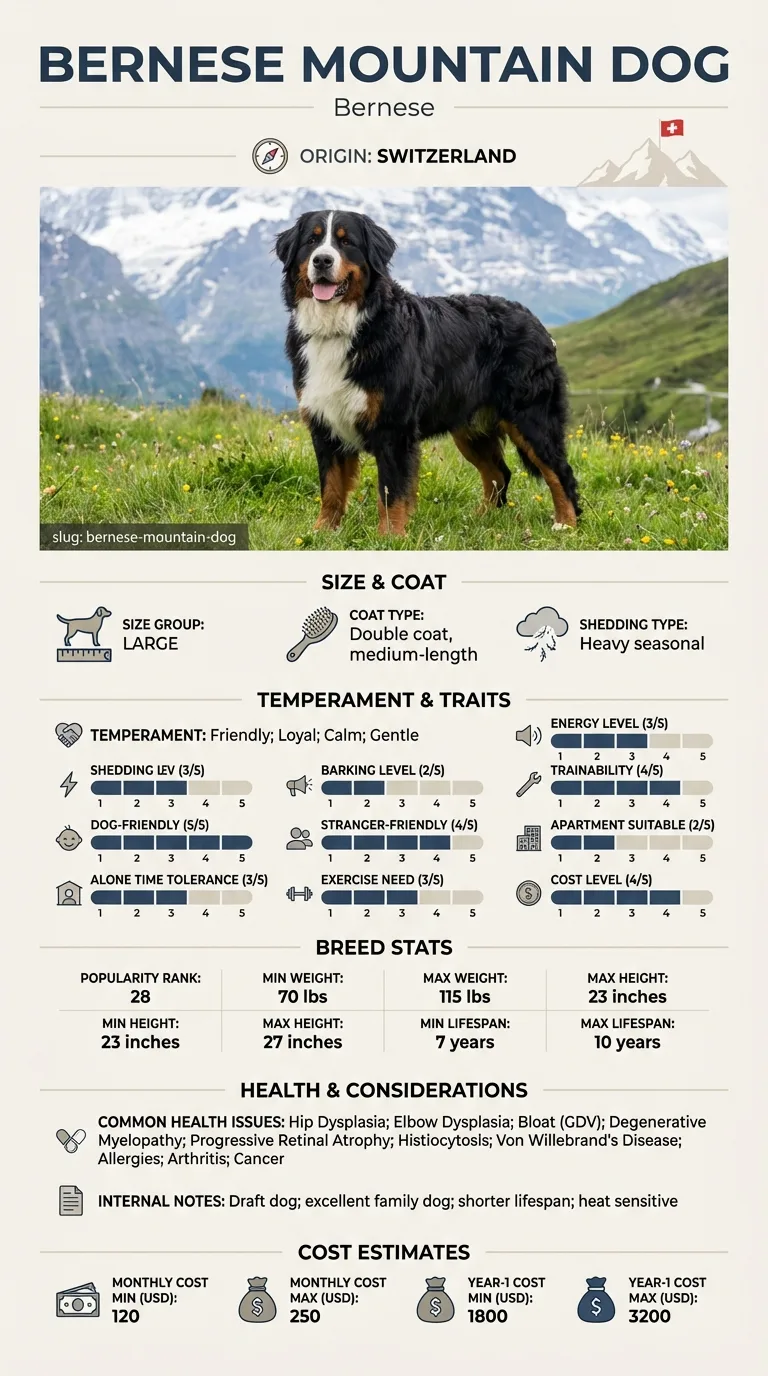
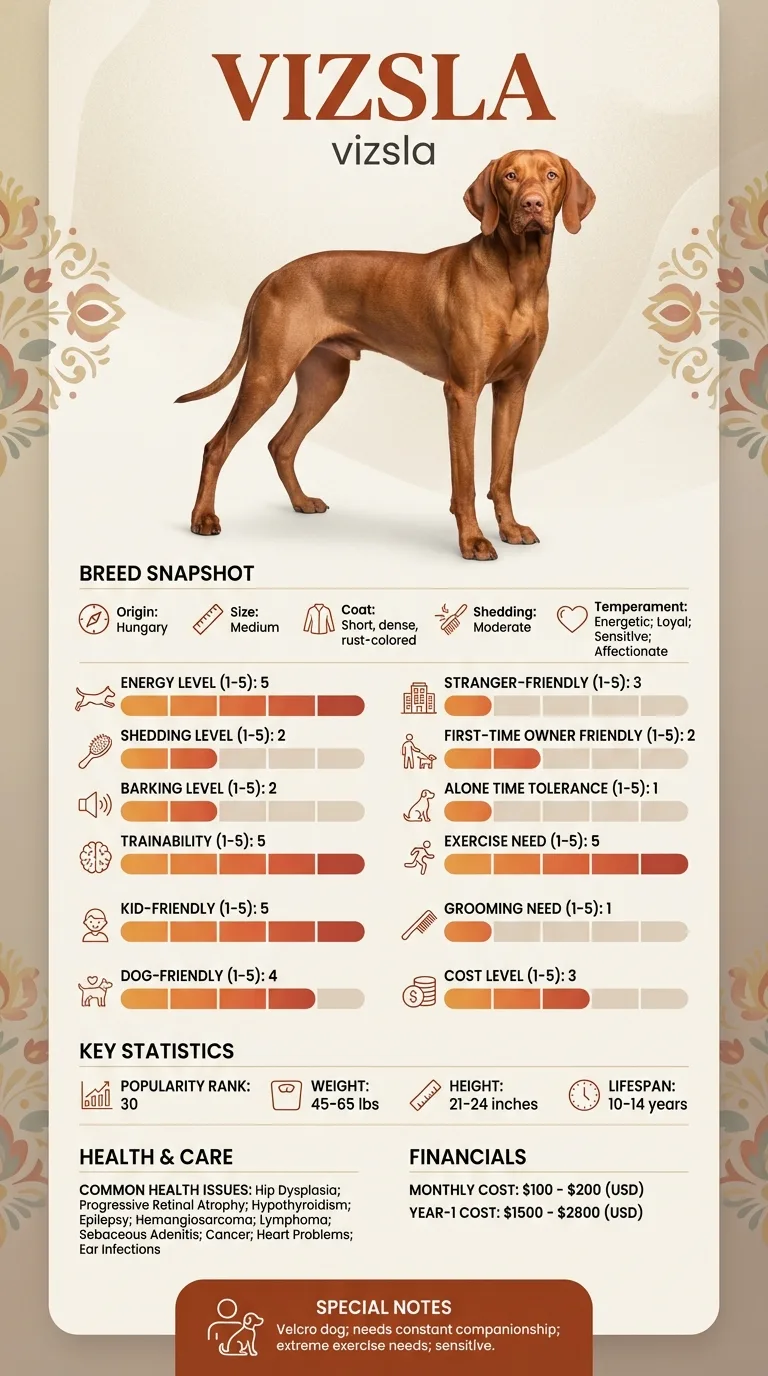
This is for someone already down to Bernese Mountain Dog and Vizsla and deciding between them. For this pair the decision usually turns on exercise need and grooming need, so those are covered first and in most detail. Anyone choosing from a flat has a clear answer here: Bernese Mountain Dog rates 2/5 against 1/5. There is no origin story here — only what changes about your week.
Between Bernese Mountain Dog and Vizsla, exercise need is what separates them, and Bernese Mountain Dog is the lower-effort dog of the two to keep.
Choose Bernese Mountain Dog if this is your first dog, your walking routine is modest and the dog will be alone during the working day.
Choose Vizsla if you do not want a standing grooming appointment, shedding is a problem in your house and you want a dog that picks up training quickly.
| Feature | bernese mountain dog | vizsla | Winner |
|---|---|---|---|
| Size class | large | medium | Equal |
| Weight | 70–115 lbs | 45–65 lbs | Equal |
| Height | 23–27 in | 21–24 in | Equal |
| Lifespan | 7–10 years | 10–14 years | vizsla |
| Exercise need | Moderate (3/5) | Very high (5/5) | bernese mountain dog |
| Grooming need | Moderate (3/5) | Very low (1/5) | vizsla |
| Shedding | High (4/5) | Low (2/5) | vizsla |
| Energy level | Moderate (3/5) | Very high (5/5) | Equal |
| Barking | Low (2/5) | Low (2/5) | Equal |
| Apartment suitability | Low (2/5) | Very low (1/5) | bernese mountain dog |
| Good for first-time owners | High (4/5) | Low (2/5) | bernese mountain dog |
| Tolerates being alone | Moderate (3/5) | Very low (1/5) | bernese mountain dog |
| Trainability | High (4/5) | Very high (5/5) | vizsla |
| Good with kids | Very high (5/5) | Very high (5/5) | Equal |
| Good with other dogs | Very high (5/5) | High (4/5) | bernese mountain dog |
| Friendly to strangers | High (4/5) | Moderate (3/5) | bernese mountain dog |
| Cost level | High (4/5) | Moderate (3/5) | vizsla |
| Coat | Double coat, medium-length | Short, dense, rust-colored | Equal |
| Origin | Switzerland | Hungary | Equal |
| Typical monthly cost | $120–$250 | $100–$200 | Equal |
| Typical first-year cost | $1,800–$3,200 | $1,500–$2,800 | Equal |
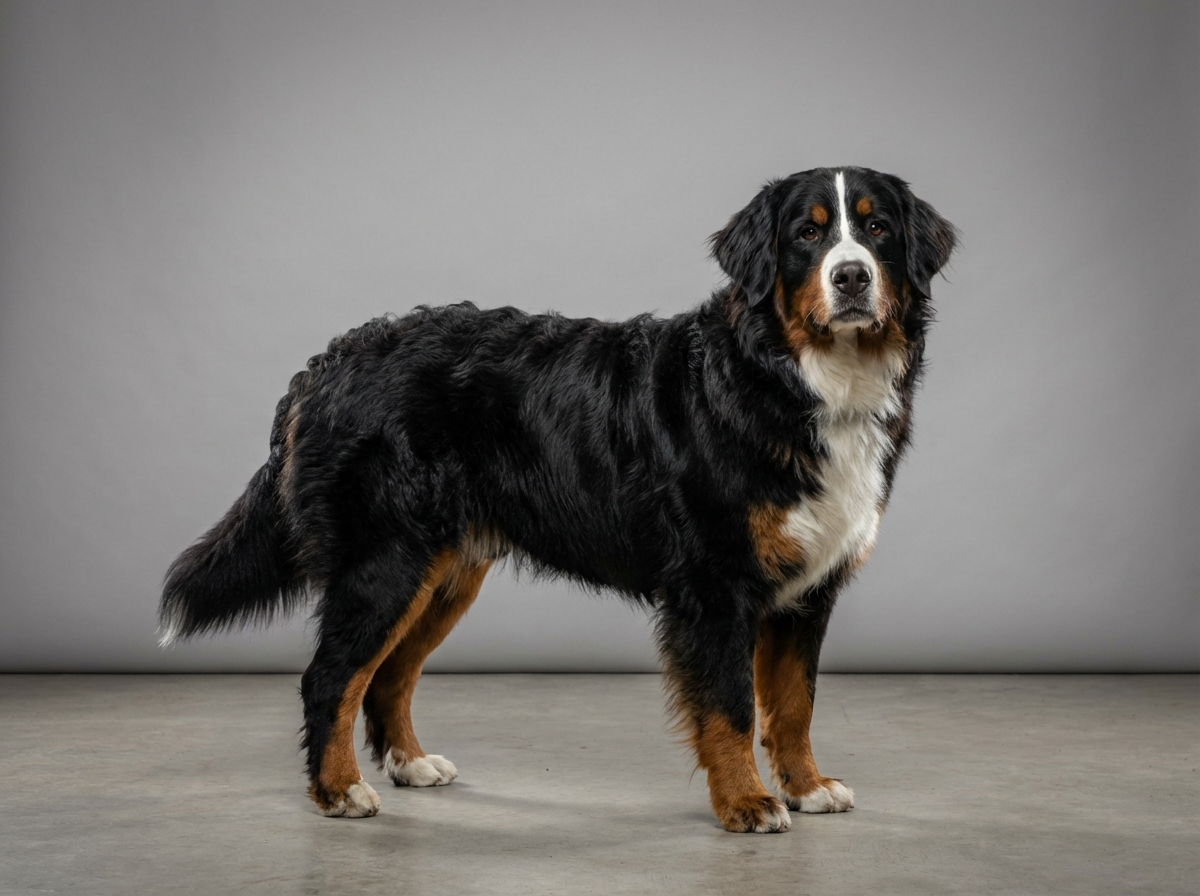
45 to 65 lbs puts the Vizsla solidly in medium territory, well below the Bernese Mountain Dog's 70-115 lb large-breed range, though their heights sit closer together at 21-24 in versus 23-27 in. The Vizsla's short, dense, rust-colored coat and lean, athletic build stand in visual contrast to the Bernese's bulkier, tricolor double coat — these are two very differently proportioned dogs even before temperament enters the picture. Anyone drawn to the Bernese's coloring specifically should know the Vizsla offers a leaner, lower-shedding alternative rather than a true substitute in build.
The Vizsla is a genuinely high-drive breed, rated Very high (5/5) for both exercise need and energy level against the Bernese's Moderate (3/5) on each. Bred as a Hungarian pointer for all-day fieldwork, the energetic, affectionate Vizsla needs substantial daily running or off-leash activity to avoid becoming anxious or destructive — it is often described as needing constant closeness with its owner combined with real physical output. The calmer Bernese is content with considerably less. This gap alone should steer most casual or sedentary households toward the Bernese.
Grooming needs favor the Vizsla strongly, rated Very low (1/5) against the Bernese's Moderate (3/5), and shedding follows suit — Low (2/5) for the Vizsla's short coat versus High (4/5) for the Bernese's medium-length double coat. There is essentially no brushing routine or seasonal coat-blow to manage with a Vizsla, just occasional wipe-downs, while the Bernese needs regular attention to keep its shedding under control. Anyone prioritizing minimal coat maintenance will find the Vizsla the clear winner here, even setting aside the other significant lifestyle differences between the two breeds.
Neither breed suits apartment living, but the Vizsla scores worse, Very low (1/5) against the Bernese's Low (2/5) — a reflection of its intense exercise needs rather than noise, since barking actually ties at Low (2/5) for both. The bigger issue is being alone: the sensitive, affectionate Vizsla scores Very low (1/5) for alone-tolerance, the lowest rating in this data, against the Bernese's Moderate (3/5). Often called a velcro dog, the Vizsla can develop real separation anxiety when left for long stretches, making it a poor match for any household with long workdays.
The Vizsla actually outranks the Bernese on raw trainability, Very high (5/5) versus High (4/5), reflecting its intelligent, biddable hunting-dog heritage, but it scores far worse for first-time owners, Low (2/5) against the Bernese's High (4/5). That combination means the Vizsla learns fast but needs a handler who understands its sensitive temperament and high drive well enough to channel it productively; a heavy-handed or inconsistent approach backfires quickly. First-timers wanting an easier learning curve, not just a trainable dog, will find the Bernese the more forgiving choice.
Both breeds score Very high (5/5) with kids, so families will not lose out either way on that front. The Bernese edges ahead with other dogs, Very high (5/5) versus High (4/5), and with strangers, High (4/5) versus Moderate (3/5) — consistent with the Vizsla's more sensitive, one-family-focused loyalty compared to the Bernese's broadly friendly nature. A household that entertains often or has multiple resident dogs will likely find the Bernese the smoother social fit, while the Vizsla tends to bond most intensely with its immediate family.
The Vizsla lives longer on average, 10-14 years against the Bernese's 7-10, a meaningful edge at the upper end. Both carry ten flagged health conditions; the Bernese's list includes Bloat (GDV), Degenerative Myelopathy, and Histiocytosis, while the Vizsla's covers Hemangiosarcoma, Lymphoma, Sebaceous Adenitis, and Heart Problems alongside shared risks like Hip Dysplasia and Progressive Retinal Atrophy. Notably, cancer-related conditions appear prominently on both lists — Cancer directly for the Bernese, Hemangiosarcoma and Lymphoma for the Vizsla — making cancer screening a priority for either breed as they age.
Costs run close for both breeds day to day, with the Vizsla actually rated Moderate (3/5) for overall cost against the Bernese's High (4/5) — monthly costs of $100-$200 versus $120-$250, and first-year costs of $1,500-$2,800 compared to $1,800-$3,200. The Vizsla's minimal grooming needs help keep its costs down despite its high exercise requirements, which can add expenses like dog-walker services or agility classes that are not reflected in the baseline rating but matter for an accurate real-world monthly budget.
Bernese Mountain Dog weighs 70–115 lbs and lives 7–10 years; Vizsla weighs 45–65 lbs and lives 10–14 years. The two diverge most on exercise need, grooming need and energy level and 3 other rated axes. They are level on barking and good with kids, so those cannot decide it. Where the table declares a winner it means less work for the owner, nothing more; descriptive rows are left as ties on purpose. The value here is in the differences between the two columns; treat any single score as approximate.

It is not recommended — the Vizsla scores Very low (1/5) for tolerating being alone, the lowest rating in this comparison, versus Moderate (3/5) for the Bernese.
The Vizsla, rated Low (2/5) for shedding and Very low (1/5) for grooming need, versus High (4/5) shedding and Moderate (3/5) grooming for the Bernese.
The Vizsla, rated Very high (5/5) for exercise need versus Moderate (3/5) for the Bernese — it needs serious daily running, not just walks.
Not ideally — it is rated Low (2/5) for first-time owners against the Bernese's High (4/5), despite the Vizsla's high trainability.
The Vizsla, typically 10-14 years versus 7-10 years for the Bernese.
Yes — the Bernese lists Cancer directly, while the Vizsla lists Hemangiosarcoma and Lymphoma, both cancer types, making cancer screening important for either breed.
The Vizsla, rated Very high (5/5) versus High (4/5) for the Bernese, though it needs a handler attuned to its sensitive temperament.
The Vizsla, rated Very low (1/5) versus Moderate (3/5) for the Bernese.
The Bernese Mountain Dog, rated High (4/5) versus Moderate (3/5) for the Vizsla.
The Vizsla, at 45-65 lbs versus the Bernese's 70-115 lbs.
The Vizsla, rated Very high (5/5) versus Moderate (3/5) for the Bernese.
Secure checkout on Stripe. We never see your card.
7-day money-back guarantee. Instant access.
Health information here is general and is not veterinary advice. If your dog shows pain, sudden behaviour change, or worsening symptoms, consult a licensed veterinarian.
Some links on this site are affiliate links. We may earn a commission at no extra cost to you, and we only suggest products we believe are helpful for dog owners.
We research and check what we publish, but we do not warrant that any figure, date, price, or statement is accurate, complete, or current, and we accept no liability for any loss, cost, injury, or other harm arising from the use of this site. Use it as one reference among several. You remain responsible for your own decisions and for your dog's care - confirm anything that matters with a licensed veterinarian or another qualified professional before you act on it. Full disclaimer.
Match your lifestyle to the right dog.
Take quizNot sure which breed is right for you? Take our 2-minute quiz to find out.
Take the quiz