Health
What does a positive thyroid antibody test mean?
That the immune system is actively attacking thyroid tissue, even if hormone levels are still normal. It predicts risk rather than diagnosing current disease.

Quick answer
What does a positive thyroid antibody test mean?
That the immune system is actively attacking thyroid tissue, even if hormone levels are still normal. It predicts risk rather than diagnosing current disease.
By the time a dog's thyroid hormone reads low, most of the gland is already gone. The interesting question is what was happening for the three years before that.
Breeders and owners of intact Bernese Mountain Dogs deciding whether to screen, and owners whose dog has tested positive for thyroid antibodies while feeling completely well.
This guide is not medical advice. If your dog shows pain, sudden behavior change, or worsening symptoms, consult a licensed veterinarian.
Some links may be affiliate links. We may earn a commission at no extra cost to you. We only suggest products we believe are helpful for dog owners.
We research and check what we publish, but we do not warrant that any figure, date, price, or statement is accurate, complete, or current, and we accept no liability for any loss, cost, injury, or other harm arising from the use of this site. Use it as one reference among several. You remain responsible for your own decisions and for your dog's care - confirm anything that matters with a licensed veterinarian or another qualified professional before you act on it. Full disclaimer.
Immune-mediated thyroiditis is the autoimmune destruction of thyroid tissue and the most common underlying cause of canine hypothyroidism. It is detected by measuring autoantibodies against thyroid proteins, which can be present for years before hormone levels fall. The condition itself causes no symptoms during that phase; what it produces, eventually, is clinical thyroid deficiency.
Thyroid autoimmunity is documented across many breeds and is the leading cause of the hypothyroidism that veterinarians diagnose. Within the Bernese Mountain Dog it sits alongside the breed's broader tendency toward immune-mediated conditions rather than standing out as a headline risk. Compared with cancer, hip and elbow dysplasia, bloat and degenerative myelopathy, it is a smaller concern in absolute terms but an unusually screenable one.
This is a heritable immune trait rather than a structural or mechanical problem, which makes it very different from most of what affects this breed. The Bernese Mountain Dog descends from a limited founder population in the Swiss cantons, and breeds built from small founder groups carry heritable immune tendencies more densely than diverse populations do. That same narrow base is part of why the breed is watched closely for immune-mediated and neoplastic disease generally.
There is no established environmental trigger, and owners should be wary of confident claims to the contrary. What environment does affect is detection. A dog in a household that runs annual bloodwork gets caught in the silent phase; a dog whose only vet visits are for vaccinations gets caught after symptoms. Breeding kennels that screen routinely generate far more information about their lines than pet homes ever will, which is why breeder records are the most useful environmental factor of all.
This condition does not produce emergencies in its silent phase, so screening and interpretation are routine appointments. Contact your veterinarian promptly, though, if an antibody-positive dog develops unexplained weight gain, non-itchy symmetrical hair loss, new heat-seeking behaviour, or ear and skin infections that keep recurring, because those suggest the transition to clinical deficiency has happened and the hormone panel should be repeated ahead of schedule rather than at the annual visit.
Start here: Bernese Mountain Dog Most Common Genetic Disorders
See all Bernese Mountain DOG health problems, which breeds are prone to immune mediated thyroiditis, or the full Bernese Mountain DOG breed guide for temperament, exercise needs and ownership costs.
This is a condition measured in years rather than weeks. Antibodies commonly appear somewhere between two and five years of age, and progression to measurable hormone deficiency can take anywhere from a year to never. Monitoring intervals are therefore annual rather than frequent, and the useful output of screening is a trend line built over the dog's life rather than a result on a single day.
For a pet owner, success is catching the handover point. That means a dog who starts hormone replacement in the month his levels drop rather than after a year of gradual decline, with no accumulated weight gain and no repeated skin infections along the way. For a breeder, success is a programme where antibody status is known before mating decisions are made, so the tendency is not passed forward blindly.
Thyroid tissue has a large functional reserve. Estimates vary, but a substantial majority of the gland has to be lost before circulating hormone falls outside the normal range. That reserve is why the disease is silent for so long.
During the silent phase the immune system is producing antibodies against thyroid proteins, most notably thyroglobulin. Those antibodies can be measured, and their presence indicates an active autoimmune process even in a dog whose hormone levels are entirely normal and whose owner has noticed nothing at all.
This distinction matters for two quite different audiences. For a pet owner it changes almost nothing about today, because there is no established treatment that halts the process, and starting hormone replacement in a dog who does not need it is not helpful. What it changes is the monitoring schedule: an antibody-positive dog gets his levels rechecked periodically so that the transition to genuine deficiency is caught early rather than after a year of unexplained weight gain.
For a breeder it changes a great deal. Antibody status is heritable information about a dog who looks clinically perfect. A dog testing positive at three is likely to become hypothyroid and is passing on that tendency, and most breed health programmes treat that as relevant to breeding decisions in a way that a clinically normal hormone panel does not capture.
Age matters when interpreting a negative result too. Antibodies typically appear between roughly two and five years, so a clear test at fourteen months carries much less information than a clear test at four.
Screening is a blood draw, not a procedure, and it is usually combined with the panels a breeder is already running. The complexity is in interpreting it, not in obtaining it.

Solveig was screened at eighteen months as part of her breeder's pre-breeding workup. Her thyroid panel was normal and her antibody test was negative, and everyone treated that as settled. Her owner, who had kept her intact, repeated the panel at four years on her vet's advice. The hormone levels were still comfortably normal. The antibody result had turned positive. Nothing was prescribed, because nothing was indicated. What changed was the plan: Solveig was not bred, and her thyroid hormone was rechecked every year instead of every few years. At six and a half her levels dropped below range and she started replacement within a fortnight of the result, before her owner had noticed a single symptom. Her breeder retested two of her siblings on the strength of it. One was positive.
Key takeaway: A negative antibody test in a young dog is a snapshot, not a clearance. In a breed where autoimmune tendency runs in lines, the value of screening comes from repeating it as the dog moves through the window in which antibodies appear.
Nothing changes today. There is no proven treatment that stops the autoimmune process, and hormone replacement in a dog with normal levels is not indicated. What your vet will usually recommend is periodic recheck of thyroid hormone, often annually, so that deficiency is caught at the point it develops rather than after months of symptoms.
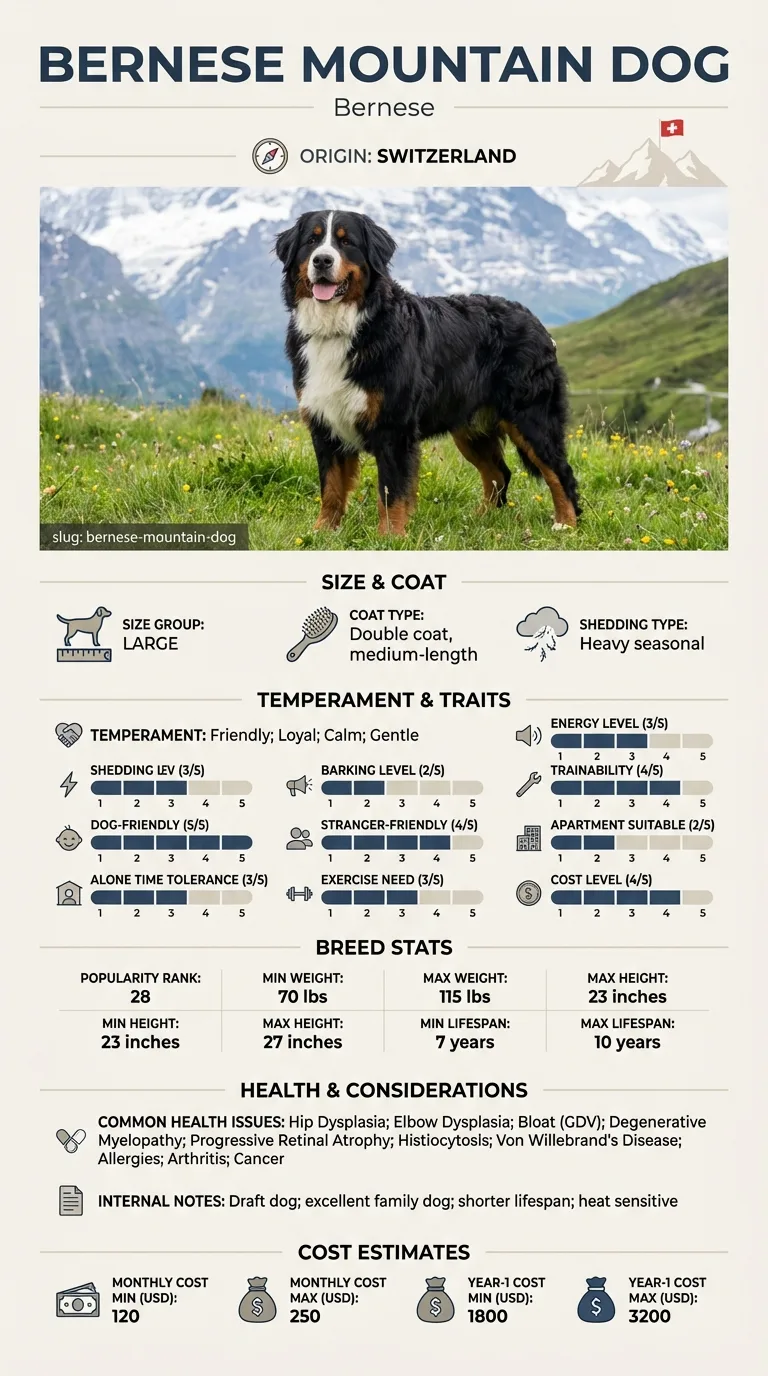
Not in every dog and not on a predictable timetable. Many antibody-positive dogs do progress, some over a few years and some much more slowly, and a proportion never reach clinical deficiency within their lifespan. In a breed averaging seven to ten years, that last group is larger than it would be in a longer-lived breed.
Screening is most informative from about two years, because antibodies typically emerge between two and five. Testing a yearling can be reassuring but proves little. Breeding programmes commonly repeat the test annually while a dog is being bred rather than relying on one clear result.
Most breed health guidance advises against it, and the reasoning is straightforward: the tendency is heritable, and this breed already carries a heavy documented health load and a short lifespan. Decisions about a specific dog belong with a veterinarian and the breed club rather than being made from a web page, but a positive result should genuinely change the plan.
There is no good evidence that any diet, supplement or immune-support product halts thyroid autoimmunity in dogs. Products marketed on that claim should be treated sceptically. Iodine supplementation in particular can do harm rather than good and should never be started without veterinary direction.
Autoimmune conditions do cluster in some lines, and Bernese Mountain Dogs are recognised as carrying an elevated burden of immune-mediated disease generally. A dog with thyroid autoimmunity is not guaranteed to develop anything else, but a family history of several immune-mediated problems is worth mentioning to your veterinarian.
That the immune system is actively attacking thyroid tissue, even if hormone levels are still normal. It predicts risk rather than diagnosing current disease.
Thyroid tissue has a large functional reserve. Most of the gland must be destroyed before circulating hormone falls below the normal range.
No, not while hormone levels are normal. The appropriate response is periodic monitoring, not preemptive hormone replacement.
Annually through the breeding years is the common approach, because antibodies can appear at any point across a roughly two to five year window.
A one-page prep sheet for this condition: the signs, the questions to ask, what to get priced. Unlocks here.
You get: Vet visit prep sheet
No spam. One-click unsubscribe. See our privacy policy.
Preview page 1 before you decide.