Health
How does pancreatitis lead to diabetes?
Repeated inflammation scars pancreatic tissue, and the insulin-producing islet cells scattered through it are destroyed along with everything else.

Quick answer
How does pancreatitis lead to diabetes?
Repeated inflammation scars pancreatic tissue, and the insulin-producing islet cells scattered through it are destroyed along with everything else.
The two diagnoses arrive years apart and most owners never connect them. The organ does.
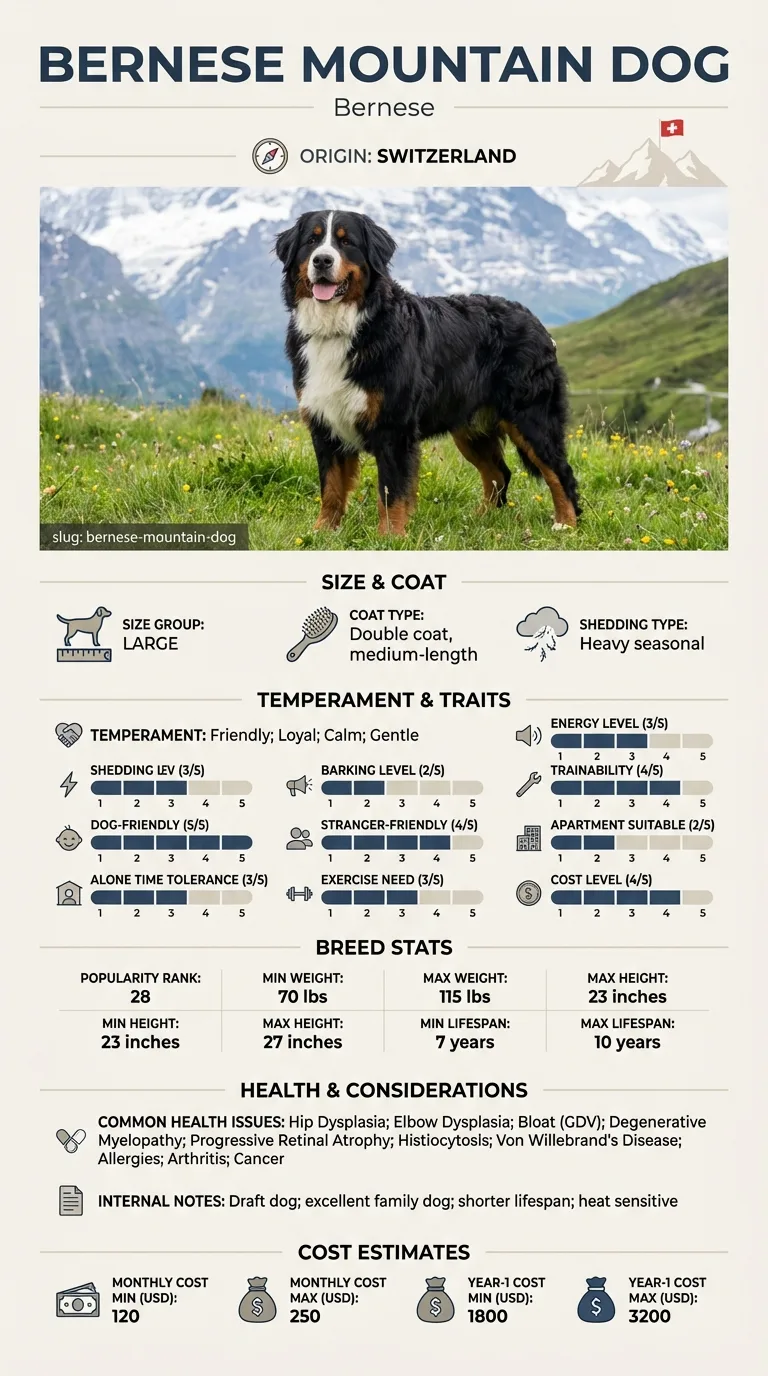
Owners of an older Bernese with a history of pancreatic flare-ups who have now been told he is diabetic, and owners weighing whether they can realistically manage twice-daily injections in a very large dog.
This guide is not medical advice. If your dog shows pain, sudden behavior change, or worsening symptoms, consult a licensed veterinarian.
Some links may be affiliate links. We may earn a commission at no extra cost to you. We only suggest products we believe are helpful for dog owners.
We research and check what we publish, but we do not warrant that any figure, date, price, or statement is accurate, complete, or current, and we accept no liability for any loss, cost, injury, or other harm arising from the use of this site. Use it as one reference among several. You remain responsible for your own decisions and for your dog's care - confirm anything that matters with a licensed veterinarian or another qualified professional before you act on it. Full disclaimer.
Pancreatitis and diabetes are linked through the same organ. Chronic or repeated inflammation of the pancreas scars the tissue and destroys the scattered islet cells that produce insulin, and when enough are lost the dog becomes diabetic. Diabetes in turn alters fat metabolism in ways that make further pancreatic inflammation more likely, so the two conditions reinforce each other once both are present.
Neither condition is among the Bernese Mountain Dog's documented breed-specific health issues, which are led by cancer, hip and elbow dysplasia, bloat and degenerative myelopathy. Both occur in this breed at roughly the rates seen across dogs generally, and both are more typical of the senior years. In a breed averaging seven to ten years, the senior window is short, which affects how these diagnoses are weighed.
This pairing is not driven by Bernese genetics, and it is more honest to explain the breed's role as amplifying than causing. Body weight is the main link: a large dog gains weight easily under a concealing double coat, and obesity contributes to both pancreatic inflammation and insulin resistance. Size also raises the practical difficulty and cost of treatment, since insulin doses scale with weight. The breed's documented bloat risk means every vomiting episode in a diabetic Berner has to be triaged more urgently than in another dog.
Household routine becomes a medical variable once insulin is involved. A home with irregular mealtimes, shift work or frequent travel finds twice-daily fixed dosing genuinely hard, and inconsistency destabilises glucose control faster than anything else. Food sharing is the other environmental factor and is doubly damaging here, since a fatty treat threatens the pancreas and any unplanned calorie disrupts the glucose plan the dose was built around.
Go to an emergency service immediately for a diabetic dog who becomes weak, wobbly, disoriented or seizures, which suggests dangerously low blood sugar, and for one who is profoundly lethargic, vomiting, breathing deeply and rapidly or whose breath smells sweet or chemical, which suggests a ketone crisis. In this breed, treat any episode of retching with a distended abdomen as a possible bloat and go at once. Book a prompt appointment for increased drinking, unexplained weight loss, a diabetic dog whose glucose control has drifted, or any vomiting episode in a dog with pancreatic history.
Start here: Bernese Mountain Dog Most Common Genetic Disorders
See all Bernese Mountain DOG health problems, which breeds are prone to pancreatitis diabetes, or the full Bernese Mountain DOG breed guide for temperament, exercise needs and ownership costs.
Expect the first six to twelve weeks after a diabetes diagnosis to be unsettled while the dose is established through repeated glucose monitoring. Most dogs reach reasonable stability within three months. After that, monitoring typically settles into checks every three to six months, punctuated by adjustments whenever a pancreatic flare-up or another illness disturbs control. The routine itself never relaxes, and owners should plan around that rather than expecting it to become optional.
Success is stability rather than cure. A well-managed dog drinks a normal amount, holds his weight, has a good coat, shows no vomiting episodes, and has glucose checks that come back consistently rather than erratically. For a Bernese diagnosed at eight or nine, success may mean a good, comfortable, well-regulated final couple of years, and that is a legitimate and worthwhile outcome rather than a consolation.
A single acute episode of pancreatic inflammation rarely causes diabetes. What does is repetition. Chronic low-grade inflammation, flaring and settling over years, gradually replaces functioning pancreatic tissue with scar. The islet cells are scattered through that tissue, so they are lost incidentally rather than targeted.
When enough of them are gone, insulin production fails and blood glucose rises. The dog begins drinking heavily, urinating constantly, losing weight despite a good appetite, and eventually becomes lethargic as his cells starve in the presence of plenty.
The relationship runs in both directions, which is what makes this pairing genuinely difficult. Diabetes alters fat metabolism in a way that makes further pancreatic inflammation more likely, and each new flare-up destabilises the glucose control that has been carefully established. Owners of dogs with both conditions describe a moving target rather than a fixed routine.
There is also a diagnostic complication. A diabetic dog who suddenly vomits and stops eating may be having a pancreatic flare-up, or may be developing a dangerous metabolic crisis in which the body starts breaking down fat and producing acidic ketones. Both present with vomiting and lethargy. The second is life-threatening and needs emergency care.
For a Bernese owner, there is a third overlapping possibility that must be excluded first, and that is bloat, which is on this breed's documented issue list. Vomiting and abdominal discomfort in this breed always warrant urgent assessment rather than home judgement.
The medical part is straightforward once established. What owners find demanding is the rigidity, because a diabetic dog needs the same routine every day including holidays and weekends.

Sepp had three episodes of pancreatic inflammation between the ages of five and nine. Each was mild, each followed something he should not have eaten, and each resolved with a few days of treatment. Nobody framed them as a sequence. At nine and a half his owners noticed he was emptying a large water bowl twice a day and asking to go out during the night. He was eating enthusiastically and had lost weight, though under his coat they had not seen it until the vet weighed him at eleven pounds down. His glucose was high and diabetes was diagnosed. His vet explained the connection to the earlier episodes for the first time, and Sepp went onto twice-daily insulin with a single low fat prescription diet serving both conditions. The first two months were difficult while the dose was found. He is eleven now, stable, and his family have not shared human food with a dog since.
Key takeaway: Repeated mild pancreatic episodes are not separate incidents; they are instalments. Treating the first one as a permanent change of diet rather than a temporary inconvenience is what protects the insulin-producing cells years later.
No, and most do not. A single acute episode that resolves well usually leaves no lasting endocrine damage. The risk belongs to dogs with repeated or chronic low-grade inflammation over years, where scarring accumulates. This is one of the strongest arguments for taking the low fat diet seriously after a first episode.
Dramatically increased drinking and urination, often the first thing noticed, alongside weight loss despite a normal or increased appetite. In a heavily coated breed the weight loss can be surprisingly advanced before anyone sees it, which is why the water bowl is usually the more reliable early signal.
In dogs, essentially no. Canine diabetes is generally a permanent loss of insulin production, unlike the situation in cats where remission is sometimes possible. Treatment is lifelong insulin. Any product or diet marketed as reversing canine diabetes should be regarded with strong scepticism.
That is a genuine question and it deserves a straight answer rather than reassurance. Bernese Mountain Dogs average seven to ten years, so a diagnosis at eight means managing a demanding routine for a period that may be short. Many families do it well and their dogs live comfortably. Others cannot fit the rigidity into their lives, and discussing that honestly with your vet is legitimate rather than a failure.
Two. Low blood sugar from insulin, which causes weakness, staggering, disorientation or seizures and requires immediate action. And a ketone crisis, where a diabetic dog becomes profoundly lethargic, vomits, breathes deeply and rapidly and may have a sweet chemical smell to his breath. Both are emergencies and both need veterinary care at once.
It has to serve two masters: low in fat for the pancreas, and consistent in composition and timing for the glucose. That usually means a single veterinary-prescribed diet fed in identical measured meals at fixed times. Do not attempt to balance these requirements yourself, because the two goals can conflict and getting it wrong destabilises both conditions.
Repeated inflammation scars pancreatic tissue, and the insulin-producing islet cells scattered through it are destroyed along with everything else.
A sharp increase in drinking and urination. In a coated breed this is more reliable than noticing weight loss, which stays hidden longer.
Typically twice daily, about twelve hours apart, paired with identical meals. The consistency matters as much as the dose.
Yes. Insulin dose scales with body weight, so a ninety pound Berner costs considerably more to manage than a small dog, on top of monitoring and prescription food.
A one-page prep sheet for this condition: the signs, the questions to ask, what to get priced. Unlocks here.
You get: Vet visit prep sheet
No spam. One-click unsubscribe. See our privacy policy.
Preview page 1 before you decide.