DogBreedCompass

Malamute or Bichon: All the Hair, or None of It

The Malamute sheds at 5/5 and the Bichon Frise at 1/5 — the full width of the scale. What people miss is the row above: the Bichon grooms at 5/5 and the Malamute at 4/5. Neither of these coats is low effort. They are opposite kinds of work, and only one of them can be done at home with a rake and a bin bag.

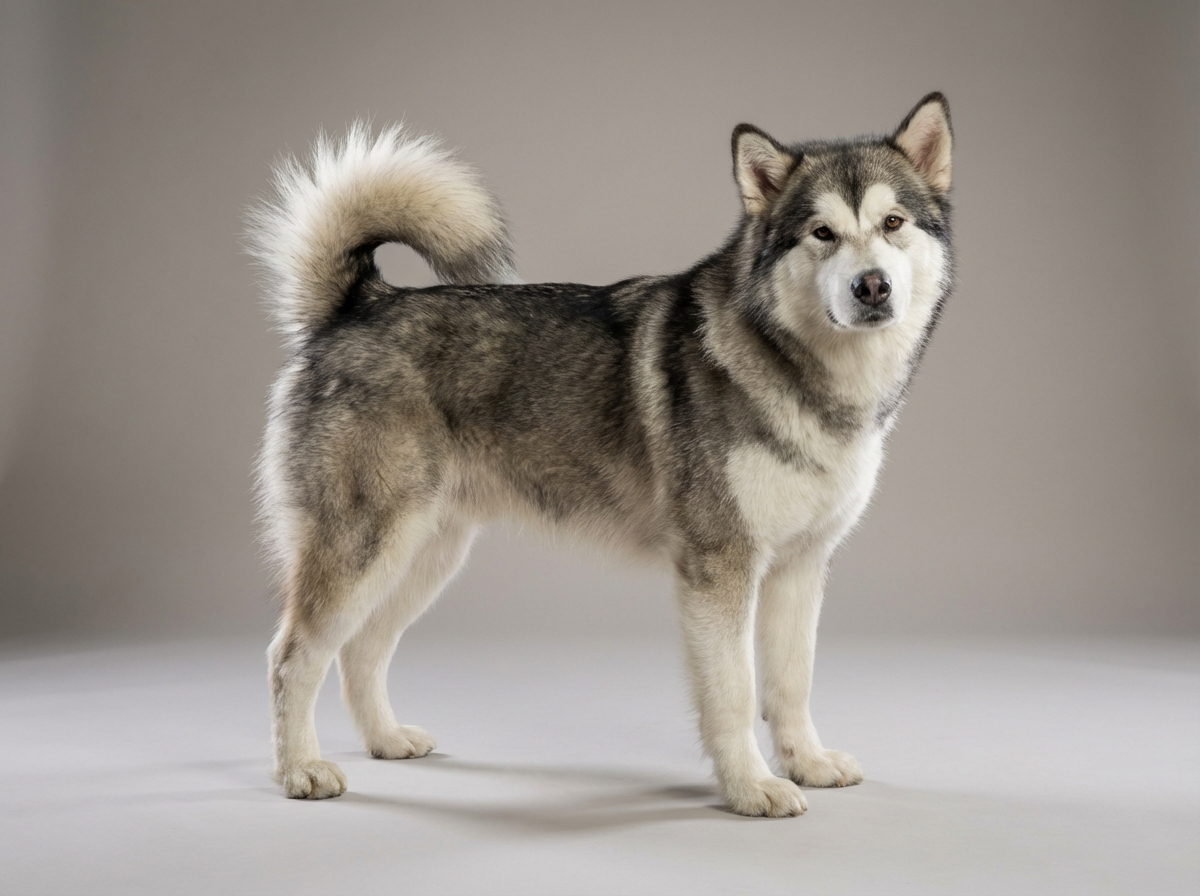
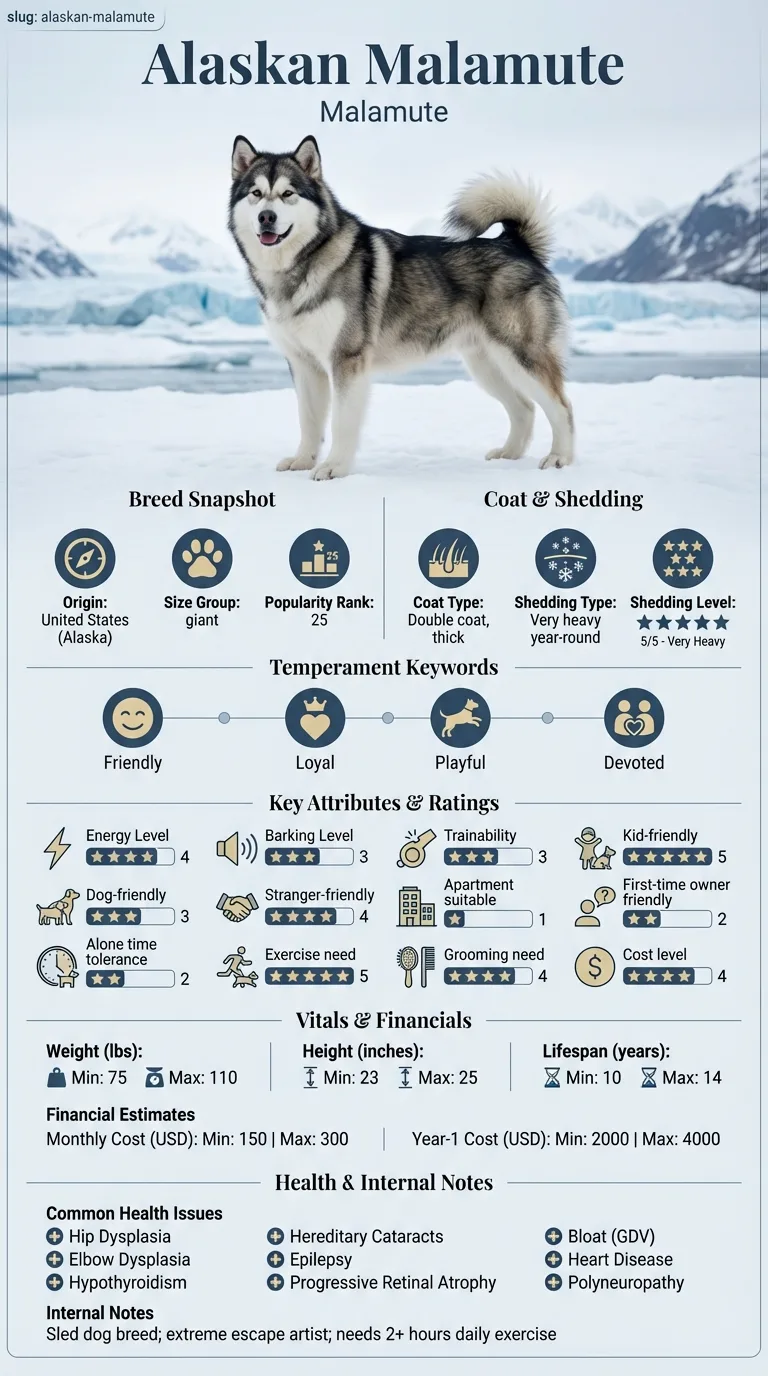
alaskan malamute infographic
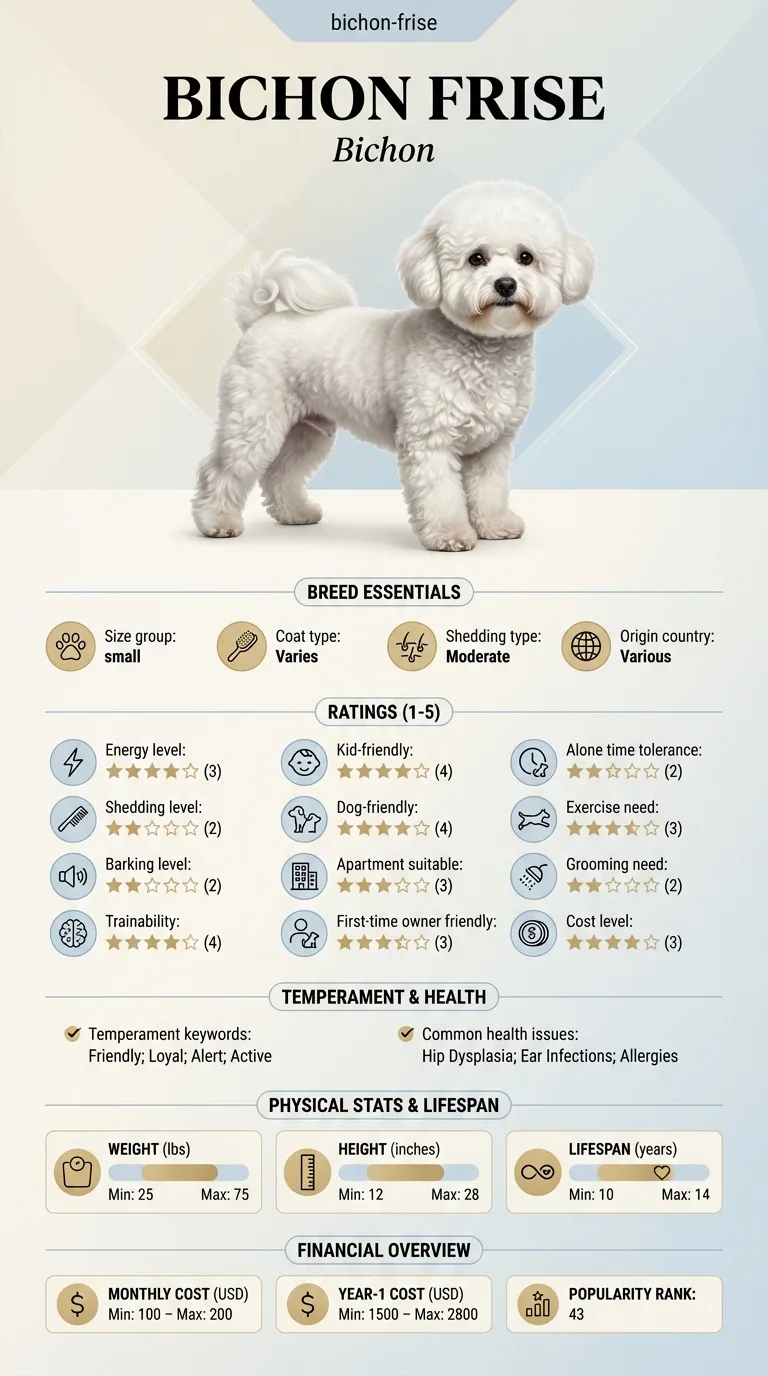
bichon frise infographic

This page is for someone weighing a small non-shedding companion against a large northern working breed. It covers the two kinds of coat work, the exercise gap, bladder stones and skin allergies, and what each costs to keep.

Quick verdict

The Bichon is cheaper, longer-lived, easier to house and needs a groomer for its whole life; the Malamute needs no groomer and two hours a day outdoors.

Choose alaskan malamute if...

Choose the Alaskan Malamute if you are athletic, have space, and would rather rake a coat than book appointments. It rates 5/5 with children against the Bichon's 4/5. You are accepting $150–$300 a month against $80–$150, 5/5 shedding, 5/5 exercise, a 1/5 apartment rating and a determined escape artist.

Choose bichon frise if...

Choose the Bichon Frise if you live in a flat and want a cheerful, low-shedding companion. It rates 5/5 for apartments, 4/5 with children, other dogs, strangers and first-time owners, needs only 2/5 exercise, lives 14 to 15 years and costs $80–$150 a month. You are accepting a 5/5 coat and skin problems.

Head-to-head comparison

Featurealaskan malamutebichon friseWinner
Weight75–110 lbs12–18 lbsEqual
Height23–25 in9–12 inEqual
Lifespan10–14 years14–15 yearsbichon frise
CoatThick double coatCurly double coatEqual
Grooming needHigh (4/5)Very high (5/5)alaskan malamute
SheddingVery high (5/5)Very low (1/5)bichon frise
Energy levelHigh (4/5)Moderate (3/5)Equal
Exercise needVery high (5/5)Low (2/5)bichon frise
TrainabilityModerate (3/5)Moderate (3/5)Equal
BarkingModerate (3/5)Moderate (3/5)Equal
Good with kidsVery high (5/5)High (4/5)alaskan malamute
Good with other dogsModerate (3/5)High (4/5)bichon frise
Friendly to strangersHigh (4/5)High (4/5)Equal
Apartment suitabilityVery low (1/5)Very high (5/5)bichon frise
Good for first-time ownersLow (2/5)High (4/5)bichon frise
Tolerates being aloneLow (2/5)Low (2/5)Equal
Typical monthly cost$150–$300$80–$150bichon frise
Typical first-year cost$2,000–$4,000$1,100–$2,300bichon frise

Deep dive

Alaskan Malamute vs Bichon Frise: two coats, neither of them easy

The shedding row runs the full width of the scale, 5/5 against 1/5. For anyone whose objection to dogs is hair on furniture, that settles it immediately.

The grooming row runs the other way and is the part people underestimate. The Bichon's curly coat grows continuously and holds its dead hair rather than dropping it, which is exactly why it mats — densely, fast, and worst behind the ears, in the armpits and around the tail. Combing to the skin several times a week plus a professional groom every six to eight weeks is the arrangement for the dog's whole life.

The Malamute's work is concentrated instead. It sheds constantly and blows its undercoat in sheets twice a year, and those weeks mean an undercoat rake and several long sessions. Between blows it needs very little, it never mats, and it never sees a groomer.

Neither coat should ever be clipped down to the skin — both are double coats that insulate against heat as well as cold, though a Bichon's regular trim is a normal part of its maintenance.

One coat costs money on a schedule; the other costs time in bursts.

Two hours against twenty minutes

The Malamute rates 5/5 for exercise and the Bichon 2/5, which is the second-widest gap on this page.

A Malamute wants two hours a day and it wants to pull — carting, scootering, canicross or long hikes. A walk does not satisfy it, and heat limits it, so summer sessions move to the cool ends of the day. An under-exercised Malamute excavates a garden and then leaves it.

A Bichon wants two short walks and some indoor play. It rates 3/5 for energy and is genuinely bouncy in the house — this is not a sedentary lap dog — but its requirement is met in a fraction of the time and in almost any weather.

That difference is what produces the apartment ratings: 5/5 against 1/5. The Malamute's problem is size and output together; the Bichon has neither.

Both rate 2/5 for tolerating time alone and 3/5 for barking, so neither suits an empty house without cover, and neither is silent.

Skin allergies and bladder stones

Skin allergies head the Bichon's condition list and they are the breed's everyday complaint — itching, paw licking, recurrent ear trouble and inflamed skin, often seasonal and often lifelong. It is managed rather than cured, and a dense coat over irritated skin makes regular grooming part of the treatment rather than a cosmetic extra.

Bladder stones are the second and they are the one to recognise early. Bichons have a documented predisposition, and the practical signs are straining to urinate, frequent small amounts, blood in the urine or discomfort. In a male dog a stone that lodges in the urethra can cause a complete blockage, which is life-threatening within hours — straining with nothing produced is an emergency, not a wait-and-see.

Water intake, a diet chosen with a vet's input after any episode, and not making the dog hold on for long stretches all reduce recurrence.

Patellar luxation, cataracts and dental disease complete the list.

The Malamute's list runs to hip and elbow dysplasia, hypothyroidism, hereditary cataracts, progressive retinal atrophy, epilepsy, heart disease, bloat, inherited polyneuropathy and zinc-responsive skin disease.

Two friendly dogs and one that runs

Strangers ties at 4/5 and barking ties at 3/5. Both are sociable, demonstrative breeds and neither guards anything — a Malamute will greet an intruder happily and a Bichon will ask him to throw something.

The Bichon is slightly better with other dogs at 4/5 against 3/5, since Malamute same-sex intolerance is common and usually appears at social maturity around two years old.

The Malamute is better with children at 5/5 against 4/5, and the Bichon's rating is about fragility rather than temperament — a 15-pound dog with fine legs and a patellar luxation risk is easily hurt by rough handling.

Both rate 3/5 for trainability and neither is eager to please in a retriever sense. Bichon house-training in particular is often slow, and small-dog bladders plus a dislike of wet grass are a common combination.

Containment is the Malamute's own problem. Its breed notes call it an extreme escape artist — it digs, climbs and travels once loose — so a fence dug in at the base and secured gates are the baseline, and its recall should never be relied on.

What each costs across a life

The Bichon runs $80–$150 a month against the Malamute's $150–$300, and $1,100–$2,300 against $2,000–$4,000 in the first year. On food alone it is a fraction of the cost.

Grooming closes some of that. Every six to eight weeks across fourteen or fifteen years is over a hundred appointments, and unless you learn to clip the dog yourself it is unavoidable. It should be in the budget from the start rather than discovered in month three.

Skin management is the other recurring cost where allergies appear, and dental care is the usual small-breed line — daily brushing genuinely reduces the anaesthetics needed over a long life.

The Malamute's spending is food-dominated and its coat work is free once you own a rake.

On lifespan the Bichon is ahead at 14 to 15 years against 10 to 14, which cuts both ways: more years of companionship and more years of appointments.

Alaskan Malamute vs Bichon Frise at a glance

The shedding row runs the full width of the scale — 5/5 against 1/5 — which settles the hair-on-furniture question immediately. The grooming row runs the other way and is easy to underestimate: the Bichon's curly coat holds its dead hair and mats fast, so it needs combing several times a week plus a professional groom every six to eight weeks for its whole life. The Malamute's coat never mats and never sees a groomer, but it blows its undercoat in sheets twice a year.

Exercise is the other wide gap, 5/5 against 2/5. A Malamute wants two hours a day and real pulling work; a Bichon is satisfied by two short walks and some indoor play, which is why it rates 5/5 for apartments against the Malamute's 1/5.

Choose the Malamute if you are athletic, have space, and would rather rake a coat than book appointments. Choose the Bichon if you live in a flat and want a cheerful, low-shedding companion.

Frequently asked questions

Which sheds less?

The Bichon Frise at 1/5 against the Malamute's 5/5 — the full width of the scale. The trade is grooming at 5/5 against 4/5. A coat that holds its dead hair mats densely and fast, so it needs combing to the skin several times a week plus a groomer every six to eight weeks for life.

How much exercise does a Bichon need?

2/5 — two short walks and some indoor play, against the Malamute's 5/5 and two hours of pulling work. It rates 3/5 for energy and is genuinely bouncy indoors rather than sedentary, but the requirement is met in a fraction of the time and in almost any weather.

Why do Bichons get bladder stones?

The breed has a documented predisposition. The signs are straining, frequent small amounts, blood in the urine or discomfort. In a male dog a stone lodging in the urethra causes a complete blockage that is life-threatening within hours — straining with nothing produced is an emergency.

Are skin allergies common in this breed?

They head the Bichon's condition list — itching, paw licking, recurrent ear trouble and inflamed skin, often seasonal and often lifelong. They are managed rather than cured, and regular grooming becomes part of the treatment rather than a cosmetic extra when a dense coat sits over irritated skin.

Which is better for an apartment?

The Bichon at 5/5 against the Malamute's 1/5. It weighs 12 to 18 pounds, needs only 2/5 exercise and sheds almost nothing. The caveats are 3/5 barking and a 2/5 tolerance for being left alone, both of which need managing from the first week in a building with neighbours.

Which copes better with a working day?

Neither — both rate 2/5. The Malamute was bred to work in a team and the Bichon purely as a companion, and neither inherited a tolerance for solitude. Absence training from week one and a walker or day care apply whichever dog you choose.

Which is cheaper to keep?

The Bichon, at $80–$150 a month against the Malamute's $150–$300, and $1,100–$2,300 against $2,000–$4,000 in the first year. Grooming narrows it: over a hundred appointments across a fourteen to fifteen year life is a substantial cumulative cost the Malamute does not have.

Quick answers

View more answers
Living

Malamute vs Bichon Frise: which should I choose?

The Bichon if you live in a flat, want a low-shedding companion and will fund grooming for life. The Malamute if you are athletic, have space, and would rather rake a coat twice a year than keep appointments.

Costs

How much does each cost per month?

The Malamute runs $150–$300 a month and the Bichon $80–$150, with first-year totals of $2,000–$4,000 and $1,100–$2,300. Neither figure includes the Bichon's grooming.

Health

What is an emergency in a Bichon?

Straining to urinate with nothing produced, particularly in a male dog. A bladder stone lodging in the urethra causes a complete blockage that is life-threatening within hours.

Health

Which lives longer?

The Bichon at 14 to 15 years against the Malamute's 10 to 14. That is more companionship and also more grooming appointments — both worth costing before you choose.

Related DogBreedCompass guides

  • Alaskan Malamute breed guideThe Malamute profile covers exercise, containment and the breed's coat.
  • Bichon Frise breed guideThe Bichon Frise profile covers coat maintenance, skin health and small-breed care.
  • Akita vs HavaneseThe Havanese is the small companion breed most often weighed against a Bichon.
  • Akita vs Miniature PoodleThe Miniature Poodle is the other small non-shedding breed with the same grooming demand.
  • Bichon Frise genetic disordersThe inherited conditions worth screening for before buying a Bichon puppy.
  • Malamute bloat and GDVBloat is a genuine emergency in the Malamute and every owner should know the signs.

Related guides

Important reminder

Health information here is general and is not veterinary advice. If your dog shows pain, sudden behaviour change, or worsening symptoms, consult a licensed veterinarian.

Some links on this site are affiliate links. We may earn a commission at no extra cost to you, and we only suggest products we believe are helpful for dog owners.

Find Your Perfect Breed

Match your lifestyle to the right dog.

Take quiz

Find your match

Not sure which breed is right for you? Take our 2-minute quiz to find out.

Take the quiz