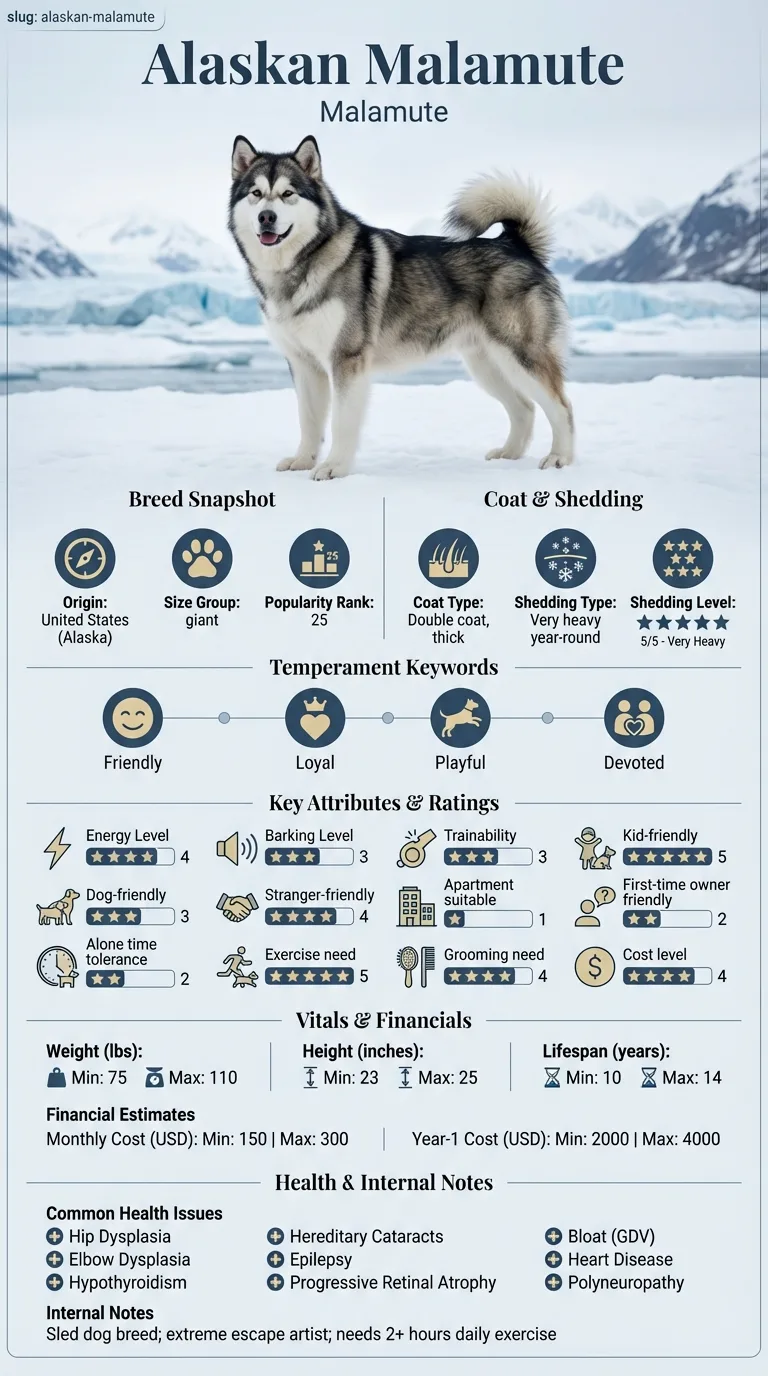
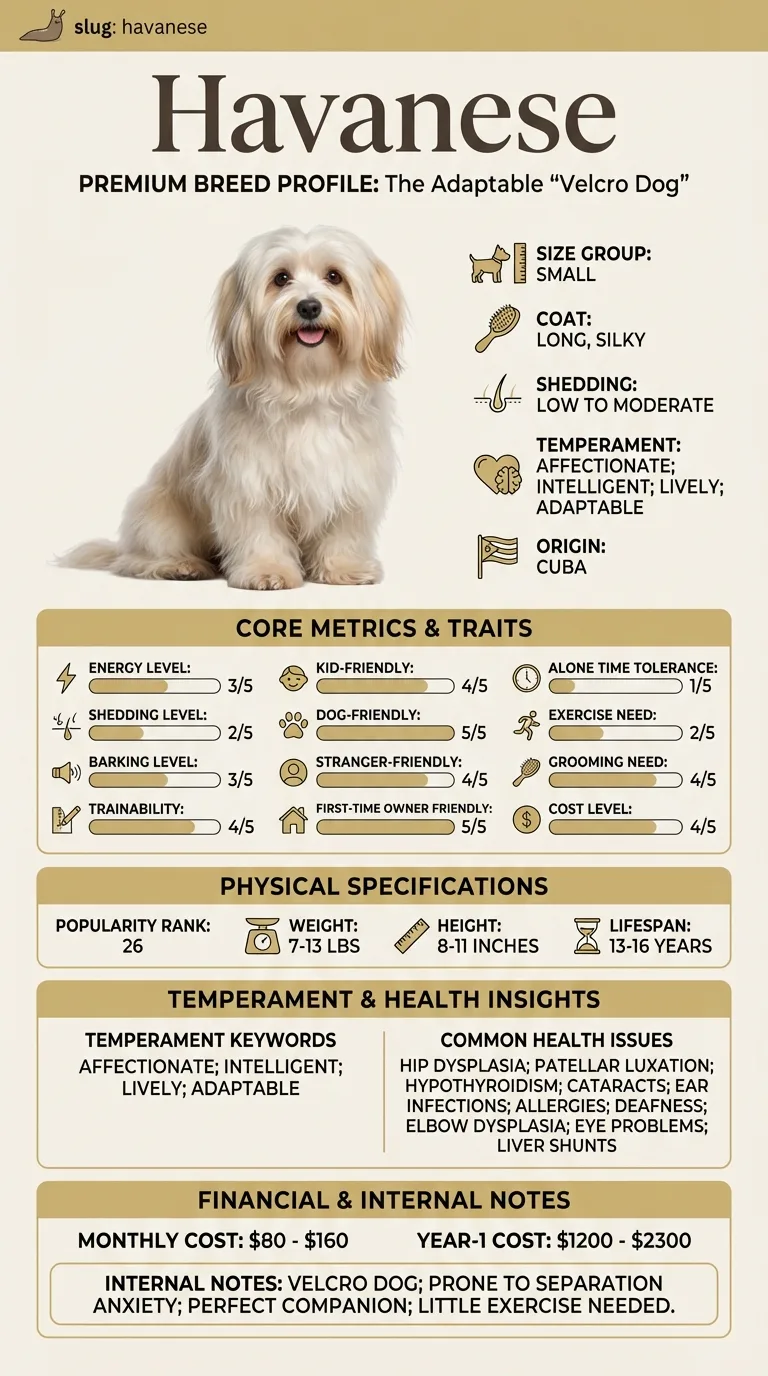
Hip dysplasia, elbow dysplasia, hypothyroidism and cataracts appear on both lists, which is unusual for breeds this far apart in size, and all four are worth raising with either breeder.
The Havanese's list is dominated by small-breed and companion-breed issues. Patellar luxation — a kneecap that slips out of its groove — is common and ranges from a dog that occasionally hops a step to one that needs surgery. Liver shunts are a serious congenital problem in small breeds where blood bypasses the liver, and they usually show up early as a poorly growing puppy, unusual neurological behaviour after meals or repeated illness; bile acid testing is the diagnostic route. Deafness appears on the list and is screenable. Ear infections and allergies round it out, and dental disease is the ever-present small-dog issue that the list implies rather than states.
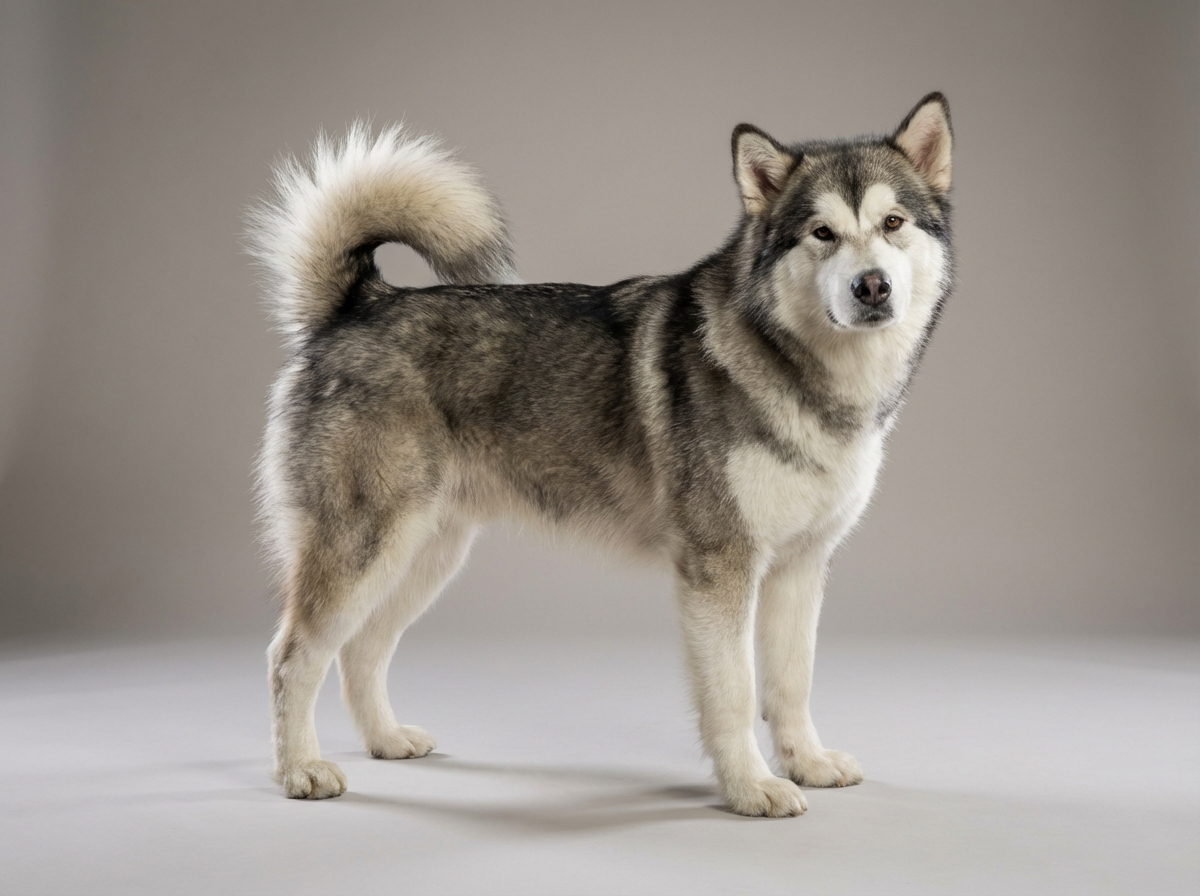
The Malamute's list is orthopaedic and northern-specific: hip and elbow dysplasia, bloat, epilepsy, progressive retinal atrophy, plus zinc-responsive dermatosis, inherited polyneuropathy and hereditary cataracts.
The practical difference for an owner is the shape of the risk. Malamute problems tend to be large, occasional and expensive — a bloat surgery, a hip. Havanese problems tend to be small, chronic and cumulative — a knee, an ear, a tooth, an eye, over sixteen years. Neither is cheaper in aggregate; they simply arrive on different schedules. Ask a Havanese breeder about patellar evaluation, eye certification, hearing testing and liver shunt history in the line, and ask a Malamute breeder for hip and elbow scores on both parents.