Costs
Which costs more to own, Bichon Frise or Bulldog?
The Bulldog, with a first-year cost of $2,500-5,000 versus the Bichon's $1,100-2,300.

Quick answer
Which costs more to own, Bichon Frise or Bulldog?
The Bulldog, with a first-year cost of $2,500-5,000 versus the Bichon's $1,100-2,300.
Bichon Frise or Bulldog (English)? On paper they differ most on grooming need, and on the scales Bulldog (English) is the heavier at 40–50 lbs. Here is how the two compare on everything that shapes an ordinary week.
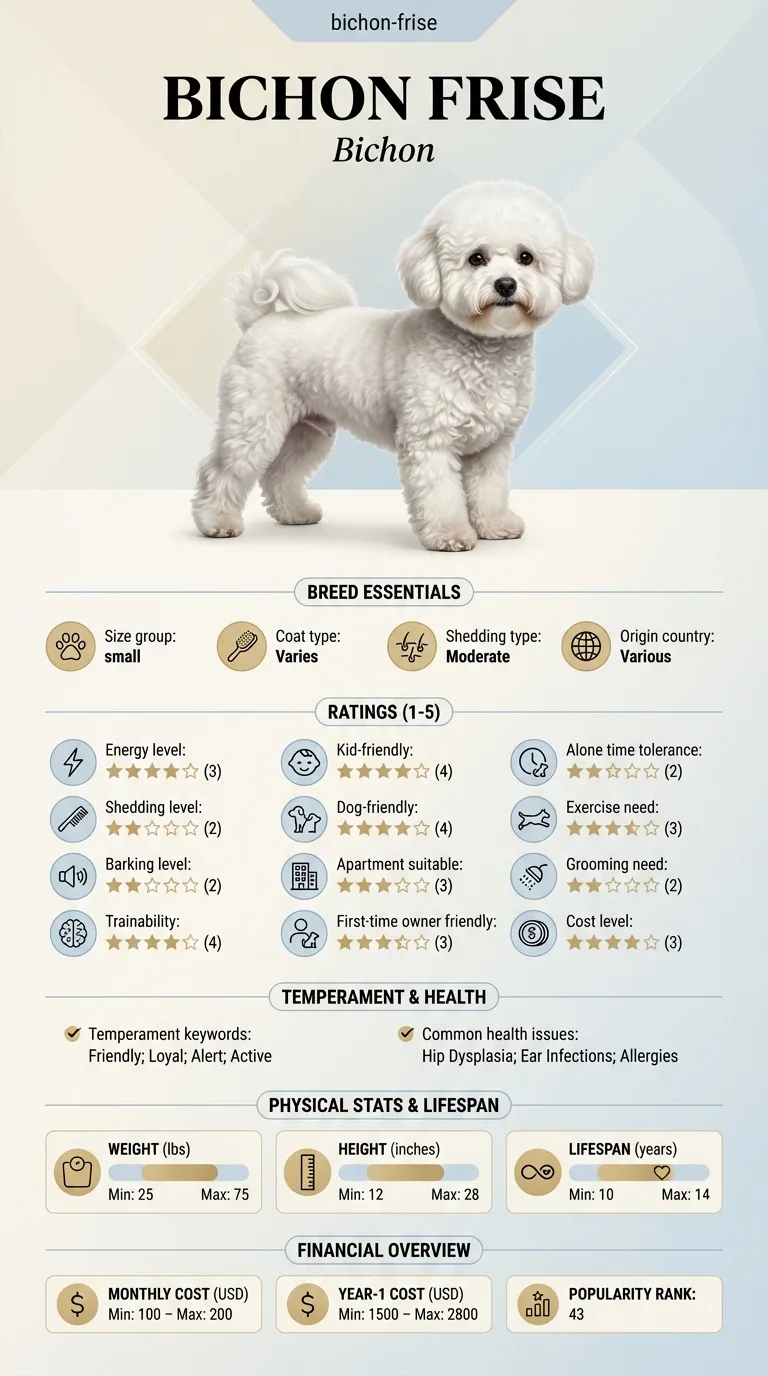
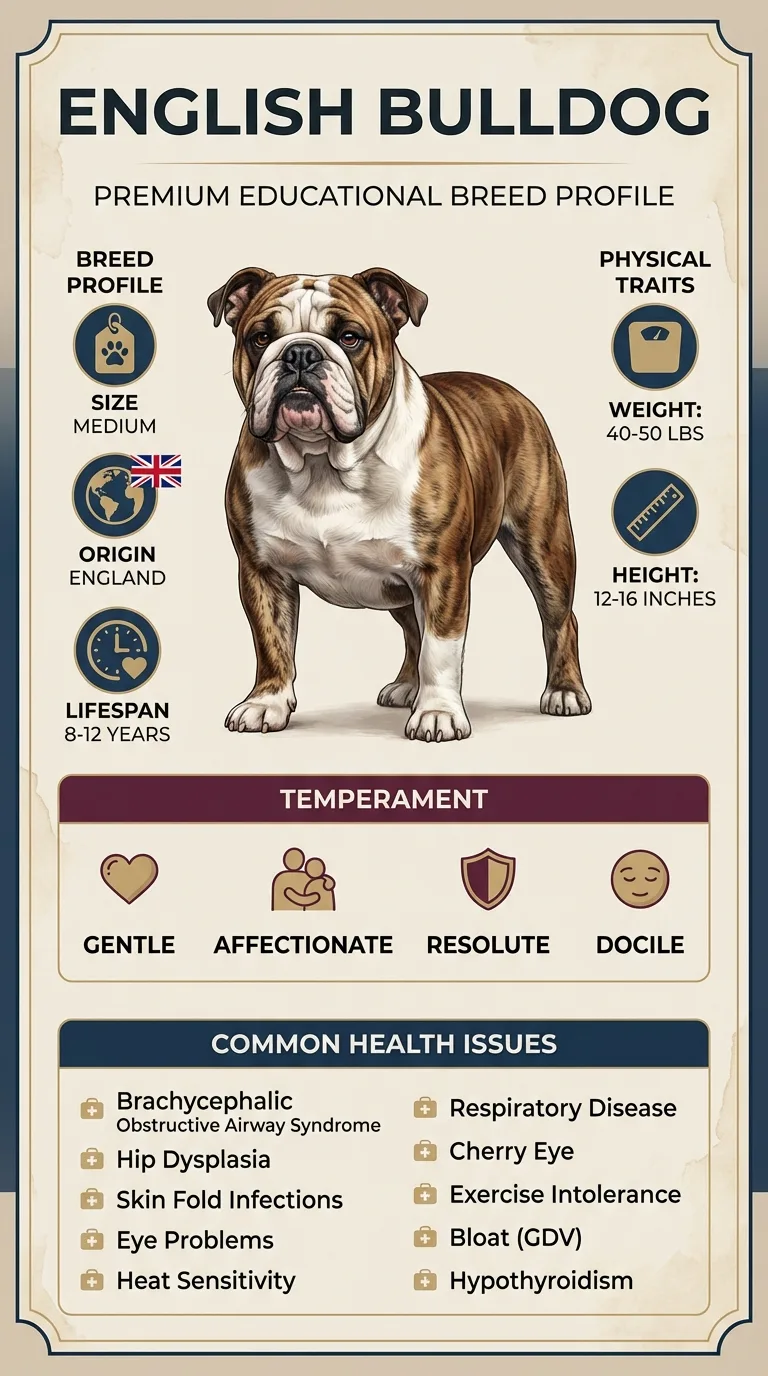
This is for someone already down to Bichon Frise and Bulldog (English) and deciding between them. For this pair the decision usually turns on grooming need and shedding, so those are covered first and in most detail. Both rate 5/5 for flats, so housing does not settle this one. There is no origin story here — only what changes about your week.
Between Bichon Frise and Bulldog (English), grooming need is what separates them, and Bulldog (English) is the lower-effort dog of the two to keep.
Choose Bichon Frise if this is your first dog, shedding is a problem in your house and a smaller dog suits your car, your home or your back.
Choose Bulldog (English) if you do not want a standing grooming appointment, the dog will be alone during the working day and there are young children at home.
| Feature | bichon frise | bulldog | Winner |
|---|---|---|---|
| Size class | small | medium | Equal |
| Weight | 12–18 lbs | 40–50 lbs | Equal |
| Height | 9–12 in | 12–16 in | Equal |
| Lifespan | 14–15 years | 8–12 years | bichon frise |
| Exercise need | Low (2/5) | Low (2/5) | Equal |
| Grooming need | Very high (5/5) | Moderate (3/5) | bulldog |
| Shedding | Very low (1/5) | Moderate (3/5) | bichon frise |
| Energy level | Moderate (3/5) | Low (2/5) | Equal |
| Barking | Moderate (3/5) | Low (2/5) | bulldog |
| Apartment suitability | Very high (5/5) | Very high (5/5) | Equal |
| Good for first-time owners | High (4/5) | Moderate (3/5) | bichon frise |
| Tolerates being alone | Low (2/5) | Moderate (3/5) | bulldog |
| Trainability | Moderate (3/5) | Moderate (3/5) | Equal |
| Good with kids | High (4/5) | Very high (5/5) | bulldog |
| Good with other dogs | High (4/5) | High (4/5) | Equal |
| Friendly to strangers | High (4/5) | High (4/5) | Equal |
| Cost level | Moderate (3/5) | Very high (5/5) | bichon frise |
| Coat | Curly, dense double coat | Short, smooth | Equal |
| Origin | Various | England | Equal |
| Typical monthly cost | $80–$150 | $150–$350 | Equal |
| Typical first-year cost | $1,100–$2,300 | $2,500–$5,000 | Equal |
The English Bulldog outweighs the Bichon Frise substantially, 40-50 lbs versus 12-18 lbs, while standing only modestly taller at 12-16 inches against the Bichon's 9-12 inches, giving the Bulldog its characteristic low, wide, heavily-built frame rather than extra height. Both are marked tie on size class formatting, but the Bulldog's dense, muscular body and distinctive brachycephalic skull shape make it a very different physical presence than the light, curly-coated Bichon. That low center of gravity and stocky build is part of what limits the Bulldog's exercise tolerance, discussed further below.
Exercise need ties at Low (2/5) for both breeds, but energy level actually favors the Bichon at Moderate (3/5) against the Bulldog's Low (2/5), this is one breed where low exercise need reflects genuine physical limitation rather than a companionable temperament choice. The Bulldog's Gentle, Docile nature and brachycephalic airway mean strenuous activity, heat, or humidity can be genuinely dangerous, not just undesirable. The Bichon's Playful energy, while still moderate, comes from an unrestricted respiratory system that can handle more exertion if the owner wants to offer it.
The Bichon Frise's Very high (5/5) grooming need outpaces the Bulldog's Moderate (3/5), though the Bulldog's short coat still requires attention to its distinctive skin folds, which need regular cleaning to prevent infection, a maintenance task the coat-focused grooming score doesn't fully capture. Shedding favors the Bichon, Very low (1/5) versus Moderate (3/5) for the Bulldog. Between the two, the Bichon's coat work happens mostly at the groomer, while the Bulldog's happens at home in the form of wrinkle care.
Both breeds tie at Very high (5/5) for apartment suitability, and the Bulldog's naturally low energy and low exercise drive genuinely suit compact living once heat and humidity are managed. Barking favors the Bulldog, Low (2/5) against the Bichon's Moderate (3/5), Bulldogs are famously undemonstrative vocally. The Bulldog also tolerates being alone slightly better, Moderate (3/5) versus the Bichon's Low (2/5), rounding out a picture where the calm, Docile Bulldog may actually be the quieter, more independent apartment companion of the two.
Trainability ties at Moderate (3/5) for both breeds, and first-time-owner suitability slightly favors the Bichon, High (4/5) versus the Bulldog's Moderate (3/5). The Bulldog's Resolute, Docile temperament can translate to a stubborn streak during training sessions, resolute cuts both ways, while the Bichon's Cheerful, Affectionate disposition tends to be more eager to please. Neither breed presents major training difficulty, but a Bulldog's health-driven exercise limitations mean training sessions should stay short and avoid overheating the dog.
The Bulldog rates Very high (5/5) with kids, edging out the Bichon's already strong High (4/5), consistent with its long history as a patient family companion reflected in its Gentle, Affectionate temperament traits. Both tie at High (4/5) for getting along with other dogs and friendliness to strangers. Families drawn to a calm, unbothered presence around rowdy children may find the low-energy, Docile Bulldog an especially good match, provided supervision accounts for the breed's physical limitations rather than temperament concerns.
This is one of the starkest health contrasts in the comparison: the Bichon Frise's 14-15 year lifespan roughly doubles the Bulldog's 8-12 years, and the Bulldog's ten-item health list, Brachycephalic Obstructive Airway Syndrome, Hip Dysplasia, Skin Fold Infections, Heat Sensitivity, Respiratory Disease, Cherry Eye, Exercise Intolerance, Bloat (GDV), and Hypothyroidism, reflects a breed with substantial, well-documented structural health burdens tied directly to its flat face and heavy build. The Bichon's five-item list is shorter and generally more manageable. Anyone considering a Bulldog should budget significant ongoing veterinary attention as a near-certainty rather than a possibility.
The Bulldog is markedly more expensive to keep: Very high (5/5) cost level against the Bichon's Moderate (3/5), with monthly costs of $150-350 versus $80-150 and first-year costs of $2,500-5,000 versus $1,100-2,300, more than double the Bichon's entry cost in year one. That premium traces directly to the Bulldog's health list: skin fold care, respiratory monitoring, and treatment for conditions like BOAS and Cherry Eye add up fast. Prospective Bulldog owners should treat that first-year figure as a realistic floor, not a worst case.
Bichon Frise weighs 12–18 lbs and lives 14–15 years; Bulldog (English) weighs 40–50 lbs and lives 8–12 years. The two diverge most on grooming need, shedding and cost level. They are level on apartment suitability, good with other dogs and exercise need, so those cannot decide it. Where the table declares a winner it means less work for the owner, nothing more; descriptive rows are left as ties on purpose. The value here is in the differences between the two columns; treat any single score as approximate.

Their extensive health list, including Brachycephalic Obstructive Airway Syndrome, Skin Fold Infections, Cherry Eye, and Bloat (GDV), drives ongoing veterinary costs, pushing typical first-year spending to $2,500-5,000 versus the Bichon Frise's $1,100-2,300.
The Bichon Frise, at 14-15 years, nearly double the Bulldog's typical 8-12 year lifespan.
Yes, tied with the Bichon Frise at Very high (5/5) apartment suitability, and their Low exercise need suits compact living, though heat and humidity need careful management given their airway issues.
The Bulldog, rated Low (2/5) versus the Bichon Frise's Moderate (3/5).
Very good, they rate Very high (5/5), even ahead of the Bichon Frise's High (4/5), consistent with their Gentle, Docile temperament.
The Bulldog, rated Moderate (3/5) versus the Bichon Frise's Very high (5/5), though Bulldog owners still need to regularly clean skin folds.
Both share a Low (2/5) exercise need rating, but the Bulldog's limitation is physical, its brachycephalic airway makes exertion and heat genuinely risky, not just unnecessary.
The Bulldog, with a first-year cost of $2,500-5,000 versus the Bichon's $1,100-2,300.
The Bichon Frise, at 14-15 years versus the Bulldog's 8-12 years.
The Bulldog, rated Low (2/5) for barking.
The Bulldog, rated Very high (5/5), slightly ahead of the Bichon's High (4/5).
Secure checkout on Stripe. We never see your card.
7-day money-back guarantee. Instant access.
Health information here is general and is not veterinary advice. If your dog shows pain, sudden behaviour change, or worsening symptoms, consult a licensed veterinarian.
Some links on this site are affiliate links. We may earn a commission at no extra cost to you, and we only suggest products we believe are helpful for dog owners.
We research and check what we publish, but we do not warrant that any figure, date, price, or statement is accurate, complete, or current, and we accept no liability for any loss, cost, injury, or other harm arising from the use of this site. Use it as one reference among several. You remain responsible for your own decisions and for your dog's care - confirm anything that matters with a licensed veterinarian or another qualified professional before you act on it. Full disclaimer.
Match your lifestyle to the right dog.
Take quizNot sure which breed is right for you? Take our 2-minute quiz to find out.
Take the quiz