DogBreedCompass

Malamute or Bulldog: The Small Dog Costs More

A Bulldog weighs 40 to 50 pounds and costs $150 to $350 a month. An Alaskan Malamute weighs 75 to 110 pounds and costs $150 to $300. The 100-pound Arctic sled dog is the cheaper animal to keep, and almost none of the difference is food.

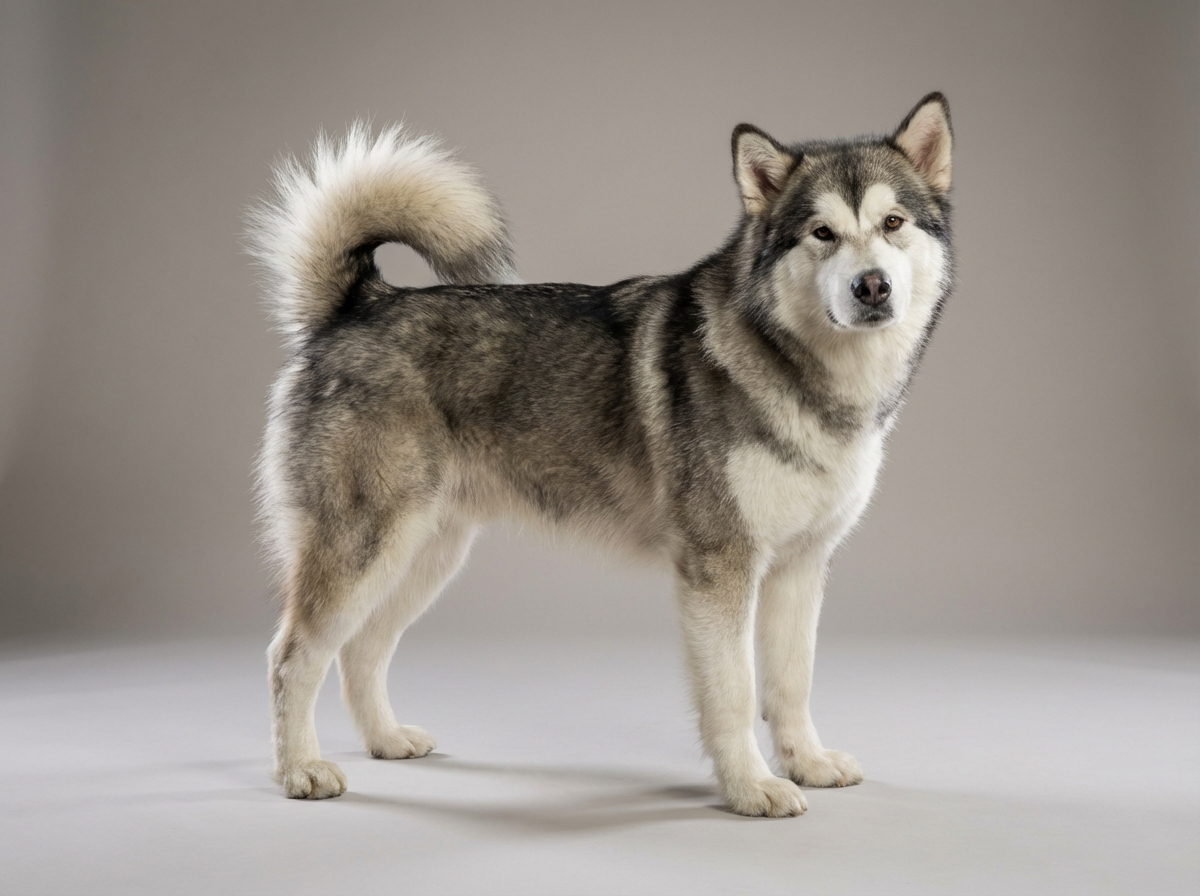
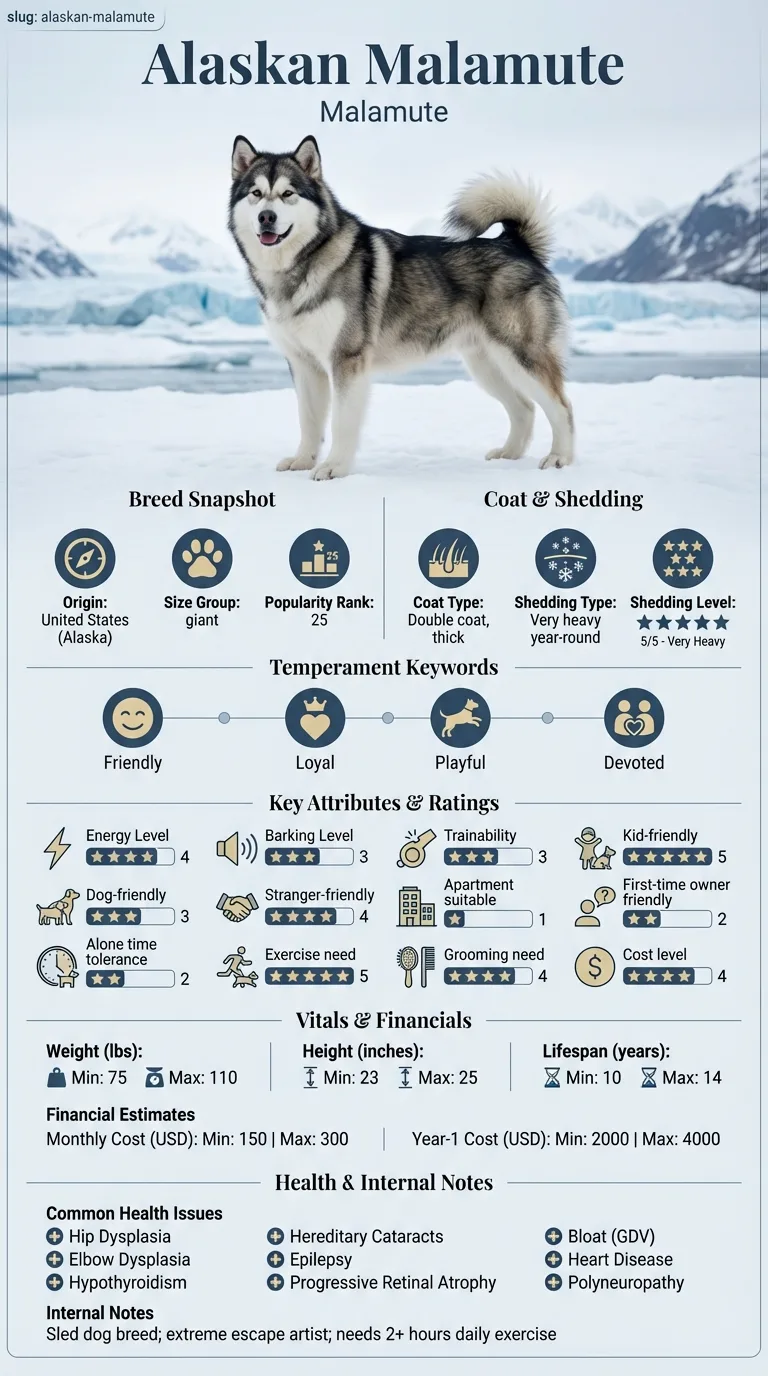
alaskan malamute infographic
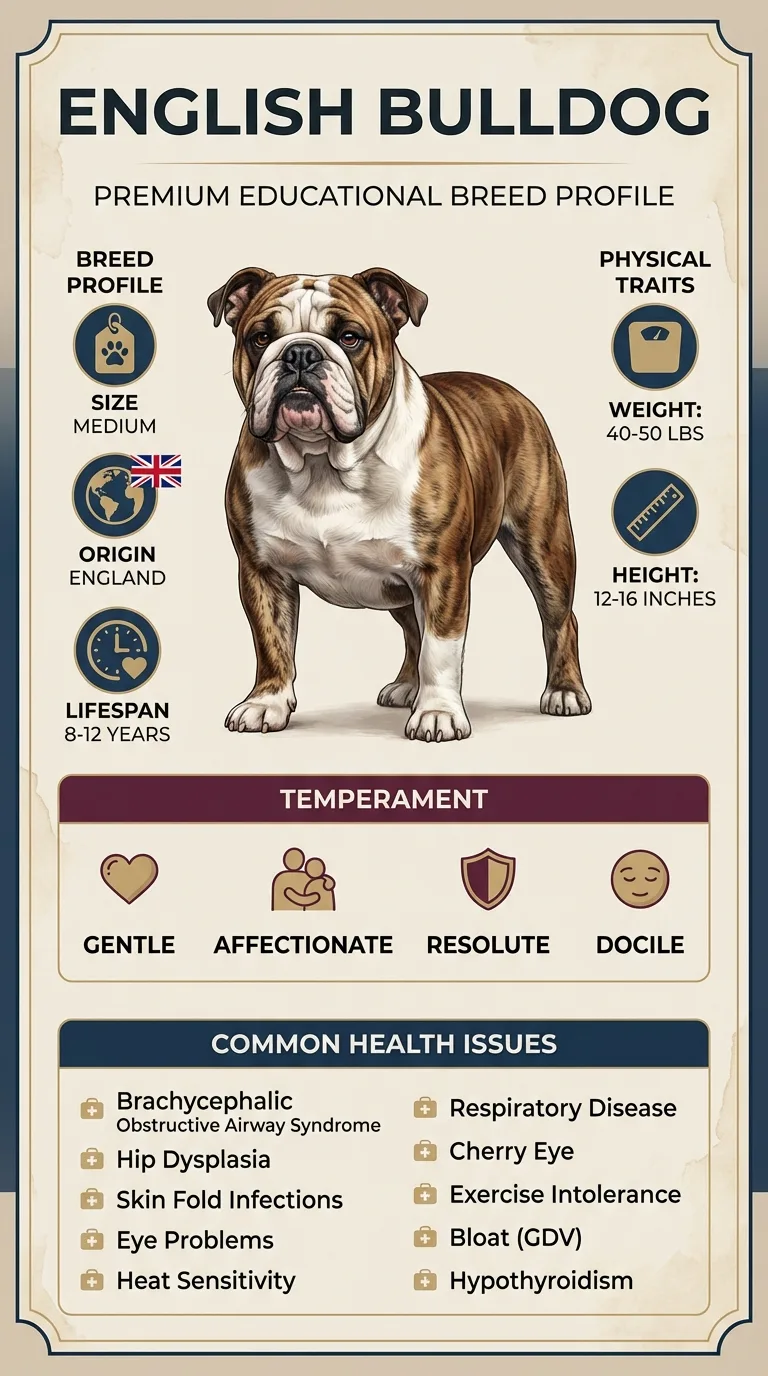
bulldog infographic

This page is for someone weighing a low-output companion against a high-output working breed, with cost as a live question. It covers where the Bulldog's money goes, exercise and heat limits, daily fold care, lifespan and containment.

Quick verdict

The Bulldog asks almost nothing of your legs and a great deal of your budget and your vet; the Malamute reverses both.

Choose alaskan malamute if...

Choose the Alaskan Malamute if you are athletic and want a structurally sound dog. It lives 10 to 14 years against the Bulldog's 8 to 12, costs less to run, can exercise in summer with sensible timing, and has no airway or fold problems. You are accepting 5/5 exercise, 5/5 shedding, 4/5 grooming and a 1/5 apartment rating.

Choose bulldog if...

Choose the Bulldog if you want a placid, exceptionally tolerant flat dog and can absorb the veterinary cost. It rates 5/5 for apartments and with children, 4/5 with other dogs and strangers, needs only 2/5 exercise and tolerates being alone at 3/5. You are accepting airway disease, real heat danger and daily fold care.

Head-to-head comparison

Featurealaskan malamutebulldogWinner
Weight75–110 lbs40–50 lbsEqual
Height23–25 in12–16 inEqual
Lifespan10–14 years8–12 yearsalaskan malamute
CoatThick double coatShort and smoothEqual
Grooming needHigh (4/5)Moderate (3/5)bulldog
SheddingVery high (5/5)Moderate (3/5)bulldog
Energy levelHigh (4/5)Low (2/5)Equal
Exercise needVery high (5/5)Low (2/5)bulldog
TrainabilityModerate (3/5)Moderate (3/5)Equal
BarkingModerate (3/5)Low (2/5)bulldog
Good with kidsVery high (5/5)Very high (5/5)Equal
Good with other dogsModerate (3/5)High (4/5)bulldog
Friendly to strangersHigh (4/5)High (4/5)Equal
Apartment suitabilityVery low (1/5)Very high (5/5)bulldog
Good for first-time ownersLow (2/5)Moderate (3/5)bulldog
Tolerates being aloneLow (2/5)Moderate (3/5)bulldog
Typical monthly cost$150–$300$150–$350alaskan malamute
Typical first-year cost$2,000–$4,000$2,500–$5,000alaskan malamute

Deep dive

Alaskan Malamute vs Bulldog: where the Bulldog's money goes

$150–$350 a month against $150–$300, and $2,500–$5,000 against $2,000–$4,000 in the first year. A dog half the weight, needing a fraction of the food, is the more expensive one at both ends of the range.

The explanation is that the Bulldog's cost is medical, structural and recurring. Skin folds need cleaning and periodically get infected. Ears get infected. Eyes need treatment, and cherry eye often needs surgery. Airway correction for nostrils and soft palate is common enough in the breed to be considered routine rather than exceptional.

Purchase price is high too, and part of the reason is production: many Bulldogs are delivered by caesarean because the breed's proportions make natural whelping difficult, and that is priced into every puppy.

Insurance sits near the top of the market for the breed, and airway and skin fold conditions are among the most commonly excluded as breed-related — which is exactly the cover you would want.

The Malamute's costs are food-heavy and predictable, with orthopaedic surgery and a bloat emergency as the expensive but uncertain risks.

Two hours against two gentle walks

Exercise intolerance appears as its own item on the Bulldog's condition list, which is unusual — most breed lists contain diseases rather than limitations.

The cause is brachycephalic obstructive airway syndrome: a shortened skull with a full complement of soft tissue produces narrowed nostrils, an elongated soft palate and often a narrow windpipe. Because a dog cools itself by moving air, the same anatomy restricts breathing and cooling at once.

The rules are firm rather than advisory. No exercise in the heat of the day between spring and autumn. A harness, never a collar. Strict weight control. Fans or air conditioning in summer. Never a parked car, even briefly. And the warning window is short — a change in the sound of the breathing means stop, not slow down.

The Malamute needs two hours a day and wants resistance: carting, scootering, canicross or loaded hikes. Its own heat limit is real but manageable by timing, because the problem is insulation rather than airflow.

In a hot climate both breeds are constrained. Only one of them is constrained by its own anatomy.

Daily folds against seasonal undercoat

Both rate above average for grooming and the work has nothing in common.

The Bulldog's 3/5 is mostly not about coat. Face and tail folds need wiping and — the part that matters — drying, every day, because trapped moisture in a fold reliably becomes an infection. Ears need checking. Teeth need attention, since the jaw shape crowds them. A Bulldog that smells is usually telling you about a fold.

The Malamute's 4/5 is entirely about coat and it is seasonal. It sheds constantly at 5/5 and blows its undercoat in sheets twice a year, and those weeks mean an undercoat rake and several long sessions. Between blows it needs very little. It never mats, never needs a groomer, and its coat should never be clipped.

So one dog needs five minutes every single day and the other needs several hours twice a year.

Which is easier depends entirely on whether you would rather have a small daily obligation or a large periodic one.

Two very sociable dogs

Children ties at 5/5, strangers ties at 4/5 and trainability ties at 3/5. Both are demonstrative breeds and neither guards anything — a Malamute will greet an intruder happily and a Bulldog will lean on him.

The Bulldog is genuinely placid: slow to take offence, largely unbothered by household chaos, and one of the more reliable family breeds available. Its 3/5 trainability is stubbornness rather than confusion — it has weighed the request against lying down and found in favour of lying down.

The Malamute is boisterous rather than placid, and its social complication is other dogs at 3/5, where same-sex intolerance is common and usually surfaces at social maturity around two years old.

Its other complication is containment, and it is a serious one. The breed's own notes describe an extreme escape artist: it digs, climbs, works at latches and travels once loose. A fence dug in at the base, secured gates and a microchip with current details are the baseline.

A Bulldog will not go anywhere. Its outdoor risk is heat and stairs rather than distance.

Two health lists, two different shapes

The Bulldog's list is long and mostly consequential to its build: brachycephalic obstructive airway syndrome, respiratory disease, heat sensitivity, skin fold dermatitis, cherry eye and other eye problems, hip dysplasia, exercise intolerance, hypothyroidism and bloat. Very little of it is bad luck.

That is why breeder selection matters more here than in almost any breed. Ask how the parents breathe under exertion rather than at rest, whether either has had airway surgery, how open the nostrils are, and whether the line whelps naturally.

The Malamute's list is systemic rather than structural: hip and elbow dysplasia, hypothyroidism, hereditary cataracts, progressive retinal atrophy, epilepsy, heart disease, bloat, inherited polyneuropathy and zinc-responsive skin disease. Polyneuropathy has a DNA test and belongs in any purchase conversation.

Both carry a real bloat risk and both households should know the signs — unproductive retching, a distending abdomen, restlessness — and both should be flagged to a vet as anaesthetic risks for different reasons.

On lifespan the Malamute is ahead at 10 to 14 years against 8 to 12, despite being much the heavier dog.

Alaskan Malamute vs Bulldog (English) at a glance

A Bulldog weighs 40 to 50 pounds and costs $150 to $350 a month. A Malamute weighs up to 110 pounds and costs $150 to $300. The hundred-pound Arctic sled dog is the cheaper animal to keep, and almost none of the difference is food — it is the Bulldog's recurring medical costs.

The Bulldog asks almost nothing of your legs, rating 2/5 for exercise and 5/5 for apartments, and a great deal of your budget and your vet, carrying airway disease and real heat danger. The Malamute reverses both: structurally sound and comparatively cheap to run, but needing 5/5 exercise, heavy seasonal shedding, and secure fencing against a breed known for escaping.

Choose the Malamute if you are athletic and want a structurally sound dog that lives longer, at 10 to 14 years against 8 to 12. Choose the Bulldog if you want a placid, exceptionally tolerant flat dog and can absorb the veterinary cost.

Frequently asked questions

Why does a Bulldog cost more than a Malamute?

Because its cost is medical and recurring rather than driven by food. It runs $150–$350 a month against the Malamute's $150–$300 despite weighing roughly half as much. Skin fold infections, ear and eye treatment, cherry eye surgery and airway correction are all common, and insurance sits near the top of the market.

How much exercise can a Bulldog have?

2/5 — two gentle walks a day, timed around temperature, against the Malamute's 5/5 and two hours of pulling work. Exercise intolerance is listed as a condition of the breed rather than a preference, because a compromised airway restricts cooling as well as breathing.

Which lives longer?

The Malamute, at 10 to 14 years against the Bulldog's 8 to 12, despite being much the heavier breed. The Bulldog's figure is driven by respiratory, dermatological and orthopaedic consequences of its build rather than by size.

What daily care does a Bulldog need?

Face and tail folds wiped and dried every day, because trapped moisture reliably becomes an infection, plus ear checks and attention to crowded teeth. It is five minutes daily rather than a weekly chore, and a Bulldog that smells is usually telling you about a fold.

Which is harder to contain?

The Malamute, by an enormous margin. Its own breed notes call it an extreme escape artist — it digs, climbs, works at latches and travels once loose. A Bulldog will not go anywhere; its outdoor risks are heat and stairs rather than distance.

Which is better for a flat?

The Bulldog at 5/5 against the Malamute's 1/5. It needs only 2/5 exercise, barks at 2/5 and tolerates being alone at 3/5. The one caveat is stairs — a Bulldog should not be jumping down them repeatedly, which matters in a building without a lift.

What should I ask a Bulldog breeder?

How the parents breathe under exertion rather than at rest, whether either has had airway surgery, how open their nostrils are, and whether the line whelps naturally rather than by routine caesarean. A breeder who treats a wide open nostril as a selling point is telling you something useful.

Quick answers

View more answers
Living

Malamute vs Bulldog: which should I choose?

The Bulldog if you want a placid flat dog and can absorb high veterinary costs. The Malamute if you are athletic, have space and a secured garden, and want a structurally sound dog that costs less to run.

Costs

How much does each cost per month?

The Bulldog runs $150–$350 a month and the Malamute $150–$300, with first-year totals of $2,500–$5,000 and $2,000–$4,000. The smaller breed is the more expensive one at both ends.

Health

Which handles heat better?

The Malamute, and its limit is manageable by timing because the problem is insulation. The Bulldog's problem is airflow, which no amount of scheduling removes — its warning window between panting and trouble is genuinely short.

Living

Which sheds more?

The Malamute at 5/5 against the Bulldog's 3/5. It sheds year-round and blows its undercoat in sheets twice a year, needing a rake and several long sessions. It never needs a groomer and should never be clipped.

Related DogBreedCompass guides

  • Alaskan Malamute breed guideThe Malamute profile covers exercise, containment and the breed's coat.
  • Bulldog breed guideThe Bulldog profile covers fold care, heat management and the breed's veterinary profile.
  • Malamute vs French BulldogThe French Bulldog is the smaller short-faced breed with a similar cost profile.
  • Akita vs Alaskan MalamuteThe Akita comparison sets out how the Malamute differs from a Japanese guardian breed.
  • Bulldog heat sensitivityHeat sensitivity is the risk most likely to cause a genuine emergency in a Bulldog.
  • Malamute bloat and GDVBloat is a genuine emergency in both breeds and every owner should know the signs.

Related guides

Important reminder

Health information here is general and is not veterinary advice. If your dog shows pain, sudden behaviour change, or worsening symptoms, consult a licensed veterinarian.

Some links on this site are affiliate links. We may earn a commission at no extra cost to you, and we only suggest products we believe are helpful for dog owners.

Find Your Perfect Breed

Match your lifestyle to the right dog.

Take quiz

Find your match

Not sure which breed is right for you? Take our 2-minute quiz to find out.

Take the quiz