DogBreedCompass

Malamute or Miniature Schnauzer: One Sheds Everything, One Sheds Nothing

Both breeds carry a double coat and both rate 4/5 for grooming. The Malamute sheds at 5/5 and the Miniature Schnauzer at 1/5, which is the entire range of the scale between two dogs built the same way.

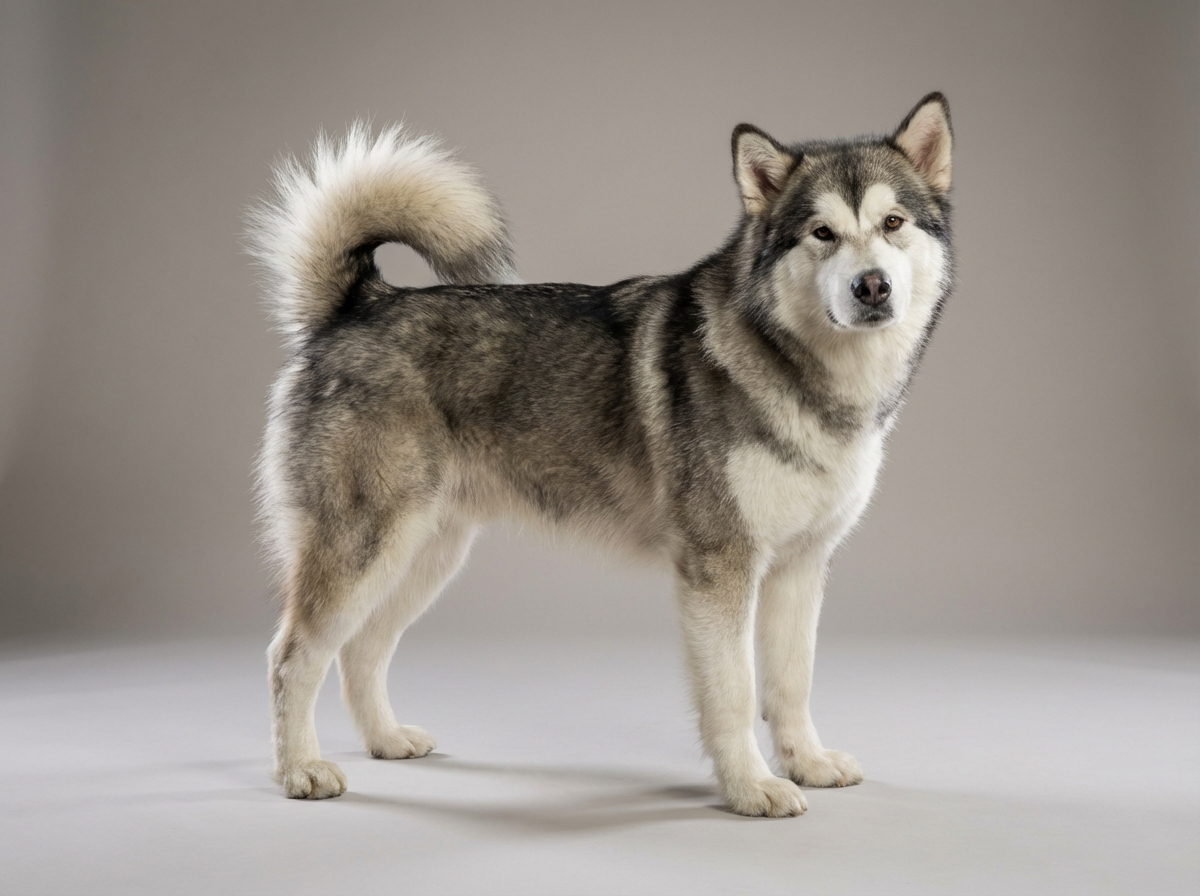
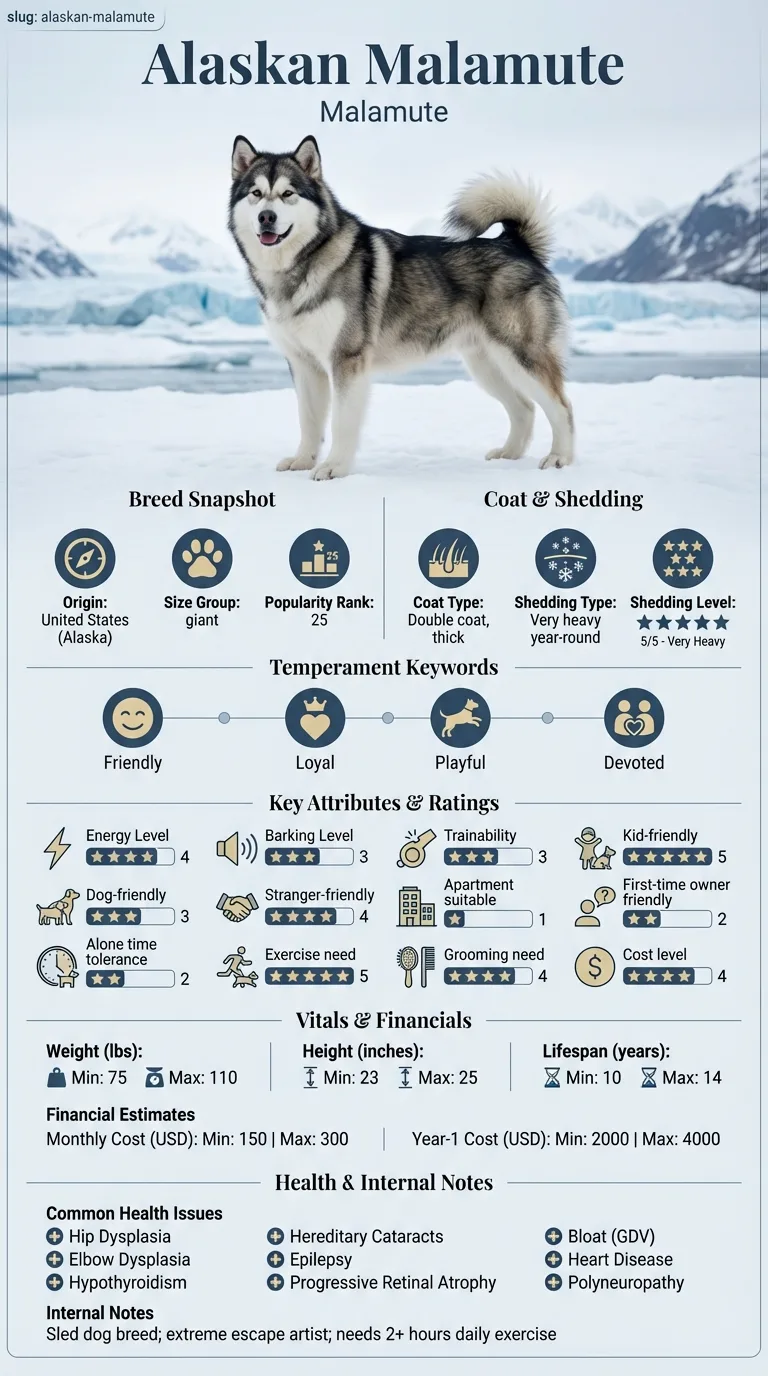
alaskan malamute infographic
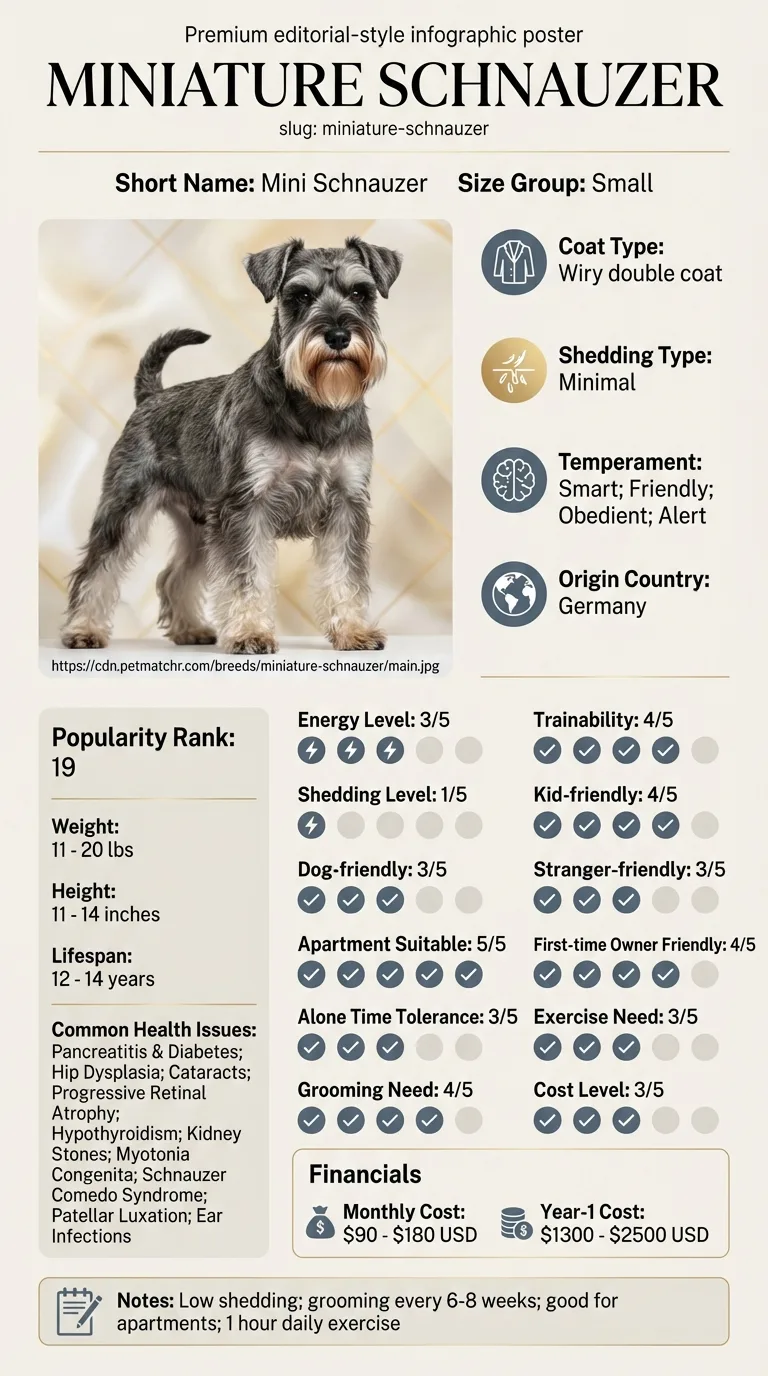
miniature schnauzer infographic

This page is for a household that wants a low-shedding dog with real character, and for anyone weighing a 15 pound flat-friendly terrier-adjacent breed against a 95 pound working dog with a two-hour daily requirement.

Quick verdict

The Miniature Schnauzer fits almost any home and drops almost no hair, but it is loud at 4/5, needs a standing grooming appointment, and carries a dietary health risk that shapes what it can eat for life.

Choose alaskan malamute if...

Choose the Alaskan Malamute if you have cold weather, a secure garden and two hours a day for physical work, you want a large dog that is genuinely warm with children and strangers, and hair in the house does not bother you.

Choose miniature schnauzer if...

Choose the Miniature Schnauzer if you live in a flat or small house, want a smart, alert, minimally shedding companion that tolerates a workday at 3/5, and you can budget for a groom every six to eight weeks and a low-fat diet.

Head-to-head comparison

Featurealaskan malamuteminiature schnauzerWinner
Weight75–110 lbs11–20 lbsEqual
Height23–25 in11–14 inEqual
Lifespan10–14 years12–14 yearsminiature schnauzer
CoatThick double coatWiry double coatEqual
Grooming need4/54/5Equal
Shedding5/5 — very heavy year-round1/5 — minimalminiature schnauzer
Energy level4/53/5miniature schnauzer
Exercise need5/53/5miniature schnauzer
Trainability3/54/5miniature schnauzer
Barking3/54/5alaskan malamute
Good with kids5/54/5alaskan malamute
Good with other dogs3/53/5Equal
Friendly to strangers4/53/5alaskan malamute
Apartment suitability1/55/5miniature schnauzer
Good for first-time owners2/54/5miniature schnauzer
Tolerates being alone2/53/5miniature schnauzer
Typical monthly cost$150–300$90–180miniature schnauzer
Typical first-year cost$2,000–4,000$1,300–2,500miniature schnauzer

Deep dive

Two double coats at opposite ends of the shedding scale

It is worth being precise about why two double-coated dogs land at 5/5 and 1/5, because the answer explains the whole grooming difference.

A Malamute's outer coat is coarse and its undercoat is dense wool. The undercoat is designed to be renewed — it grows in for winter and releases in spring, and the release is dramatic. Rated very heavy year-round with two annual blows, the coat sheds into the house continuously and in sheets twice a year. The management is mechanical: an undercoat rake taken to the skin two or three times a week, ten to fifteen minutes, more during a blow. No appointments, no cost beyond a rake and a vacuum, and an absolute prohibition on clipping.

A Miniature Schnauzer's outer coat is wiry and stiff and grips its own dead hair rather than releasing it. The undercoat is soft and sits beneath. Because the dead hair stays put, the dog sheds almost nothing — and the coat keeps growing, thickening and eventually matting if nothing removes the dead layer. That removal is the groomer's job every six to eight weeks, by hand-stripping for a coat kept harsh and correct, or by clipping for a pet coat kept simple. Clipping softens the texture permanently and lightens the colour, which most pet owners accept without complaint.

Between appointments the Schnauzer's furnishings are the daily work. The beard, eyebrows and leg hair are longer and softer than the body coat, and they mat fastest. The beard also collects water, food and mud and delivers all three to whatever the dog leans on. A comb through the beard and legs every day or two is the small routine that keeps the appointments simple.

The honest summary: the Malamute costs you cleaning, the Schnauzer costs you money and a diary entry.

Pancreatitis and fat: the Schnauzer's defining health constraint

Pancreatitis and diabetes head the Miniature Schnauzer's health list, and that placement is not arbitrary. The breed is strongly associated with elevated blood fats, and a dog with high circulating triglycerides is at real risk of pancreatitis — an inflamed pancreas, which is painful, sometimes life-threatening, and prone to recurring once it has happened.

What that means day to day is a genuine dietary constraint rather than general good practice. Fatty table scraps, sausage, cheese, buttered toast and the trimmings off a roast are not harmless treats for this breed. Many Schnauzers do best on a deliberately low-fat diet for life, and owners of affected dogs learn to read fat percentages on food labels. The warning signs of an episode are vomiting, a hunched posture, abdominal pain and refusal to eat, and it is a same-day veterinary matter rather than something to sleep on.

Repeated pancreatic damage is one of the routes to diabetes, which is why the two conditions appear together on the list. Diabetes in a small dog is manageable but it means twice-daily insulin, fixed feeding times and regular monitoring for the rest of the dog's life.

The rest of the Schnauzer list carries other specifics worth knowing: calcium oxalate bladder and kidney stones, which present as straining, frequent urination or blood and can become an emergency if a stone obstructs; Schnauzer comedo syndrome, a benign but persistent skin condition producing blackhead-like bumps along the spine; myotonia congenita, a rare inherited muscle-stiffness disorder with a DNA test; and the usual small-breed patellar luxation.

The Malamute's list runs orthopaedic and northern instead — hip and elbow dysplasia, bloat, zinc-responsive dermatosis, inherited polyneuropathy — with hypothyroidism, cataracts and progressive retinal atrophy shared between the two breeds.

Barking 4/5 against 3/5, and what a flat-friendly rating hides

The Schnauzer rates 5/5 for apartment suitability, which makes it look like the obvious choice for a flat. Its 4/5 barking rating is the qualification that belongs next to it.

The Miniature Schnauzer was developed in Germany as a farm ratter and general-purpose small guard, and alertness was the point. It notices things — the lift, the corridor, footsteps on the stairs, a bag rustling two floors down — and it tells you about each one. At 3/5 with strangers it is watchful rather than social, and that combination of alert temperament and territorial instinct is what produces the noise.

This is trainable, more so than in most vocal breeds, because at 4/5 trainability the Schnauzer takes direction well. A reliable quiet cue, blocked visual access to windows and doorways, and a properly exercised dog make an enormous difference. But the tendency is baked in and it will never be a silent breed.

The Malamute's 3/5 is a different noise profile in a different building. Malamutes bark comparatively little and howl instead, in long carrying notes, and they hold conversations in a range of grumbles and woos. In a block of flats this is worse than a Schnauzer, but the Malamute should not be in a block of flats — its 1/5 apartment rating is about the two-hour exercise requirement rather than about noise.

On tolerating solitude the Schnauzer is the better bet at 3/5 against 2/5, which for a small breed is unusually good and reflects its independent farm-dog history. It is not an all-day dog, but a normal working day with exercise either side is within range for many of them.

3/5 against 5/5 and two different kinds of energy

The Schnauzer's 3/5 exercise rating and its own note of about an hour daily make it one of the better-balanced small breeds — enough activity to be interesting, little enough to be sustainable.

That hour is best split. A walk in the morning, a walk in the evening, and something for the brain in between: this is a smart, busy dog that responds well to training games, scent work and puzzle feeders. An under-stimulated Schnauzer becomes a barking Schnauzer, which loops directly back to the previous section. It also retains a working ratter's prey drive, so squirrels, cats it does not live with, and anything small and fast will trigger a chase, and off-lead recall needs proper work.

The Malamute's 5/5 has no small version. Two hours minimum with physical resistance — a pack, a harness, a rig, steep ground, snow — and no indoor or bad-weather substitute. In a warm climate the Arctic coat forces the routine to first and last light for months. Under-exercised, it digs, chews and works on the fence, and its own notes call it an extreme escape artist.

The practical difference is what happens on a bad week. A Schnauzer owner with flu can get away with short walks and indoor games for a few days. A Malamute owner cannot, and that non-negotiability is the single most common reason the breed ends up rehomed.

On cost the Schnauzer is cheaper at $90–180 a month against $150–300, with a first year of $1,300–2,500 against $2,000–4,000 — though the six-to-eight-week grooming appointment across twelve to fourteen years narrows the lifetime gap more than most buyers expect.

Family fit, other animals and the honest recommendation

With children the Malamute leads 5/5 to 4/5. Both are good; the difference is that the Malamute is genuinely unbothered by handling while the Schnauzer is a small dog with terrier-adjacent opinions and does better with children old enough to be gentle. The physical caution reverses as usual — the Malamute is strong enough to knock a child over, the Schnauzer is small enough to be hurt by one.

With other dogs they tie at 3/5. The Schnauzer can be bold and same-sex intolerant in a way that is out of proportion to its size; the Malamute's tolerance narrows with same-sex adults. Neither is a natural dog-park breed.

With cats, neither is reliably safe. The Schnauzer's ratting background produces a real prey drive toward small fast animals, though a Schnauzer raised with a household cat usually manages. The Malamute's hunting drive is stronger and less negotiable, and most experienced owners treat cohabitation with small pets as permanently supervised.

On first-time ownership the Schnauzer's 4/5 against 2/5 is a fair reflection. It is trainable, portable, adaptable and forgiving of a beginner's inconsistency. The Malamute charges for the same errors in escapes and lost recalls.

The honest recommendation is that these two breeds rarely compete for the same household. If the shortlist genuinely contains both, the deciding question is whether your home and week can support a working breed at all. If it can, the Malamute offers something the Schnauzer cannot — an outdoor life with a large athletic dog. If it cannot, the Schnauzer is not a consolation prize; it is a sharp, funny, low-hair dog that will fit the life you actually have.

Alaskan Malamute vs Miniature Schnauzer at a glance

Both breeds carry a double coat and both rate 4/5 for grooming. The Malamute sheds at 5/5 and the Miniature Schnauzer at 1/5 — the entire range of the scale between two dogs built on the same double-coated design.

The Miniature Schnauzer fits almost any home and drops almost no hair, which makes it the practical choice for most households on that measure alone. What it carries instead is real noise, at 4/5 barking, a standing grooming appointment every six to eight weeks, and a dietary health risk that shapes what it can safely eat for life.

Choose the Malamute if you have cold weather, a secure garden, and two hours a day for physical work, you want a large dog that is genuinely warm with children and strangers, and hair in the house does not bother you. Choose the Miniature Schnauzer if you live in a flat and want a smart, minimally shedding companion, and you can budget for grooming and manage its diet carefully.

Frequently asked questions

Why does a non-shedding dog still rate 4/5 for grooming?

Because a wiry coat holds its dead hair rather than dropping it. That hair has to be removed by a groomer every six to eight weeks, by stripping or clipping, and the beard and leg furnishings need combing every day or two in between.

What is the Schnauzer's biggest health risk?

Pancreatitis, linked to the breed's tendency toward high blood fats, with diabetes as a downstream consequence. It means a genuinely low-fat diet for life and treating vomiting with a hunched posture as a same-day veterinary matter.

Which barks more?

The Miniature Schnauzer at 4/5 against 3/5. It was bred as a farm ratter and alert dog and it announces everything. It is trainable at 4/5, so a quiet cue and blocked window access help, but it will never be silent.

Which is better for a flat?

The Schnauzer at 5/5 against 1/5. It needs about an hour of activity a day and tolerates a workday at 3/5. The Malamute's two-hour requirement makes it unsuitable for a flat regardless of how quiet the building is.

Which sheds less?

The Miniature Schnauzer at 1/5 against the Malamute's 5/5 — the widest possible gap between two double-coated breeds. The Schnauzer's wiry outer coat grips dead hair instead of releasing it.

Which is cheaper to keep?

The Schnauzer at $90–180 a month against $150–300, and $1,300–2,500 in the first year against $2,000–4,000. Grooming appointments across a twelve to fourteen year life narrow the lifetime difference.

Are Miniature Schnauzers good with cats?

Cautiously. The breed was developed to kill rats, so prey drive toward small fast animals is real, though a Schnauzer raised alongside a household cat usually manages. The Malamute is the riskier of the two by a distance.

Quick answers

View more answers
Living

Malamute or Miniature Schnauzer: which should I choose?

The Schnauzer for a flat or small house — 5/5 for apartments, minimal shedding, workable for a first-time owner — as long as you accept the barking and the grooming schedule. The Malamute only with cold weather, secure fencing and two hours daily.

Costs

Which is cheaper month to month?

The Miniature Schnauzer at $90–180 against $150–300, with cost levels of 3/5 and 4/5. Its grooming appointments are the recurring cost that closes part of the gap.

Health

Does a Miniature Schnauzer need a special diet?

Often yes. The breed's tendency toward high blood fats and pancreatitis means many do best on a deliberately low-fat food for life, with fatty scraps and cheese kept off the menu entirely.

Behavior

Which tolerates a working day better?

The Schnauzer at 3/5 against 2/5, which is good for a small breed and reflects its independent farm-dog history. Neither is an all-day dog without exercise either side.

Related DogBreedCompass guides

  • Alaskan Malamute breed guideThe Malamute profile covers exercise load, coat raking and the containment work the breed requires.
  • Miniature Schnauzer breed guideThe Schnauzer profile covers coat options, grooming schedules and the breed's alert temperament.
  • excessive barking in Miniature SchnauzersA 4/5 barking rating in a flat-friendly breed is the complaint most new owners run into first.
  • cataracts in Miniature SchnauzersCataracts sit on both breeds' lists and are picked up through routine eye certification.
  • hypothyroidism in Alaskan MalamutesHypothyroidism is shared by both breeds and is easy to miss as gradual coat and weight change.
  • adopting a Miniature SchnauzerSchnauzers turn up in rescue regularly and an adult arrives with its coat type already settled.

Related guides

Important reminder

Health information here is general and is not veterinary advice. Dietary management, screening and individual risk should be discussed with your own veterinarian.

Some links on this site are affiliate links. We may earn a commission if you buy through them, at no additional cost to you.

Find Your Perfect Breed

Match your lifestyle to the right dog.

Take quiz

Find your match

Not sure which breed is right for you? Take our 2-minute quiz to find out.

Take the quiz