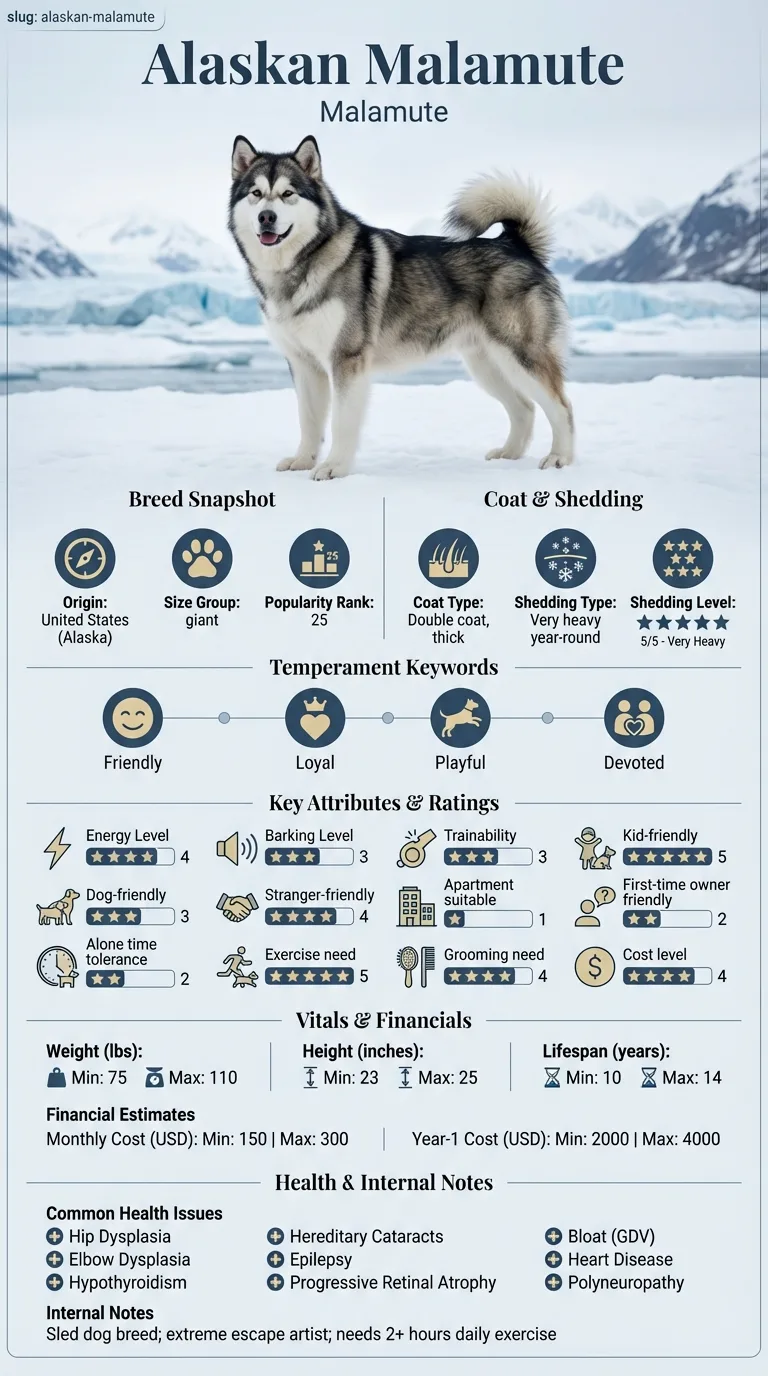
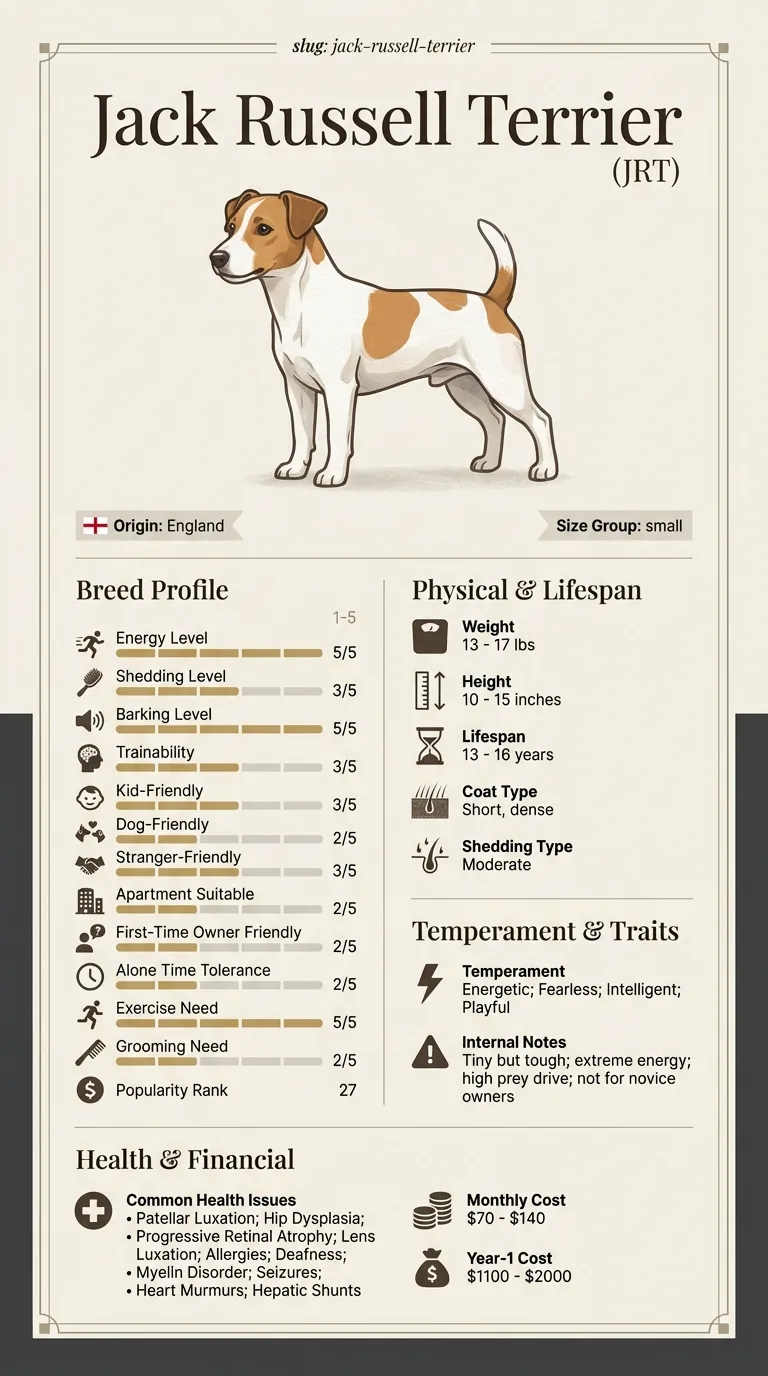
The Jack Russell is the cheapest breed compared against the Malamute anywhere on this site: cost level 2/5 against 4/5, $70–140 a month against $150–300, and $1,100–2,000 in the first year against $2,000–4,000. Food is negligible, grooming at 2/5 is a rubber mitt once a week, and weight-based veterinary items cost a fraction of what they do for a 90 pound dog.
It also lives longer — 13 to 16 years against 10 to 14, which is a long working life for a dog this active. Many JRTs are still chasing a ball at twelve.
The health lists overlap on hip dysplasia, progressive retinal atrophy and epilepsy or seizure activity. The Jack Russell adds patellar luxation, which is the most common orthopaedic complaint in the breed and shows as a skipping step; lens luxation, a painful displacement of the lens that is an urgent problem and has DNA testing available in the breed; congenital deafness, which is screenable; and hepatic shunts. The breed's small size and terrier hardiness mean many of these are the whole of its veterinary history — JRTs are broadly robust dogs.
The Malamute adds bloat, hypothyroidism, zinc-responsive dermatosis, inherited polyneuropathy and hereditary cataracts, plus the elbow dysplasia that comes with weight.
Ask a Jack Russell breeder specifically about lens luxation status and hearing testing, and ask a Malamute breeder for hip and elbow scores on both parents. Both questions are standard and both should get a straight answer.