People shopping for a big impressive dog often assume size does the deterring. With these two breeds it does not, and the ratings say so plainly.
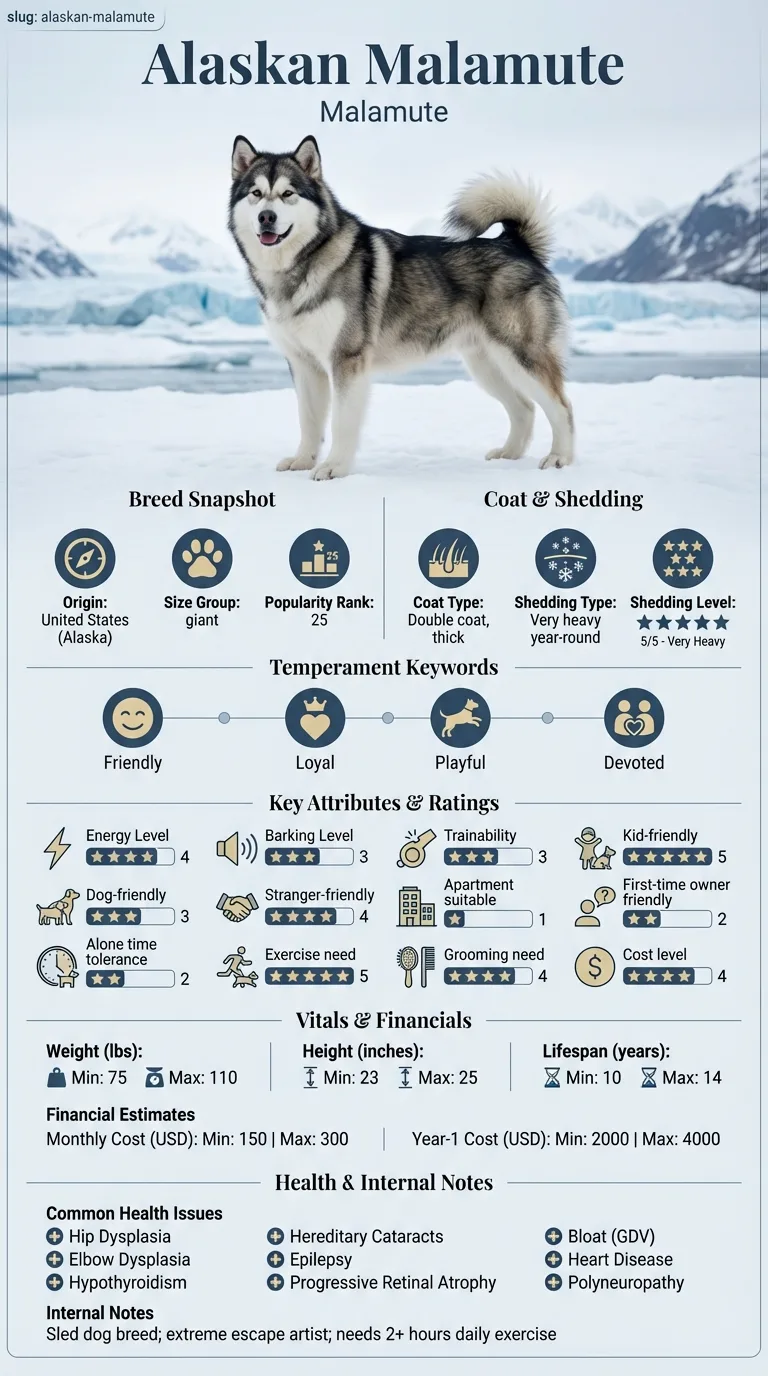
The Malamute scores 4/5 with strangers. Its temperament keywords are friendly, loyal, playful and devoted, and that friendliness is not selective. A Malamute typically meets an intruder the way it meets a delivery driver — with interest, a wagging tail and possibly an invitation to come inside. The breed will bark at a knock because something is happening, not because it has judged the visitor. Anyone buying a Malamute for protection is buying a very large greeter with a big voice and no follow-through.
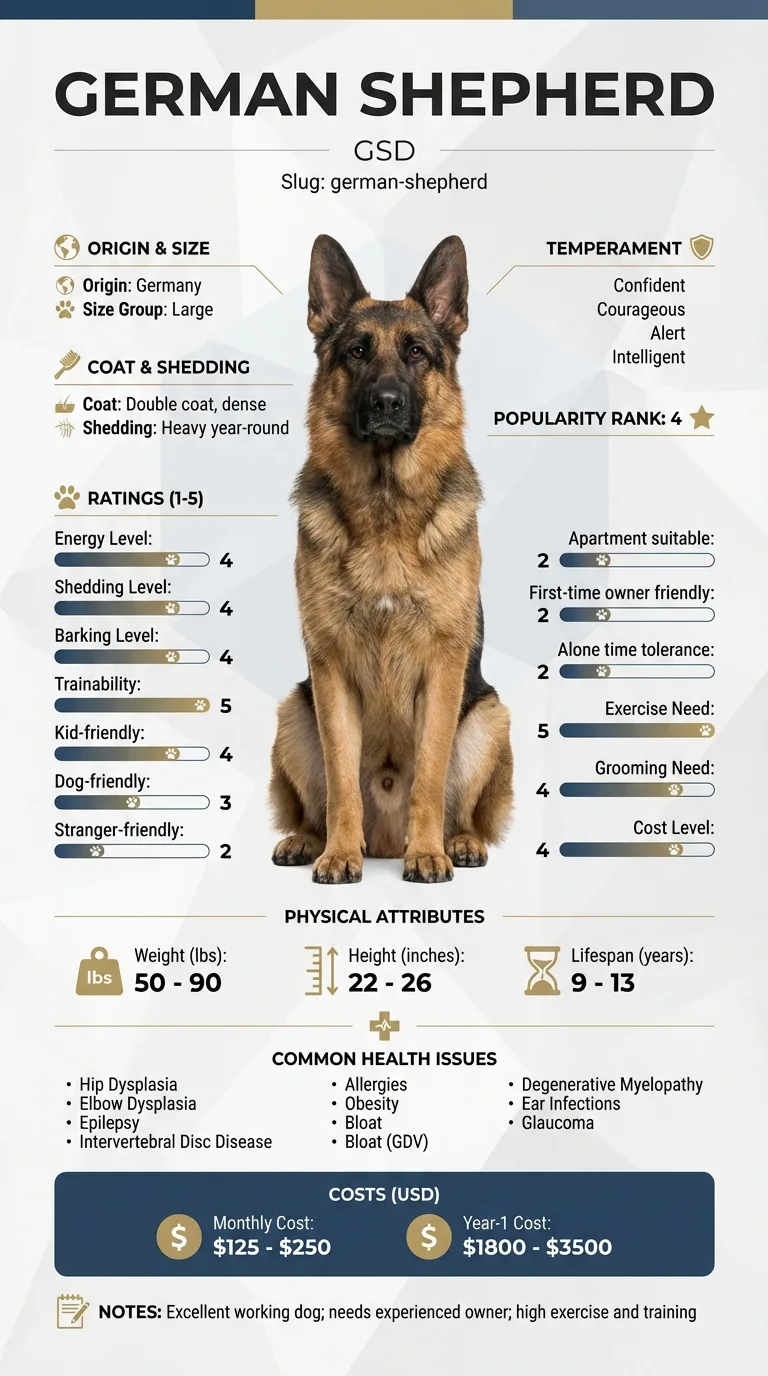
The German Shepherd scores 2/5, and that aloofness is functional. A well-bred, well-socialised Shepherd is reserved with people it does not know, watches rather than approaches, and positions itself between its family and an unknown. That is genuine deterrence, and it is also a genuine liability. A 2/5 stranger rating in an under-socialised dog does not stay neutral — it slides into suspicion, then fence-line reactivity, then a bite risk with a 50 to 90 pound dog attached to it. German Shepherd owners carry an obligation the Malamute owner does not: deliberate, repeated, positive exposure to new people, surfaces, noises and situations through the first eighteen months, and honest management afterward.
Check your homeowners policy before you commit either way. Some insurers list the German Shepherd among restricted breeds and some do not; the Malamute appears on fewer lists but is not absent from all of them. Barking is a second live issue — 4/5 for the Shepherd against 3/5 for the Malamute means the Shepherd is the more likely source of a complaint from a close neighbour, though the Malamute compensates with a howl that carries a great deal further than a bark.