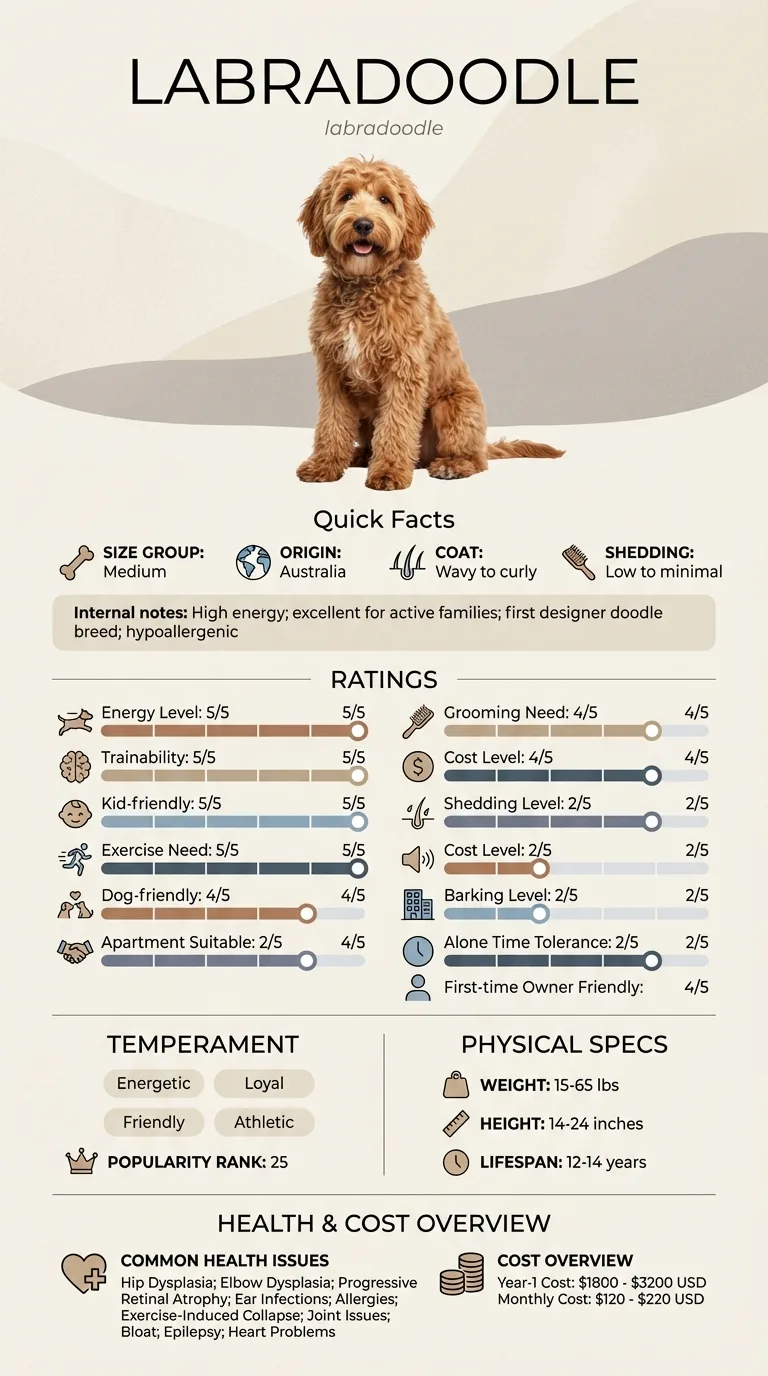
The Labradoodle's health list contains one entry that belongs in any conversation about a high-exercise dog: exercise-induced collapse.
EIC is an inherited condition carried through Labrador lines in which an affected dog, after five to twenty minutes of intense excited activity, develops a wobbling, weak-hindquartered gait and can collapse. Dogs usually recover within half an hour and appear normal afterwards, which is exactly why it is often mistaken for heat exhaustion or unfitness the first few times. It has a DNA test, the inheritance is recessive, and a responsible breeder will know the status of both parents. For a breed you intend to run, swim and train hard, this is the single most useful question to ask.
The rest of the Labradoodle list reflects both parents: hip and elbow dysplasia, joint issues, progressive retinal atrophy with DNA testing available on the Poodle side, ear infections and allergies driven by a drop-eared, moisture-trapping coat, plus bloat, epilepsy and heart problems. Ear cleaning is a routine job for this cross, not an occasional one.
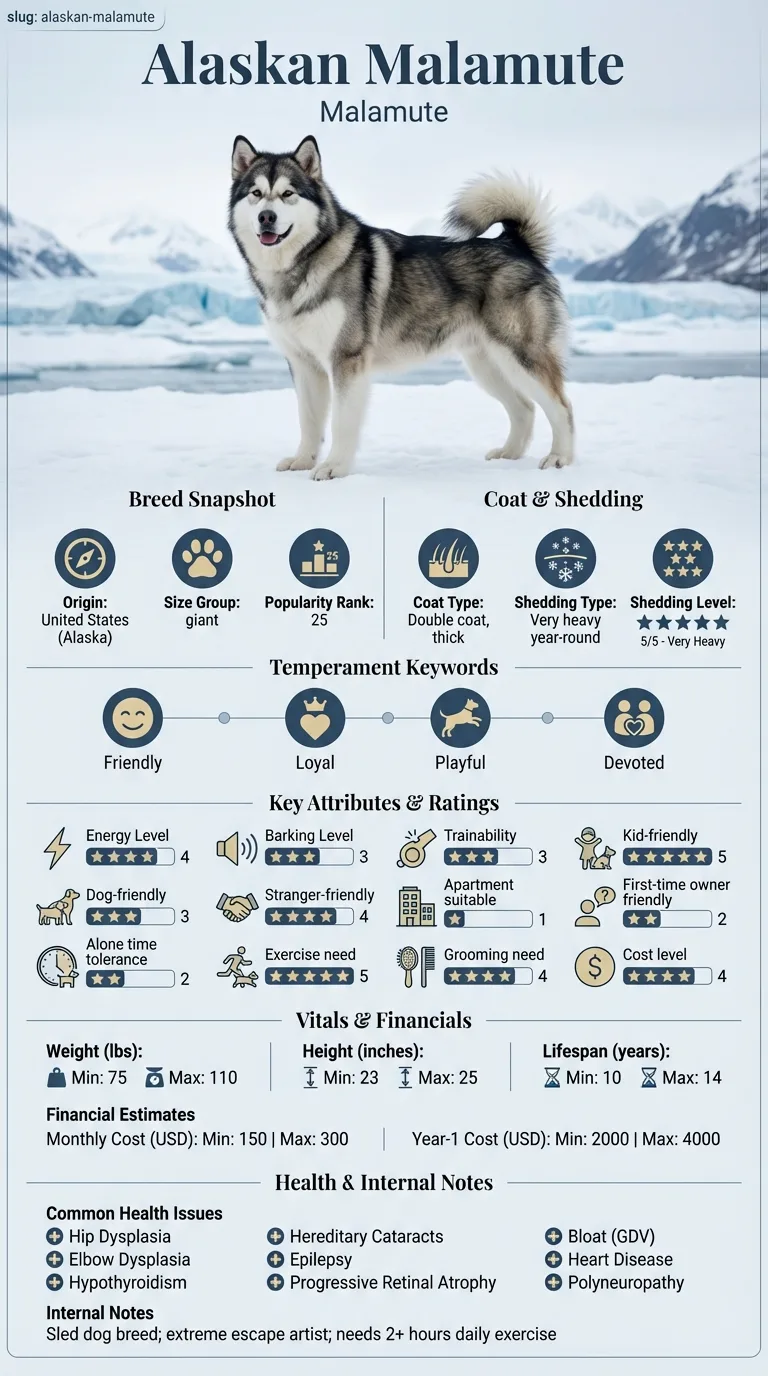
The Malamute shares hip dysplasia, elbow dysplasia, bloat, epilepsy and progressive retinal atrophy, and adds hypothyroidism plus three northern specifics: zinc-responsive dermatosis, inherited polyneuropathy and hereditary cataracts.
Both are deep-chested enough for bloat planning to be sensible — split meals, no hard exercise around feeding, and a known route to an out-of-hours clinic. Lifespan modestly favours the Labradoodle at 12 to 14 years against 10 to 14, with smaller crosses sitting at the top of that range.