Health
What is the first sign of PRA?
Night blindness. A dog that navigates the house fine but hesitates in a dark garden or in unfamiliar dim places.

Quick answer
What is the first sign of PRA?
Night blindness. A dog that navigates the house fine but hesitates in a dark garden or in unfamiliar dim places.
The first thing to go is night vision, and almost nobody notices, because a dog that hesitates in a dark garden is easy to explain away.
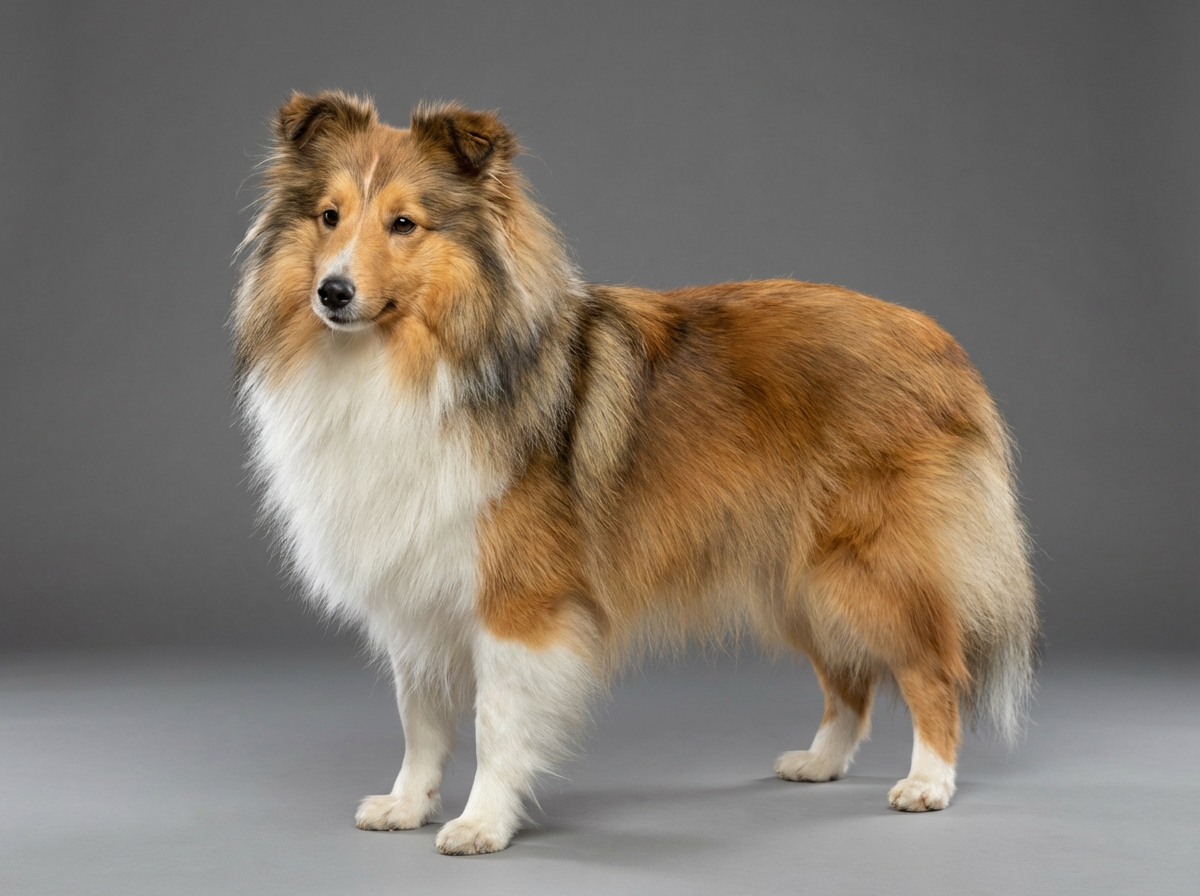
Owners of a middle-aged Sheltie who has become oddly reluctant to go out after dark, or who bumps into things only in unfamiliar places, and owners trying to understand how this differs from the eye condition their breeder tested for.
This guide is not medical advice. If your dog shows pain, sudden behavior change, or worsening symptoms, consult a licensed veterinarian.
Some links may be affiliate links. We may earn a commission at no extra cost to you. We only suggest products we believe are helpful for dog owners.
We research and check what we publish, but we do not warrant that any figure, date, price, or statement is accurate, complete, or current, and we accept no liability for any loss, cost, injury, or other harm arising from the use of this site. Use it as one reference among several. You remain responsible for your own decisions and for your dog's care - confirm anything that matters with a licensed veterinarian or another qualified professional before you act on it. Full disclaimer.
Progressive retinal atrophy is the inherited degeneration of the retina's light-sensing cells, ending in blindness. It is painless and gradual, and it begins with the loss of night vision, which a dog conceals almost completely in familiar surroundings. Owners typically notice hesitation in unfamiliar dim places first, then bumping into things in daylight much later. The practical impact is a household that stops rearranging furniture and starts talking to the dog more.
Progressive retinal atrophy occurs across many breeds and is far less prominent in Shetland Sheepdogs than Collie Eye Anomaly, which is the breed's documented inherited eye condition. It is nonetheless a recognised cause of adult-onset vision loss in dogs generally, and annual eye screening is what distinguishes it from the alternatives in an individual Sheltie.
Collie Eye Anomaly, not progressive retinal atrophy, is the eye condition documented for the Shetland Sheepdog, and that distinction matters because owners often assume any vision loss must be the condition their breeder tested for. It usually is not. Retinal atrophy is a separate inherited degeneration that can occur in this breed as in others. What the breed genuinely brings to the situation is temperament: high trainability, strong verbal responsiveness and a close bond with its people, all of which make a Sheltie an unusually adaptable candidate for life without sight.
Nothing in the environment causes retinal degeneration, and no diet or supplement slows it despite marketing to the contrary. Environment determines how disabling the loss is. A house whose layout stays fixed, whose floors are not slippery, and whose stairs are gated or clearly marked underfoot allows a blind dog to move confidently. A household that rearranges furniture, leaves obstacles in walkways, or lets visitors grab the dog without warning turns a manageable disability into a source of anxiety.
Go the same day, treating it as urgent: vision that has been lost suddenly rather than gradually, an eye that is red, cloudy, bulging or painful, an eye the dog is holding shut, or pupils that are widely dilated in a dog that also seems disoriented. Sudden blindness has causes including retinal detachment, glaucoma, high blood pressure and neurological disease, several of which are treatable if caught quickly, and none of which is progressive retinal atrophy. Book within a few weeks for gradual changes: hesitation in the dark, bumping into things in new places, a new caution on stairs, or unusually bright eye-shine in photographs. Ask specifically for an ophthalmologist rather than accepting a general examination.
See all Shetland Sheepdog health problems, which breeds are prone to progressive retinal atrophy pra, or the full Shetland Sheepdog breed guide for temperament, exercise needs and ownership costs.
From the first detectable night-vision loss to functional blindness commonly takes one to three years in adult-onset forms, though this varies. Adaptation in a familiar home usually takes a few weeks once sight has largely gone, and most owners are surprised by how quickly the dog appears to cope. There is no point at which the disease stabilises, and no treatment alters its course, so planning should assume progression to blindness.
Success is a blind Sheltie that still trots confidently down the garden, still knows where the water bowl is, and still gets up when the lead comes off the hook. It is not preserved vision, which is not available. The honest measure is whether the dog's confidence has survived, and in this breed, with an owner who keeps the furniture still and talks to the dog, it very often does.
The retina has two kinds of light-sensing cell. Rods work in low light and give no colour information. Cones work in bright light and handle detail and colour.
In the common forms of progressive retinal atrophy, the rods degenerate first. The practical consequence is that a dog loses its ability to see in dim conditions long before daytime vision is affected, and dogs compensate for this astonishingly well in places they know. A Sheltie can navigate its own house and garden in near-total blindness by memory and by scent, which is why owners routinely date the onset far later than it actually began.
What gives it away is unfamiliar territory. The dog that walks confidently around the kitchen at midnight but freezes at the bottom of a friend's unlit stairs is telling you something specific.
As the disease progresses, cones follow, and daylight vision degrades too. Owners often notice the eyes looking unusually reflective in photographs or torchlight, because the degenerating retina lets more light bounce back off the reflective layer behind it. Pupils become widely dilated and slow to respond. Cataracts frequently develop late in the process as a secondary consequence.
The whole progression, in the adult-onset forms, typically unfolds over one to three years.
Shetland Sheepdog owners often conflate the two. They are separate diseases with different mechanisms, different timelines and different implications.

Tom's Sheltie, Skye, was seven and entirely normal, as far as he could tell. She ran the garden at dusk, found her toys, and had never bumped into anything. On a camping weekend she would not leave the tent after dark. She stood at the entrance and would not step out onto the grass, which was completely unlike her. Tom carried her to the toilet spot twice before it occurred to him that this was not stubbornness. An ophthalmologist confirmed retinal degeneration, already well advanced. Skye had been navigating home entirely from memory for what her vet estimated was at least a year. Tom spent the next six months teaching her a vocabulary of cues while she could still make out shapes in bright daylight: step, edge, wait, this way. He also stopped rearranging the living room, which his partner found harder to accept than he did. Skye is eleven now and fully blind. She still walks the same three routes, still finds the sofa, and still barks at the postman before Tom hears him.
Key takeaway: A dog conceals night blindness completely on home ground, so the diagnosis usually arrives from somewhere unfamiliar. Use the sighted time you have left to teach the words the dog will navigate by, and then stop moving the furniture.
No. There is no treatment that halts or reverses the degeneration, and you should be sceptical of supplements marketed on that promise. What can be treated are the complications, particularly the cataracts that often develop late, and what can be managed extremely well is the dog's ability to live confidently without sight.
Hesitation in low light, particularly in places the dog does not know. A reluctance to go out into a dark garden, bumping into furniture only at night, or freezing at the top of unlit stairs. In familiar territory a dog compensates so well that daytime signs come much later.
In the adult-onset forms, typically over one to three years from the first night-vision changes to functional blindness. That gradual pace is genuinely a mercy, because it lets the dog adapt progressively rather than waking up blind, and it gives you time to teach the skills that will matter.
As the retina thins, more light passes through it and reflects off the tapetum, the mirror-like layer behind. That is why a dog with advanced retinal degeneration can produce unusually bright eye-shine in torchlight or flash photographs. It is a consequence, not a cause.
Discuss it with your vet, because the answer depends on which variants have been validated in this breed. Broad commercial panels report many retinal variants characterised in other breeds, and a positive result for a variant not established in Shelties may mean very little. The MDR1 and eye tests relevant to this breed are the priorities.
Yes, and this breed adapts unusually well. Shelties are intelligent, strongly bonded to their people, and highly responsive to verbal cues, which is exactly the toolkit a dog needs when sight goes. The main requirements are that furniture stays where it is and that people announce themselves before touching the dog.
Night blindness. A dog that navigates the house fine but hesitates in a dark garden or in unfamiliar dim places.
No. CEA is a developmental defect present at birth and usually mild. PRA is a progressive degeneration that ends in blindness.
No. It is a painless degeneration. An eye that is painful, red or cloudy indicates something else and needs same-day attention.
An ophthalmologist's examination is typically in the low hundreds, with electroretinography costing more where it is needed to confirm.
Do not move furniture, keep bowls and steps in fixed places, and teach directional verbal cues while the dog can still see.
A one-page prep sheet for this condition: the signs, the questions to ask, what to get priced. Unlocks here.
You get: Vet visit prep sheet
No spam. One-click unsubscribe. See our privacy policy.
Preview page 1 before you decide.