Costs
Shetland Sheepdog cost in Milwaukee
$74–$140 monthly and $1,023–$2,139 in year one, slightly below average. The local decision is whether to follow the six-month season or the year-round veterinary guidance.

See Shetland Sheepdog price across all cities →
Quick answer
Shetland Sheepdog cost in Milwaukee
$74–$140 monthly and $1,023–$2,139 in year one, slightly below average. The local decision is whether to follow the six-month season or the year-round veterinary guidance.
Here is a disagreement that shows up on a Milwaukee invoice and almost nowhere warmer. Lake-effect winters give this city one of the shortest parasite seasons in the country, roughly six months of genuine flea, tick and mosquito pressure. The American Heartworm Society, meanwhile, recommends year-round prevention across the entire United States, cold winters included. Both of those statements are true, and a Wisconsin owner has to decide which one their money follows.
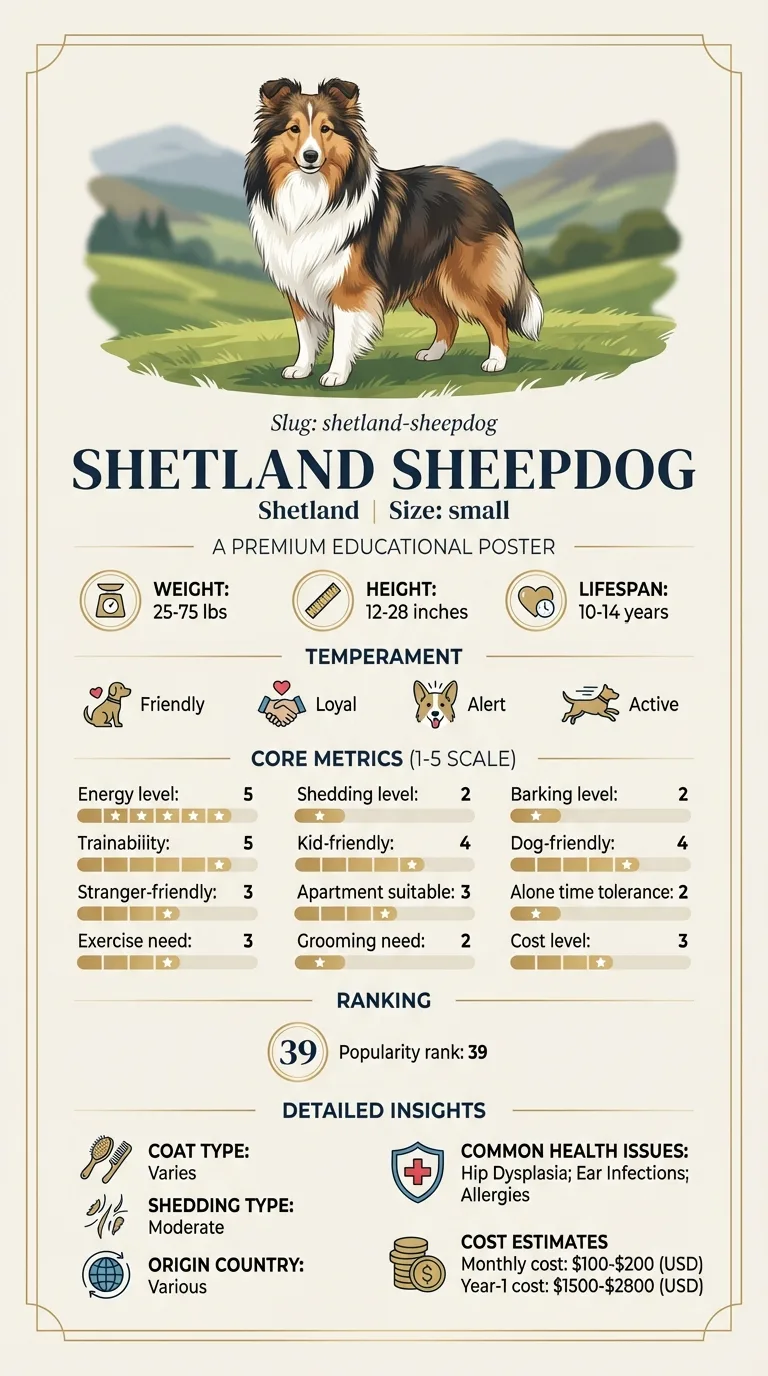
This breed's documented conditions are Collie Eye Anomaly, MDR1 Drug Sensitivity, Dermatomyositis, Hypothyroidism and Patellar Luxation. MDR1 sits at the centre of any preventive discussion, because it is an inherited sensitivity to particular veterinary drugs where routine dosing can be fatal in an affected dog. Confirm the genotype before you choose a product, not after.
Milwaukee prices run modestly under national norms, and the distinctive line is a six-month parasite season that veterinary guidance would prefer you treated as twelve.
Estimate · source: estimation · confidence: medium · updated 2026-09-06 · not a quote
| Item | Cost range |
|---|---|
Initial costs (exam, sterilization, MDR1 test, gear) Confirm the genotype before settling on any preventive product rather than afterwards. | $340 - $580 |
| Item | Cost range |
|---|---|
Food Portions for a fifteen-to-twenty-five-pound dog at Wisconsin grocery pricing. | $29 - $50 |
Each range starts from a national baseline for this breed's size class and is then adjusted for local cost of living and veterinary pricing. The baselines, and the source each one came from, are listed on our sources page (dataset 2026.09). Two inputs, the purchase price and the emergency reserve, have no published national figure we could verify, so we leave them to you rather than invent them.
These are planning estimates, not quotes. Your own numbers will move with the individual dog, your vet and your insurer. Build a budget with your own figures.
Nothing in Milwaukee's climate distorts the insurance question, so it reduces to the ordinary one: whether an unexpected four-figure bill would be a problem.
Enrol early while the record is clean. Preventable parasitic disease is often excluded on the grounds of missed prevention, which is another argument for a continuous schedule.
Local pricing is moderate enough that a household with a real reserve and a well-managed preventive schedule can reasonably self-fund.
The saving available here is real but modest, and it is only a saving if the restart never gets missed.
Start with what you are actually buying. Preventive products are priced in weight bands, and a Shetland Sheepdog at fifteen to twenty-five pounds sits in one of the cheaper ones, usually the second band up from the smallest. That is a genuine advantage of the breed's size and it means the difference between a six-month and a twelve-month schedule in Milwaukee is smaller in absolute terms than it would be for a large dog.
The case for the seasonal approach is straightforward: if you keep good records, set a calendar reminder for the restart, and start early rather than when you first see a tick, you save six doses a year with no meaningful exposure. Plenty of Wisconsin owners do exactly this and their dogs are fine. The case against is that the failure mode is silent. Heartworm has a long development period, and by the time a lapse produces symptoms it has been a lapse for a long while.
The practical resolution most clinics here recommend is to split the difference honestly: run heartworm prevention year-round because the restart timing is the risky part and the doses are cheap, and treat flea and tick products as the genuinely seasonal line, since their effect is immediate and their absence is obvious. That is not a compromise so much as matching the schedule to how each product actually fails.
General costs in Milwaukee run under the national average, and there is no hidden local premium in veterinary or grooming pricing the way a coastal or tourist market carries. The monthly figure is unremarkable and the value is in what the climate removes rather than what the city charges.
Winter is genuinely comfortable for this breed. A long, dense double coat handles a lakefront January without assistance, and a healthy adult Sheltie will take a longer walk at twenty degrees than at eighty. What the season demands is attention to road salt, which works into the feathering and between the pads and needs rinsing out after walks rather than being allowed to dry in.
Spring is the expensive part of a Milwaukee coat year. A sharp transition out of a real winter triggers a heavy, concentrated shedding period, and for two or three weeks the volume of undercoat coming off this dog is genuinely difficult to keep ahead of at home. Booking a professional de-shedding treatment in late March, before the salons are overwhelmed, is the single most useful grooming decision available here.

A Shetland Sheepdog in Milwaukee costs what the table below says, and the plan for keeping it there is simple: budget the first-year figure before you buy, then treat the monthly figure as the floor rather than the target.
| Line | Milwaukee range |
|---|---|
| First year | $1,023–$2,139 |
| Monthly | $74–$140 |
The two numbers move for different reasons. First-year cost is dominated by one-off items — purchase or adoption, vaccination, neutering, equipment — so it is the number to have saved before the dog arrives. The monthly figure is food, preventatives, grooming and insurance, and it is the one that decides whether ownership is sustainable in Milwaukee on your income. Steps that reliably lower both: buy from a source that screens for the breed's known conditions, take out insurance before the first claim rather than after, and price local grooming and boarding before you commit.
A Bay View owner ran his Sheltie on a strict six-month schedule for years, May through October, and saved a genuine amount doing it. One spring a house move swallowed most of April and May, and he restarted in June without thinking much of it. The following spring's routine heartworm test came back needing a follow-up, and although the result was ultimately clear, the retesting and the anxious fortnight cost more than the doses he had skipped over four years combined.
Key takeaway: The seasonal schedule works right up until the year life interferes with the restart, and that is the year it costs more than it ever saved.
About $74 to $140, a little below the national average, with no local premium hiding in veterinary or grooming rates.
Roughly $1,023 to $2,139, including the first exam, sterilization, vaccinations and setup gear.
Veterinary guidance recommends year-round heartworm prevention everywhere in the country. The practical compromise many clinics here suggest is continuous heartworm cover and genuinely seasonal flea and tick products.
Around six doses a year. Because a fifteen-to-twenty-five-pound dog sits in a cheaper weight band, the absolute saving is smaller than it would be for a large breed.
The restart, not the winter. Heartworm develops slowly and silently, so a forgotten April dose is a lapse you will not notice for a long time.
About $490 covers a typical significant visit at local pricing.
$74–$140 monthly and $1,023–$2,139 in year one, slightly below average. The local decision is whether to follow the six-month season or the year-round veterinary guidance.
Yes. Preventives are priced in weight bands, and at fifteen to twenty-five pounds a Sheltie sits near the cheap end, which narrows the gap between seasonal and year-round dosing.
This guide is not medical advice. If your dog shows pain, sudden behavior change, or worsening symptoms, consult a licensed veterinarian.
Some links may be affiliate links. We may earn a commission at no extra cost to you. We only suggest products we believe are helpful for dog owners.
We research and check what we publish, but we do not warrant that any figure, date, price, or statement is accurate, complete, or current, and we accept no liability for any loss, cost, injury, or other harm arising from the use of this site. Use it as one reference among several. You remain responsible for your own decisions and for your dog's care - confirm anything that matters with a licensed veterinarian or another qualified professional before you act on it. Full disclaimer.
One sheet with every line item, the emergency fund and when insurance pays off - unlocks on this page.
You get: 12-month budget sheet
No spam. One-click unsubscribe. See our privacy policy.
Preview page 1 before you decide.