Behavior
What should I do if my Jack Russell Terrier is diagnosed with PRA?
Focus on creating a safe environment and maintain regular vet check-ups to monitor their condition.

Quick answer
What should I do if my Jack Russell Terrier is diagnosed with PRA?
Focus on creating a safe environment and maintain regular vet check-ups to monitor their condition.
Jack Russell Terrier progressive retinal atrophy (PRA) is a serious condition that leads to gradual vision loss. It can significantly affect your dog's quality of life.
Owners of Jack Russell Terriers may struggle with the emotional and practical challenges of managing PRA. This includes recognizing the signs early, adjusting their dog's environment, and providing the right support.
This guide is not medical advice. If your dog shows pain, sudden behavior change, or worsening symptoms, consult a licensed veterinarian.
Some links may be affiliate links. We may earn a commission at no extra cost to you. We only suggest products we believe are helpful for dog owners.
We research and check what we publish, but we do not warrant that any figure, date, price, or statement is accurate, complete, or current, and we accept no liability for any loss, cost, injury, or other harm arising from the use of this site. Use it as one reference among several. You remain responsible for your own decisions and for your dog's care - confirm anything that matters with a licensed veterinarian or another qualified professional before you act on it. Full disclaimer.
Check this first
Understanding when Jack Russell Terrier progressive retinal atrophy (PRA) requires immediate attention can be crucial for your dog's well-being. If you notice any sudden changes in your dog's vision, such as bumping into objects, difficulty navigating familiar environments, or signs of distress when moving, it’s time to call your vet immediately. These symptoms may indicate a severe progression of the disease or other related issues that need urgent care.
On the other hand, if your Jack Russell Terrier shows mild signs of vision impairment but is still able to navigate comfortably and engage in daily activities, you can monitor the situation. Keep track of any changes in behavior, and maintain regular vet check-ups to assess the condition's progression. Regularly observing your dog's response to various stimuli and environments can help you identify when to escalate the situation to your vet.
In summary, red flags include sudden vision changes and distress, while mild cases can often be watched and managed with a plan. Always trust your instincts—if you're worried, it's better to be safe and consult your vet.
If any of these apply, call your vet or an emergency clinic now. The rest of this page is for the cases that are not an emergency.
Jack Russell Terrier progressive retinal atrophy (PRA) is a serious concern for owners. This genetic condition leads to progressive vision loss, often starting with night blindness and eventually affecting daylight vision. Daily life can become challenging for both the dog and the owner, as the JRT may bump into objects or seem disoriented in familiar environments.
Progressive retinal atrophy is relatively common in Jack Russell Terriers, with estimates suggesting that around 10-20% of the breed may be affected. Early detection through regular vet check-ups is crucial for managing this condition.
Jack Russell Terriers are genetically predisposed to progressive retinal atrophy (PRA). This inherited condition affects the retina, leading to gradual vision loss. It is more common in certain breeds, including the JRT, due to specific genetic factors.
While PRA is primarily a genetic issue, environmental factors can also play a role in your dog's overall eye health. Exposure to certain toxins or health issues that affect circulation can exacerbate vision problems. However, PRA is not caused by the environment alone.
Consult your vet if you notice significant changes in your dog's vision or behavior. They can perform a thorough examination and recommend appropriate treatments or management strategies for PRA.
Avoiding these common mistakes can help improve your Jack Russell Terrier's condition. Here are some behaviors to steer clear of.
Start here: Jack Russell Terrier Most Common Genetic Disorders
See all Jack Russell Terrier health problems, which breeds are prone to progressive retinal atrophy pra, or the full Jack Russell Terrier breed guide for temperament, exercise needs and ownership costs.
Managing Jack Russell Terrier progressive retinal atrophy (PRA) typically takes several months, with most owners noticing changes in their dog's behavior and adaptability within 3 to 6 months after diagnosis.
Success looks like your dog adjusting to their vision loss. This includes learning alternative ways to navigate their environment, being comfortable with training techniques that enhance their confidence, and maintaining a good quality of life.
When Sarah adopted Bella, her energetic Jack Russell Terrier, she soon noticed Bella struggling to find her toys and bumping into furniture. After a vet visit confirmed PRA, Sarah felt overwhelmed. Realizing that Bella could still enjoy life, she enrolled in training that focused on teaching Bella visual cues and scent games. They slowly adapted their home, using rugs with different textures to guide Bella and enhancing her playtime with scent trails. Over time, Bella learned to navigate confidently, and Sarah found joy in their improved bond.
Key takeaway: With patience and the right training, Jack Russell Terriers with progressive retinal atrophy can lead fulfilling lives, adapting to their new reality while still enjoying play and exploration.
Yes, PRA is a common issue among Jack Russell Terriers. Due to their genetic predisposition, it’s important for potential owners to be aware of this condition when choosing a JRT. Responsible breeding practices can help reduce the incidence of PRA.
To support a Jack Russell Terrier with PRA, maintain a stable environment to reduce stress. Use consistent commands and cues to help guide them around the house. Consulting an animal behaviorist can also provide tailored strategies for your dog's needs.
Currently, there is no cure for PRA, but treatments focus on managing the dog's quality of life. Regular veterinary visits and possibly medications can help alleviate any secondary issues. Maintaining a safe and familiar environment is essential for their well-being.
Training a Jack Russell Terrier with PRA requires patience and consistency. Use verbal commands and tactile cues to help guide them during training. Positive reinforcement can motivate them and build their confidence despite their vision challenges.
Early signs of Jack Russell Terrier progressive retinal atrophy (PRA) may include difficulty seeing in low light, bumping into objects, and hesitance when navigating new environments. Keeping an eye on changes in your dog's behavior can help in identifying these issues sooner.
The progression of PRA typically leads to gradual vision loss, starting with night blindness and eventually resulting in complete blindness. It's important to monitor your dog’s condition closely and consult a vet for potential management options as the disease advances.
Yes, Jack Russell Terriers with PRA can still enjoy a fulfilling life. With proper training, a safe environment, and plenty of love, they can adapt to their vision loss and continue to thrive.
Genetic testing can be beneficial, especially if you’re considering breeding your Jack Russell Terrier. It can help identify carriers of the PRA gene, allowing you to make informed decisions about breeding and health management.
If you notice any signs of vision loss or changes in behavior related to sight, it's wise to consult your vet. Early intervention can help manage the condition and improve your dog's quality of life.
Focus on creating a safe environment and maintain regular vet check-ups to monitor their condition.
Yes, they can still enjoy play and exercise, but supervise their activities to prevent injuries.
Keep their living space consistent and use verbal cues to help them navigate their environment.
Consider using lighting aids and tactile maps to help your dog move safely around your home.
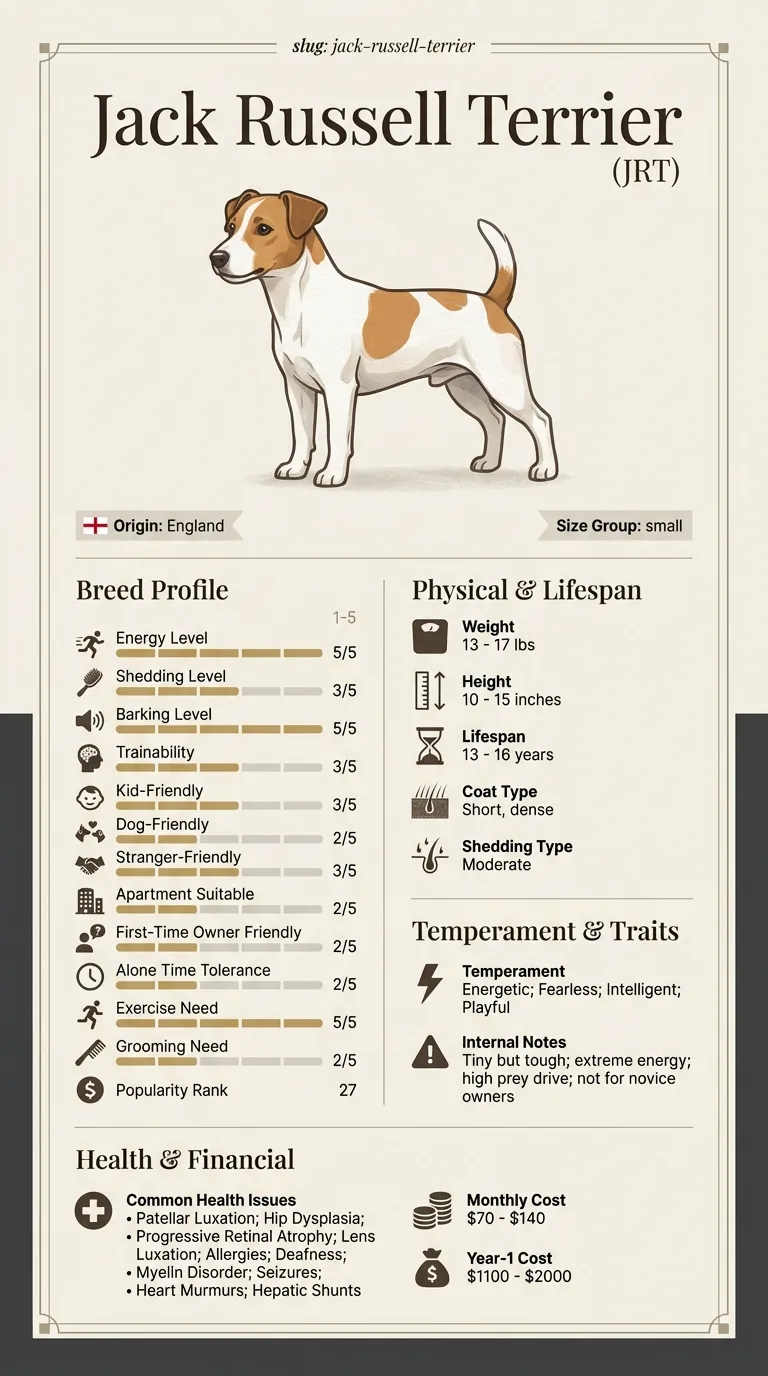
Costs can vary, but regular vet visits and potential medications may range from $70 to $140 monthly.
A one-page prep sheet for this condition: the signs, the questions to ask, what to get priced. Unlocks here.
You get: Vet visit prep sheet
No spam. One-click unsubscribe. See our privacy policy.
Preview page 1 before you decide.