Behavior
What are quick tips for Labradoodle progressive retinal atrophy (PRA)?
Keep your home environment safe and familiar, and train your dog to respond to voice commands. Regular vet visits are crucial for monitoring their condition.

Quick answer
What are quick tips for Labradoodle progressive retinal atrophy (PRA)?
Keep your home environment safe and familiar, and train your dog to respond to voice commands. Regular vet visits are crucial for monitoring their condition.
Labradoodle progressive retinal atrophy (PRA) is a serious condition that causes gradual vision loss in dogs. This can deeply affect their quality of life and their ability to enjoy daily activities.
Owners of Labradoodles, especially those with active lifestyles or families, may struggle with the emotional impact of their dog's declining vision. This condition requires patience and understanding as your dog adapts to their new reality.
This guide is not medical advice. If your dog shows pain, sudden behavior change, or worsening symptoms, consult a licensed veterinarian.
Some links may be affiliate links. We may earn a commission at no extra cost to you. We only suggest products we believe are helpful for dog owners.
We research and check what we publish, but we do not warrant that any figure, date, price, or statement is accurate, complete, or current, and we accept no liability for any loss, cost, injury, or other harm arising from the use of this site. Use it as one reference among several. You remain responsible for your own decisions and for your dog's care - confirm anything that matters with a licensed veterinarian or another qualified professional before you act on it. Full disclaimer.
Check this first
Recognizing when Labradoodle progressive retinal atrophy (PRA) is an emergency is crucial for your dog's well-being. Some signs require immediate vet attention, while others can be monitored at home. Here’s how to differentiate between the two.
If any of these apply, call your vet or an emergency clinic now. The rest of this page is for the cases that are not an emergency.
Labradoodle progressive retinal atrophy (PRA) is a genetic condition that affects a dog’s vision as they age. Daily life for a Labradoodle with PRA may involve struggles with navigating familiar spaces, resulting in bumps and hesitations. Owners often notice their pet bumping into furniture or seeming disoriented in new environments.
This condition is relatively common among Labradoodles, given their genetic background. PRA can manifest in varying degrees, making some dogs more severely affected than others. Regular veterinary check-ups can help in early detection and management.
Labradoodles can inherit Progressive Retinal Atrophy (PRA) due to genetic predispositions. This condition is more common in breeds with a history of eye issues. Consequently, if your Labradoodle's parents had PRA or similar concerns, your pup may be at risk.
Environmental factors can also contribute to the progression of PRA. For example, lack of proper nutrition or exposure to harmful substances can impact overall eye health. Moreover, inadequate veterinary care may lead to undetected issues worsening over time.
If you notice any signs of vision loss, such as bumping into objects or reluctance to go outside, schedule an appointment with your vet. They can assess your dog's eye health and recommend a management plan for PRA.
Many owners unintentionally worsen their Labradoodle's progressive retinal atrophy (PRA) symptoms. Here are some common mistakes to avoid and better alternatives.
Start here: Labradoodle Most Common Genetic Disorders: Screening
See all Labradoodle health problems, which breeds are prone to progressive retinal atrophy pra, or the full Labradoodle breed guide for temperament, exercise needs and ownership costs.
Managing Labradoodle progressive retinal atrophy (PRA) typically takes several months. Expect gradual changes as your dog's vision declines, which can vary from 6 months to a few years, depending on the severity.
Success means you can adapt your dog's environment, ensuring they feel safe and secure despite their vision loss. You'll notice your Labradoodle adjusting to new routines and commands that help them navigate their world.
Look out for these concerning signs that indicate your Labradoodle needs immediate veterinary assistance: - Sudden vision loss or blindness - Disorientation or bumping into objects - Severe behavioral changes, such as anxiety or aggression - Excessive tearing or eye discharge - Swollen or painful eyes

If your Labradoodle shows mild symptoms, such as slightly decreased vision or minor behavioral changes, you can monitor the situation. Here’s what to keep an eye on: - Gradual changes in vision - Slightly hesitant movements in unfamiliar environments - Occasional pawing at the eyes without signs of pain

Emily, a busy nurse from Seattle, adopted Maggie, her Labradoodle, excited for their adventures together. Over time, Emily noticed Maggie bumping into furniture and hesitating on walks. After consulting her vet, they diagnosed Maggie with progressive retinal atrophy (PRA). With guidance, Emily began modifying their home, using tactile cues and verbal commands to help Maggie move confidently. Slowly, Maggie adapted, and Emily found joy in their new routines, discovering the bond grew even deeper through these challenges.
Key takeaway: With patience and the right adjustments, you can help your Labradoodle thrive even as they face the challenges of PRA.
PRA is often hereditary and can occur in Labradoodles due to genetic factors inherited from their parent breeds. If your Labradoodle has PRA, it may be due to the genetic history of either the Labrador Retriever or the Poodle. Regular vet check-ups can help identify this condition early.
To support a Labradoodle with PRA, keep their environment familiar and safe. Use consistent commands and avoid moving furniture to prevent accidents. Training them to respond to verbal cues can also be beneficial.
Currently, there is no cure for Labradoodle progressive retinal atrophy (PRA). However, treatments may focus on managing your dog's quality of life. Your veterinarian can recommend strategies to enhance your dog's comfort and mobility despite vision loss.
Yes, many Labradoodles with PRA can live happy, fulfilling lives. With proper adjustments and care, they can adapt to their vision loss. Providing mental stimulation and regular exercise can greatly improve their quality of life.
Early signs of PRA in Labradoodles include difficulty seeing in low light, bumping into objects, and changes in behavior such as reluctance to walk in unfamiliar areas. If you notice these signs, consult your vet for an evaluation.
While PRA is often genetic and cannot be prevented, responsible breeding practices can reduce its occurrence. Ensure that your Labradoodle comes from a breeder who screens for genetic conditions. Regular veterinary care is also important.
Early signs of Labradoodle progressive retinal atrophy (PRA) may include difficulty seeing in low light, hesitation when navigating unfamiliar spaces, or bumping into objects. Owners might notice their dog seems to have trouble playing fetch or responding to visual cues. If you observe these signs, it's important to consult your vet for a proper diagnosis.
Yes, Labradoodle progressive retinal atrophy (PRA) can manifest differently in older dogs. While younger dogs may show symptoms early on, older Labradoodles might adapt their behavior to compensate for vision loss. Regular check-ups with your vet are crucial to monitor any changes in their vision and overall health.
To help your Labradoodle with progressive retinal atrophy (PRA), maintain a consistent environment. Keep furniture in the same place and avoid clutter to help your dog navigate safely. Training techniques that focus on verbal cues can also assist your dog in adapting to their vision loss.
Keep your home environment safe and familiar, and train your dog to respond to voice commands. Regular vet visits are crucial for monitoring their condition.
Maintain a consistent layout in your home and use auditory cues to guide your Labradoodle. Avoid sudden changes in their environment.
Schedule an appointment with your veterinarian to discuss your dog's symptoms and get an accurate diagnosis.
Yes, consider seeking out specialized training programs that focus on working with visually impaired dogs. These can help you learn effective techniques.
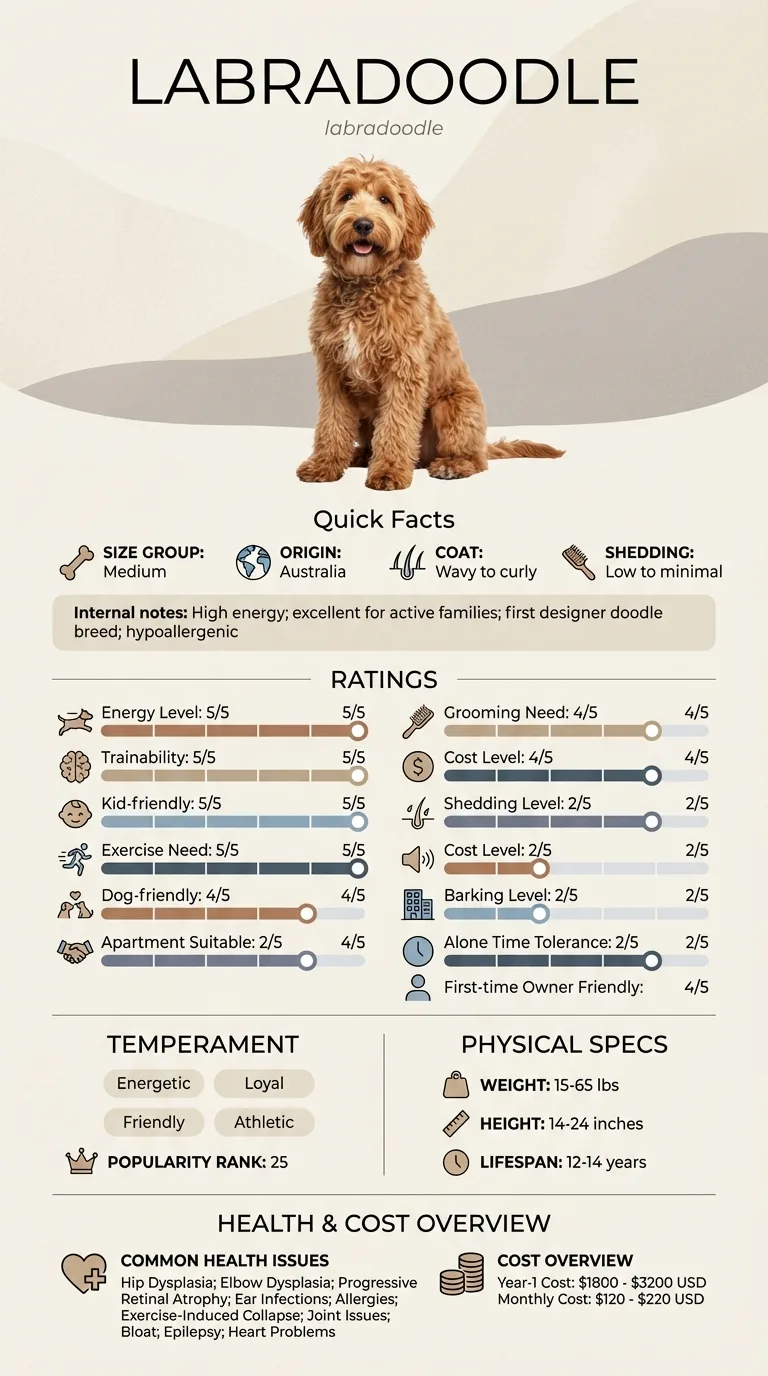
The cost can vary, but you may expect to spend an additional $120 to $220 monthly for vet visits and care adjustments.
A one-page prep sheet for this condition: the signs, the questions to ask, what to get priced. Unlocks here.
You get: Vet visit prep sheet
No spam. One-click unsubscribe. See our privacy policy.
Preview page 1 before you decide.