Health
Is the Shetland Sheepdog a flat-faced breed?
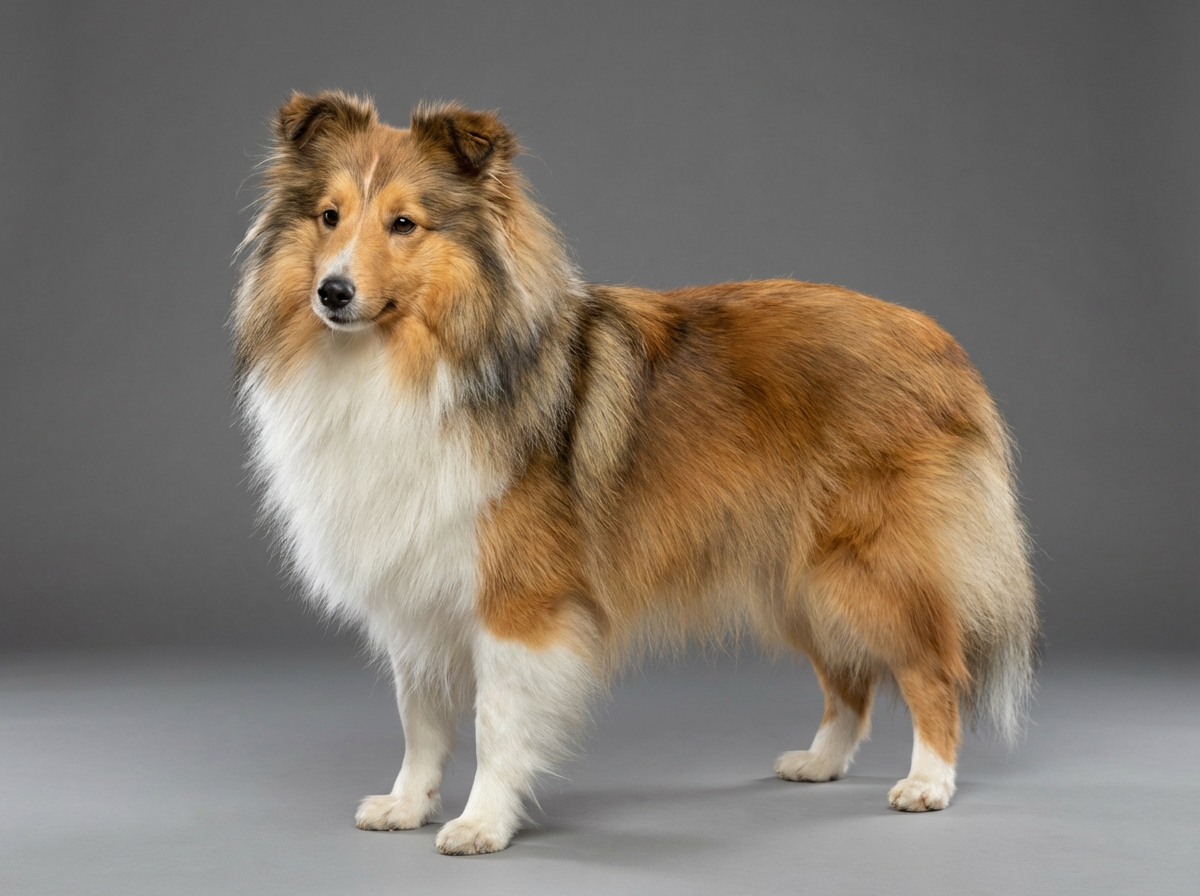
No. It has a long, tapered wedge-shaped head and sits at the opposite end of the skull conformation spectrum from brachycephalic breeds.

Quick answer
Is the Shetland Sheepdog a flat-faced breed?
No. It has a long, tapered wedge-shaped head and sits at the opposite end of the skull conformation spectrum from brachycephalic breeds.
Dog skulls fall into three broad shapes, and almost every welfare problem attributed to facial conformation belongs to one of them. The Shetland Sheepdog belongs to a different one.
Prospective owners comparing breeds and screening out conformational health problems. Owners told by a stranger that their Sheltie looks like a small Collie and wondering what that implies. Anyone trying to work out which face-related conditions to actually screen for in this breed.
This guide is not medical advice. If your dog shows pain, sudden behavior change, or worsening symptoms, consult a licensed veterinarian.
Some links may be affiliate links. We may earn a commission at no extra cost to you. We only suggest products we believe are helpful for dog owners.
We research and check what we publish, but we do not warrant that any figure, date, price, or statement is accurate, complete, or current, and we accept no liability for any loss, cost, injury, or other harm arising from the use of this site. Use it as one reference among several. You remain responsible for your own decisions and for your dog's care - confirm anything that matters with a licensed veterinarian or another qualified professional before you act on it. Full disclaimer.
Facial conformation determines a large share of a breed's health burden. Shortened skulls produce obstructed airways, exposed eyes, infected skin folds and crowded teeth. Long skulls avoid all four. The Shetland Sheepdog's head is a long, refined wedge, and consequently the breed carries none of the flat-faced welfare problems. Its documented conformation-related condition is Collie Eye Anomaly, which concerns how the eye develops rather than how the face is shaped.
Brachycephalic conditions do not occur in this breed in any meaningful sense. Collie Eye Anomaly, by contrast, is documented for the Shetland Sheepdog and is common enough that responsible breeders screen every litter for it. Prospective owners should treat eye documentation as non-negotiable and treat questions about breathing conformation as unnecessary.
The Shetland Sheepdog was developed as a small herding dog and retained a functional working head: long enough for a full nasal chamber, narrow enough to be light, with a flat skull and a smooth stop. Nothing in that design compresses the airway or displaces the eye. The breed's genuine inherited facial problem, Collie Eye Anomaly, is shared with the Rough Collie and traces to common ancestry rather than to skull shape. Patellar luxation, also documented, is the breed's other developmental structural condition, though it concerns the hind limb rather than the head.
The environment acts on the face rather than shaping it. A long muzzle led through hedgerows, stubble and undergrowth collects grass seeds in the nose, thorn scratches on the cornea and debris in the ear. Summer stubble fields are the classic seed hazard. Indoors, the semi-erect ear traps moisture after swimming or bathing, particularly if the coat around the ear base is not dried properly. None of this is a conformational defect, but it is where face-related veterinary visits in this breed actually come from.
Seek same-day help for any painful eye: squinting, holding an eye shut, a sudden flood of tears, pawing at the face, or visible cloudiness. Eye pain in a dog is genuinely urgent and delays cost vision. Go urgently too for sudden violent sneezing with discharge from one nostril after a walk in long grass, since an inhaled grass seed migrates and does not come out on its own. Book a routine appointment for a suspected inherited eye condition in a puppy, ideally with an ophthalmologist while litter screening is still possible, and for a puppy whose adult teeth appear crowded or whose baby teeth have not fallen out.
See all Shetland Sheepdog health problems, which breeds are prone to brachycephalic features, or the full Shetland Sheepdog breed guide for temperament, exercise needs and ownership costs.
Conformation does not change, so this is not something with a treatment timeline. Eye screening is a one-off at six to eight weeks. Handling tolerance for face and mouth care takes two to four weeks of short daily sessions to establish and is then permanent.
Knowing your dog's eye status from documented screening, having a mouth you can brush without a fight, and treating a squinting eye or a violent sneezing fit as urgent rather than waiting. There is nothing to fix about the head itself, which is exactly the point.
Conformation is a set of trade-offs rather than a scale from good to bad. A long, narrow head sidesteps the flat-faced problems and comes with a small set of its own.
If you want to know which conformation-linked problem actually matters in this breed, it is Collie Eye Anomaly, and it appears on the Shetland Sheepdog's documented health list. It is inherited and developmental: the layer of tissue underneath the retina, which supplies it with blood, fails to form properly while the puppy is still in the womb. In mild cases the dog sees perfectly well for life. In severe cases there are pits in the wall of the eye or retinal detachment, and vision is lost.
The crucial practical detail is that CEA is present from birth and does not develop later. A specialist ophthalmologist can examine a litter at six to eight weeks and identify affected puppies while the changes are still visible, before the developing pigment in the eye can mask them. This is why responsible Sheltie breeders litter-screen and why a DNA test for the associated variant is available. Ask any breeder for both.
The wedge-shaped head contributes indirectly to a much more mundane issue: the almond-shaped eye is set obliquely in a narrow face and is well protected, but a dog who works through hedgerows and long grass with that face leading collects scratches and seeds. Corneal injuries in this breed are usually earned outdoors rather than built in.
One more conformational note that is genuinely useful. The Sheltie's ears are semi-erect with a folded tip, which gives a canal that is neither wide open nor tightly covered. It is a middle position: better ventilated than a heavy drop ear, worse than a fully pricked one, and hairy enough that debris and moisture linger.

Merrick's breeder had bred Shelties for eleven years and had never had an affected puppy. She still booked the ophthalmologist for the litter at seven weeks, on the grounds that the whole value of the test is finding what you did not expect. Two of the six puppies showed mild changes consistent with Collie Eye Anomaly. Both had entirely functional vision and both went to homes with the finding disclosed in writing. Merrick was clear. His owner Selina still has the certificate, and when Merrick came home squinting at four years old after a walk through a stubble field, the fact that his eyes had a documented baseline meant the vet could focus straight on the corneal scratch rather than wondering what was inherited and what was new.
Key takeaway: The head shape is not the risk in this breed. The eye is, and a documented baseline from puppyhood is worth having.
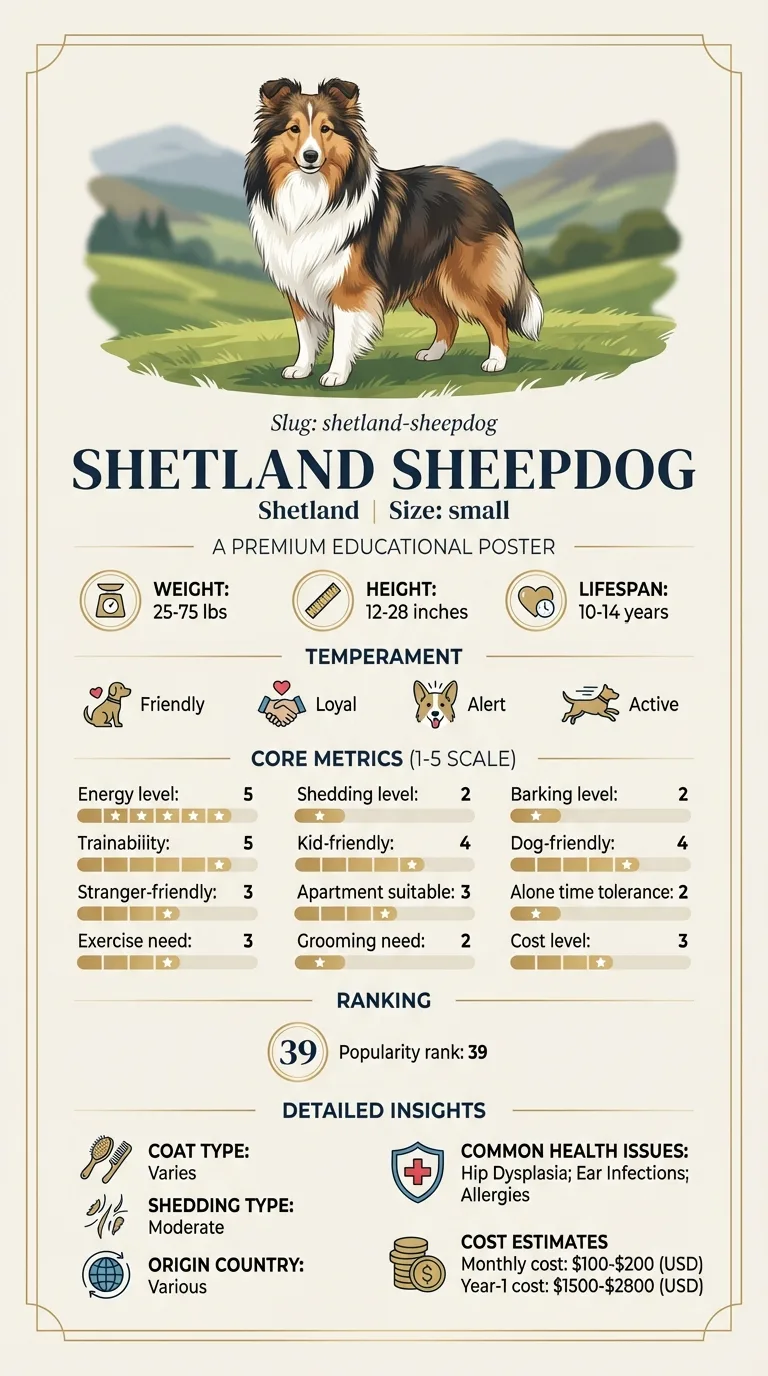
A long, blunt wedge tapering from the ears to the nose, with a flat skull and a smooth transition from forehead to muzzle. It is the opposite of a shortened brachycephalic skull and is central to the breed standard.
Yes, but not facial ones in the flat-faced sense. The documented conformation-linked conditions in the breed are Collie Eye Anomaly, which affects how the eye forms, and patellar luxation, which reflects how the knee joint forms.
It can be a minor one. A refined jaw means teeth sit closely together, and tight contacts trap food debris and plaque. It is nothing like brachycephalic crowding, but it is a reason not to skip toothbrushing in this breed.
Mostly from the environment rather than from anatomy. The eye sits in a well-formed socket rather than protruding, but a dog nosing through brambles and stubble picks up scratches. Squinting, tearing and rubbing all warrant a same-day appointment.
Absolutely, and ask for documentation rather than reassurance. Litter screening by a specialist ophthalmologist at six to eight weeks plus DNA testing of the parents is what a responsible Sheltie breeder does as standard.
It helps. A full-length nasal chamber gives more olfactory surface than a shortened skull allows, and combined with high trainability it makes this breed genuinely good at scent-based sports.
The early signs are set out in the sections above, and they are the reason to book a veterinary appointment rather than wait. Brachycephalic Features in Shetlands is diagnosed by a vet, not from a symptom list, and the sooner it is on record the more options remain open.
No. It has a long, tapered wedge-shaped head and sits at the opposite end of the skull conformation spectrum from brachycephalic breeds.
Collie Eye Anomaly. It is documented in the breed, present from birth, and detectable by specialist litter screening at six to eight weeks.
No. They have no deep facial folds, which removes an entire category of daily maintenance that flat-faced breeds require.
Mainly around the ears and ruff, where the coat is thickest. The face itself needs very little beyond checking the eyes after outdoor work.
A specialist eye examination is a modest one-off cost relative to the breed's eighty to a hundred and fifty dollar monthly running expenses.
A one-page prep sheet for this condition: the signs, the questions to ask, what to get priced. Unlocks here.
You get: Vet visit prep sheet
No spam. One-click unsubscribe. See our privacy policy.
Preview page 1 before you decide.