Living
Which is smaller?
The Shetland Sheepdog, at 15–25 lbs versus the Weimaraner's 55–90 lbs.

Quick answer
Which is smaller?
The Shetland Sheepdog, at 15–25 lbs versus the Weimaraner's 55–90 lbs.
Shetland Sheepdog or Weimaraner? On paper they differ most on grooming need, and on the scales Weimaraner is the heavier at 55–90 lbs. Here is how the two compare on everything that shapes an ordinary week.
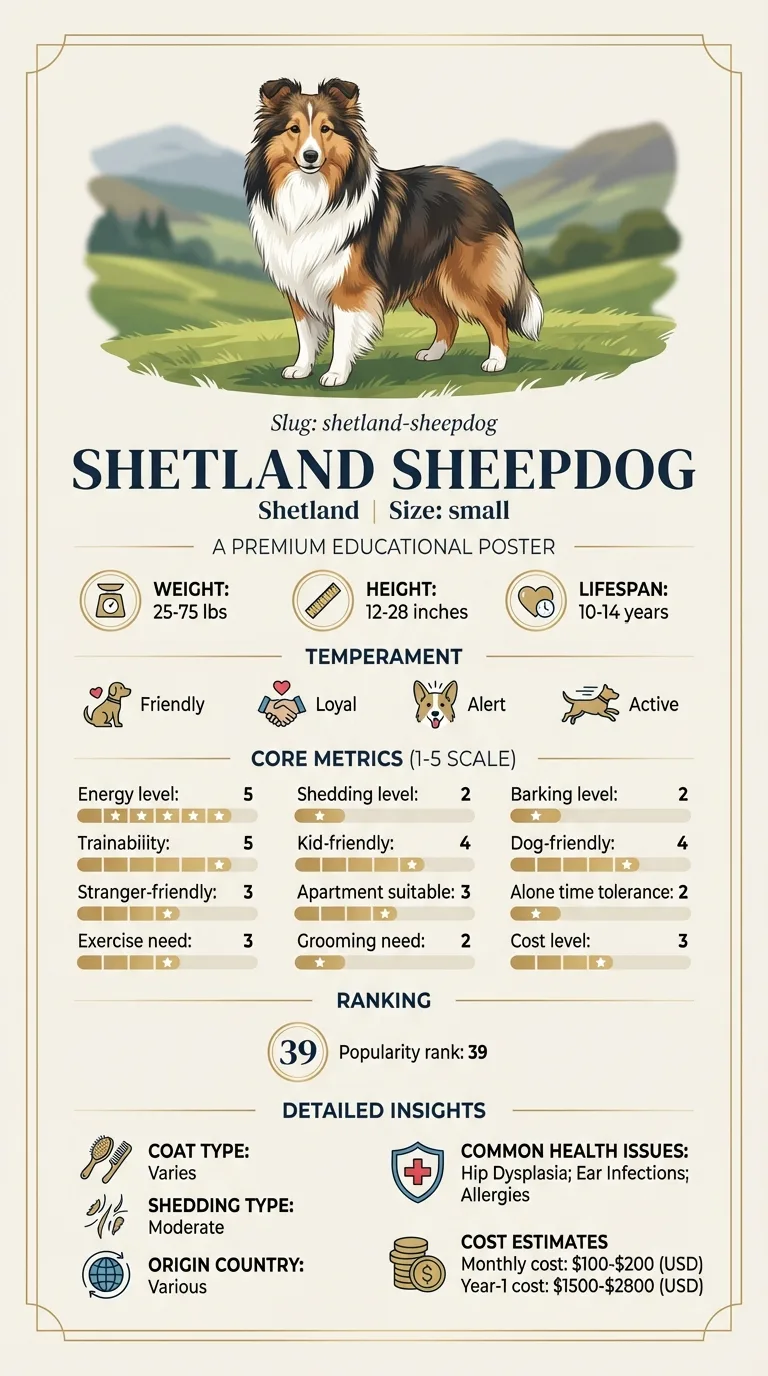
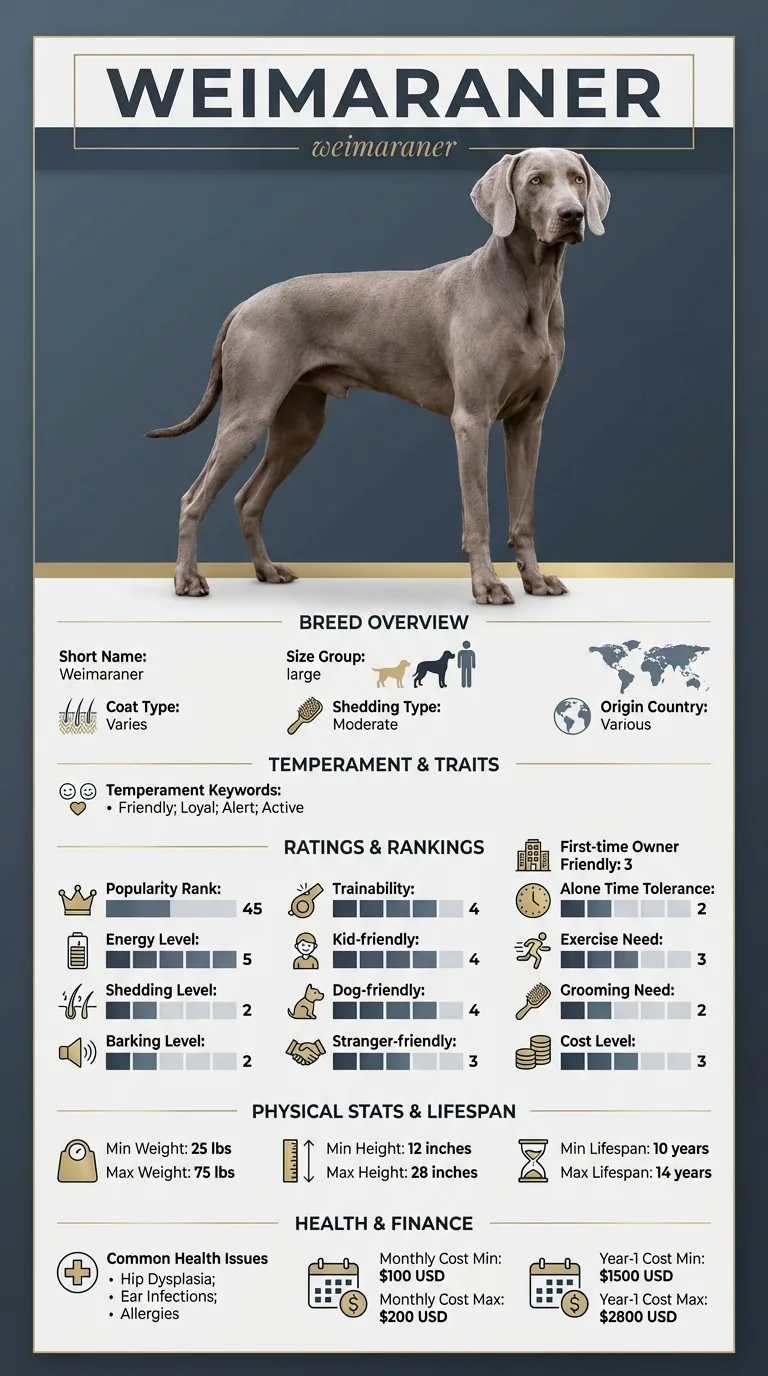
This is for someone already down to Shetland Sheepdog and Weimaraner and deciding between them. For this pair the decision usually turns on grooming need and apartment suitability, so those are covered first and in most detail. Anyone choosing from a flat has a clear answer here: Shetland Sheepdog rates 3/5 against 1/5. There is no origin story here — only what changes about your week.
Between Shetland Sheepdog and Weimaraner, grooming need is what separates them, and Shetland Sheepdog is the lower-effort dog of the two to keep.
Choose Shetland Sheepdog if you are in a flat or a smaller home, this is your first dog and your walking routine is modest.
Choose Weimaraner if you do not want a standing grooming appointment, shedding is a problem in your house and you want a dog that can keep up with an active routine.
| Feature | shetland sheepdog | weimaraner | Winner |
|---|---|---|---|
| Size class | small | large | Equal |
| Weight | 15–25 lbs | 55–90 lbs | Equal |
| Height | 13–16 in | 23–27 in | Equal |
| Lifespan | 12–14 years | 10–13 years | shetland sheepdog |
| Exercise need | High (4/5) | Very high (5/5) | shetland sheepdog |
| Grooming need | High (4/5) | Very low (1/5) | weimaraner |
| Shedding | High (4/5) | Low (2/5) | weimaraner |
| Energy level | High (4/5) | Very high (5/5) | Equal |
| Barking | Very high (5/5) | Moderate (3/5) | weimaraner |
| Apartment suitability | Moderate (3/5) | Very low (1/5) | shetland sheepdog |
| Good for first-time owners | High (4/5) | Low (2/5) | shetland sheepdog |
| Tolerates being alone | Low (2/5) | Very low (1/5) | shetland sheepdog |
| Trainability | Very high (5/5) | High (4/5) | shetland sheepdog |
| Good with kids | High (4/5) | High (4/5) | Equal |
| Good with other dogs | High (4/5) | Moderate (3/5) | shetland sheepdog |
| Friendly to strangers | Low (2/5) | Moderate (3/5) | weimaraner |
| Cost level | Moderate (3/5) | Moderate (3/5) | Equal |
| Coat | Long, dense double coat | Short and sleek | Equal |
| Origin | Various | Various | Equal |
| Typical monthly cost | $80–$150 | $110–$240 | Equal |
| Typical first-year cost | $1,100–$2,300 | $1,700–$3,200 | Equal |
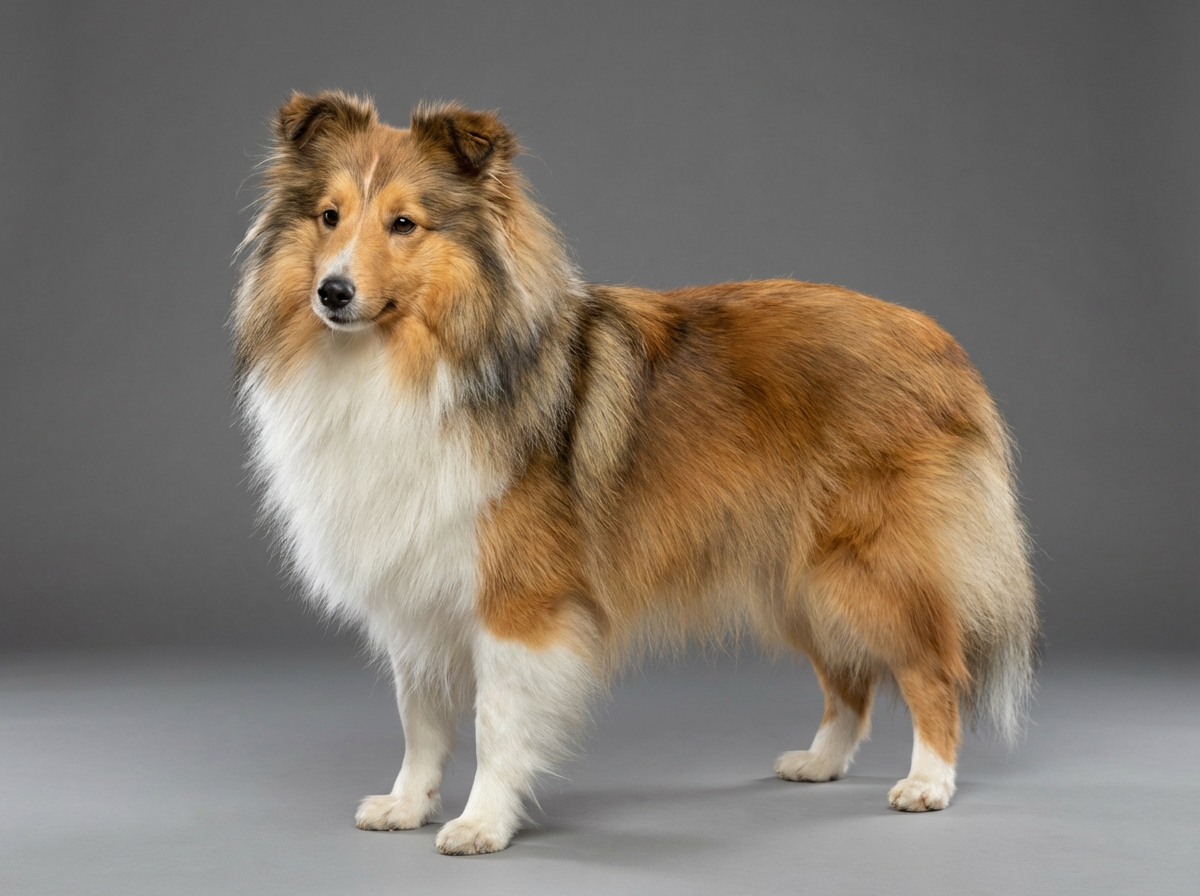
The gap here is stark: a Shetland Sheepdog tops out around 15–25 lbs and 13–16 inches at the shoulder, while a Weimaraner runs 55–90 lbs and stands 23–27 inches — nearly triple the weight and a full head taller. That difference shapes almost everything else on this page, from how much space each needs to how much a torn ligament might cost to treat. The Sheltie's compact frame under a long, dense double coat makes it look bigger than it is; the Weimaraner's lean, short-coated build is all visible muscle built for covering ground fast. Anyone choosing between them is really choosing between a lap-sized herder and a genuinely large sporting dog.
Both dogs score high on energy, but the Weimaraner edges out at a Very High (5/5) exercise need against the Sheltie's still-considerable High (4/5). In practice, a Weimaraner bred to run alongside horses and track game for hours wants sustained daily exertion — jogging, hiking, or serious off-leash time — or it turns destructive. The Sheltie's herding instincts mean it prefers brisk, purposeful activity like fetch, agility, or a structured walk over sheer mileage. Neither is a couch companion, but an owner who can offer a 45-minute walk will satisfy a Sheltie far more easily than a Weimaraner, which tends to need real cardio to settle.
This category flips the size expectation on its head. The Sheltie carries a long, dense double coat rated High (4/5) for both grooming and shedding, meaning regular brushing several times a week and heavier seasonal blowouts. The Weimaraner's short, sleek coat needs almost none of that — grooming is rated Very Low (1/5) and shedding Low (2/5), so a weekly wipe-down covers it. Anyone drawn to the Weimaraner's easy-care coat but worried about the breed's size should know that the trade-off runs the other way for the Sheltie: less physical dog, but noticeably more coat maintenance and more hair around the house.
Neither breed is an obvious apartment pick, but for different reasons. The Sheltie rates a Moderate (3/5) for apartment suitability yet is flagged Very High (5/5) for barking — its herding heritage makes it vocal at doorbells, passersby, and other dogs, which can be a real problem for thin-walled buildings. The Weimaraner rates Very Low (1/5) for apartment life mainly on size and exercise needs rather than noise (Moderate 3/5 barking), and both breeds tolerate being alone poorly — the Sheltie Low (2/5), the Weimaraner Very Low (1/5), with separation anxiety specifically listed among its known issues. Long workdays suit neither dog well.
The Sheltie is built for first-time owners in a way the Weimaraner isn't: it scores Very High (5/5) on trainability and High (4/5) for first-time-owner suitability, reflecting a breed developed to take direction from a handler at a distance. The Weimaraner, described as Energetic, Devoted, Alert, and Headstrong, still trains well at High (4/5) trainability but only rates Low (2/5) for first-time owners — that headstrong streak paired with its size and drive means novice handlers can get overwhelmed. A Sheltie rewards consistency and patience; a Weimaraner rewards an owner who can out-stubborn it while also meeting its exercise needs.
Both breeds score High (4/5) for compatibility with kids, so families aren't choosing between good and bad here — just between styles. The Sheltie also rates High (4/5) with other dogs but only Low (2/5) with strangers, consistent with its watchful, sensitive temperament and tendency to bark at newcomers. The Weimaraner is more moderate across the board with other dogs (3/5) and warmer toward strangers (Moderate 3/5), fitting its more outgoing, Alert-but-social profile. A household that entertains often or has a revolving door of visitors may find the Weimaraner's stranger-friendliness less stressful than managing a Sheltie's alert barking at every arrival.
The Sheltie's 12–14 year lifespan outpaces the Weimaraner's 10–13 years, typical of the size gap between them. Sheltie owners should watch for Collie Eye Anomaly, MDR1 drug sensitivity (which affects how the breed metabolizes certain medications), Dermatomyositis, Hypothyroidism, and Patellar Luxation — a mix of inherited eye, skin, and joint conditions. Weimaraner owners face a different risk profile centered on size: Bloat (GDV) is a genuine emergency risk in deep-chested large breeds, alongside Hip Dysplasia, Hypertrophic Osteodystrophy, Von Willebrand Disease (a clotting disorder), and Separation Anxiety. Vet costs for the Weimaraner's issues, especially bloat surgery, tend to run higher than the Sheltie's more manageable chronic conditions.
On paper the two land in the same Moderate (3/5) cost bracket, but the ranges tell a fuller story. The Sheltie runs $80–$150 a month and $1,100–$2,300 in the first year, while the Weimaraner runs noticeably higher at $110–$240 monthly and $1,700–$3,200 in year one — food volume for an 80-lb dog alone accounts for much of that gap. Add in the Weimaraner's bloat risk, which can mean an emergency surgery bill in the thousands, and its lifetime cost curve skews higher despite the low-maintenance coat. The Sheltie's grooming needs add labor, not necessarily dollars, if owners brush at home.
Shetland Sheepdog weighs 15–25 lbs and lives 12–14 years; Weimaraner weighs 55–90 lbs and lives 10–13 years. The two diverge most on grooming need, apartment suitability and shedding and 2 other rated axes. They are level on cost level and good with kids, so those cannot decide it. Where the table declares a winner it means less work for the owner, nothing more; descriptive rows are left as ties on purpose. The value here is in the differences between the two columns; treat any single score as approximate.

The Sheltie is the easier choice — it rates High (4/5) for first-time owners against the Weimaraner's Low (2/5), largely because of the Weimaraner's headstrong streak, size, and very high exercise needs.
The Sheltie is rated Very High (5/5) for barking, well above the Weimaraner's Moderate (3/5) — its herding instincts make it vocal around visitors, doorbells, and other animals.
Not comfortably. The Sheltie tolerates alone time Low (2/5) and the Weimaraner rates even lower at Very Low (1/5), with separation anxiety specifically listed as a known issue for the breed.
The Weimaraner, by a wide margin — its short coat rates Low (2/5) for shedding versus the Sheltie's High (4/5) from its long double coat.
Its Very Low (1/5) apartment suitability score, driven by its very high exercise needs and size, makes it a poor apartment fit; the Sheltie's Moderate (3/5) rating, if you can manage its barking, makes it the more realistic city dog.
The Sheltie, typically 12–14 years compared to the Weimaraner's 10–13 years.
Bloat (GDV), a life-threatening emergency common in deep-chested large breeds, is the standout concern, alongside hip dysplasia and a clotting disorder called Von Willebrand Disease.
The Shetland Sheepdog, at 15–25 lbs versus the Weimaraner's 55–90 lbs.
The Weimaraner, rated Very High (5/5) versus the Sheltie's High (4/5).
The Weimaraner, rated Moderate (3/5) for barking versus the Sheltie's Very High (5/5).
The Sheltie, at $80–$150 versus the Weimaraner's $110–$240.
Secure checkout on Stripe. We never see your card.
7-day money-back guarantee. Instant access.
Health information here is general and is not veterinary advice. If your dog shows pain, sudden behaviour change, or worsening symptoms, consult a licensed veterinarian.
Some links on this site are affiliate links. We may earn a commission at no extra cost to you, and we only suggest products we believe are helpful for dog owners.
We research and check what we publish, but we do not warrant that any figure, date, price, or statement is accurate, complete, or current, and we accept no liability for any loss, cost, injury, or other harm arising from the use of this site. Use it as one reference among several. You remain responsible for your own decisions and for your dog's care - confirm anything that matters with a licensed veterinarian or another qualified professional before you act on it. Full disclaimer.
Match your lifestyle to the right dog.
Take quizNot sure which breed is right for you? Take our 2-minute quiz to find out.
Take the quiz