Living
Which breed suits most households better?
The Sheltie - smaller, friendlier, easier for beginners, and cheaper to keep, though its heavy barking is a real consideration for close-quarters living.

Quick answer
Which breed suits most households better?
The Sheltie - smaller, friendlier, easier for beginners, and cheaper to keep, though its heavy barking is a real consideration for close-quarters living.
Belgian Malinois or Shetland Sheepdog? On paper they differ most on good for first-time owners, and on the scales Belgian Malinois is the heavier at 55–65 lbs. Here is how the two compare on everything that shapes an ordinary week.
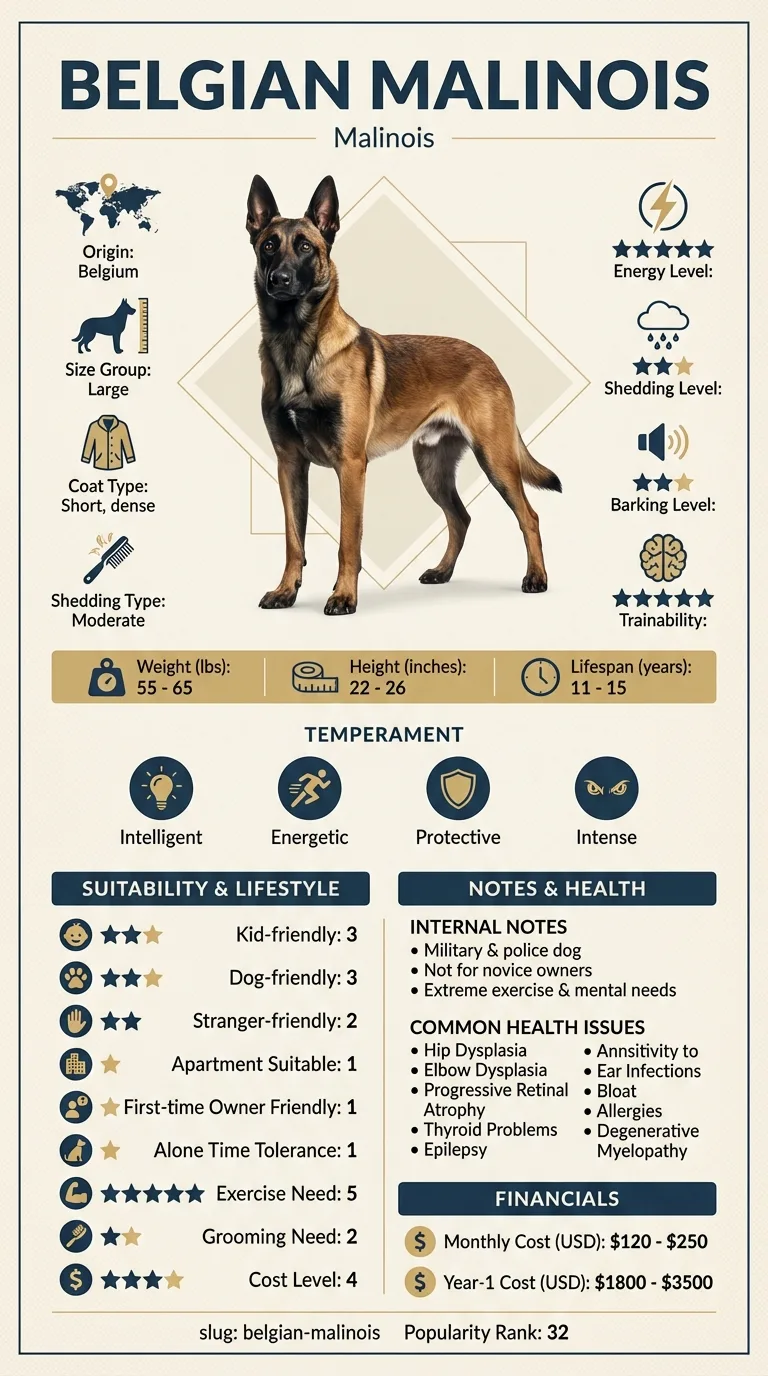
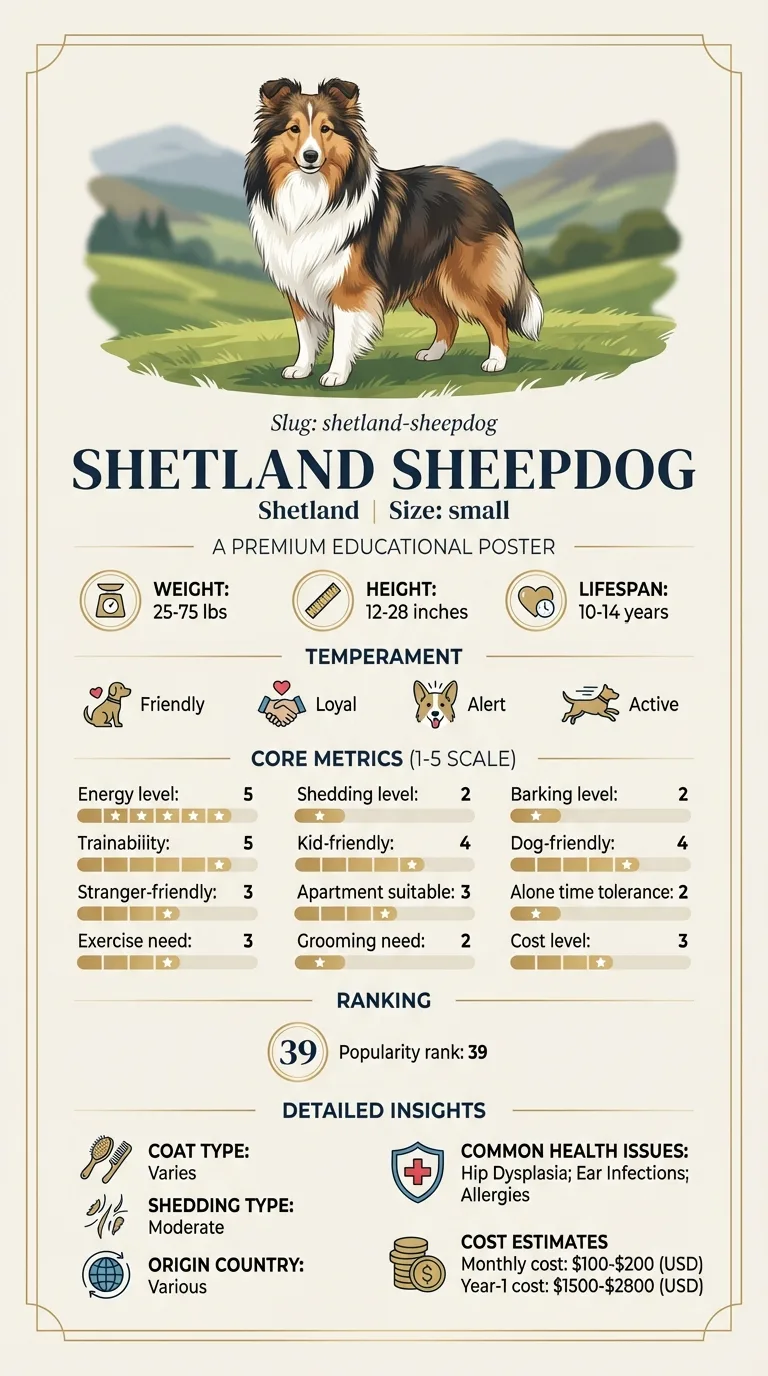
This is for someone already down to Belgian Malinois and Shetland Sheepdog and deciding between them. For this pair the decision usually turns on good for first-time owners and grooming need, so those are covered first and in most detail. Anyone choosing from a flat has a clear answer here: Shetland Sheepdog rates 3/5 against 1/5. There is no origin story here — only what changes about your week.
Between Belgian Malinois and Shetland Sheepdog, good for first-time owners is what separates them, and Shetland Sheepdog is the lower-effort dog of the two to keep.
Choose Belgian Malinois if you do not want a standing grooming appointment, shedding is a problem in your house and you want a dog that can keep up with an active routine.
Choose Shetland Sheepdog if you are in a flat or a smaller home, this is your first dog and your walking routine is modest.
| Feature | belgian malinois | shetland sheepdog | Winner |
|---|---|---|---|
| Size class | large | small | Equal |
| Weight | 55–65 lbs | 15–25 lbs | Equal |
| Height | 22–26 in | 13–16 in | Equal |
| Lifespan | 11–15 years | 12–14 years | Equal |
| Exercise need | Very high (5/5) | High (4/5) | shetland sheepdog |
| Grooming need | Low (2/5) | High (4/5) | belgian malinois |
| Shedding | Moderate (3/5) | High (4/5) | belgian malinois |
| Energy level | Very high (5/5) | High (4/5) | Equal |
| Barking | Moderate (3/5) | Very high (5/5) | belgian malinois |
| Apartment suitability | Very low (1/5) | Moderate (3/5) | shetland sheepdog |
| Good for first-time owners | Very low (1/5) | High (4/5) | shetland sheepdog |
| Tolerates being alone | Very low (1/5) | Low (2/5) | shetland sheepdog |
| Trainability | Very high (5/5) | Very high (5/5) | Equal |
| Good with kids | Moderate (3/5) | High (4/5) | shetland sheepdog |
| Good with other dogs | Moderate (3/5) | High (4/5) | shetland sheepdog |
| Friendly to strangers | Low (2/5) | Low (2/5) | Equal |
| Cost level | High (4/5) | Moderate (3/5) | shetland sheepdog |
| Coat | Short, dense | Long, dense double coat | Equal |
| Origin | Belgium | Various | Equal |
| Typical monthly cost | $120–$250 | $80–$150 | Equal |
| Typical first-year cost | $1,800–$3,500 | $1,100–$2,300 | Equal |
At 15-25 lbs and 13-16 inches, the Shetland Sheepdog is a small breed next to the Malinois's large-breed 55-65 lbs and 22-26. Despite the size gap, both are herding dogs at their core - the Sheltie just does it at a fraction of the mass, closer to a scaled-down Collie than anything resembling the Malinois's frame. That shared herding instinct sometimes shows up as chasing joggers or bikes in either breed if it isn't redirected early.
The Sheltie is more active than its small size suggests, rating 4/5 on exercise need against the Malinois's 5/5 - this is a working herding breed, not a lapdog, and it wants real daily activity, not just a stroll around the block. The one-point gap here is smaller than the size difference might imply. Agility work or a fenced yard to run in suits the Sheltie's energy especially well.
The Malinois needs far less coat care, 2/5 against the Sheltie's 4/5 - that long, dense double coat needs regular brushing to prevent mats, especially through seasonal coat blows. Shedding follows the same pattern: the Sheltie sheds more (4/5, high) than the Malinois's moderate 3/5, despite being the much smaller dog. Plan on brushing the Sheltie at least a few times a week to stay ahead of matting.
Barking is the standout number here - the Sheltie rates 5/5, the maximum on this site's scale, a breed famous for vocalizing at nearly everything. The Malinois is comparatively quiet at 3/5. Apartment suitability favors the Sheltie overall (3/5 versus 1/5), but that barking score is worth serious thought if you share walls with neighbors. Bark-management training early on can make a real difference before habits set in.
Both breeds tie at the top for trainability, 5/5 each - Shelties are frequently near the top of obedience competition rankings, every bit as sharp as the Malinois. Where they split is first-time-owner suitability: 4/5 for the Sheltie against the Malinois's 1/5. A smart, eager Sheltie gives a new owner a far gentler introduction to serious training work, and that eagerness makes it a good fit for reward-based methods.
The Sheltie edges ahead with kids (4/5 versus 3/5) and other dogs (4/5 versus 3/5), while the two tie on friendliness to strangers (both rated low, 2/5) - Shelties are famously reserved with unfamiliar people despite their warmth at home, a trait they actually share with the Malinois here. Early, positive exposure to new people helps both breeds settle faster around guests.
Lifespans land close - 12-14 years for the Sheltie, 11-15 for the Malinois. Unlike most pairings on this site, their health profiles share no overlap at all: the Sheltie's risks (collie eye anomaly, MDR1 drug sensitivity, dermatomyositis) are herding-breed-specific genetic conditions, while the Malinois's list covers hip and elbow dysplasia, epilepsy, and bloat. Ask about both sets of screening tests if you're comparing breeders.
The Sheltie costs less to keep, rating 3/5 (moderate) against the Malinois's 4/5 (high) - $80-150 monthly versus $120-250, and $1,100-2,300 in the first year versus $1,800-3,500. Its smaller size keeps food and medication costs down even with a heavier grooming routine factored in. That difference adds up meaningfully across several years of ownership, especially once routine vet care and food costs are factored in year over year.
Belgian Malinois weighs 55–65 lbs and lives 11–15 years; Shetland Sheepdog weighs 15–25 lbs and lives 12–14 years. The two diverge most on good for first-time owners, grooming need and apartment suitability and 1 other rated axes. They are level on friendly to strangers and trainability, so those cannot decide it. Where the table declares a winner it means less work for the owner, nothing more; descriptive rows are left as ties on purpose. The value here is in the differences between the two columns; treat any single score as approximate.

A lot - 15-25 lbs and 13-16 inches against the Malinois's 55-65 lbs and 22-26 inches. It's roughly a third of the Malinois's weight at the high end.
The Sheltie, by a wide margin - it rates 5/5, the maximum on this site's scale, against the Malinois's moderate 3/5. This is worth real consideration for apartment or close-neighbor living.
Yes, notably so - 4/5 versus the Malinois's 1/5, despite both breeds tying at 5/5 for raw trainability. The Sheltie's eagerness to please translates into an easier day-to-day learning curve.
No overlap at all, unusually - the Sheltie's risks (collie eye anomaly, MDR1 drug sensitivity, dermatomyositis) are distinct genetic conditions tied to herding breeds, separate from the Malinois's hip dysplasia, epilepsy, and bloat concerns.
The Sheltie runs cheaper - $80-150 versus $120-250 for the Malinois - and about $700 less across a typical first year.
The Sheltie, despite its small size - it rates 4/5 (high) against the Malinois's moderate 3/5, a result of that dense double coat.
The Sheltie, at 3/5 versus the Malinois's 1/5 - though its 5/5 barking score is a real trade-off to weigh against thin walls or close neighbors.
The Sheltie - smaller, friendlier, easier for beginners, and cheaper to keep, though its heavy barking is a real consideration for close-quarters living.
Meaningfully - $80-150 versus $120-250 for the Malinois, a gap of roughly $500-700 over a first year.
The Malinois, 5/5 versus the Sheltie's 4/5 - both want real daily activity, just one tier apart on this site's scale.
Close - 12-14 years for the Sheltie, 11-15 for the Malinois, with the ranges overlapping through most of that window.
Secure checkout on Stripe. We never see your card.
7-day money-back guarantee. Instant access.
Health information here is general and is not veterinary advice. If your dog shows pain, sudden behaviour change, or worsening symptoms, consult a licensed veterinarian.
Some links on this site are affiliate links. We may earn a commission at no extra cost to you, and we only suggest products we believe are helpful for dog owners.
We research and check what we publish, but we do not warrant that any figure, date, price, or statement is accurate, complete, or current, and we accept no liability for any loss, cost, injury, or other harm arising from the use of this site. Use it as one reference among several. You remain responsible for your own decisions and for your dog's care - confirm anything that matters with a licensed veterinarian or another qualified professional before you act on it. Full disclaimer.
Match your lifestyle to the right dog.
Take quizNot sure which breed is right for you? Take our 2-minute quiz to find out.
Take the quiz