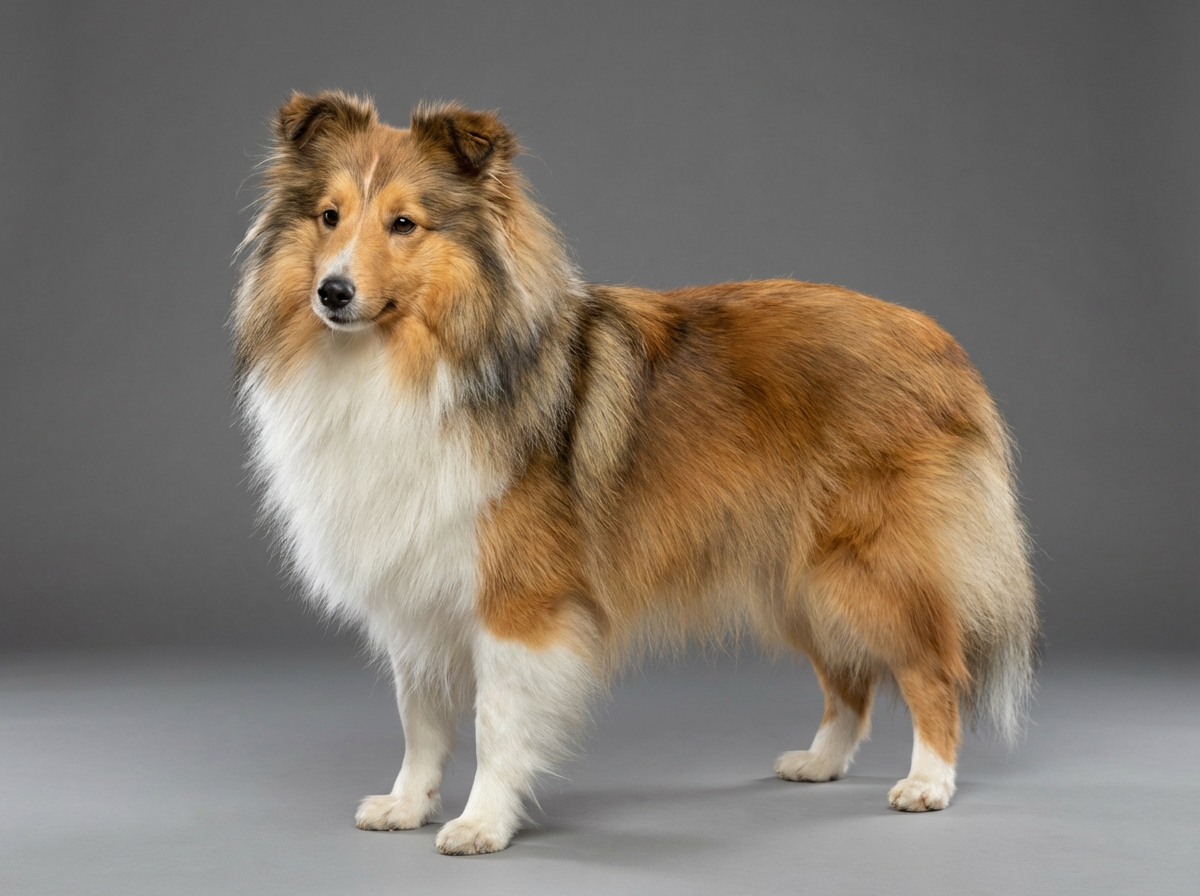
Health
What does MDR1 sensitivity actually mean?
A faulty gene builds a defective pump at the blood-brain barrier, so certain drugs reach the brain in amounts they normally never would.

Quick answer
What does MDR1 sensitivity actually mean?
A faulty gene builds a defective pump at the blood-brain barrier, so certain drugs reach the brain in amounts they normally never would.
Of the five health conditions documented for this breed, MDR1 drug sensitivity is the only one that can turn a routine dental into a crisis, and the only one you can resolve with a cheek swab.
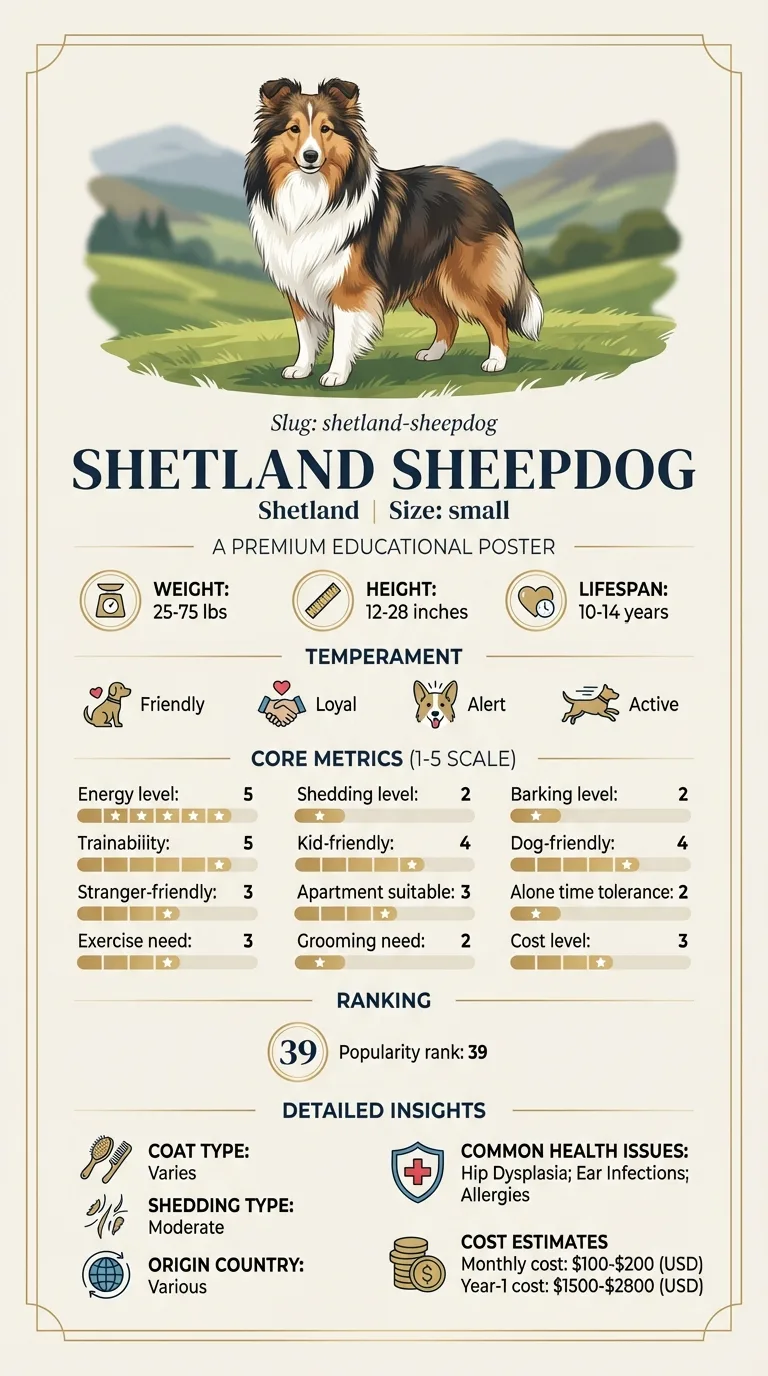
Owners booking a first spay, neuter or dental and being asked about breed. People whose Sheltie seemed unusually flat and wobbly for a day after a sedation. Anyone weighing whether a DNA test is worth the money before a surgery is even scheduled.
This guide is not medical advice. If your dog shows pain, sudden behavior change, or worsening symptoms, consult a licensed veterinarian.
Some links may be affiliate links. We may earn a commission at no extra cost to you. We only suggest products we believe are helpful for dog owners.
MDR1 drug sensitivity is one of the five conditions documented on the Shetland Sheepdog health profile. It is an inherited difference in a transport protein that normally keeps certain drugs out of the central nervous system. Affected dogs are entirely healthy until they meet one of those drugs, at which point a standard dose behaves like an overdose. Because it is invisible until tested for or triggered, it is the classic example of a breed trait that owners only learn about at the worst possible moment.
The faulty variant is well established in herding breeds and is documented specifically for the Shetland Sheepdog, though a substantial share of individual Shelties carry no affected copy. Testing is routine enough that most laboratories offering canine DNA panels include it. In practical terms, an untested Sheltie should be treated as potentially affected until a result says otherwise.
This is purely genetic and specific to the breed's ancestry. Shetland Sheepdogs share a herding lineage in which the MDR1 variant became established long before anyone understood what it did, and it has been carried forward through generations of selection for working ability and appearance. Nothing about the dog's size, coat or temperament influences it. A 15 pound Sheltie and a 25 pound Sheltie are equally likely to be affected, and the condition is entirely silent until a relevant drug enters the system.
The environment does not cause the sensitivity, but it determines whether it ever matters. Dogs who live rurally near livestock have more opportunity to encounter agricultural wormers. Households that buy parasite products online without veterinary input take more risk. Dogs treated across several different clinics can end up with no single record holding the genotype, which is a paperwork problem that becomes a clinical one.
Raise MDR1 at the pre-anesthetic consultation, ideally weeks ahead, so testing can be done in time. Contact the clinic urgently if your dog, after any sedation or medication, is disoriented, tremoring, unable to stand, drooling heavily, or has visibly abnormal eye movements. Those are neurological signs and they need veterinary assessment straight away rather than overnight observation at home. Also call promptly if a dog seems abnormally sleepy or unsteady more than twenty four hours after a procedure, or if you realise the dog has eaten a medication intended for livestock or for a person, which is an emergency regardless of genotype.
See all Shetland Sheepdog health problems, which breeds are prone to anesthesia sensitivity, or the full Shetland Sheepdog breed guide for temperament, exercise needs and ownership costs.
Testing takes a couple of weeks from swab to result. After that, nothing about the dog changes, because this is planning information rather than a condition to treat. A dog affected by a drug event typically needs supportive hospital care and recovers over days rather than hours.
Success here is entirely administrative and entirely achievable: a known genotype recorded in the file at every clinic your dog visits, and a lifetime of procedures where the sensitivity was designed around and never became an event.
In a dog with two working copies of MDR1, P-glycoprotein lines the capillaries of the brain and spinal cord and continuously ejects a specific family of drug molecules. The brain stays chemically insulated. In a dog with two faulty copies the pump is largely absent, and those same molecules cross freely and build up. The result is exaggerated, prolonged sedation from a normal dose, and with certain drugs, neurological signs well beyond sedation.
Inheritance matters. A dog with one faulty copy and one normal copy has partial protection and usually shows a milder, dose-dependent sensitivity. A dog with two faulty copies has none. This is why the DNA result is reported as a genotype rather than a yes or no, and why your vet will want the actual result rather than a guess based on breed alone. Plenty of Shelties carry no faulty copy at all.
The practical consequence is that anesthesia in a Sheltie is not more dangerous, it is more specific. An anesthetist who knows the genotype selects around the affected drug families, adjusts doses, and plans for a longer recovery window. An anesthetist who does not know is working blind on a breed where the sensitivity is documented.
You are not expected to know pharmacology. You are expected to hand over the right facts before the dog is premedicated, not afterwards.

Fen was a seven year old tricolour Sheltie booked for a scale and polish after his owner Marion noticed bad breath. The practice asked whether he had been MDR1 tested. He had not, and Marion had never heard of it. The dental was pushed back three weeks so a swab could be sent off. Fen came back carrying two faulty copies. Nothing about him changed, and he was still the same bright, noisy dog who barked at the postman. What changed was the anesthetic plan: different premedication, a lower dose, and a longer recovery window with staff watching him rather than a same-hour discharge. He woke smoothly and went home that evening. Marion has since had the result added to the file at the emergency hospital twenty miles away, on the reasonable grounds that emergencies do not happen during office hours.
Key takeaway: The test is only useful if the result is somewhere a stranger can find it at three in the morning. Put it everywhere.
A cheek swab or a small blood sample sent to a laboratory. It is a one-off test because the genotype never changes, and it is cheap relative to a single surgery. Many broad breed health panels now include it by default.
No. It is documented in the breed, which means it appears at a meaningful frequency, not that every individual has it. Some Shelties have two normal copies and no sensitivity at all. That is exactly why testing beats assuming.
Not inherently. Modern protocols handle this well when the team knows about it. The risk comes from an unknown genotype combined with a drug choice that would be perfectly reasonable in another breed.
Yes, mention it and hand over the result. It saves the team from applying breed-based caution unnecessarily, and it puts the actual evidence in the file rather than an assumption.
Some parasite products belong to drug families affected by MDR1 and some do not. This is a conversation for your vet before you buy anything over the counter, and one of the strongest arguments for testing a dog who will be on lifelong prevention.
Grogginess for the rest of the day is normal in any dog. What deserves a phone call is a Sheltie still unsteady, disoriented, tremoring or unable to stand the following morning, or one whose pupils and responsiveness seem wrong to you.
A faulty gene builds a defective pump at the blood-brain barrier, so certain drugs reach the brain in amounts they normally never would.
Yes. It is a single cheek swab, the result is permanent, and it costs a fraction of one surgical procedure.
You can read about it, but drug selection is your vet's job. Bring the genotype and let the clinical team choose the protocol.
The genotype is fixed for life. What changes is that older dogs handle any anesthetic less robustly, so pre-anesthetic bloodwork matters more.
Responsible Sheltie breeders test for it and share results. Ask directly and ask for paperwork, not a verbal reassurance.
A one-page prep sheet for this condition: the signs, the questions to ask, what to get priced. Unlocks here.
You get: Vet visit prep sheet
No spam. One-click unsubscribe. See our privacy policy.
Preview page 1 before you decide.