Costs
Shetland Sheepdog cost in Indianapolis
$74–$140 monthly and $1,023–$2,139 in year one, slightly below average. Indiana's county 4-H dog programme gives a five-out-of-five trainability rating somewhere to go for almost no money.

See Shetland Sheepdog price across all cities →
Quick answer
Shetland Sheepdog cost in Indianapolis
$74–$140 monthly and $1,023–$2,139 in year one, slightly below average. Indiana's county 4-H dog programme gives a five-out-of-five trainability rating somewhere to go for almost no money.
Most cities charge you to give a clever dog something to do. Indiana hands it to a child for the price of a county enrolment. The 4-H dog project runs in every county in the state, culminating each August at the Indiana State Fairgrounds on the north side of Indianapolis, and it is one of the largest youth dog programmes anywhere in the country. Obedience, showmanship, agility and grooming are all judged, and the handler has to be the kid.
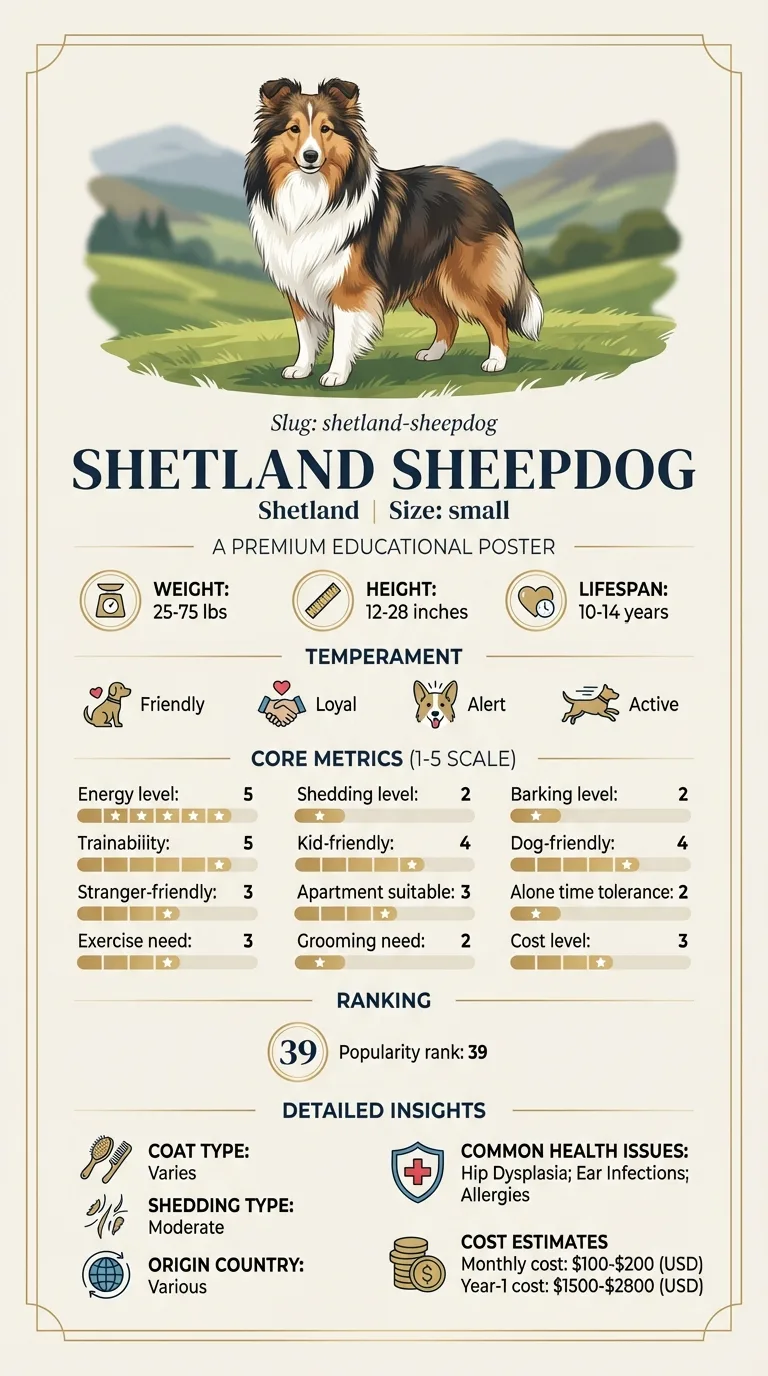
The documented conditions in this breed are Collie Eye Anomaly, MDR1 Drug Sensitivity, Dermatomyositis, Hypothyroidism and Patellar Luxation. MDR1 is the one to raise before anything else: an inherited sensitivity to several routine veterinary drugs, some parasite preventives and anesthetic agents included, where a standard dose can kill an affected dog. Test once, record it permanently.
Indianapolis prices run slightly below the national average with no hidden local premium, and the notable line is how little structured training costs here compared with a private-instruction market.
Estimate · source: estimation · confidence: medium · updated 2026-09-06 · not a quote
| Item | Cost range |
|---|---|
Initial costs (exam, sterilization, genetic testing, gear) Includes the MDR1 genotype and an eye check, both worth doing before the dog is a year old. | $340 - $580 |
| Item | Cost range |
|---|---|
Food Portions for a fifteen-to-twenty-five-pound dog at Indiana grocery pricing. | $29 - $50 |
Coat maintenance Weekly work year-round plus two heavy shedding periods; a showmanship project keeps this ahead of where most household coats sit. | $24 - $48 |
Each range starts from a national baseline for this breed's size class and is then adjusted for local cost of living and veterinary pricing. The baselines, and the source each one came from, are listed on our sources page (dataset 2026.09). Two inputs, the purchase price and the emergency reserve, have no published national figure we could verify, so we leave them to you rather than invent them.
These are planning estimates, not quotes. Your own numbers will move with the individual dog, your vet and your insurer. Build a budget with your own figures.
Insurance decisions in Indianapolis are straightforward because nothing local distorts them: the question is purely whether you could self-fund a five-figure orthopaedic or ophthalmic pathway.
Enrol while the record is clean. Every insurer excludes inherited conditions, so the value sits in accident and acute illness cover, and a dog doing regular ring and agility work has more accident exposure than a sofa dog.
A household with a genuine reserve and a dog with clean eye, knee and thyroid baselines can reasonably self-insure at these price levels.
The Indianapolis saving is structural: the state provides the training infrastructure that owners in other cities buy privately.
A five-out-of-five trainability rating does not mean the dog trains itself. What it means is that the dog reads a handler quickly, learns sequences fast and stays engaged through repetition. Those three properties are exactly what a child needs, because a child cannot out-muscle or out-time an adult trainer. They have to rely on the dog meeting them halfway, and this breed does.
The money involved is genuinely small. County 4-H enrolment is a nominal annual fee, meetings are run by volunteers at fairgrounds and extension offices, and the equipment is a lead, a collar and a grooming kit you would already own for this coat. Compare that against private obedience instruction at market rates over the same twelve months and the gap is the largest single saving available to an Indianapolis owner of a clever dog.
There is a real caution attached. This is a herding breed with a vocal streak rated at the top of the scale, and a ring full of unfamiliar dogs, judges and spectators is a demanding environment for an animal rated two out of five with strangers. The families this works for start early, take the dog to low-pressure practice nights long before the fair, and treat the first season as exposure rather than competition. The ones who enter cold usually discover the reserve at the worst possible moment.
Nothing about Indianapolis pricing is unusual, which is genuinely useful information. General costs run modestly below the national average, veterinary practices are plentiful across Marion and the surrounding donut counties, and there is no local premium hiding in boarding or grooming rates the way there is in a tourist or coastal market.
The parasite-prevention window runs roughly eight months, a clean seasonal shape with a real winter gap. That saves a few doses against a Gulf Coast budget, though it is worth deciding deliberately rather than by drift whether you are stopping and restarting or simply running the year continuously.
Grooming is where an Indiana budget quietly leaks. A long, dense double coat with heavy feathering needs work every week, and twice a year it blows out in earnest. A family running a 4-H showmanship project will actually be ahead here, because grooming is a judged class and the practice keeps the coat in better condition than most household dogs ever see. That is not a saving anyone plans for, but it is real.

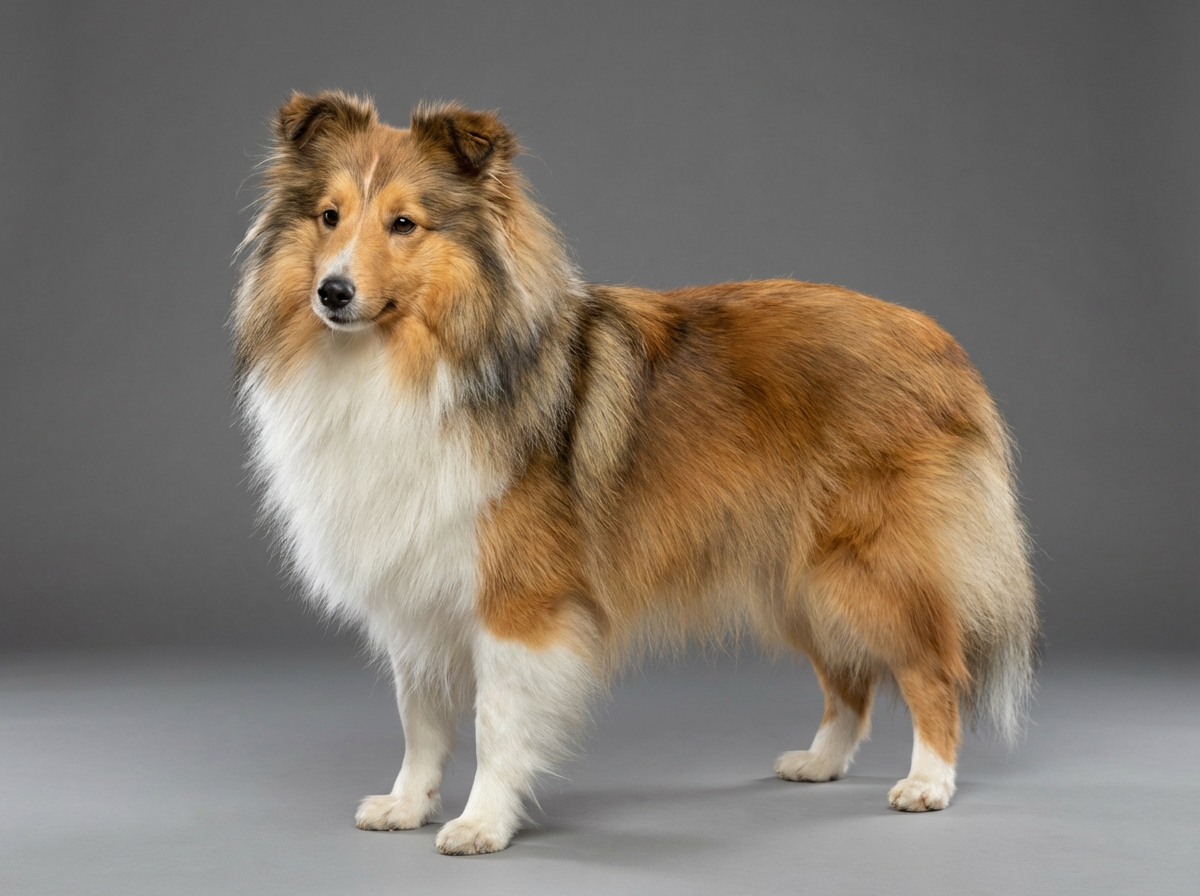
A family on the east side of Indianapolis enrolled their daughter and their two-year-old Sheltie in the county dog project mostly to fill a summer. The dog learned the obedience pattern in a fortnight and the child spent the rest of the season learning to slow down enough to match him. What surprised the parents was the second-order effect: nine months of weekly club nights turned a dog who had barked at every visitor into one who could work in a crowded barn. The training that fixed it had cost them an enrolment fee and petrol.
Key takeaway: In Indiana the cheapest fix for this breed's reserve around strangers is a youth programme designed for something else entirely.
About $74 to $140, a little under the national average, with no local service premium in grooming or boarding rates.
Roughly $1,023 to $2,139, including the first exam, sterilization, vaccinations and starting equipment.
It suits the format unusually well. Trainability is rated five out of five and friendliness with children four, which is the combination a young handler needs. The reservation is around strangers, not around the work.
A nominal county enrolment fee and equipment you would already own for this coat. Against a year of private obedience instruction the difference is substantial.
Start at low-pressure practice nights months ahead and treat the first season as exposure rather than competition. This breed is rated two out of five with unfamiliar people, and a crowded ring is a lot to meet cold.
Around $490 covers a typical significant visit at local pricing, which sits close to the national midpoint.
$74–$140 monthly and $1,023–$2,139 in year one, slightly below average. Indiana's county 4-H dog programme gives a five-out-of-five trainability rating somewhere to go for almost no money.
Yes, and it is one of the better breeds for it. The dog reads a handler quickly and stays engaged through repetition, which is what compensates for a young handler's inexperience.
This guide is not medical advice. If your dog shows pain, sudden behavior change, or worsening symptoms, consult a licensed veterinarian.
Some links may be affiliate links. We may earn a commission at no extra cost to you. We only suggest products we believe are helpful for dog owners.
We research and check what we publish, but we do not warrant that any figure, date, price, or statement is accurate, complete, or current, and we accept no liability for any loss, cost, injury, or other harm arising from the use of this site. Use it as one reference among several. You remain responsible for your own decisions and for your dog's care - confirm anything that matters with a licensed veterinarian or another qualified professional before you act on it. Full disclaimer.
One sheet with every line item, the emergency fund and when insurance pays off - unlocks on this page.
You get: 12-month budget sheet
No spam. One-click unsubscribe. See our privacy policy.
Preview page 1 before you decide.