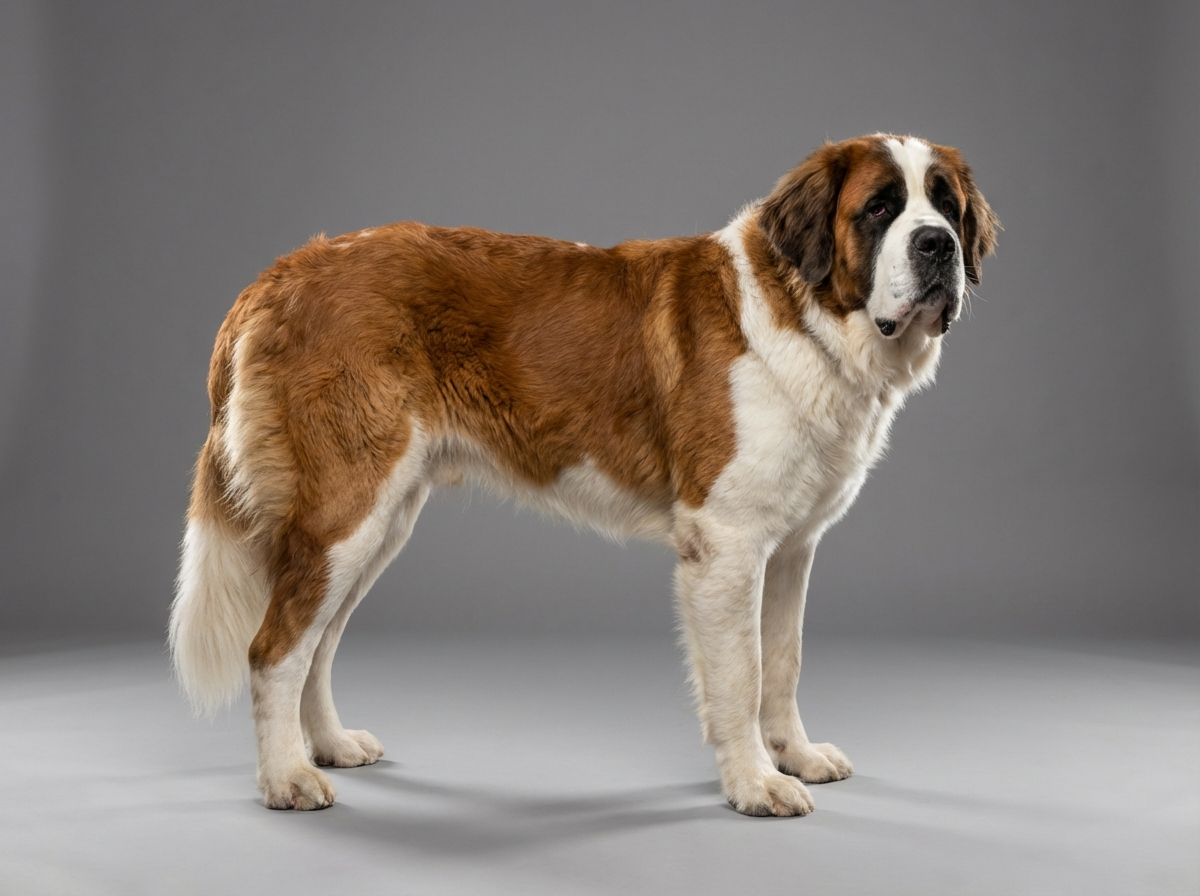
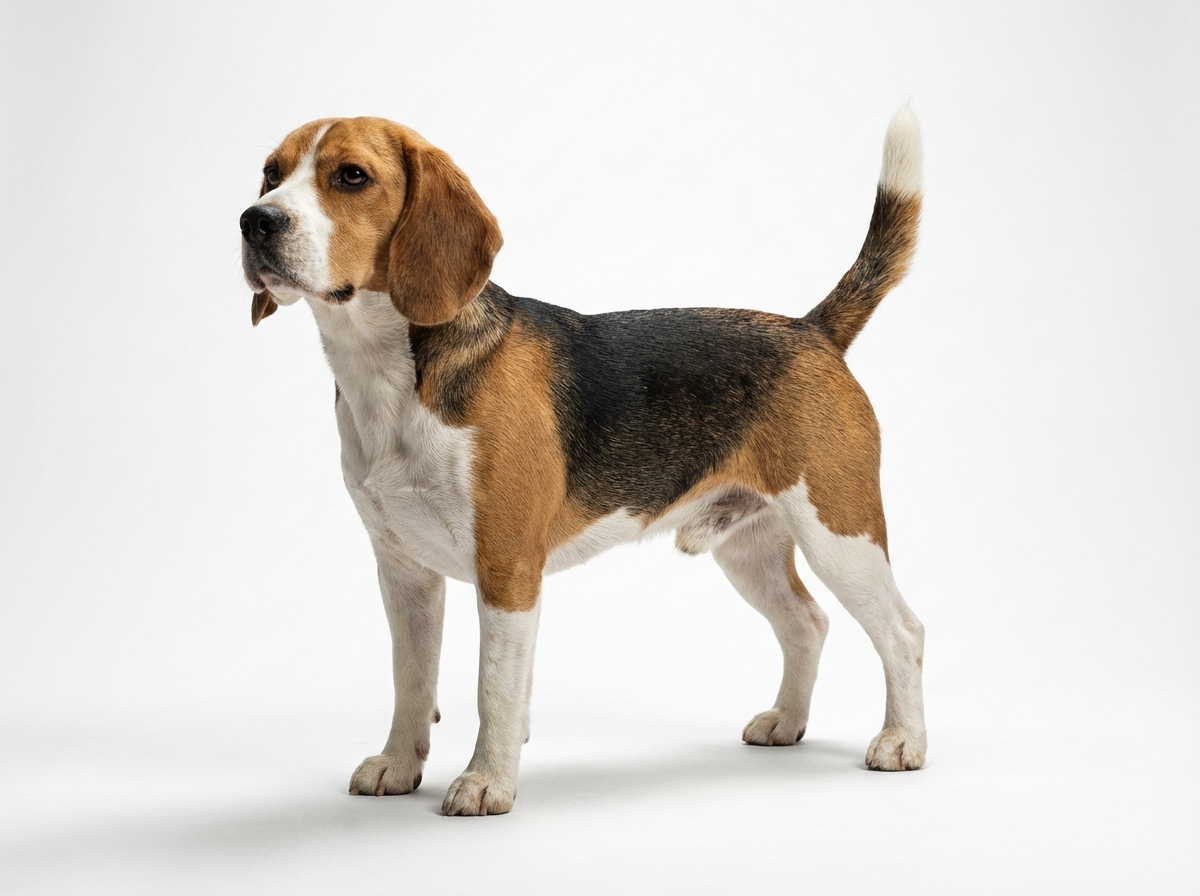
Health
Is CDDY a real concern for Saint Bernards?
No — it is a dwarfism-linked genetic trait relevant to short-legged breeds, not to this tall, giant, proportionally built breed.

Quick answer
Is CDDY a real concern for Saint Bernards?
No — it is a dwarfism-linked genetic trait relevant to short-legged breeds, not to this tall, giant, proportionally built breed.
You searched this term because it appeared on a list somewhere, attached to your dog's breed. The honest answer is that it doesn't apply here — and what actually matters for a Saint Bernard's spine is a completely different set of risk factors, tied to giant size rather than dwarfism genetics.
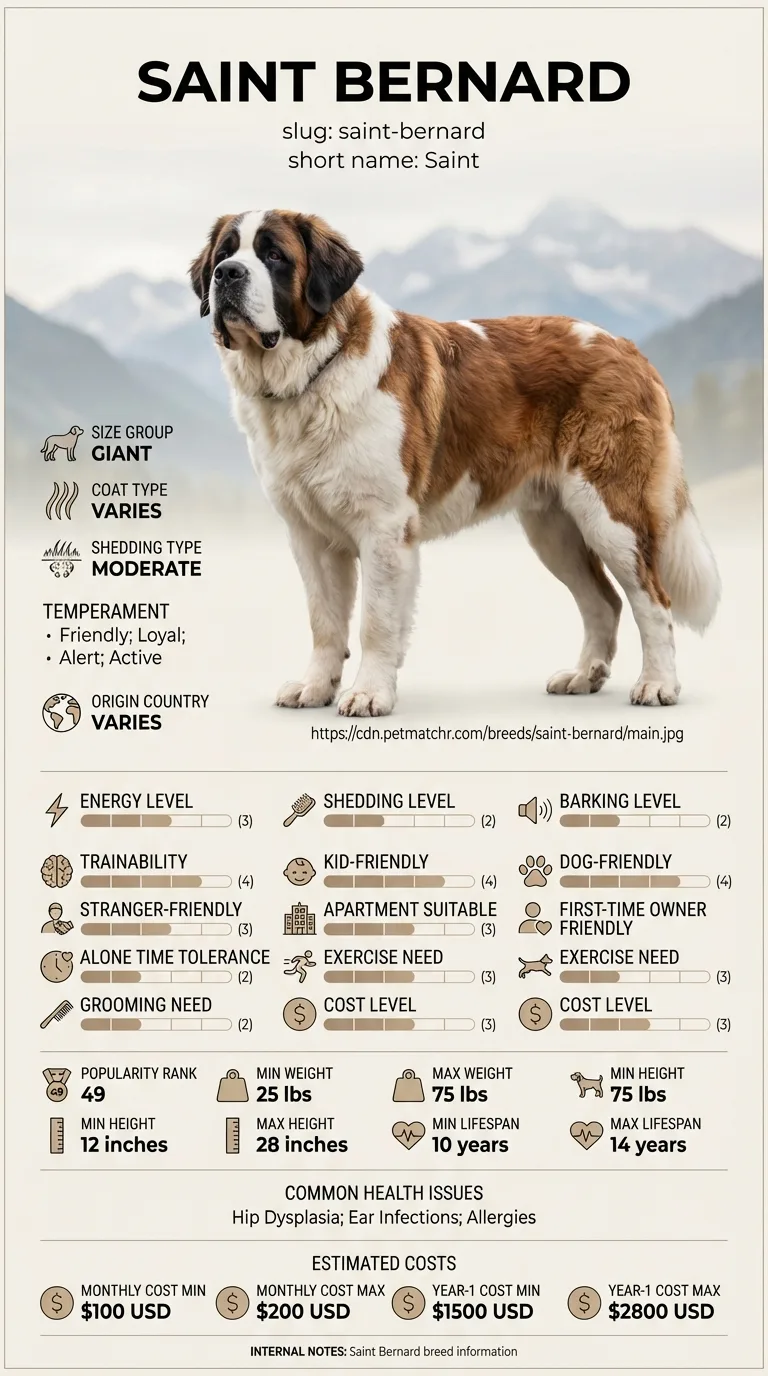
Owners who found 'chondrodystrophy' listed as a Saint Bernard health concern somewhere online and want a straight answer about whether their dog actually has this genetic trait, rather than more generic, unhelpful reassurance.
This guide is not medical advice. If your dog shows pain, sudden behavior change, or worsening symptoms, consult a licensed veterinarian.
Some links may be affiliate links. We may earn a commission at no extra cost to you. We only suggest products we believe are helpful for dog owners.
Chondrodystrophy (CDDY) is a genetic variant that causes shortened, curved limbs and accelerated disc degeneration in dwarfism-linked breeds like Dachshunds and Corgis. It has no established documentation or biological basis in Saint Bernards, a tall, proportionally built giant breed, and this page exists to correct a mismatch that sometimes appears on generic breed health lists.
CDDY itself is not documented as occurring in Saint Bernards at any meaningful rate, since the breed's genetics and structure do not match the chondrodystrophic pattern. The genuine, giant-breed-relevant spinal and joint risks this breed does carry are covered on their own dedicated pages.
There is no breed driver here, because CDDY is not an established trait in Saint Bernards. The relevant breed-specific drivers for actual spinal health in this breed are its giant size, rapid growth rate, and documented hip and elbow dysplasia risk, all mechanically distinct from chondrodystrophic disc disease.
Since CDDY itself does not apply, the relevant environmental factors are the same ones that affect any giant breed's spine: repetitive high-impact activity, excess body weight, and hard flooring, all of which are covered in more detail on this breed's dedicated back-health pages.
There is no CDDY-specific reason to see a vet, since the condition does not apply to this breed. See a vet for any of the genuinely relevant signs of giant-breed back or joint trouble instead: reluctance to jump, stiffness, or any change in gait, treating sudden hind-end weakness or collapse as a true emergency regardless of cause.
See all Saint Bernard health problems, which breeds are prone to chondrodystrophy cddy, or the full Saint Bernard breed guide for temperament, exercise needs and ownership costs.
There is no CDDY-related timeline to track for this breed, since the condition does not apply. Genuine, giant-breed-relevant spinal health is a lifelong management focus, detailed on this breed's dedicated back and spine pages.
Success here is simply an accurate understanding: recognizing that this specific term does not describe a real risk for your dog, and redirecting attention to the spinal and joint concerns that are actually documented for Saint Bernards.
CDDY refers to a specific inserted retrogene affecting the FGF4 gene, which produces the shortened, curved limbs characteristic of chondrodystrophic breeds and also accelerates degeneration of the discs between vertebrae, raising the lifetime risk of disc herniation in those breeds. It is well documented and genetically tested for in Dachshunds, Corgis, Basset Hounds and similar breeds specifically because of their distinctive body shape.
A Saint Bernard's body plan is the opposite of this pattern: tall, long-legged, and built to a giant proportional standard rather than a shortened, dwarfed one. There is no established documentation of the CDDY variant being a relevant concern in this breed's genetics, and nothing about the breed's structure suggests it should be. If this term appeared on a generic list applied to many breeds indiscriminately, it was very likely applied without regard to whether it actually fits the breed in question.
None of these involve the CDDY variant at all — they are giant-breed-specific mechanisms, and they are what a Saint Bernard owner should actually be paying attention to.

When Maple's owners researched health risks after adopting their Saint Bernard puppy, they found a generic online breed list that included chondrodystrophy among a dozen conditions, alongside items clearly copied from other breeds' pages. Confused, since Maple was clearly a tall, long-legged giant breed dog with nothing resembling a Dachshund's build, they asked their vet directly. Their vet confirmed what the mismatch suggested: CDDY has no established relevance to Saint Bernards, and the list had almost certainly applied a broad template without verification. Maple's owners refocused their attention on the breed's actual documented risks — hip dysplasia, growth-period bone stress and general size-related back strain — and set up a wellness plan around those instead.
Key takeaway: A single ill-fitting item on a generic list nearly sent Maple's owners down an irrelevant research path — a direct question to their vet redirected their attention to the risks that actually mattered for their dog.
No — chondrodystrophy describes a dwarfism-related body structure found in short-legged breeds. Saint Bernards are a tall, proportionally built giant breed with no established connection to this trait.
Some generic health-risk lists apply broad condition names across many breeds without verifying they actually fit the specific breed's documented biology. This is one of those cases.
CDDY testing exists and is meaningful for chondrodystrophic breeds specifically. There is no established reason to test for it in a Saint Bernard given the breed's completely different body structure.
The relevant risks are giant-breed-specific: general back strain from size and growth, and less commonly, cervical instability or lumbosacral stenosis — mechanisms entirely different from CDDY-driven disc disease.
Any dog can develop disc issues with age, but the accelerated, genetically driven pattern seen in CDDY-positive breeds is not the relevant concern for a Saint Bernard. General size-related back and spine care is the more useful focus.
It happens when broad, generic health information gets applied across breeds without verification. It's worth cross-checking any surprising or ill-fitting claim against your specific breed's actual documented traits.
No — it is a dwarfism-linked genetic trait relevant to short-legged breeds, not to this tall, giant, proportionally built breed.
Giant-breed-specific risks: general back strain from size and rapid growth, and less commonly cervical or lumbosacral spinal conditions.
Not specifically for CDDY in this breed, since it has no established relevance to Saint Bernard biology.
Generic health lists sometimes apply condition names across many breeds without verifying they actually fit each one.
No — Saint Bernards are tall and proportionally built, the structural opposite of a chondrodystrophic breed.
A one-page prep sheet for this condition: the signs, the questions to ask, what to get priced. Unlocks here.
You get: Vet visit prep sheet
No spam. One-click unsubscribe. See our privacy policy.
Preview page 1 before you decide.