DogBreedCompass
← Back to breed profileEvery breed’s cost in Virginia Beach

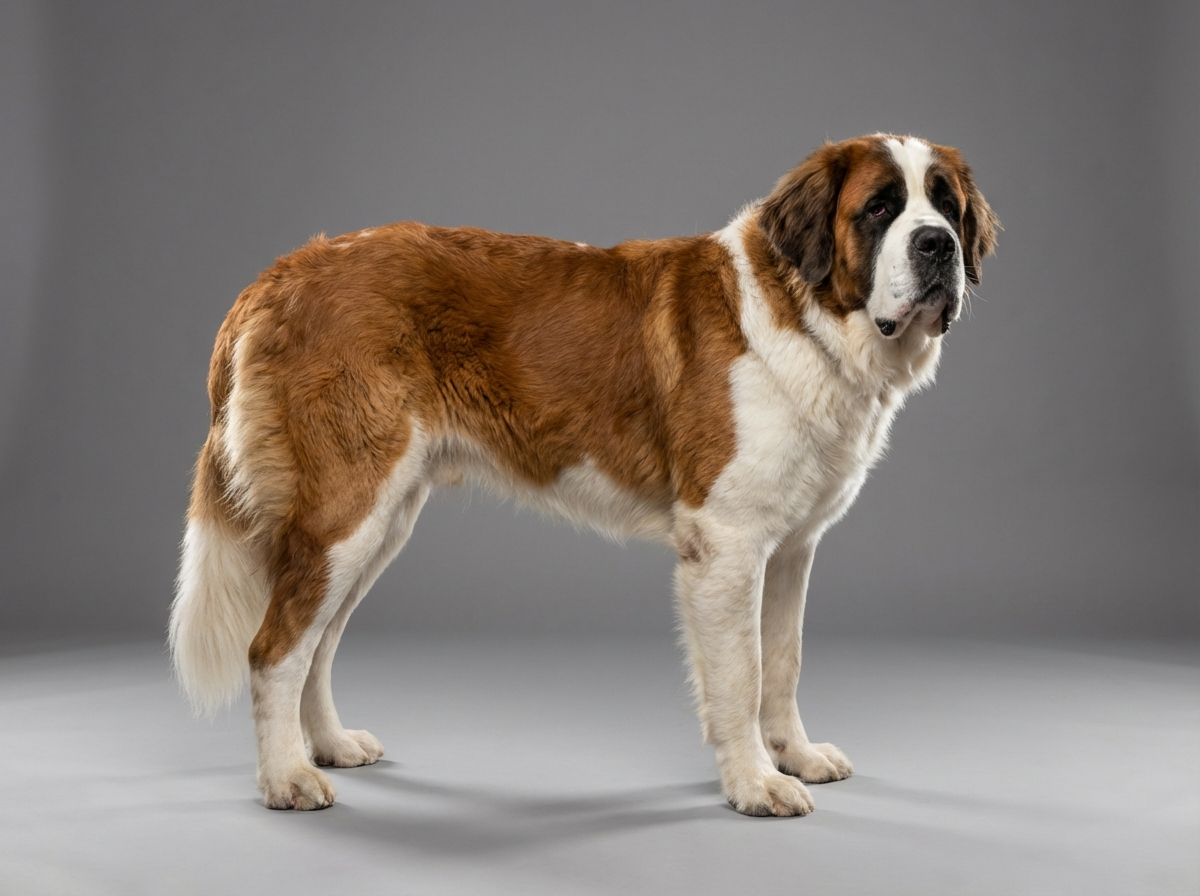
Saint Bernard Cost in Virginia Beach

See Saint Bernard price across all cities →

Quick answer

Saint Bernard cost in Virginia Beach

About $150–$310 monthly and $2,200–$4,200 for year one, right at the national average — with the local advantage that one of the flattest cities in the country offers exactly the even, level walking an ageing giant's joints want.

A Saint Bernard in Virginia Beach costs about $150 to $310 a month, with the first year landing near $2,200 to $4,200 — right at the national average, which makes Virginia's largest city an unusually clean market to plan in. The local advantage for this particular breed is topographical and easy to overlook: this is one of the flattest cities in the country, and it has an enormous amount of flat, even, made surface to walk on.

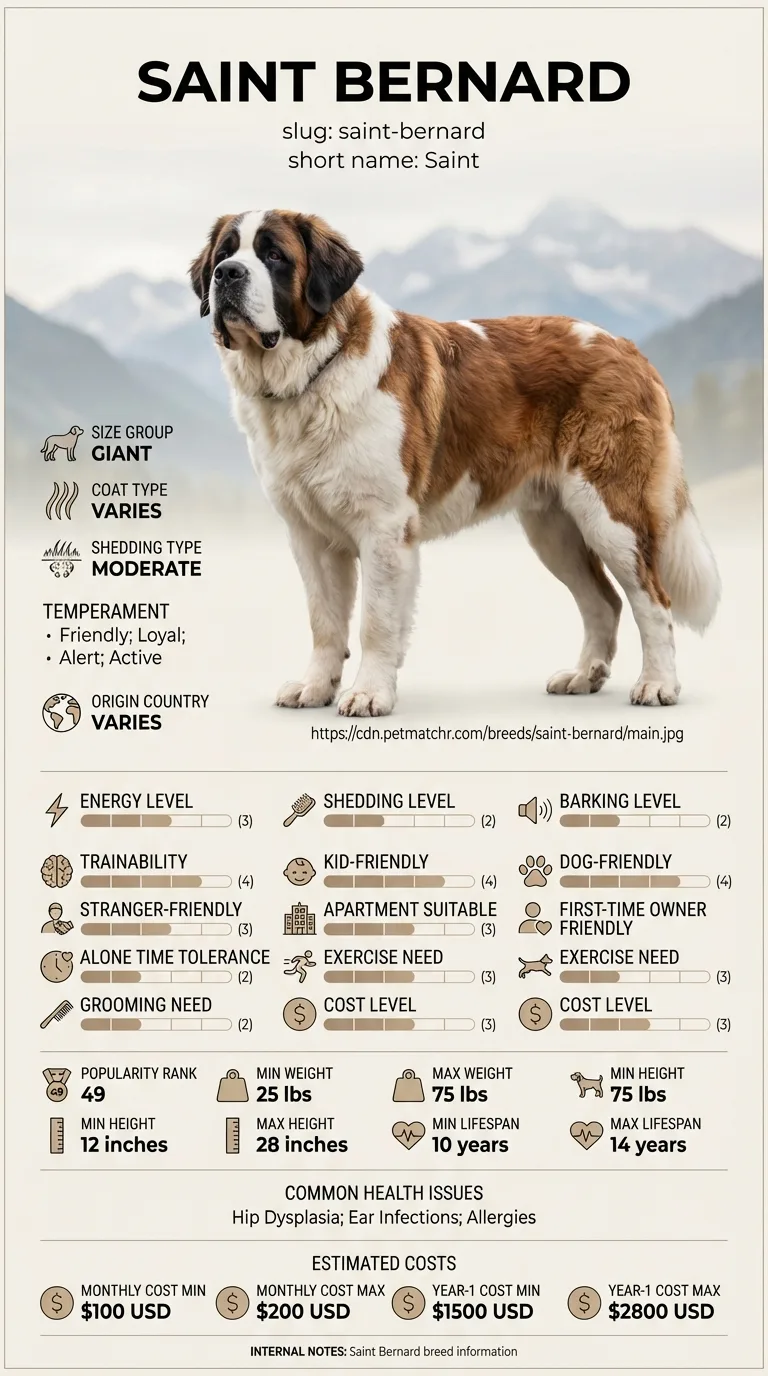
Saint Bernard Cost in Virginia Beach infographic

Why costs vary

Those two joint conditions sit alongside Dilated Cardiomyopathy, Entropion and Bloat on this breed's documented list. Orthopedic disease is the one where daily routine genuinely influences how comfortable the dog is at eight, and where the difference between managing well and managing badly shows up as medication, rehabilitation and eventually mobility equipment.

Cost summary

Virginia Beach prices at the national middle with a nine-month prevention season, and its most valuable local asset for this breed costs nothing at all.

Estimate · source: estimation · confidence: medium · updated 2026-09-06 · not a quote

First year
$2200 - $4200
Ongoing monthly
$150 - $310

First-year expenses

ItemCost range
One-time setup (giant crate, bed, first exam, spay/neuter)
A supportive orthopedic bed belongs in this line rather than being deferred, since giant joints benefit from it early.
$520 - $900

Monthly expenses

ItemCost range
Food
The largest recurring line, with the quantity determined by the dog rather than by local retail pricing.
$72 - $129
Parasite prevention (nine-month coastal season)
Coastal humidity stretches the window well past a single season, at the top weight bracket available.
$28 - $51

Is pet insurance worth it?

Good daily routine reduces how badly joint disease goes; it does not decide whether it happens, which is what insurance is for.

When insurance makes sense

Worth buying early if an orthopedic procedure and its long rehabilitation would be difficult to fund from savings.

When you might skip it

An owner with a genuine reserve can self-fund, and this market's average pricing makes accumulating one realistic.

Ways to save without cutting essentials

The most valuable thing in this city for this breed is free, and the rest is ordinary discipline.

  • Use the level paved paths for daily walking rather than loose sand or uneven ground.
  • Take several short steady walks a day instead of one long outing, which suits a 2-out-of-5 exercise requirement.
  • Buy prevention against the region's nine-month season instead of a default twelve.
  • Keep summer outings early and late, since a heavy alpine coat and coastal humidity are a poor mix at midday.
  • Book summer boarding well ahead, because giant runs are the scarcest category in a resort city's peak season.

Virginia Beach Cost Factors: Flat, Even and Predictable Ground

For a large dog with stiffening joints, the best walking surface is flat, even and predictable. Steady movement on level ground maintains muscle and range of motion; uneven footing, steep descents and sudden changes in grade are where an older giant twists, slips or overloads a joint. Virginia Beach happens to offer an unusual quantity of exactly the right kind of ground, and it is free.

That matters more than it sounds because this breed's documented exercise requirement is 2 out of 5. The daily walk is short, so its quality is the whole of it. Twenty steady minutes on a level path several times a day does more for an ageing giant than a single ambitious outing over rough ground.

Sand is the exception worth naming. Loose sand is hard work and unstable footing for a heavy dog, which is fine occasionally and unsuitable as a routine. It is also worth knowing that the city restricts dogs from the resort-area beach during the summer season, so the paved path beside it is the practical year-round option anyway.

The Rest of a Coastal Virginia Budget

Service pricing here sits at the national middle, with no unusual local premium in either direction. The parasite-prevention window runs about nine months — coastal humidity stretches it well past a single season without quite reaching year-round — and every dose sits in the top weight bracket the product line offers.

Summer requires the usual discipline for a heavy alpine coat in a humid climate: outings early and late through the hottest weeks, water always available, and no midday walking regardless of how pleasant the breeze is at the shore. That costs nothing beyond attention.

Everything else is standard giant-breed budgeting. Food is the largest recurring line and its size is set by the dog. Grooming is a genuine recurring cost for a heavy seasonal shedder. Boarding is charged by run size, and a giant fits only the largest category, which in a coastal city fills quickly through the summer.

Saint Bernard Cost in Virginia Beach - The Rest of a Coastal Virginia Budget

The Same Walk, on Better Ground

A Virginia Beach owner whose nine-year-old Saint Bernard was slowing down assumed the answer was less walking. Their veterinarian suggested the opposite: the same amount of movement, but consistently, on flat even surfaces rather than the uneven grass verges they had been using. Three short outings a day on a paved path replaced one longer wander. Within a couple of months the dog was moving more freely, and the family had spent nothing to achieve it.

Key takeaway: For an ageing giant, the surface matters more than the distance. In one of the flattest cities in the country, that is an advantage available to every household for free.

Frequently asked questions

What does a Saint Bernard cost monthly in Virginia Beach?

About $150 to $310, essentially the national average, with no unusual local premium in either direction.

And the first twelve months?

Roughly $2,200 to $4,200, once the initial exam, sterilisation and giant-sized equipment are added to the recurring costs.

Why does flat terrain matter for this breed?

Because level, even ground is the best walking surface for a heavy dog with joint disease. Steep descents and uneven footing are where an older giant twists or overloads a joint.

Is the beach itself useful?

Not as a routine. Loose sand is unstable and hard work for a heavy dog, and the city restricts dogs from the resort-area beach during the summer season anyway.

How much walking does this breed need?

Less than people expect. The documented exercise requirement is 2 out of 5, so several short steady walks on level ground beat one long ambitious one.

What emergency reserve makes sense here?

Around $1,250, sized for average local pricing against the quantity of drugs and materials a giant patient consumes.

Quick answers

View more answers
Costs

Saint Bernard cost in Virginia Beach

About $150–$310 monthly and $2,200–$4,200 for year one, right at the national average — with the local advantage that one of the flattest cities in the country offers exactly the even, level walking an ageing giant's joints want.

Related DogBreedCompass guides

Important reminder

This guide is not medical advice. If your dog shows pain, sudden behavior change, or worsening symptoms, consult a licensed veterinarian.

Some links may be affiliate links. We may earn a commission at no extra cost to you. We only suggest products we believe are helpful for dog owners.

Get the 12-month budget for this breed in your city

One sheet with every line item, the emergency fund and when insurance pays off - unlocks on this page.

You get: 12-month budget sheet

No spam. One-click unsubscribe. See our privacy policy.

Preview page 1 before you decide.

Related guides