Health
What's the clearest sign of bloat?
A visibly swollen, tight abdomen combined with repeated unproductive attempts to vomit.

Quick answer
What's the clearest sign of bloat?
A visibly swollen, tight abdomen combined with repeated unproductive attempts to vomit.
Bloat doesn't wait for a diagnosis; every hour without treatment measurably worsens the odds.
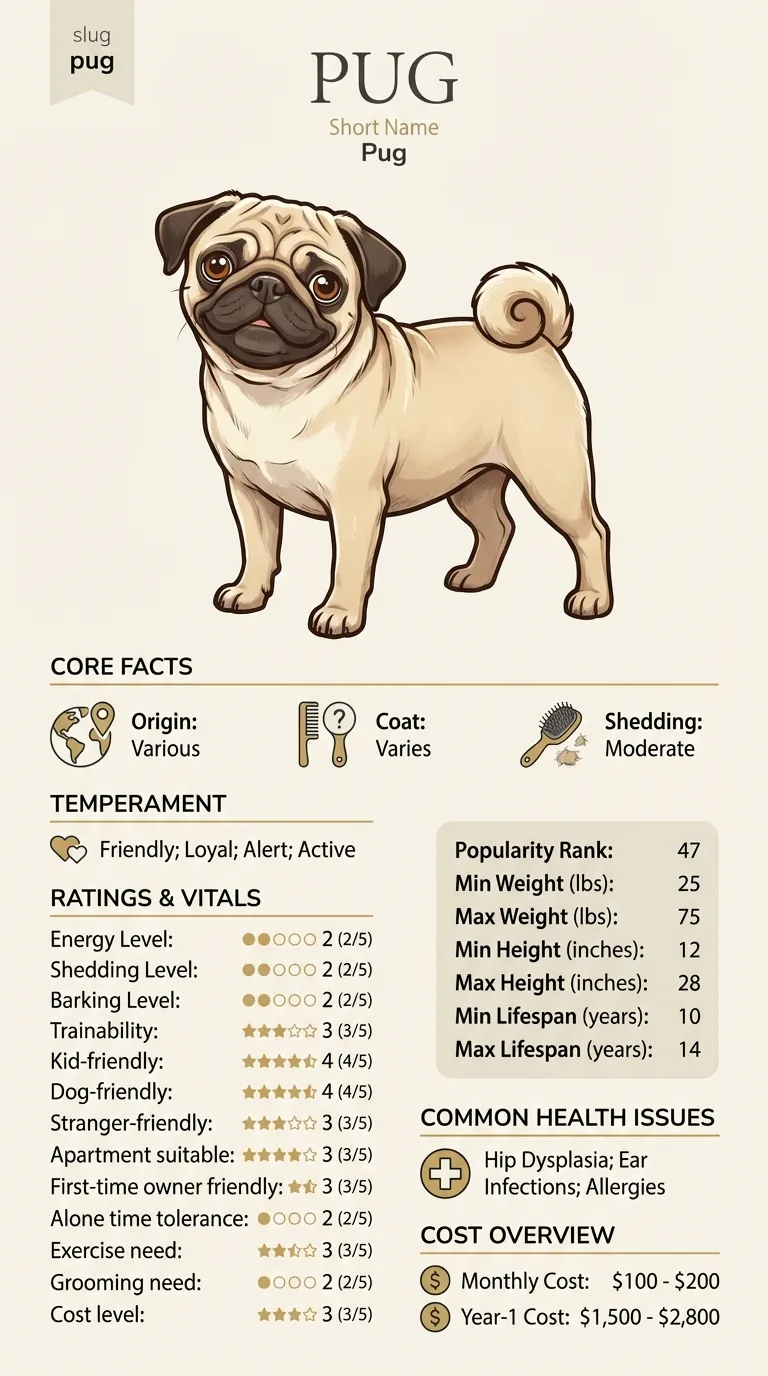
This is relevant to every Pug owner, even though this breed is lower-risk than classic deep-chested breeds, because the consequences of missing the early signs are severe enough that awareness matters regardless of statistical likelihood.
This guide is not medical advice. If your dog shows pain, sudden behavior change, or worsening symptoms, consult a licensed veterinarian.
Some links may be affiliate links. We may earn a commission at no extra cost to you. We only suggest products we believe are helpful for dog owners.
We research and check what we publish, but we do not warrant that any figure, date, price, or statement is accurate, complete, or current, and we accept no liability for any loss, cost, injury, or other harm arising from the use of this site. Use it as one reference among several. You remain responsible for your own decisions and for your dog's care - confirm anything that matters with a licensed veterinarian or another qualified professional before you act on it. Full disclaimer.
Gastric dilatation-volvulus is a life-threatening emergency where the stomach fills with gas and twists on itself, cutting off blood flow and trapping the gas with no way to escape. It progresses rapidly toward organ damage and shock, making immediate recognition and treatment critical regardless of a dog's size or breed.
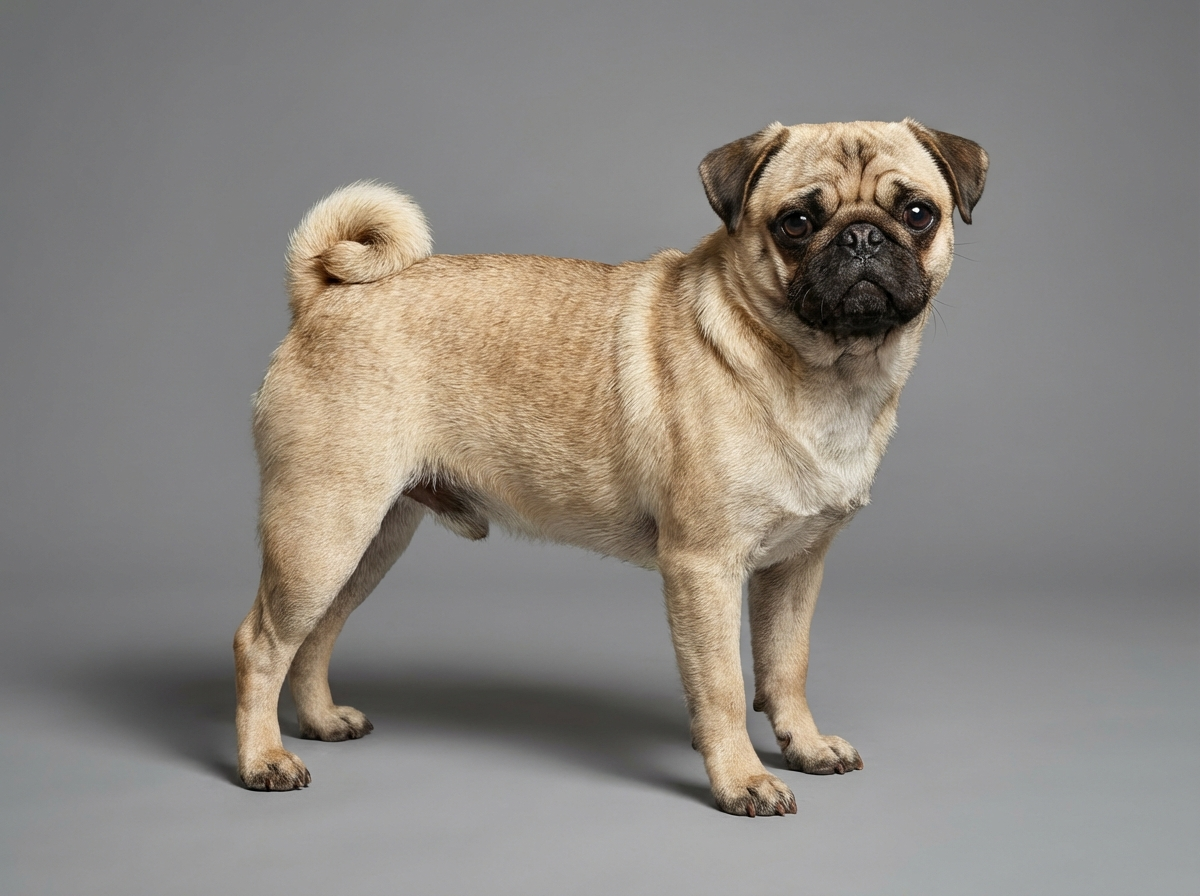
GDV is far less common in small breeds like Pugs than in large, deep-chested breeds, but it does occur, and its rapid, life-threatening progression means it deserves the same urgency and awareness from every dog owner regardless of statistical risk.
Pugs are not a classic high-risk body type for GDV the way deep-chested large breeds are, but brachycephalic dogs do tend to swallow more air while eating and breathing due to their airway obstruction, which may contribute some added gas-related risk even if the overall likelihood remains lower than in high-risk breeds.
Fast eating, a single large meal, and exercise too soon after eating are the most consistently identified environmental contributors across breeds, and they're all manageable through everyday feeding habits.
Go to an emergency vet immediately if you see a swollen or tight abdomen combined with repeated unproductive retching, restlessness, drooling, or a hunched, distressed posture. This is not a condition to monitor at home; every hour of delay measurably worsens the outcome.
See all PUG health problems, which breeds are prone to bloat gastric dilatation volvulusgdv, or the full PUG breed guide for temperament, exercise needs and ownership costs.
GDV requires same-day emergency surgery; there is no timeline for watching and waiting. Recovery from surgery typically involves several days of hospitalization followed by two to three weeks of restricted activity at home.
Success means recognizing the signs immediately and getting to emergency care fast enough that surgery can address the problem before tissue damage becomes severe; survival odds drop significantly with each hour of delay.
In a normal case of gas buildup, a dog can burp or pass gas to relieve the pressure. In GDV, the stomach twists along its own axis, sealing off both the entrance and exit, so gas and fluid keep accumulating with no way out. The distended stomach then presses on major blood vessels, cutting circulation to the stomach wall itself and reducing blood return to the heart. Without emergency surgery to untwist the stomach and address the trapped gas, this progresses to tissue death, shock, and death, often within hours of the first signs.
The hallmark signs are a visibly swollen or distended abdomen, unproductive retching, attempting to vomit repeatedly without bringing anything up, restlessness or pacing, drooling, and a hunched or anxious posture. A dog showing these signs needs to be at an emergency vet immediately, not observed at home for even an hour, since GDV cannot resolve on its own and delay directly worsens the odds of survival. Treatment involves emergency stabilization, decompressing the stomach, and surgery to untwist it and, in most cases, permanently tack the stomach in place to prevent recurrence.

If you think your Pug has bloat (gastric dilatation-volvulus/gdv), the plan is three steps: write down what you have seen and when it started, book a veterinary appointment rather than waiting for the next flare, and take video of the behaviour or symptom before you go — the thing you are worried about rarely happens in the consulting room. Screening in the parents covers brachycephalic airway syndrome (boas), pug dog encephalitis, corneal ulcers.
What the vet visit should produce is a diagnosis and a written plan, not just reassurance: what is being ruled out, what the monitoring interval is, and which signs mean you come back sooner. Ask what the treatment costs across a year rather than per visit, because that is the number that decides whether you are managing this condition or reacting to it.
Between appointments, keep a short log — dates, what you saw, what changed. It is the single most useful thing an owner brings to a follow-up, and for bloat (gastric dilatation-volvulus/gdv) it is often what separates a clear pattern from a guess.
Ziggy, a six-year-old Pug, started pacing restlessly one evening and tried repeatedly to vomit without bringing anything up. His owner noticed his belly looked unusually tight and swollen and, remembering having read about bloat, decided not to wait until morning. At the emergency clinic, X-rays confirmed GDV, and Ziggy went into surgery within the hour. The vet was able to untwist his stomach before significant tissue damage occurred and performed a gastropexy to prevent it from happening again. Ziggy recovered fully after a few days of hospitalization and several weeks of restricted activity at home.
Key takeaway: Recognizing the combination of a swollen belly and unproductive retching, and acting on it immediately rather than waiting to see if it passes, is what gave Ziggy a good outcome.
Yes. GDV is far more common in large, deep-chested breeds, but it is documented in small breeds too. The mechanism, the stomach filling with gas and twisting, isn't exclusive to any body type, even though it's statistically rarer here.
A visibly swollen or tight abdomen, restlessness, pacing, drooling, and repeated unproductive attempts to vomit are the classic early signs. A dog acting distressed and unable to get comfortable, combined with a swollen belly, should go to an emergency vet immediately.
Treatment starts with emergency stabilization to address shock, followed by surgery to untwist the stomach and, in almost all cases, a procedure called gastropexy to tack the stomach to the abdominal wall and prevent it from twisting again.
Emergency GDV treatment typically runs from around $1,500 to $7,500 depending on severity, whether tissue has died and needs removal, and the length of hospitalization required, making it one of the more expensive emergencies a dog owner can face.
There's no guaranteed prevention, but feeding smaller, more frequent meals, avoiding vigorous exercise right after eating, and slowing down fast eaters can reduce some risk factors associated with GDV in general.
Gastropexy is a surgical procedure that permanently attaches the stomach to the abdominal wall to prevent it from twisting in the future. It's performed during GDV surgery and can also be discussed as a preventive option in dogs considered higher risk.
It can progress to fatal shock within a matter of hours once the stomach twists, which is why any suspicious combination of a swollen belly and unproductive retching needs immediate emergency care rather than a wait-and-see approach.
Most dogs transition back to a regular diet with smaller, more frequent meals during recovery, and your vet may recommend a therapeutic diet temporarily if there was significant tissue damage requiring bowel healing time.
A visibly swollen, tight abdomen combined with repeated unproductive attempts to vomit.
Yes, GDV progresses the same way regardless of breed size and needs immediate emergency care.
Emergency treatment and surgery typically range from about $1,500 to $7,500 depending on severity.
Smaller, more frequent meals and slowing down fast eaters may reduce some contributing risk factors.
Most accident-and-illness plans cover GDV as an emergency condition; confirm your policy's coverage before you need it.
A one-page prep sheet for this condition: the signs, the questions to ask, what to get priced. Unlocks here.
You get: Vet visit prep sheet
No spam. One-click unsubscribe. See our privacy policy.
See a sample page before you decide.
Early access list
The free prep sheet covers the same-day warning signs, a symptom log and the questions to ask. We are considering a fuller kit that adds a cost worksheet for the usual tests and treatments (US price ranges with their sources) and a plain-English guide to ways of covering the bill. It is not built yet; this list tells us whether it is worth building.
One email, no spam, unsubscribe anytime. Information only, not veterinary advice.