Health
What test detects thyroiditis specifically, rather than just low thyroid hormone?
A thyroglobulin autoantibody (TgAA) test detects the autoimmune process directly, separate from a standard hormone panel.

Quick answer
What test detects thyroiditis specifically, rather than just low thyroid hormone?
A thyroglobulin autoantibody (TgAA) test detects the autoimmune process directly, separate from a standard hormone panel.
By the time a Pug's thyroid hormone reads low on a standard blood test, the autoimmune disease that caused it may have been quietly progressing for years already.
Owners who've had a vet mention thyroid antibodies rather than just a low hormone level, or breeders trying to understand what a positive antibody test actually means for their breeding program.
This guide is not medical advice. If your dog shows pain, sudden behavior change, or worsening symptoms, consult a licensed veterinarian.
Some links may be affiliate links. We may earn a commission at no extra cost to you. We only suggest products we believe are helpful for dog owners.
We research and check what we publish, but we do not warrant that any figure, date, price, or statement is accurate, complete, or current, and we accept no liability for any loss, cost, injury, or other harm arising from the use of this site. Use it as one reference among several. You remain responsible for your own decisions and for your dog's care - confirm anything that matters with a licensed veterinarian or another qualified professional before you act on it. Full disclaimer.
Immune-mediated thyroiditis is an autoimmune disease in which the body attacks its own thyroid tissue, gradually destroying the cells that produce thyroid hormone. It's the underlying cause behind most cases of canine hypothyroidism, and can be detected through antibody testing years before hormone levels actually drop.
Immune-mediated thyroiditis is believed to underlie the large majority of hypothyroidism cases in dogs, making it a common — if often silent and undiagnosed — process well before it ever produces a symptom.
A genetic predisposition to developing thyroid-directed autoimmune attack is well documented in dogs, and while it isn't unique to Pugs, it's common enough across breeds that responsible breeding programs increasingly screen for it directly via antibody testing rather than relying on hormone panels alone.
The specific environmental or immune triggers that set off this autoimmune process in an individual dog aren't well established. What's clearer is the timeline — the destructive process unfolds gradually over years rather than being caused by any single identifiable event.
Discuss testing with your vet if you have breeding plans, a known family history of thyroid disease, or if your dog shows the classic hypothyroidism symptom cluster — unexplained weight gain, coat changes, low energy, or increased skin infections — even if a prior hormone test came back normal.
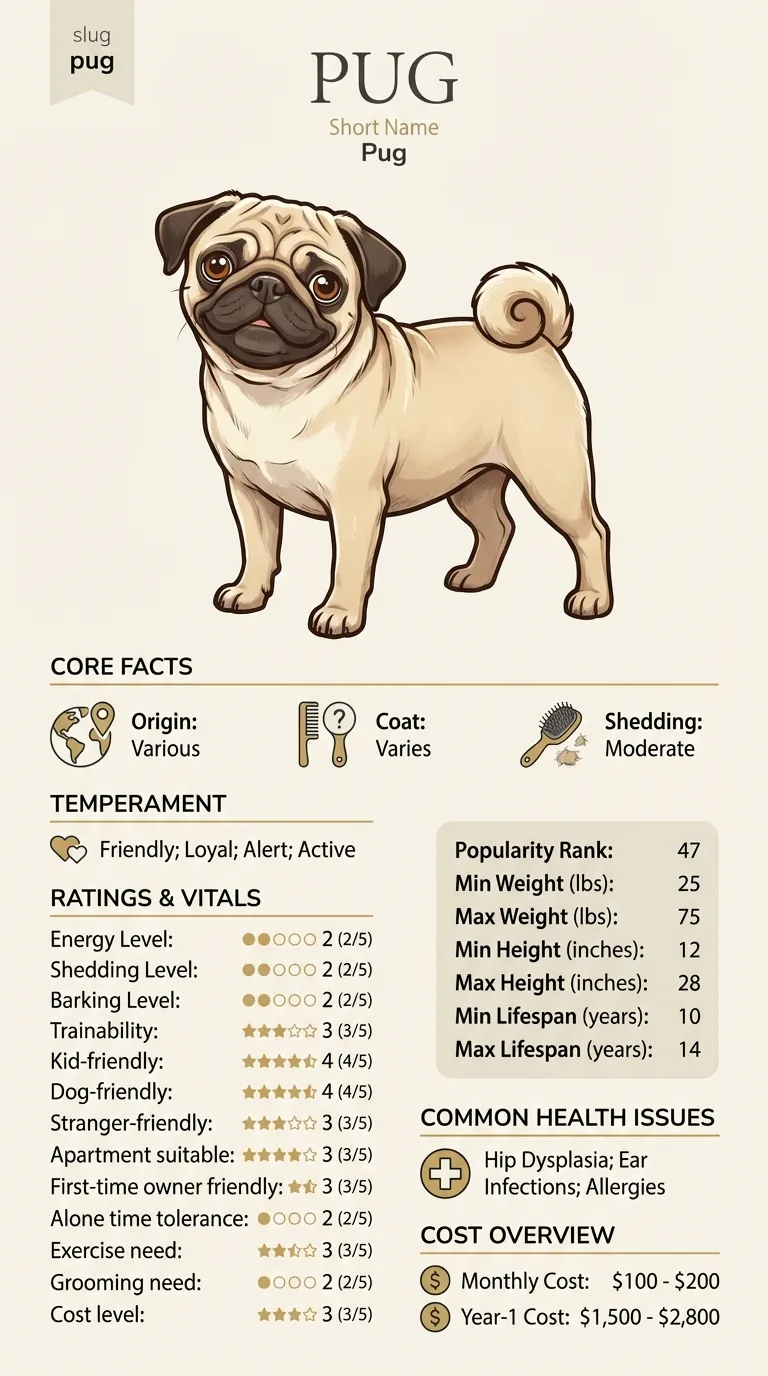
See all PUG health problems, which breeds are prone to immune mediated thyroiditis, or the full PUG breed guide for temperament, exercise needs and ownership costs.
The autoimmune destruction of thyroid tissue typically unfolds over years before hormone levels drop enough to require treatment, meaning an antibody-positive, hormonally normal dog may need nothing more than periodic monitoring for a long stretch of time.
Success is catching the transition to actual hypothyroidism early through periodic monitoring, so treatment starts promptly once hormone levels do drop — not preventing the autoimmune process itself, which currently has no established way to be stopped.
In immune-mediated thyroiditis, the body's own immune system mistakenly identifies thyroid gland tissue as foreign and mounts a sustained attack against it, gradually destroying the cells responsible for producing thyroid hormone. This is a slow-motion process — it can take years of gradual tissue destruction before enough of the gland is damaged that hormone output actually falls below normal and symptoms appear. That lag is exactly why a dog can test positive for thyroid antibodies well before ever showing a single visible sign of hypothyroidism.
This distinction matters most for breeding decisions. A dog testing positive for thyroid antibodies has a documented autoimmune process underway, and because that susceptibility appears to run in families, breeders use antibody testing specifically to identify dogs that shouldn't be bred, independent of whether that individual dog has developed clinical symptoms yet. It's a genetic-screening tool in a way that a simple hormone-level test isn't.
The two tests answer genuinely different questions, and knowing which one your vet ran changes what the result actually tells you.

When Alan decided to breed his Pug, Duchess, he had her fully health-tested, including a standard thyroid hormone panel that came back completely normal. His vet mentioned, almost as an aside, that a more specific antibody test existed and asked if he wanted to add it. He did, mostly out of curiosity. The antibody test came back positive — Duchess had an autoimmune process underway despite her hormone levels being entirely normal at that point. Alan made the difficult call not to breed her, given the documented genetic risk of passing on that susceptibility. Duchess herself has stayed hormonally normal for the two years since, monitored with an annual recheck, living an entirely ordinary life — just one that's being watched a little more closely than most.
Key takeaway: A normal thyroid hormone level doesn't rule out the autoimmune disease that eventually causes hypothyroidism — antibody testing answers a genuinely different question.
Thyroiditis is the autoimmune process that attacks and damages thyroid tissue; hypothyroidism is the resulting condition once enough tissue damage has occurred that hormone output drops below normal. Thyroiditis can be present for years before hypothyroidism actually develops.
Yes, and this is actually the more common scenario early on — antibody-positive results often appear well before hormone levels drop low enough to cause visible symptoms, since the destructive process takes time.
Typically not immediately — most vets recommend monitoring hormone levels periodically rather than starting medication before symptoms or abnormal hormone readings actually appear.
A genetic predisposition to developing this autoimmune process is well documented in dogs generally, which is why breeding programs that care about thyroid health test for antibodies specifically, not just hormone function.
Antibody testing can catch the underlying autoimmune susceptibility years before hormone levels would ever show a problem, giving breeders a much earlier and more genetically meaningful signal than a hormone panel alone.
The autoimmune process itself is generally specific to thyroid tissue, though dogs with one autoimmune condition can have a somewhat higher likelihood of other immune-mediated issues, which is part of why a full workup is sometimes recommended.
There's no established treatment that stops the autoimmune attack itself — management focuses on replacing thyroid hormone once levels drop, rather than halting the underlying immune process.
A thyroglobulin autoantibody (TgAA) test detects the autoimmune process directly, separate from a standard hormone panel.
Yes — this is common in earlier stages, since gland destruction can take years before hormone output actually drops.
It typically runs somewhat more than a basic hormone panel, often in the range of a specialized add-on test through a veterinary lab.
It's considered a responsible screening step by breeders focused on thyroid health, since it catches genetic susceptibility earlier than hormone testing alone.
Not guaranteed, but the risk is meaningfully elevated, which is why periodic hormone monitoring is recommended for antibody-positive dogs.
A one-page prep sheet for this condition: the signs, the questions to ask, what to get priced. Unlocks here.
You get: Vet visit prep sheet
No spam. One-click unsubscribe. See our privacy policy.
See a sample page before you decide.
Early access list
The free prep sheet covers the same-day warning signs, a symptom log and the questions to ask. We are considering a fuller kit that adds a cost worksheet for the usual tests and treatments (US price ranges with their sources) and a plain-English guide to ways of covering the bill. It is not built yet; this list tells us whether it is worth building.
One email, no spam, unsubscribe anytime. Information only, not veterinary advice.