Costs
Pug cost in Wichita
About $74–$139/month, $1,016–$2,125 for year one — among the lowest tracked, with recurring boarding a real cost for a breed most airlines won't fly.

See Pug price across all cities →
Quick answer
Pug cost in Wichita
About $74–$139/month, $1,016–$2,125 for year one — among the lowest tracked, with recurring boarding a real cost for a breed most airlines won't fly.
A Pug in Wichita runs about $74 to $139 a month, with the first year landing near $1,016 to $2,125, among the lowest figures this guide tracks. There's a pointed irony in the Air Capital of the World: this is one of the hardest breeds in the country to actually put on a plane, because most major airlines restrict or refuse brachycephalic dogs in cargo, and for a household where work travel is routine that turns boarding into a recurring line item rather than an occasional one.
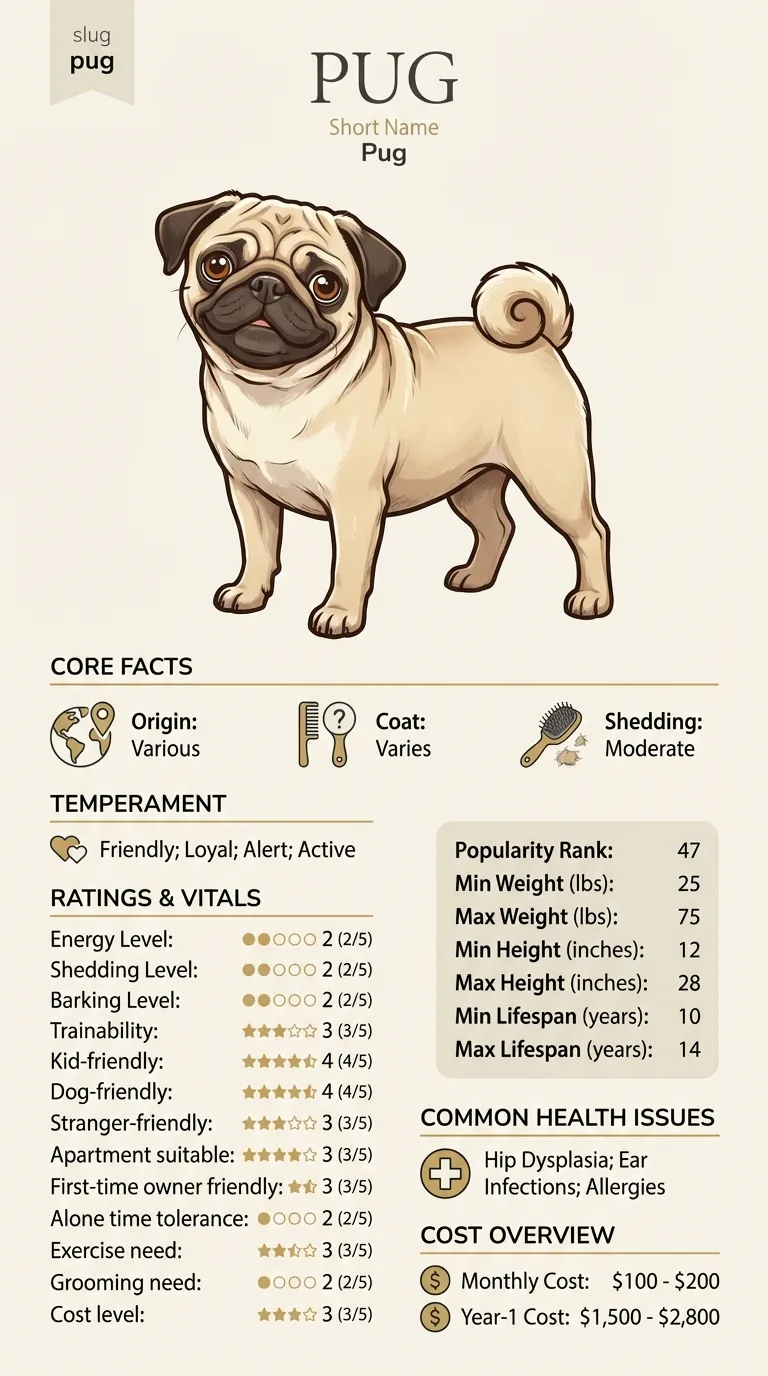
Brachycephalic Airway Syndrome (BOAS) and Pug Dog Encephalitis are this breed's more commonly documented health risks, alongside real, documented Corneal Ulcers and Hemivertebrae risk. This breed's low exercise needs make Obesity a real, common risk that itself worsens breathing effort, making weight management a genuine, ongoing cost.
These figures reflect Wichita's genuinely low general pricing, with a real note that recurring boarding may be the largest variable line for a travelling household with this breed.
Estimate · source: estimation · confidence: medium · updated 2026-09-06 · not a quote
| Item | Cost range |
|---|---|
One-time setup (initial vet visit, spay/neuter, gear) Covers the first exam, vaccinations, spay/neuter if needed, and basic gear — priced at Wichita's genuinely low rates. | $258 - $433 |
| Item | Cost range |
|---|---|
Food (weight-managed portions) Reflects this breed's genuine 14-to-18-pound size and documented Obesity risk, priced well below the national average given Wichita's low cost of living. | $31 - $51 |
Each range starts from a national baseline for this breed's size class and is then adjusted for local cost of living and veterinary pricing. The baselines, and the source each one came from, are listed on our sources page (dataset 2026.09). Two inputs, the purchase price and the emergency reserve, have no published national figure we could verify, so we leave them to you rather than invent them.
These are planning estimates, not quotes. Your own numbers will move with the individual dog, your vet and your insurer. Build a budget with your own figures.
For a Pug in Wichita, insurance is genuinely worth taking seriously given this breed's documented BOAS, Pug Dog Encephalitis and Corneal Ulcer risks, which carry real variance even in a low-cost market.
Given this breed's documented airway risk profile, insurance purchased while the dog is young is worth pricing out seriously before anything is on record.
Owners who've built a genuinely solid emergency fund and are comfortable managing a procedure themselves can reasonably self-insure instead.
Wichita's low baseline leaves room for the one cost this breed genuinely imposes on a travelling household: consistent, familiar care while you're away.
Airline restrictions on brachycephalic breeds in cargo are real and widely applied, grounded in the documented risk these dogs face from heat and stress in transit. In-cabin travel stays theoretically available, but this breed's weight plus a carrier sits at or above most carriers' combined limits.
Wichita's real concentration of aviation manufacturing means work travel is a normal rhythm for many local households, and the consequence for this breed is repeated boarding rather than occasional boarding. Its documented low alone-time tolerance makes those stays genuinely harder on the dog than they'd be for an independent breed, which argues for investing early in one consistent, familiar boarding arrangement or a regular in-home sitter rather than whoever has availability that week.
Wichita otherwise keeps every category of general cost meaningfully below the national average, and the region's moderate climate keeps parasite prevention a clearly seasonal expense.

A Wichita engineer who travels several times a quarter assumed their Pug would simply come along, the way a colleague's small terrier did, and discovered every airline they checked either barred brachycephalic breeds from cargo or put the combined in-cabin weight out of reach. The dog stayed home instead, and finding one sitter it genuinely knew — rather than a different kennel each trip — turned out to matter more than the nightly rate.
Key takeaway: In Wichita, an aviation town's travel rhythms collide with a breed airlines largely won't carry, making consistent at-home care the real recurring cost.
About $74–$139, among the lowest of any city this guide tracks, reflecting Wichita's genuinely low general cost of living.
Roughly $1,016–$2,125, including the initial vet exam, spay/neuter if needed, and gear on top of ongoing monthly costs.
Usually not in cargo — most major airlines restrict or refuse brachycephalic breeds there — and its weight plus carrier sits at or above most in-cabin limits.
Boarding becomes a recurring cost rather than an occasional one, and this breed's documented low alone-time tolerance makes a consistent, familiar arrangement worth paying for.
Worth pricing out given this breed's documented BOAS and Pug Dog Encephalitis risks, bought while the dog is young and before anything is on record.
Around $480 covers a typical significant vet visit in this market, reflecting Wichita's genuinely low local pricing and this breed's real emergency-risk profile.
About $74–$139/month, $1,016–$2,125 for year one — among the lowest tracked, with recurring boarding a real cost for a breed most airlines won't fly.
This guide is not medical advice. If your dog shows pain, sudden behavior change, or worsening symptoms, consult a licensed veterinarian.
Some links may be affiliate links. We may earn a commission at no extra cost to you. We only suggest products we believe are helpful for dog owners.
We research and check what we publish, but we do not warrant that any figure, date, price, or statement is accurate, complete, or current, and we accept no liability for any loss, cost, injury, or other harm arising from the use of this site. Use it as one reference among several. You remain responsible for your own decisions and for your dog's care - confirm anything that matters with a licensed veterinarian or another qualified professional before you act on it. Full disclaimer.
One sheet with every line item, the emergency fund and when insurance pays off - unlocks on this page.
You get: 12-month budget sheet
No spam. One-click unsubscribe. See our privacy policy.
Preview page 1 before you decide.