Health
Is OCD a Papillon health problem?
No. It is a large and giant breed condition driven by rapid growth and heavy joint loading, neither of which applies to a five to ten pound dog.

Quick answer
Is OCD a Papillon health problem?
No. It is a large and giant breed condition driven by rapid growth and heavy joint loading, neither of which applies to a five to ten pound dog.
This condition needs a big, fast growing dog to generate the forces that break the cartilage. A Papillon reaches its adult weight of five to ten pounds without ever getting close.
Owners whose Papillon has developed a front leg limp and who have found this condition on a health list, and anyone trying to understand what a shoulder or elbow lameness in a toy dog actually indicates.
This guide is not medical advice. If your dog shows pain, sudden behavior change, or worsening symptoms, consult a licensed veterinarian.
Some links may be affiliate links. We may earn a commission at no extra cost to you. We only suggest products we believe are helpful for dog owners.
Osteochondritis dissecans is a developmental cartilage disease of fast growing, heavy puppies, in which a patch of joint cartilage fails to convert properly to bone, thickens, cracks and can lift into the joint as a flap. It causes persistent lameness in adolescent large breed dogs, usually in the shoulder. The Papillon's adult weight of five to ten pounds and modest growth trajectory place it entirely outside the conditions that produce the disease.
In predisposed large breeds it is a routine referral diagnosis and a well recognised cause of adolescent lameness. In toy breeds it is essentially absent from the clinical picture. Papillon owners investigating a limp will find that the useful differentials are mechanical injury, foot problems and, in the hind limb, the breed's documented kneecap issue.
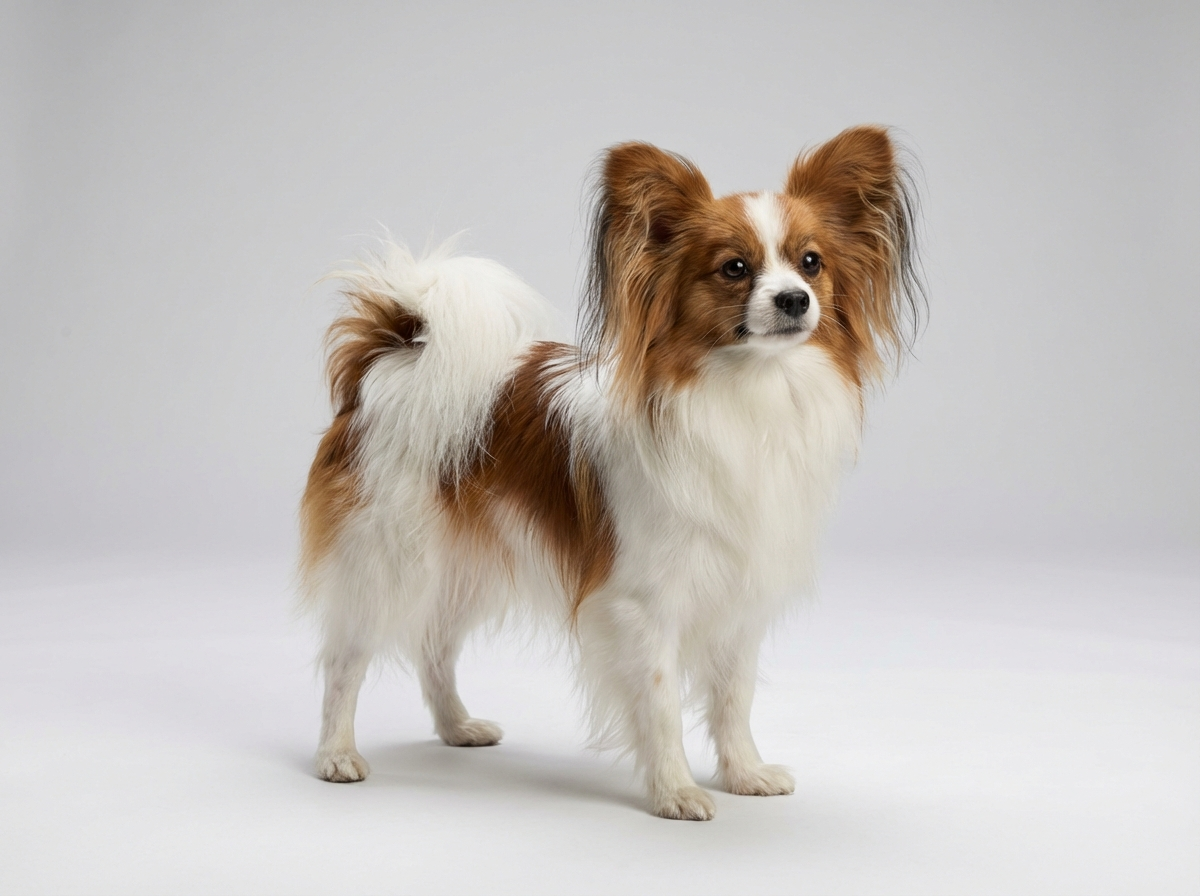
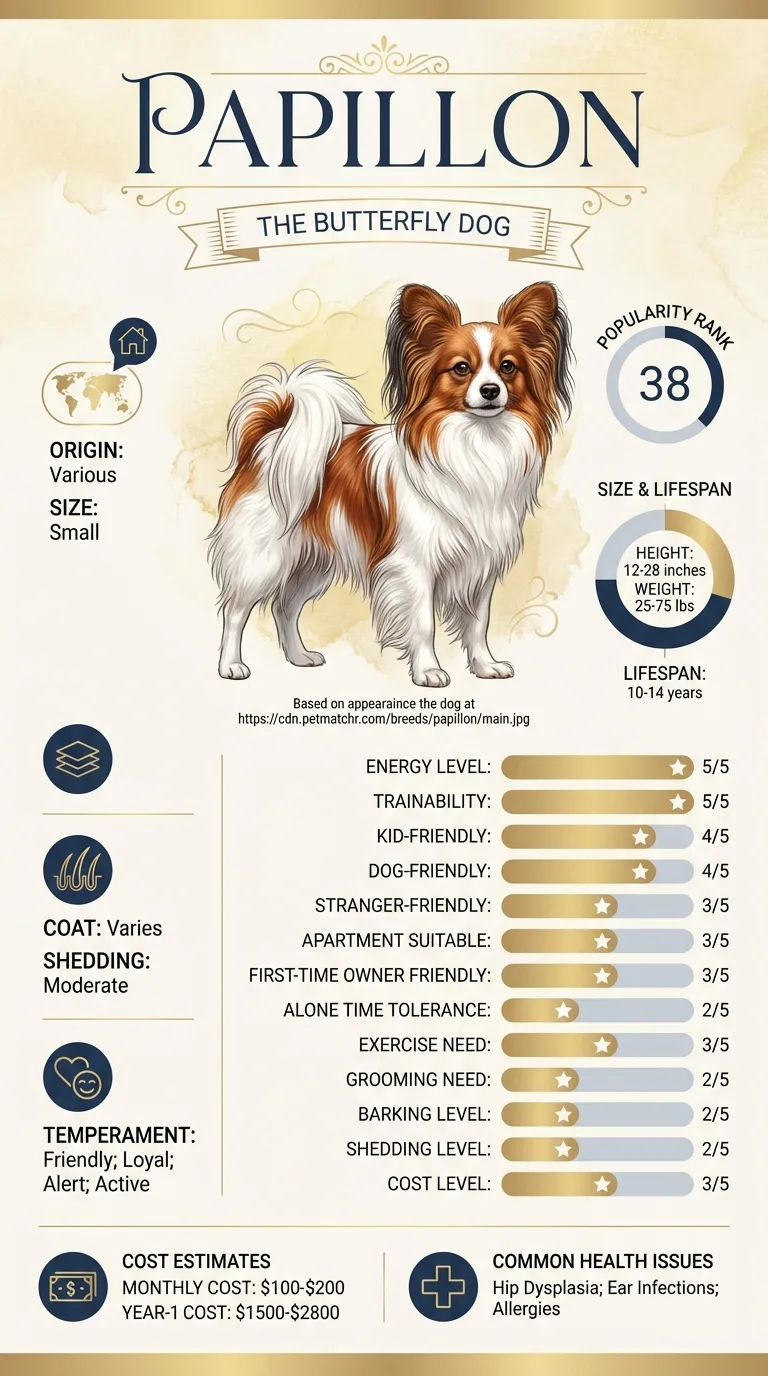
The Papillon is a proportionately built dog standing eight to eleven inches tall on fine bones. Its joint surfaces are small, its cartilage is thin, and the forces it applies to them during growth are a small fraction of those a giant breed puppy generates. Its documented health issues sit elsewhere entirely, in the kneecaps, eyes, teeth, skull and windpipe. There is no plausible route by which the cartilage failure mechanism behind this condition would occur at this size.
In the breeds that genuinely get it, the environment can accelerate the process through diets that push growth rate and through hard repetitive exercise on unforgiving surfaces during adolescence. For a Papillon, the household factors that matter for joints are quite different: slippery flooring that forces scrabbling take offs, furniture at nearly twice the dog's height, and creeping weight gain on a very small frame.
Book an appointment for any limp persisting beyond a couple of days, for a limp that keeps returning to the same leg, or for one accompanied by swelling or reluctance to be touched. Seek same day care if the leg is held completely off the ground, if the limb is hot or obviously deformed, if the dog cries continuously, or if the lameness followed a fall or a jump from height, because a five to ten pound dog with fine bones can fracture in circumstances a larger dog would walk away from.
See all Papillon health problems, which breeds are prone to osteochondritis dissecans ocd, or the full Papillon breed guide for temperament, exercise needs and ownership costs.
A simple soft tissue strain in a Papillon usually resolves within one to two weeks with restricted activity and any pain relief your vet prescribes. A foreign body in the foot resolves as soon as it is removed. A fracture in a fine boned toy dog requires proper stabilisation and healing over six to twelve weeks, with rechecks.
Success is a limp that got a correct explanation quickly, rather than months spent investigating a condition the breed does not develop. For most Papillons that means a foot examined, a video reviewed and, if needed, one set of radiographs.
The forces passing through a joint scale with bodyweight, and they scale unhelpfully. A dog that weighs eighty pounds does not simply put eight times the load through its shoulder that a ten pound dog does at rest; in movement, landing and turning, the peak forces are far larger still, and they are applied to a joint surface that has not grown proportionally thicker.
Now add growth rate. A giant breed puppy can add many pounds a month. Its cartilage is being asked to convert to bone rapidly while simultaneously carrying an increasing load, and if the deepest layer of that cartilage outruns its blood supply, the tissue dies and separates. That is the recipe for osteochondritis dissecans, and it is why the condition concentrates in Labradors, Rottweilers, Great Danes, Bernese Mountain Dogs and similar breeds, most often in the shoulder, sometimes the elbow, hock or stifle.
A Papillon puppy grows from a few ounces to five to ten pounds over months. Its cartilage is thin because its bones are small, and the load it carries is trivial by comparison. It also does not experience the additional risk factor of overnutrition during growth, since a diet that produces excessive growth rate in a giant breed puppy simply cannot do the same thing to a dog with this adult size.
What this means practically is that a limping Papillon needs a different list of differentials, not a copy of the large breed one.

The list is short and mostly mechanical. A vet will work through it with an examination and, if the limp persists, radiographs.
If you think your Papillon has osteochondritis dissecans (ocd), the plan is three steps: write down what you have seen and when it started, book a veterinary appointment rather than waiting for the next flare, and take video of the behaviour or symptom before you go — the thing you are worried about rarely happens in the consulting room. Screening in the parents covers patellar luxation, progressive retinal atrophy, dental disease.
What the vet visit should produce is a diagnosis and a written plan, not just reassurance: what is being ruled out, what the monitoring interval is, and which signs mean you come back sooner. Ask what the treatment costs across a year rather than per visit, because that is the number that decides whether you are managing this condition or reacting to it.
Between appointments, keep a short log — dates, what you saw, what changed. It is the single most useful thing an owner brings to a follow-up, and for osteochondritis dissecans (ocd) it is often what separates a clear pattern from a guess.
Halima's Papillon Cosmo started limping on his right front leg at eleven months. She searched puppy shoulder lameness, found osteochondritis dissecans described as a growth phase cartilage problem, and arrived at her vet asking about referral for advanced imaging. Her vet listened, then sat on the floor and went through Cosmo's foot. Between the third and fourth toes, buried under a generous tuft of Papillon foot hair, was a grass awn that had worked partly through the skin. It was removed under sedation the same afternoon. Cosmo was sound within three days. The vet's parting advice was to keep the foot tufts trimmed, which had the secondary benefit of giving him better grip on the kitchen floor.
Key takeaway: Match the differential to the dog in front of you. A giant breed cartilage disease will never explain a toy breed limp, and the answer for a Papillon is far more often in the foot than in the shoulder.
It is not a recognised problem in the breed and is very unlikely on mechanical grounds. The condition requires the combination of rapid growth and substantial joint loading found in large and giant breed puppies. A Papillon reaching an adult weight of five to ten pounds does not generate those forces at any stage of its development.
Because many breed health lists are assembled by copying a general catalogue of canine conditions rather than by reviewing what is actually documented in the breed. The Papillon's genuine documented issues are patellar luxation, progressive retinal atrophy, dental disease, open fontanel and collapsing trachea. Cartilage conditions of giant breeds do not belong on that list.
The foot. Part the hair between the pads and look for a grass seed, a cut, a cracked nail or something wedged between the toes. Then feel gently up the leg for heat, swelling or a spot that makes the dog flinch. If nothing is obvious and the limp lasts more than a couple of days, book an appointment.
Growth rate management matters enormously in large breed puppies and is not a meaningful concern at this size. What does matter is not letting a Papillon puppy become overweight, since extra load on developing joints is unhelpful in any breed, and because a habit of overfeeding a small dog is very hard to reverse later.
Yes, but different ones. Degeneration of the femoral head is a genuine toy breed growth phase condition, appearing typically between five and eight months as a worsening one sided hind limb lameness. Patellar luxation can also become apparent during growth. Both belong on a Papillon's list where cartilage flap conditions do not.
A mild limp that resolves within a day or two after obvious rough play can reasonably be watched. Anything lasting beyond forty eight hours, anything where the leg is not used at all, and anything with swelling, heat or crying deserves an appointment. In a fine boned toy dog, do not assume a limp is a sprain without someone examining it.
No. It is a large and giant breed condition driven by rapid growth and heavy joint loading, neither of which applies to a five to ten pound dog.
Most often something in the foot, a soft tissue strain from a landing, or in fine boned dogs a fracture. Check between the pads first.
Degeneration of the femoral head, appearing around five to eight months as a worsening one sided hind limb limp with muscle wasting in that thigh.
No large breed growth formula is needed. What matters is not letting the puppy become overweight, since habits set early are hard to change later.
A one-page prep sheet for this condition: the signs, the questions to ask, what to get priced. Unlocks here.
You get: Vet visit prep sheet
No spam. One-click unsubscribe. See our privacy policy.
Preview page 1 before you decide.