Health
Does BOAS apply to Papillons?
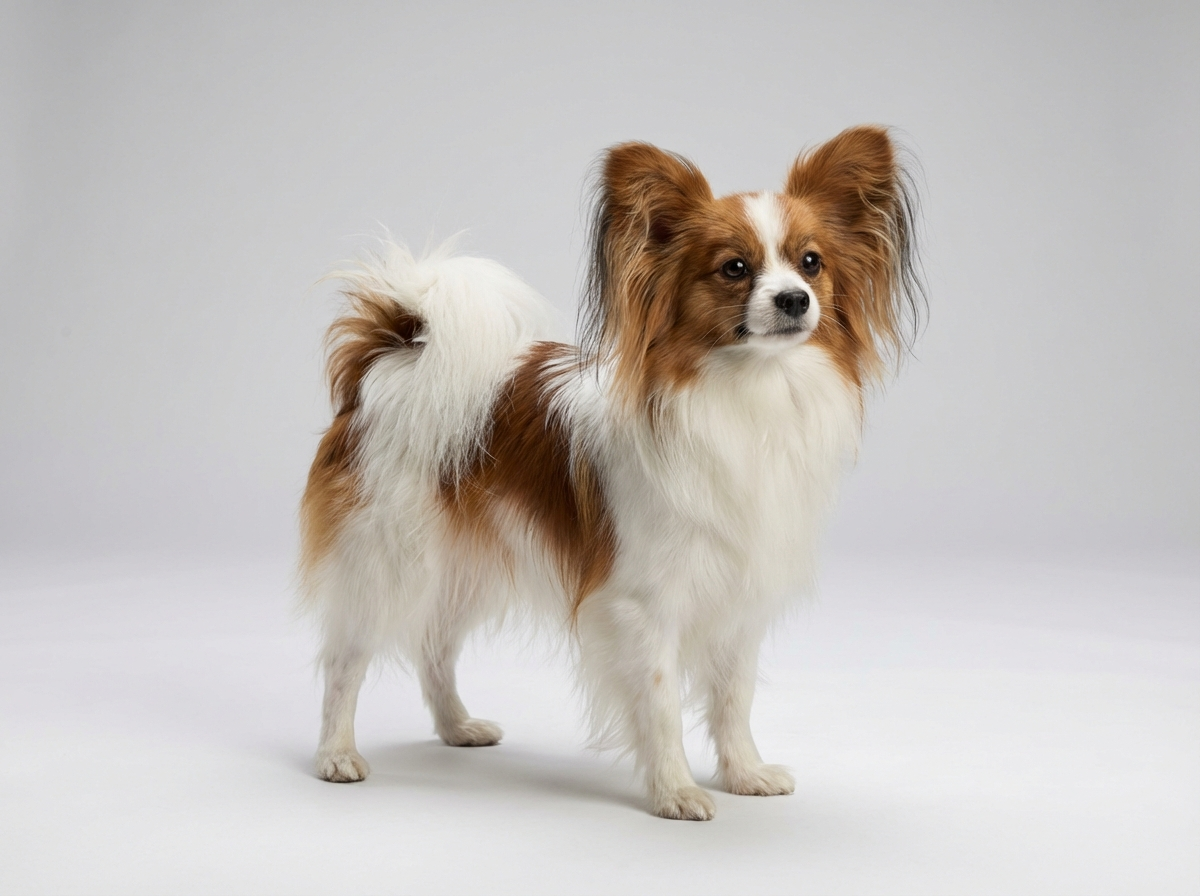
No. The syndrome is defined by a shortened skull compressing normal soft tissue, and the Papillon has an ordinary muzzle length. Airway noise in this breed points somewhere else, most often at the windpipe.

Quick answer
Does BOAS apply to Papillons?
No. The syndrome is defined by a shortened skull compressing normal soft tissue, and the Papillon has an ordinary muzzle length. Airway noise in this breed points somewhere else, most often at the windpipe.
A Papillon has a fine, tapering muzzle and an ordinary nasal chamber. It is not a candidate for a disease defined by the absence of both.
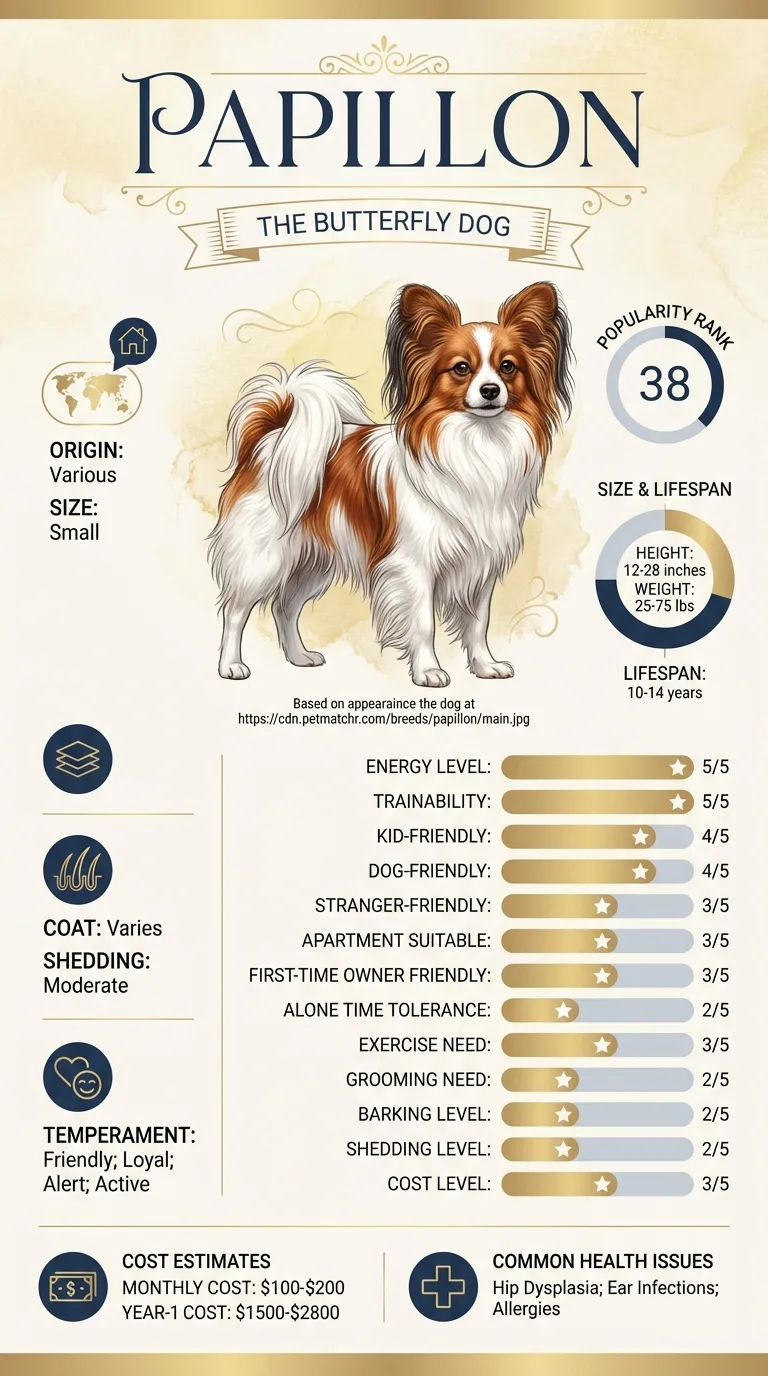
Owners whose Papillon snores, snorts or makes a sudden honking noise on the lead, who searched those symptoms, and who landed on a page about pugs and bulldogs that did not fit the dog in front of them.
This guide is not medical advice. If your dog shows pain, sudden behavior change, or worsening symptoms, consult a licensed veterinarian.
Some links may be affiliate links. We may earn a commission at no extra cost to you. We only suggest products we believe are helpful for dog owners.
We research and check what we publish, but we do not warrant that any figure, date, price, or statement is accurate, complete, or current, and we accept no liability for any loss, cost, injury, or other harm arising from the use of this site. Use it as one reference among several. You remain responsible for your own decisions and for your dog's care - confirm anything that matters with a licensed veterinarian or another qualified professional before you act on it. Full disclaimer.
BOAS is a package of airway obstructions produced by breeding for a compressed skull. Papillons are not built that way and the syndrome does not belong to them. What owners of this breed do encounter is airway noise from other sources, principally a collapsing trachea, which is on the breed's documented health list and produces a completely different sound with a completely different management plan.
BOAS is effectively absent in this breed and epidemic in the flat-faced ones, where studies have found the majority of some populations affected to some degree. Collapsing trachea, by contrast, is common enough in Papillons and other toy breeds to sit on the documented health list, and it typically shows up in middle age rather than in puppies.
The Papillon's skull is the reason the diagnosis does not apply. The breed carries a normal craniofacial ratio with a fine, pointed muzzle and open nostrils, so air enters and travels without the mechanical bottleneck that defines brachycephalic disease. The breed's real airway vulnerability is a documented tendency for tracheal cartilage to weaken, which is unrelated to face length and is shared with other toy breeds. Its long silky single coat and eight to eleven inch height also mean it manages heat better than any short-faced dog.
What provokes airway noise in a Papillon is almost always situational rather than structural. A doorbell, a visitor, a squirrel, a tight collar, a hot afternoon, a smoky room or a few extra ounces of body weight all increase either airflow speed or pressure on the neck. A dog that is quiet and comfortable at rest but noisy when roused is describing an intermittent, triggered problem, which is the opposite of the constant obstruction seen in flat-faced breeds.
Any dog struggling to breathe at rest, breathing with an open mouth while lying still, showing blue or grey gums, or collapsing during an episode needs emergency attention immediately. That is true whatever the underlying cause. Book a same-day appointment for airway noise that is new and continuous, for a honking cough that will not stop, or for a dog that is suddenly exercise-intolerant. A routine appointment is right for occasional honking on excitement, snoring that has been present for years without changing, or intermittent reverse sneezing in a dog that is otherwise well.
See all Papillon health problems, which breeds are prone to brachycephalic airway syndrome boas, or the full Papillon breed guide for temperament, exercise needs and ownership costs.
Ruling out brachycephalic disease takes a single consultation, since it is largely a matter of examining the head. Investigating a collapsing trachea takes longer, often two to four weeks including imaging. Management changes such as a harness and weight loss show results within four to eight weeks. Tracheal collapse is progressive and managed for life rather than resolved.
Success is a correctly named problem and a proportionate response. It means an owner who stops reading flat-faced breed advice, a dog on a harness at a lean weight, honking episodes that are occasional rather than daily, and normal quiet breathing at rest for the whole of a fourteen to sixteen year life.
BOAS is usually described as four anatomical faults occurring together. Stenotic nares are nostrils compressed into narrow slits, so air struggles to enter at all. An elongated soft palate is a curtain of tissue at the back of the mouth that overshoots into the airway because there is no longer enough length of jaw to accommodate it. Everted laryngeal saccules are small pouches sucked into the larynx by the negative pressure of a dog fighting to breathe. A hypoplastic trachea is a windpipe with an abnormally narrow rigid diameter.
The first two are direct consequences of skull compression. The third is a secondary consequence of the first two. Only the fourth is independent, and even that clusters in the same breeds.
A Papillon has open, rounded nostrils and a muzzle roughly a third of the length of its skull, which is the ordinary canine proportion. There is no compression, so there is no mismatch, and none of the four components has a reason to be present.

Collapsing trachea appears on the Papillon's documented health list, and it is a genuinely different mechanism. The windpipe is held open by C-shaped rings of cartilage joined across the top by a soft membrane. If those rings weaken, the tube flattens on itself when air moves through it fast, most often during excitement or exertion.
The signature sound is unmistakable and is nothing like the wet snoring of a flat-faced dog. It is a dry, sudden, repetitive honk, often compared to a goose, arriving in a burst and then stopping.
Unlike BOAS, which is a fixed obstruction present with every breath, tracheal collapse is intermittent and triggered. A Papillon can be silent all morning and then honk for twenty seconds when the doorbell rings.
The management is also different. There is no equivalent of the corrective airway surgery a flat-faced dog might have. Weight control, a harness instead of a collar, avoiding heat and reducing excitement spikes do most of the work.
Sanne spent two months following airway advice she had found for brachycephalic dogs after her Papillon, Elke, began making a harsh noise on walks. She bought a cooling mat, restricted exercise almost entirely, and worried about surgery she could not afford. At the consultation the vet spent thirty seconds looking at Elke's nose and muzzle and said the obvious thing: this dog has a full-length face and open nostrils, so none of that literature applies. What Elke had was early tracheal collapse. The plan was a harness, six ounces of weight off, walks moved to the cool of the morning and a mat routine for the doorbell. Elke's exercise was increased rather than restricted, because losing weight mattered more than avoiding effort. Six weeks later the honking had dropped from most walks to about one a fortnight.
Key takeaway: Two months of anxiety came from applying one breed's disease to another breed's dog. The muzzle takes half a minute to assess and rules the whole syndrome in or out.
No. They are a normally proportioned toy spaniel with a fine, tapering muzzle, and none of the breed's documented health issues relate to a shortened face. The breed's documented list covers the knees, eyes, teeth, skull fontanel and windpipe.
Ordinary snoring during deep sleep is common in dogs with completely normal airways, particularly when lying on their back or curled with the neck flexed. Snoring becomes worth investigating when it is new, is getting louder, or is accompanied by noise while the dog is awake.
A sudden bout of rapid snorting inhalations, usually lasting under a minute, caused by irritation at the back of the nose. It is dramatic to watch and generally harmless in any breed. Frequent episodes deserve a check, since they can accompany nasal disease or dental problems.
It is possible for any dog to have soft tissue at the back of the throat that is too long, but it is a genuinely uncommon finding without the underlying skull shortening. It would be a diagnosis made under sedation by direct examination, not by breed assumption.
By sound and by pattern. BOAS produces continuous wet snorting and snoring, present with every breath and worse with any effort. Tracheal collapse produces a dry, honking cough in bursts, triggered by excitement, pressure on the neck, drinking or heat, with quiet breathing in between.
Better than any flat-faced breed, because they can pant efficiently through a normal-length airway. They still need shade, water and avoidance of midday walks in summer, but they do not carry the built-in heatstroke risk that defines the brachycephalic breeds.
No. The syndrome is defined by a shortened skull compressing normal soft tissue, and the Papillon has an ordinary muzzle length. Airway noise in this breed points somewhere else, most often at the windpipe.
A dry, harsh, repeated honk like a goose, arriving in bursts during excitement, pulling on a collar, drinking or heat, with normal quiet breathing between episodes.
Yes. Collapsing trachea is on this breed's documented health list, and a harness removes direct pressure from the windpipe of a dog that pulls or lunges at the end of a lead.
A consultation with chest and neck radiographs typically runs a few hundred dollars. Fluoroscopy or airway endoscopy, which show a collapsing windpipe in motion, cost considerably more and usually mean a referral.
It genuinely helps. Teaching a settled greeting at the door and loose-lead walking removes the arousal spikes and the neck pressure that set off most honking bouts in this breed.
A one-page prep sheet for this condition: the signs, the questions to ask, what to get priced. Unlocks here.
You get: Vet visit prep sheet
No spam. One-click unsubscribe. See our privacy policy.
Preview page 1 before you decide.