Living
Which one should I get?
In a small space with older kids or no kids, the Papillon's 5/5 apartment score and low cost make it the easier choice. With young children and more room, the Labradoodle's 5/5 kid rating and durability win out.

Quick answer
Which one should I get?
In a small space with older kids or no kids, the Papillon's 5/5 apartment score and low cost make it the easier choice. With young children and more room, the Labradoodle's 5/5 kid rating and durability win out.
Labradoodle or Papillon? On paper they differ most on apartment suitability, and on the scales Labradoodle is the heavier at 15–65 lbs. Here is how the two compare on everything that shapes an ordinary week.
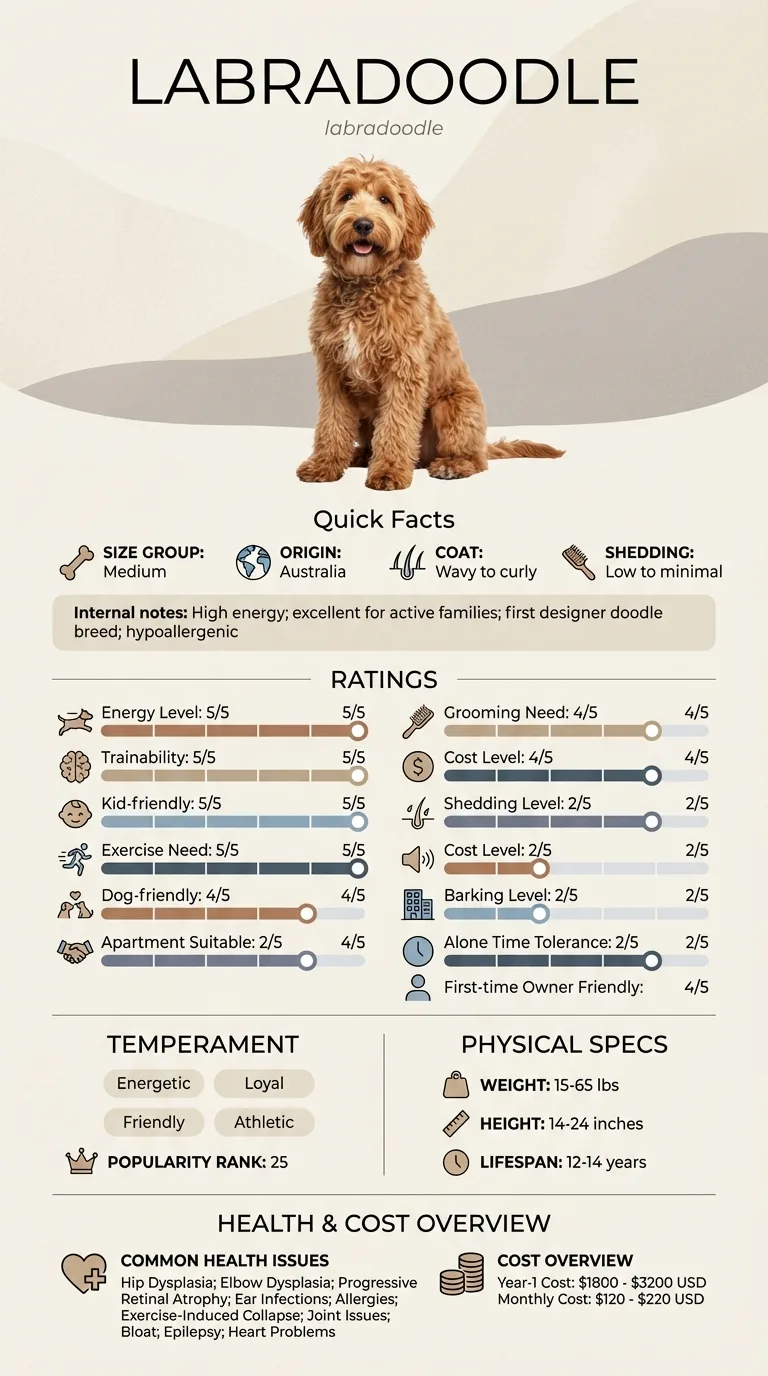
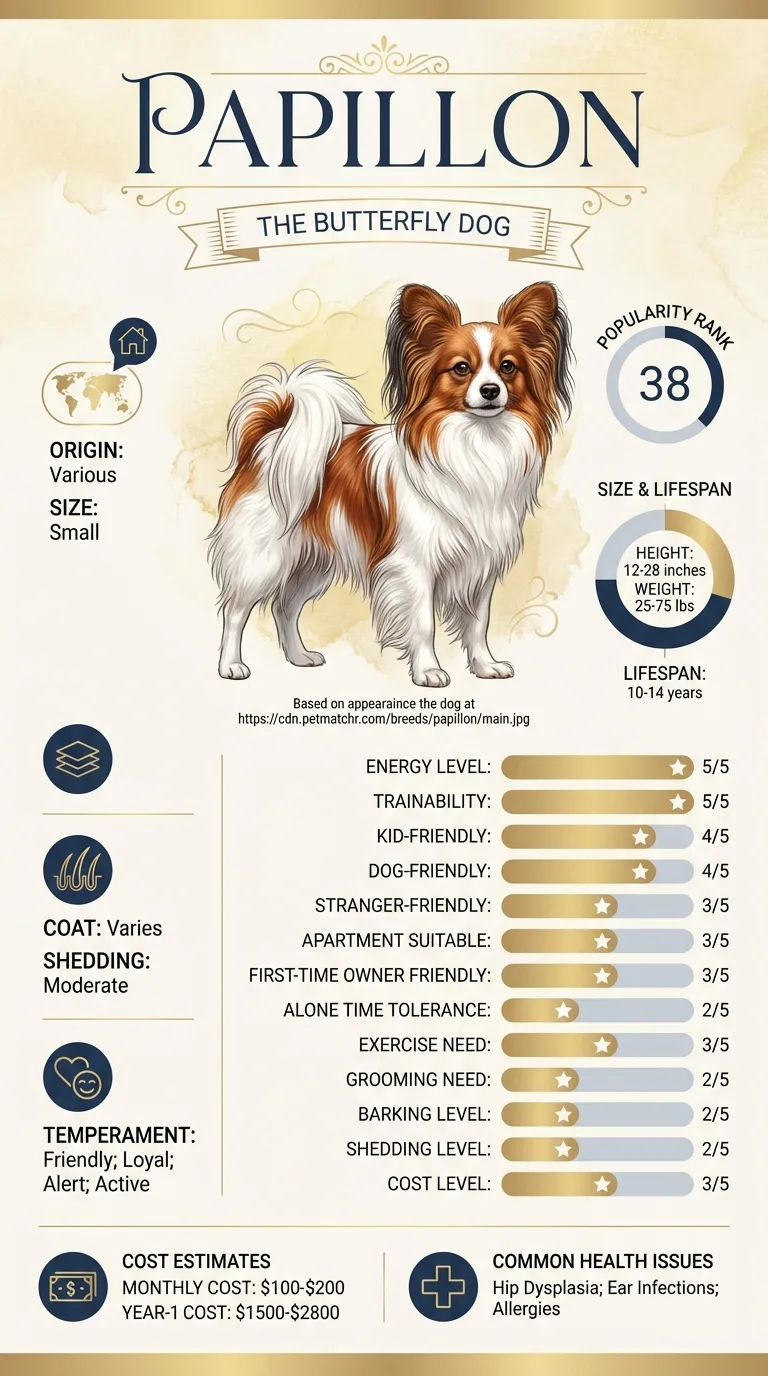
This is for someone already down to Labradoodle and Papillon and deciding between them. For this pair the decision usually turns on apartment suitability and exercise need, so those are covered first and in most detail. Anyone choosing from a flat has a clear answer here: Papillon rates 5/5 against 2/5. The focus throughout is on daily consequences rather than breed background.
Between Labradoodle and Papillon, apartment suitability is what separates them, and Papillon is the lower-effort dog of the two to keep.
Choose Labradoodle if there are young children at home and you want a dog that can keep up with an active routine.
Choose Papillon if you are in a flat or a smaller home, you do not want a standing grooming appointment and your walking routine is modest.
| Feature | labradoodle | papillon | Winner |
|---|---|---|---|
| Size class | medium | small | Equal |
| Weight | 15–65 lbs | 5–10 lbs | Equal |
| Height | 14–24 in | 8–11 in | Equal |
| Lifespan | 12–14 years | 14–16 years | papillon |
| Exercise need | Very high (5/5) | Moderate (3/5) | papillon |
| Grooming need | High (4/5) | Low (2/5) | papillon |
| Shedding | Low (2/5) | Low (2/5) | Equal |
| Energy level | Very high (5/5) | High (4/5) | Equal |
| Barking | Low (2/5) | High (4/5) | labradoodle |
| Apartment suitability | Low (2/5) | Very high (5/5) | papillon |
| Good for first-time owners | High (4/5) | High (4/5) | Equal |
| Tolerates being alone | Low (2/5) | Low (2/5) | Equal |
| Trainability | Very high (5/5) | Very high (5/5) | Equal |
| Good with kids | Very high (5/5) | Moderate (3/5) | labradoodle |
| Good with other dogs | High (4/5) | High (4/5) | Equal |
| Friendly to strangers | High (4/5) | High (4/5) | Equal |
| Cost level | High (4/5) | Low (2/5) | papillon |
| Coat | Wavy to curly | Long, silky single coat | Equal |
| Origin | Australia | Various | Equal |
| Typical monthly cost | $120–$220 | $80–$150 | Equal |
| Typical first-year cost | $1,800–$3,200 | $1,100–$2,300 | Equal |
The Papillon is a genuine toy breed, 5-10 lbs and 8-11 inches, dwarfed by the Labradoodle's 15-65 lbs and 14-24 inch range. Even the smallest mini Labradoodle would outweigh a Papillon several times over; this is a comparison of a lap dog against a mid-to-large athletic breed built for very different lifestyles and living spaces entirely, from studio apartments to sprawling backyards.
The Labradoodle rates 5/5 on exercise need against the Papillon's 3/5, moderate, a real gap but a smaller one than the size difference might suggest. Papillons are livelier than their delicate look implies; this isn't a breed that just sits in a lap all day and calls it exercise, it wants to move too, even if its stride is much shorter.
The Papillon is the far easier coat to manage, 2/5 grooming against the Labradoodle's 4/5, thanks to a fine, silky single coat that doesn't mat or need clipping the way curly hair does. Shedding ties at 2/5 for both breeds, so the grooming gap, not the shedding, is the number to weigh most heavily here when comparing how much coat effort you're signing up for.
The Papillon wins apartment suitability clearly, 5/5 against the Labradoodle's 2/5, but it's also the noisier of the two, 4/5 barking against the Labradoodle's 2/5. Papillons are surprisingly vocal for such a small breed. Both tolerate being alone poorly, tying at 2/5, so neither suits a household with long, consistent solo hours away from home each day of the week.
Both breeds tie at 4/5 for first-time owners and 5/5 for trainability, which might surprise anyone who assumes toy breeds are harder to train. Papillons are consistently ranked among the smartest toy breeds and compete seriously in agility, matching the Labradoodle stride for stride here on raw trainability and eagerness to work for treats or praise from an owner they trust.
The Labradoodle is the better pick for a house with kids, 5/5 against the Papillon's 3/5, mostly a matter of durability; a 5-10 lb dog is more easily hurt by rough play than a dog several times its size. Good with other dogs, friendly to strangers, and tolerating alone time all tie between the two breeds despite that size gap.
The Papillon has the longest lifespan of any breed paired with the Labradoodle in this batch, 14-16 years against the Labradoodle's 12-14. Its health list is shorter too, five conditions including progressive retinal atrophy and open fontanel, a soft spot in the skull common in toy breeds, versus the Labradoodle's longer, ten-item list of joint and organ risks worth reviewing with a vet before you decide.
The Papillon is the cheapest breed to keep in this comparison, 2/5 cost level against the Labradoodle's 4/5. Monthly costs run $80-150 versus $120-220, and first-year costs land at $1,100-2,300 against $1,800-3,200, a straightforward reflection of the size difference between a toy breed and a mid-to-large dog that eats and takes up far more room and needs bigger everything, right down to its bed.
Labradoodle weighs 15–65 lbs and lives 12–14 years; Papillon weighs 5–10 lbs and lives 14–16 years. The two diverge most on apartment suitability, exercise need and grooming need and 3 other rated axes. They are level on tolerates being alone, good with other dogs and good for first-time owners, so those cannot decide it. The table below marks a winner only where one breed is genuinely easier for a typical owner; size and origin are facts rather than merits and stay level. Ratings come from one source applied to both breeds, so they are meaningful against each other rather than as absolute scores.

Not according to this data, no. It rates 3/5 moderate on exercise need and 4/5 energy level, closer to an active small breed than a couch companion. Its toy-breed size doesn't mean toy-breed activity levels.
The Papillon, considerably, 2/5 against the Labradoodle's 4/5. Its fine, silky coat doesn't mat or need clipping the way the Labradoodle's curls do.
The Papillon, 4/5 against the Labradoodle's 2/5. Despite its dainty appearance, it's a genuinely vocal breed, something worth knowing before choosing it for a quiet household.
The Labradoodle, 5/5 versus the Papillon's 3/5. The gap here is mostly about physical durability; a small toy breed is more vulnerable to injury from rough handling than a larger, sturdier dog.
The Papillon, notably, 14-16 years against the Labradoodle's 12-14. That's the longest lifespan of any breed compared against the Labradoodle in this batch.
The Papillon is the cheaper of the two by a wide margin, $80-150 monthly against $120-220 for the Labradoodle, and $1,100-2,300 in year one against $1,800-3,200.
No, they tie the Labradoodle at 5/5 trainability, among the highest scores for any small breed on this site. They're competitive agility dogs, not just decorative lap companions.
In a small space with older kids or no kids, the Papillon's 5/5 apartment score and low cost make it the easier choice. With young children and more room, the Labradoodle's 5/5 kid rating and durability win out.
$80-150 for a Papillon versus $120-220 for a Labradoodle, the widest cost gap of any pairing in this batch.
The Labradoodle needs more, 5/5 versus the Papillon's 3/5, moderate, though the Papillon is livelier than its size suggests.
The Papillon, by up to four years, 14-16 versus the Labradoodle's 12-14.
Secure checkout on Stripe. We never see your card.
7-day money-back guarantee. Instant access.
Health information here is general and is not veterinary advice. If your dog shows pain, sudden behaviour change, or worsening symptoms, consult a licensed veterinarian.
Some links on this site are affiliate links. We may earn a commission at no extra cost to you, and we only suggest products we believe are helpful for dog owners.
We research and check what we publish, but we do not warrant that any figure, date, price, or statement is accurate, complete, or current, and we accept no liability for any loss, cost, injury, or other harm arising from the use of this site. Use it as one reference among several. You remain responsible for your own decisions and for your dog's care - confirm anything that matters with a licensed veterinarian or another qualified professional before you act on it. Full disclaimer.
Match your lifestyle to the right dog.
Take quizNot sure which breed is right for you? Take our 2-minute quiz to find out.
Take the quiz