Health
Is this a common health issue in the breed?
No, true autoimmune skin disease is uncommon and isn't among this breed's documented common health issues.

Quick answer
Is this a common health issue in the breed?
No, true autoimmune skin disease is uncommon and isn't among this breed's documented common health issues.
Sores and hair loss around the nose, eyes, or footpads that don't respond to the usual allergy or infection treatment are the pattern that should raise the question of an autoimmune cause.
This is most relevant to owners who've already been through a round or two of allergy or infection treatment without improvement, and are starting to wonder if something else is going on.
This guide is not medical advice. If your dog shows pain, sudden behavior change, or worsening symptoms, consult a licensed veterinarian.
Some links may be affiliate links. We may earn a commission at no extra cost to you. We only suggest products we believe are helpful for dog owners.
We research and check what we publish, but we do not warrant that any figure, date, price, or statement is accurate, complete, or current, and we accept no liability for any loss, cost, injury, or other harm arising from the use of this site. Use it as one reference among several. You remain responsible for your own decisions and for your dog's care - confirm anything that matters with a licensed veterinarian or another qualified professional before you act on it. Full disclaimer.
Check this first
Autoimmune skin disease itself rarely constitutes a sudden emergency, but its complications can. Widespread ulceration, sores that are actively oozing or bleeding significantly, a dog that seems systemically unwell with lethargy or fever alongside skin lesions, or rapid spread over a period of days rather than weeks should prompt an urgent vet visit rather than a routine appointment.
Because the nose, footpads, and areas around the eyes are common sites for autoimmune skin disease, and these areas are more exposed and less protected by this breed's dense body coat, watch specifically for crusting, depigmentation, or sores in those spots even if the rest of the coat looks completely normal.
If any of these apply, call your vet or an emergency clinic now. The rest of this page is for the cases that are not an emergency.
Autoimmune skin disease occurs when the immune system mistakenly attacks the body's own skin cells, producing sores, crusting, or hair loss, often in a symmetrical pattern around the nose, eyes, or footpads. It is uncommon in dogs generally and is not a documented predisposition in Old English Sheepdogs, but it is frequently mistaken for allergies until it's properly diagnosed.
Uncommon overall, and not among this breed's documented common health issues. It's included here because it is frequently confused with allergies, a genuinely common issue in this breed, and getting the distinction right changes the entire treatment path.
There is no documented breed-specific predisposition to autoimmune skin disease in Old English Sheepdogs. What is specific to the breed is how the condition tends to be discovered: exposed areas like the nose and footpads aren't hidden by the dense body coat, so lesions there tend to be noticed relatively early, even when body-coat symptoms would be missed for weeks.
Sun exposure can worsen lesions on the nose in some autoimmune skin conditions, and general skin barrier stress from over-bathing or harsh products can make any skin condition, autoimmune or not, look worse and harder to interpret.
Talk to your vet if skin sores or crusting don't improve after a proper course of allergy treatment, if lesions are symmetrical or concentrated around the nose, eyes, or footpads, or if depigmentation appears on the nose or lips.
Because autoimmune skin disease is uncommon, it's often the last thing considered, which can mean months of the wrong treatment.
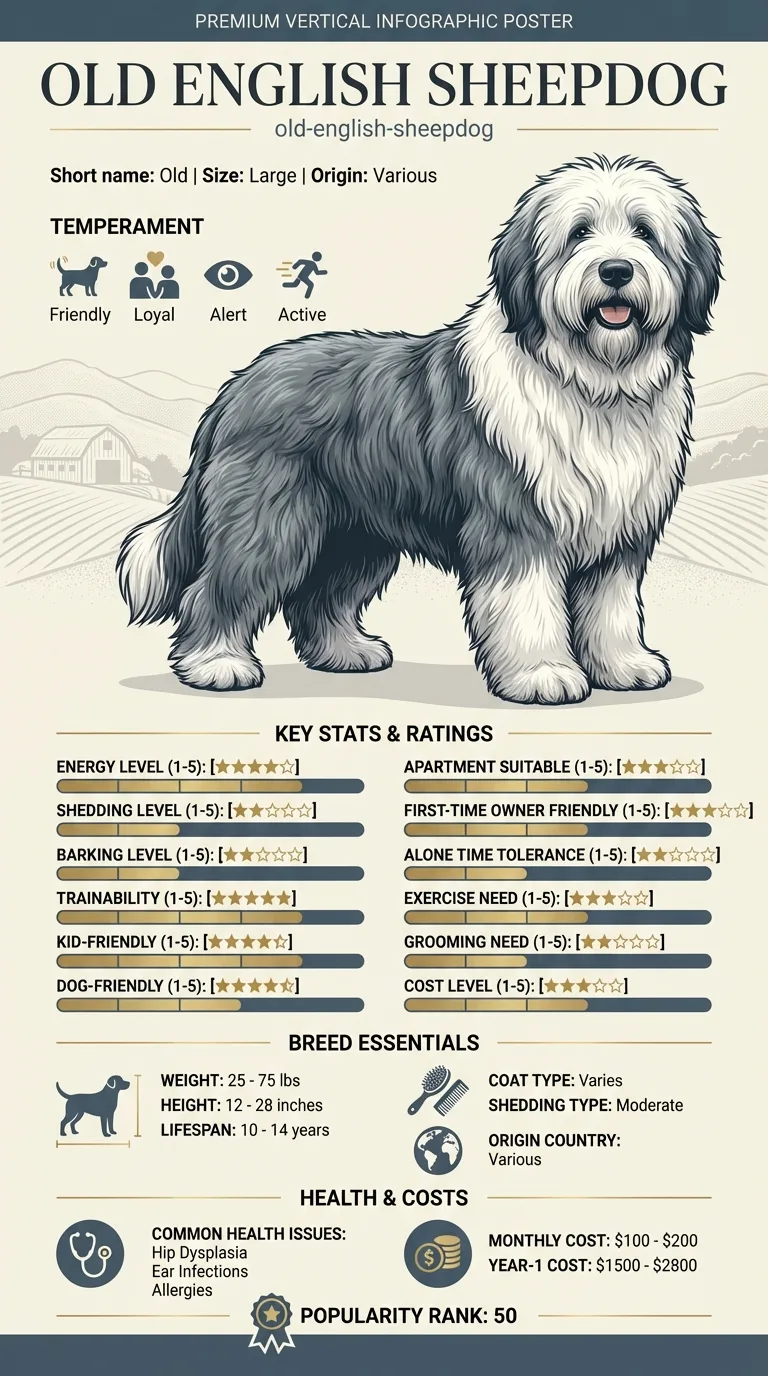
See all OLD English Sheepdog health problems, which breeds are prone to autoimmune diseases, or the full OLD English Sheepdog breed guide for temperament, exercise needs and ownership costs.
Diagnosis typically takes several weeks, since ruling out allergies and infection usually comes first, followed by a biopsy if symptoms persist. Once treatment starts, improvement is often seen within four to eight weeks, though full control can take longer.
Success looks like lesions healing or significantly improving on treatment, with a maintenance plan to keep flare-ups controlled, since most autoimmune skin conditions in dogs are managed long-term rather than cured outright.
Gus, a nine-year-old Old English Sheepdog, developed crusty sores across the bridge of his nose that his vet initially treated as an allergic reaction. Two rounds of allergy medication over six weeks didn't help, and the sores had started to look symmetrical on both sides. A referral to a veterinary dermatologist and a skin biopsy confirmed an autoimmune skin condition. With the right prescription treatment, Gus's nose healed within about two months, and his owner now watches for any recurrence as part of routine grooming checks.
Key takeaway: When a skin problem doesn't respond to allergy treatment and follows a symmetrical pattern, it's worth asking specifically about autoimmune causes rather than repeating the same approach.
It's uncommon in this breed specifically and in dogs generally. It's not among the documented common health issues for Old English Sheepdogs, but it's worth knowing about because it's frequently mistaken for allergies.
Allergies typically cause itching first and lesions second, often widespread and seasonal or food-related. Autoimmune skin disease tends to cause more localized, often symmetrical sores, crusting, or depigmentation, especially around the nose, eyes, and footpads, and it usually doesn't respond to typical allergy treatment.
A skin biopsy is typically required for a definitive diagnosis, since the appearance alone can overlap with allergies or infection. Your vet may also run bloodwork to rule out other causes first.
Most autoimmune skin conditions in dogs are managed long-term with medication rather than cured outright, similar in concept to how chronic allergies are managed rather than eliminated.
Treatment is prescribed and monitored by a vet, often a veterinary dermatologist, and is tailored to the specific autoimmune condition identified. It is not something to attempt to manage with over-the-counter products alone.
Nose depigmentation or crusting has several possible causes, from sunburn to allergies to autoimmune conditions. It's specific enough that a vet exam, and sometimes a biopsy, is the only reliable way to know which one you're dealing with.
A skin biopsy is a routine diagnostic step, not a sign of an inevitably serious outcome. It's the most reliable way to distinguish between several possible causes that can look similar on the surface.
No, true autoimmune skin disease is uncommon and isn't among this breed's documented common health issues.
Symmetrical sores or crusting around the nose, eyes, or footpads that don't respond to allergy treatment point toward an autoimmune cause.
A skin biopsy, often combined with bloodwork, is the standard way to confirm an autoimmune skin condition.
Diagnosis with a biopsy and dermatology referral, plus ongoing prescription treatment, can be a meaningful recurring cost, often more than routine allergy management.
No. Over-the-counter shampoos may soothe symptoms temporarily but won't address an autoimmune cause and can delay proper diagnosis.
A one-page prep sheet for this condition: the signs, the questions to ask, what to get priced. Unlocks here.
You get: Vet visit prep sheet
No spam. One-click unsubscribe. See our privacy policy.
Preview page 1 before you decide.