Health
What are some quick tips for Miniature Schnauzer autoimmune diseases?
Monitor your Mini Schnauzer for skin changes and consult your vet promptly. A balanced diet and regular vet visits can greatly improve their well-being.

Quick answer
What are some quick tips for Miniature Schnauzer autoimmune diseases?
Monitor your Mini Schnauzer for skin changes and consult your vet promptly. A balanced diet and regular vet visits can greatly improve their well-being.
Miniature Schnauzers can face autoimmune diseases that lead to skin issues and hair loss. Understanding these conditions is crucial for their health.
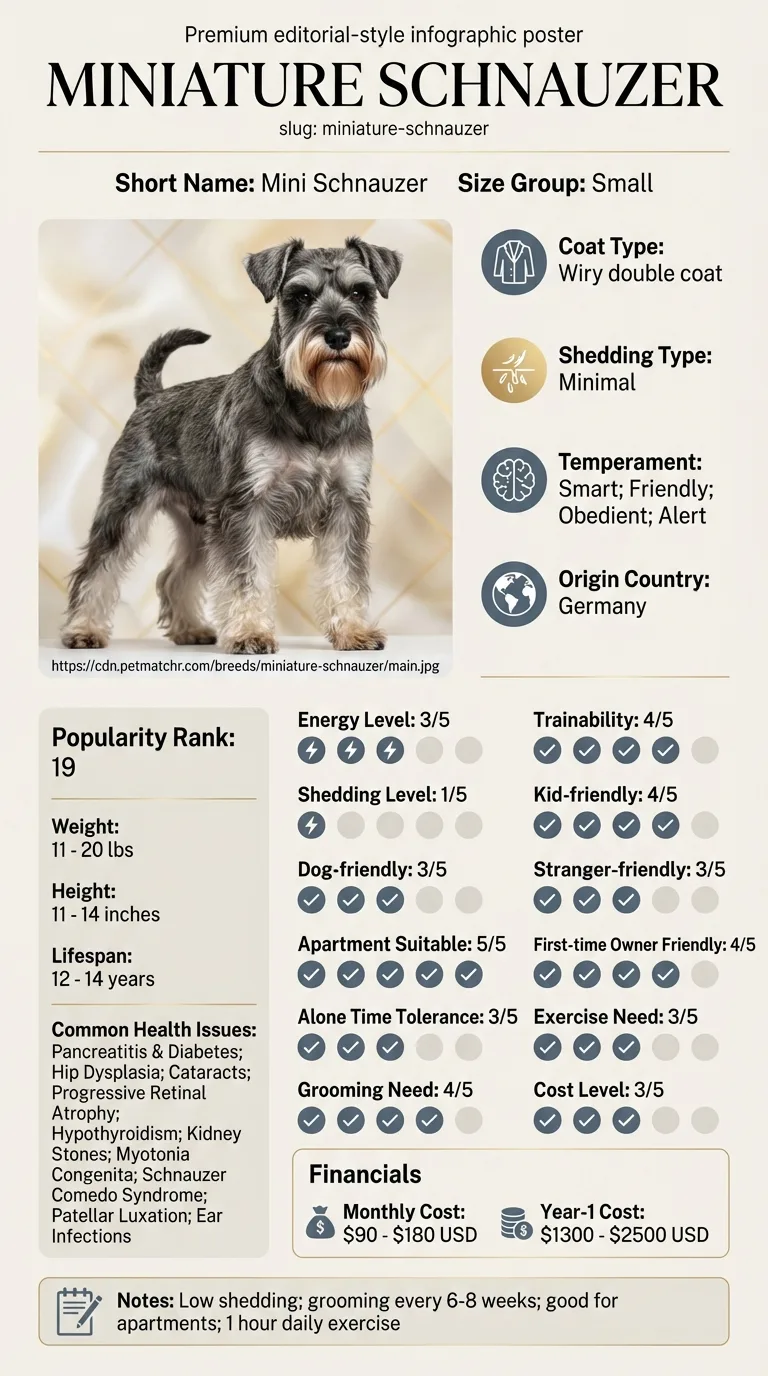
Owners of Miniature Schnauzers, especially first-time dog parents, may find themselves struggling with these health challenges. It can be particularly tough for those who are not prepared for the potential medical costs and care needed to manage these diseases.
This guide is not medical advice. If your dog shows pain, sudden behavior change, or worsening symptoms, consult a licensed veterinarian.
Some links may be affiliate links. We may earn a commission at no extra cost to you. We only suggest products we believe are helpful for dog owners.
We research and check what we publish, but we do not warrant that any figure, date, price, or statement is accurate, complete, or current, and we accept no liability for any loss, cost, injury, or other harm arising from the use of this site. Use it as one reference among several. You remain responsible for your own decisions and for your dog's care - confirm anything that matters with a licensed veterinarian or another qualified professional before you act on it. Full disclaimer.
Check this first
In summary, watch for red flags like: - Sudden weight loss - Swelling or hard lumps - Blood in urine or stool. If you see any of these, don't hesitate to reach out to your veterinarian. Keeping your Miniature Schnauzer healthy is always a priority.
If any of these apply, call your vet or an emergency clinic now. The rest of this page is for the cases that are not an emergency.
Miniature Schnauzers can be prone to autoimmune diseases, which often manifest as skin conditions that cause sores and hair loss. These issues can lead to discomfort for your pup and require consistent management. Owners may notice their Mini Schnauzer scratching more than usual or developing unusual skin patches, which can be concerning and confusing.
Autoimmune diseases are relatively common in Miniature Schnauzers, with many owners reporting skin issues at some point. It's crucial to monitor your dog's health closely and consult a vet if you notice any symptoms.
Miniature Schnauzers are prone to certain autoimmune diseases due to their genetic makeup. Their small size and specific lineage may increase susceptibility to conditions where the immune system attacks healthy cells. This breed is known to face issues like Schnauzer Comedo Syndrome, which is linked to autoimmune responses.
Environmental factors can also contribute to autoimmune diseases in Miniature Schnauzers. Stressful situations, poor diet, and exposure to allergens can trigger or worsen these health issues. Additionally, living conditions that lack proper hygiene can lead to skin problems, further complicating their health.
If you notice persistent skin problems, sores, or hair loss in your Miniature Schnauzer, contact your vet. Early intervention can make a significant difference in managing autoimmune conditions effectively.
Many owners unknowingly reinforce issues related to Miniature Schnauzer autoimmune diseases. Here are common mistakes and safer alternatives.
Start here: Miniature Schnauzer Most Common Genetic Disorders: Screening
See all Miniature Schnauzer health problems, which breeds are prone to autoimmune diseases, or the full Miniature Schnauzer breed guide for temperament, exercise needs and ownership costs.
Managing Miniature Schnauzer autoimmune diseases can take several months of consistent care and attention. Initial symptoms may improve within a few weeks with the right treatment, but full recovery can take up to six months.
Success means your Miniature Schnauzer shows improved skin health, reduced itching, and regrowth of fur. You'll notice a happier, more comfortable dog, and a decrease in flare-ups over time.
Sarah, a busy nurse in Chicago, adopted a Miniature Schnauzer named Maggie. Shortly after bringing her home, Maggie developed skin sores that worried Sarah. After consulting a vet, they discovered Maggie had an autoimmune disease. With a tailored diet and regular vet check-ups, Sarah learned how to manage Maggie’s condition. Six months later, Maggie’s skin improved significantly, and she was back to her playful self, with a healthy coat.
Key takeaway: Consistency in treatment and close observation of your Miniature Schnauzer’s symptoms can lead to a successful management plan for autoimmune diseases.
Autoimmune diseases in Miniature Schnauzers can arise due to genetic predispositions, environmental factors, or allergies. These conditions often manifest as skin issues, such as sores and hair loss. Regular vet check-ups can help identify underlying causes early. This answer relates to Miniature Schnauzer autoimmune diseases.
Managing autoimmune diseases starts with a proper diagnosis from your vet. You can support your Mini Schnauzer's health through a balanced diet, regular exercise, and avoiding allergens in their environment. Medication or supplements may also be recommended by your veterinarian.
Common symptoms include skin lesions, hair loss, and excessive itching. Your Mini Schnauzer may also show signs of fatigue or changes in appetite. Early recognition and treatment are key to managing these diseases effectively.
Yes, many autoimmune diseases can be managed with appropriate treatment. This may include medication, dietary changes, or topical therapies. A veterinarian's guidance is essential in creating an effective treatment plan.
Creating a stress-free environment and maintaining a regular grooming routine can help minimize flare-ups. Ensure your Mini Schnauzer has a nutritious diet and adequate exercise. Consult with your vet about any necessary adjustments to their care routine.
You can support your Miniature Schnauzer by providing a balanced diet, regular vet check-ups, and managing stress. Keeping their environment calm and safe can also help minimize flare-ups.
Yes, some autoimmune diseases can be hereditary. If your Miniature Schnauzer comes from a line known for these issues, they may be at a higher risk. A good breeder will provide health history and testing information.
Yes, older Miniature Schnauzers are more susceptible to autoimmune diseases. As they age, their immune system can weaken, making them prone to various health issues, so regular vet visits are essential.
Allergies can sometimes trigger autoimmune responses in dogs. If your Miniature Schnauzer has allergies, it's important to work with your vet to manage them and monitor for any signs of autoimmune diseases.
Monitor your Mini Schnauzer for skin changes and consult your vet promptly. A balanced diet and regular vet visits can greatly improve their well-being.
Monthly costs can range from $90 to $180, depending on treatment needs and vet visits. Be prepared for additional expenses if specialized care is required.
Training can help your Mini Schnauzer cope with stress and anxiety, which may exacerbate their symptoms. Consider gentle training methods to create a calm environment.
A one-page prep sheet for this condition: the signs, the questions to ask, what to get priced. Unlocks here.
You get: Vet visit prep sheet
No spam. One-click unsubscribe. See our privacy policy.
Preview page 1 before you decide.