Health
What are quick tips for managing Schnauzer (Standard) autoimmune diseases?
Regular vet visits, a balanced diet, and keeping stress low are essential. Monitor your dog's behavior closely for any changes.

Quick answer
What are quick tips for managing Schnauzer (Standard) autoimmune diseases?
Regular vet visits, a balanced diet, and keeping stress low are essential. Monitor your dog's behavior closely for any changes.
Schnauzer (Standard) autoimmune diseases can be serious and distressing for both dogs and their owners. These conditions often lead to skin issues like sores and hair loss, impacting your dog's quality of life.
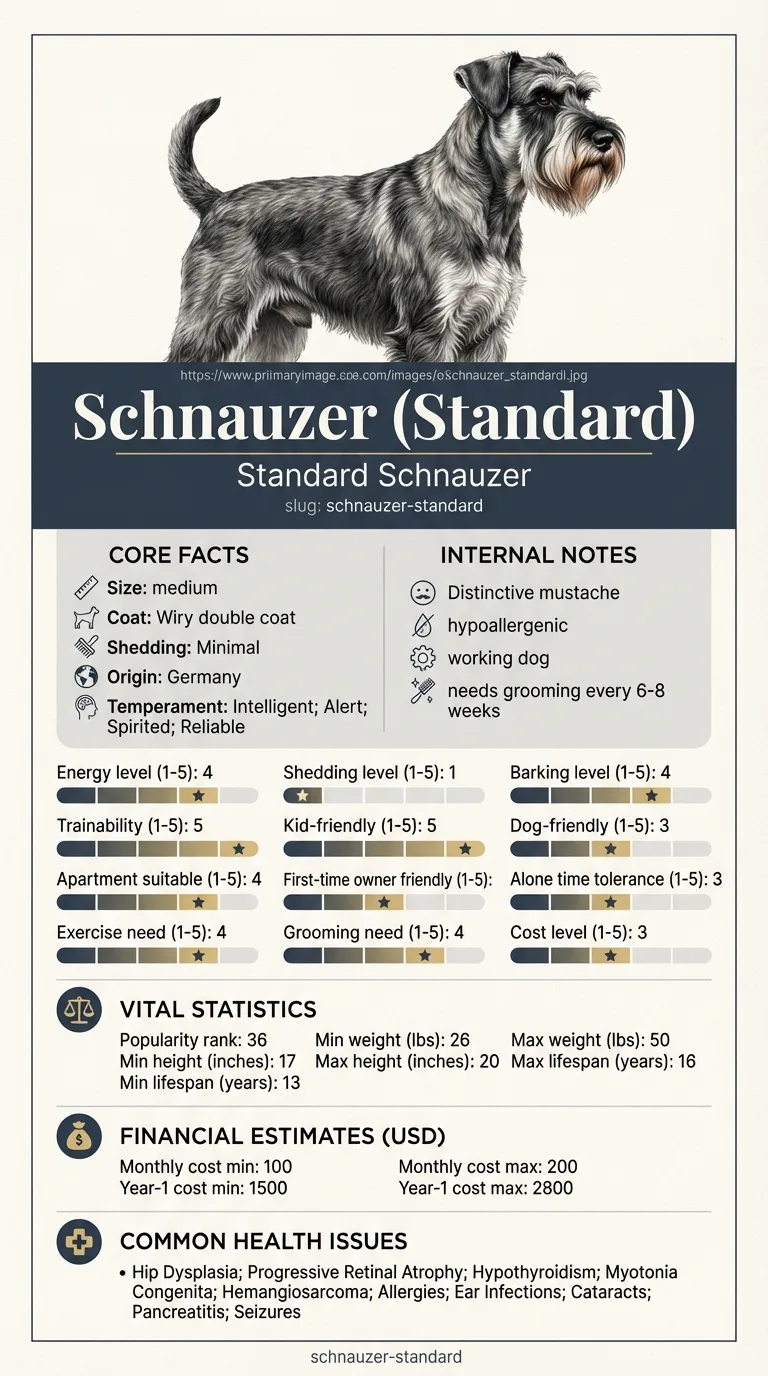
This issue commonly affects owners of Schnauzers who may notice changes in their dog's coat or skin health. Typically, new or first-time pet parents may feel overwhelmed, unsure of how to address these health issues effectively.
This guide is not medical advice. If your dog shows pain, sudden behavior change, or worsening symptoms, consult a licensed veterinarian.
Some links may be affiliate links. We may earn a commission at no extra cost to you. We only suggest products we believe are helpful for dog owners.
We research and check what we publish, but we do not warrant that any figure, date, price, or statement is accurate, complete, or current, and we accept no liability for any loss, cost, injury, or other harm arising from the use of this site. Use it as one reference among several. You remain responsible for your own decisions and for your dog's care - confirm anything that matters with a licensed veterinarian or another qualified professional before you act on it. Full disclaimer.
Check this first
If you notice any of the following red-flag signs, call your vet immediately: - Severe skin lesions that are bleeding or won’t heal. - Sudden weight loss or a noticeable change in appetite. - Lethargy or weakness that seems unusual for your Schnauzer. - Difficulty breathing or excessive panting. - Persistent vomiting or diarrhea that lasts more than 24 hours.
These symptoms may indicate a serious autoimmune reaction requiring urgent care. In contrast, mild symptoms can often be managed at home. Monitoring your Schnauzer is essential if you see things like: - Occasional itching or minor skin irritations. - Mild fatigue that resolves with rest. - Temporary changes in appetite that stabilize.
Develop a watchful care plan with your vet for these cases. Regular check-ups and monitoring can help keep track of your Schnauzer's health. If symptoms worsen or new ones develop, don’t hesitate to seek veterinary help. Autoimmune diseases can be unpredictable, so staying informed and prepared is key to your Schnauzer’s well-being.
If any of these apply, call your vet or an emergency clinic now. The rest of this page is for the cases that are not an emergency.
Schnauzer (Standard) autoimmune diseases can manifest as skin conditions leading to sores and hair loss. These issues arise when the immune system mistakenly attacks the dog's own body, causing discomfort and distress. Owners may notice their Schnauzer scratching excessively or developing unusual rashes, which can be frustrating and worrisome.
Autoimmune diseases are relatively common in Schnauzer (Standard) breeds, with many owners reporting issues during their dog's lifetime. While not every Schnauzer will face these problems, awareness and early detection can greatly improve management and treatment.
Schnauzers (Standard) can be predisposed to autoimmune diseases due to their genetic makeup. Certain breeds, including Schnauzers, may have inherited traits that make them more susceptible to these conditions, leading to skin issues or other health problems. These genetic factors can affect their immune system, making them vulnerable to various autoimmune disorders.
Environmental factors can also play a significant role in the development of autoimmune diseases in Schnauzers. Exposure to allergens, poor diet, stress, and lack of proper veterinary care can trigger or worsen these health issues. For instance, a diet lacking in essential nutrients may weaken their immune system, making them more prone to autoimmune reactions.
If you notice persistent skin issues, hair loss, or changes in behavior, consult your veterinarian. They can perform tests to diagnose autoimmune diseases and suggest appropriate treatments to manage your Schnauzer's health.
Avoiding certain behaviors can help manage Schnauzer (Standard) autoimmune diseases more effectively. Here are common mistakes to steer clear of.
Start here: Standard Schnauzer Most Common Genetic Disorders: Screening
See all Schnauzer Standard health problems, which breeds are prone to autoimmune diseases, or the full Schnauzer Standard breed guide for temperament, exercise needs and ownership costs.
Managing Schnauzer (Standard) autoimmune diseases typically takes a few weeks to months. Consistent care and regular vet visits are essential.
Success means your Schnauzer shows improvement in skin condition, reduced symptoms, and overall better health. Regular follow-ups with the vet will help track progress.
When Jake adopted Max, his Standard Schnauzer, he noticed patches of hair loss and skin sores shortly after. Concerned, he took Max to the vet, who diagnosed him with an autoimmune disease. Jake learned that managing this condition required a specialized diet, medication, and consistent vet visits. It was tough at first, but with patience and dedication, Jake saw Max's condition improve significantly over a few months. Regular grooming and a tailored diet became part of their routine, allowing Max to thrive.
Key takeaway: Managing your Schnauzer's autoimmune diseases takes time and commitment, but with the right care and nutritional support, you can help them lead a happier, healthier life.
Autoimmune diseases in Schnauzers can be due to genetic predisposition, environmental factors, or infections. A vet can help identify the cause through tests and observations. Early detection is crucial for effective management. This answer relates to Schnauzer (Standard) autoimmune diseases.
Preventive care is key, including regular vet check-ups and a healthy diet. Keep your Schnauzer's environment clean and stress-free. Good hygiene and avoiding exposure to toxins can also help.
Common signs include skin lesions, hair loss, lethargy, and unusual behavior. Watch for changes in appetite or energy levels. If you notice these symptoms, consult a vet promptly.
Treatment may include medications to suppress the immune system, anti-inflammatory drugs, or dietary changes. Your vet will tailor a treatment plan based on your Schnauzer's specific needs. Regular monitoring is essential to adjust the treatment as needed.
While training won't cure autoimmune diseases, it can help manage behavior issues that may arise due to discomfort. Positive reinforcement techniques can help build a trusting relationship and reduce stress. Consider consulting a trainer familiar with health-related challenges.
Signs of autoimmune diseases in Schnauzers can include skin sores, hair loss, lethargy, and unexplained weight loss. If you notice these symptoms, it's important to consult your vet for a proper diagnosis.
Yes, many autoimmune diseases can be managed with medications and lifestyle changes. Your vet can provide guidance on the best treatment options tailored to your Schnauzer's specific condition.
While any dog can develop autoimmune diseases, some breeds, including Schnauzers, may be more susceptible. Genetic factors often play a role, so it's essential to stay informed about your dog's health history.
Autoimmune diseases can develop at various ages, but they are often diagnosed in middle-aged to older dogs. Regular vet check-ups can help catch potential issues early, regardless of your Schnauzer's age.
If you suspect your Schnauzer may have an autoimmune disease, the first step is to schedule a vet appointment. Early diagnosis and treatment are crucial for managing the condition effectively.
Regular vet visits, a balanced diet, and keeping stress low are essential. Monitor your dog's behavior closely for any changes.
Treatment costs can vary but expect to spend around $100 to $200 monthly for medications and vet visits. Yearly costs can range from $1,500 to $2,800.
With proper care, Schnauzers can live 13 to 16 years, even with autoimmune diseases. Regular veterinary care is crucial for managing their health.
Create a calm environment, provide comfortable bedding, and maintain a consistent routine. Regular exercise and gentle play can also help improve their mood.
A one-page prep sheet for this condition: the signs, the questions to ask, what to get priced. Unlocks here.
You get: Vet visit prep sheet
No spam. One-click unsubscribe. See our privacy policy.
Preview page 1 before you decide.