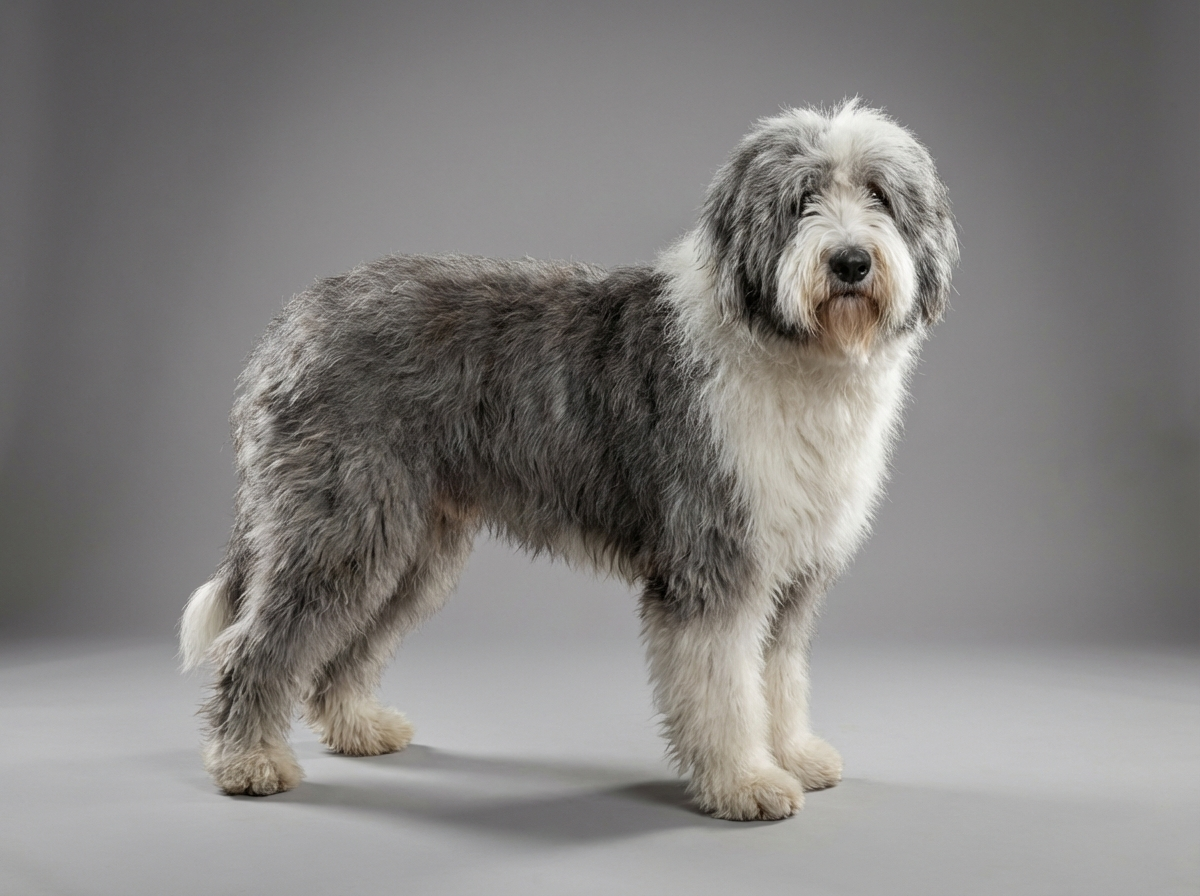
Health
What's the earliest sign of arthritis in this breed?
Reluctance to jump into the car or take stairs quickly, often before any visible limp appears.

Quick answer
What's the earliest sign of arthritis in this breed?
Reluctance to jump into the car or take stairs quickly, often before any visible limp appears.
A dog that used to bound off the porch and now hesitates at the top step isn't necessarily 'just getting old.' That hesitation is often the first visible sign of arthritis.
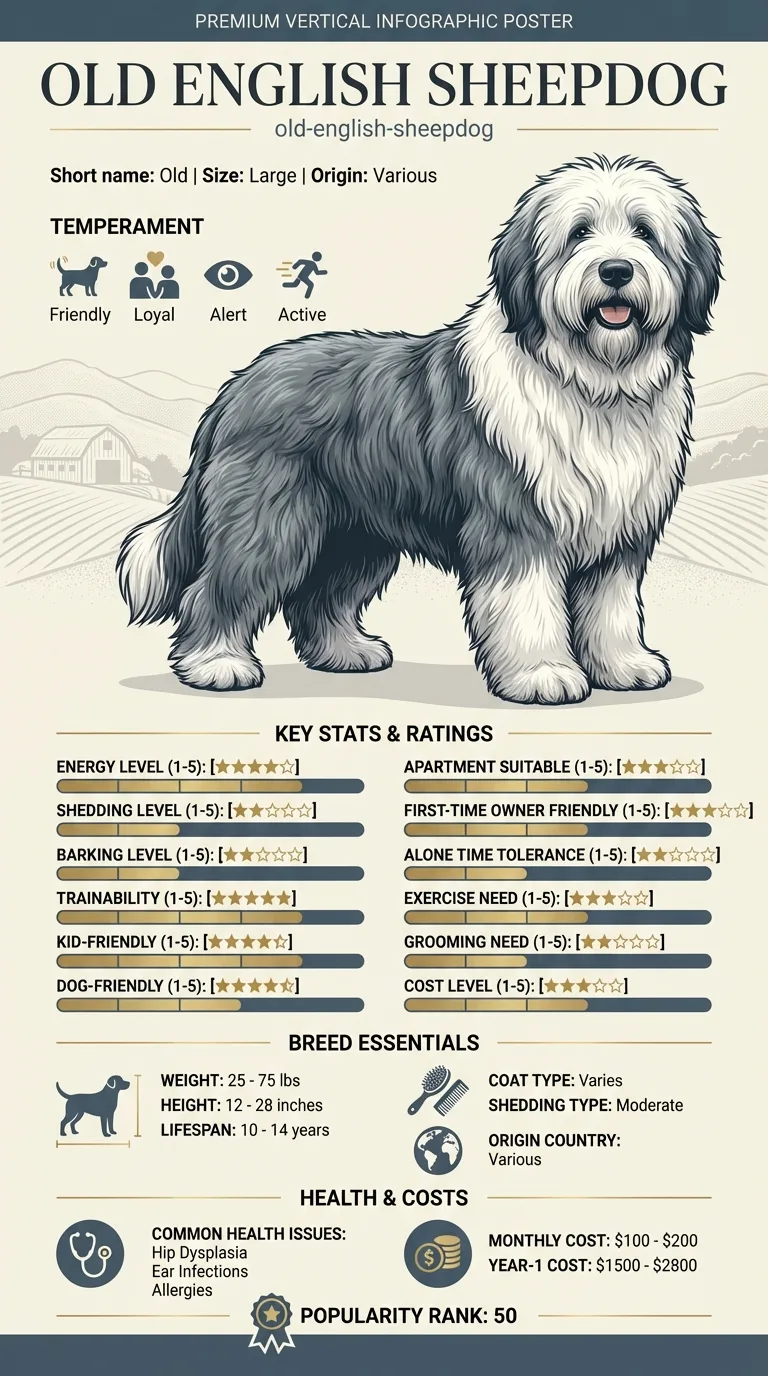
This affects owners of dogs past middle age most directly, but it starts earlier than most people expect in a breed with documented hip dysplasia risk. It's also genuinely harder to spot early in this breed, because muscle loss and stiffness are both hidden under a dense, all-covering coat.
This guide is not medical advice. If your dog shows pain, sudden behavior change, or worsening symptoms, consult a licensed veterinarian.
Some links may be affiliate links. We may earn a commission at no extra cost to you. We only suggest products we believe are helpful for dog owners.
We research and check what we publish, but we do not warrant that any figure, date, price, or statement is accurate, complete, or current, and we accept no liability for any loss, cost, injury, or other harm arising from the use of this site. Use it as one reference among several. You remain responsible for your own decisions and for your dog's care - confirm anything that matters with a licensed veterinarian or another qualified professional before you act on it. Full disclaimer.
Check this first
Most arthritis is a gradual, manageable condition rather than an emergency. But a sudden inability to bear weight on a leg, a leg held completely off the ground, obvious swelling or heat in a joint, or a dog that cries out when touched in a specific spot are signs of an acute injury on top of, or separate from, chronic arthritis, and deserve same-day veterinary attention rather than being written off as an arthritis flare.
Because this breed's coat hides so much, doing a regular hands-on check, feeling for heat, swelling, or a flinch response along the hips and legs, is genuinely more useful here than in a short-coated breed where visible swelling would be obvious immediately.
If any of these apply, call your vet or an emergency clinic now. The rest of this page is for the cases that are not an emergency.
Arthritis in Old English Sheepdogs typically develops as a downstream consequence of hip dysplasia, a documented issue in the breed, compounded by the mechanical stress of a large, heavy frame on an imperfectly formed joint. It's a progressive, manageable condition rather than one with a cure.
Given the documented hip dysplasia risk in this breed, arthritis is a common outcome by mid-to-late life, and some dogs show early signs well before what most owners consider 'old age.'
Hip dysplasia, a documented health issue in this breed, means the ball and socket of the hip joint don't fit together as precisely as they should. Over years of normal use, that imperfect fit wears down cartilage faster than in a well-formed joint, and at this breed's large size and weight, sixty to a hundred pounds, that wear accumulates faster than it would in a small dog.
Extra body weight, hard indoor flooring that reduces traction, and inconsistent exercise, long stretches of inactivity punctuated by bursts of hard play, all add mechanical stress to joints that are already working at a disadvantage.
Talk to your vet if you notice reluctance to jump, slower stairs, a shorter stride, or morning stiffness that doesn't ease with gentle movement. Seek same-day care for sudden inability to bear weight, visible swelling, or a pain response to touch in a specific area.
None of these cause arthritis outright, but each one accelerates the joint damage and discomfort once it starts.
See all OLD English Sheepdog health problems, which breeds are prone to arthritis, or the full OLD English Sheepdog breed guide for temperament, exercise needs and ownership costs.
Arthritis is a lifelong, progressive condition rather than one that resolves. Most dogs on a proper management plan see meaningful comfort improvement within four to six weeks of starting treatment, with ongoing management needed indefinitely.
Success looks like a dog that moves comfortably through normal daily activities, with occasional bad days managed rather than constant discomfort, not a return to puppy-level mobility.
Duchess, a six-year-old Old English Sheepdog with known mild hip dysplasia from a puppy X-ray, started taking the porch stairs more slowly. Her owner assumed it was just caution rather than a symptom, since Duchess never limped and her coat hid any visible change. At her annual checkup, the vet noted reduced hip range of motion and mild muscle loss in her hindquarters that hadn't been visible under her coat. A weight check, a joint supplement, and a switch from twice-weekly hard fetch sessions to daily steady walks brought her mobility back within about six weeks.
Key takeaway: In this breed, arthritis often shows up as a change in behavior long before any visible limp. Watching how a dog moves matters more than how they look.
Because hip dysplasia is a documented issue in this breed, some dogs show early joint changes well before typical 'senior' age, sometimes as young as three to five years old, especially if the dysplasia is moderate to severe.
Hip dysplasia is a structural malformation of the hip joint, often present from a young age. Arthritis is the progressive joint damage and inflammation that tends to develop over time as a result of that abnormal joint mechanics, among other causes.
Watch behavior instead of appearance: reluctance to jump into the car, slower or more careful stairs, a shorter stride on walks, or difficulty getting up after lying down are all behavioral signs that show up before any visible change.
It can't always be prevented given the documented hip dysplasia risk, but keeping the dog lean, providing controlled exercise rather than sporadic bursts, and addressing pain early can meaningfully slow how much arthritis develops and how quickly it progresses.
Yes. Arthritis is a genuinely painful condition, even though dogs are often good at masking discomfort. Treating the pain isn't just about comfort; untreated pain accelerates muscle loss and further mobility decline.
A combination approach is standard: weight management, joint supplements as recommended by a vet, controlled low-impact exercise, and prescription pain management for more advanced cases, tailored to the individual dog by a veterinarian.
Not necessarily. Many dogs are managed successfully with weight control, exercise modification, and medical management for years. Surgery is typically reserved for cases where conservative management isn't providing adequate quality of life.
Many owners report their dog seems stiffer in cold or damp weather, and while the science on this is mixed, it's common enough that adjusting exercise and providing extra warmth on cold days is a reasonable precaution.
Reluctance to jump into the car or take stairs quickly, often before any visible limp appears.
Yes, hip dysplasia is a documented issue in this breed and is one of the most common paths to early arthritis.
Ongoing costs for supplements, vet rechecks, and possibly prescription pain medication commonly run several hundred dollars a year, more if surgery is eventually needed.
No, stopping activity entirely usually makes things worse. Controlled, low-impact exercise like steady leash walks helps maintain muscle that supports the joints.
You can watch for behavioral changes and do a gentle hands-on check for heat or swelling, but a proper diagnosis requires a vet exam and often X-rays.
A one-page prep sheet for this condition: the signs, the questions to ask, what to get priced. Unlocks here.
You get: Vet visit prep sheet
No spam. One-click unsubscribe. See our privacy policy.
Preview page 1 before you decide.