Health
Is this the same as hip dysplasia?
No, it's a separate condition affecting the elbow joint specifically, distinct from this breed's documented hip dysplasia risk.

Quick answer
Is this the same as hip dysplasia?
No, it's a separate condition affecting the elbow joint specifically, distinct from this breed's documented hip dysplasia risk.
A front-leg limp in a growing Old English Sheepdog puppy isn't automatically a hip problem. The elbows have their own, separate developmental risk.
This is most relevant to owners of puppies in the growth phase, roughly four months to a year old, when developmental joint conditions in either the hips or elbows are most likely to become apparent.
This guide is not medical advice. If your dog shows pain, sudden behavior change, or worsening symptoms, consult a licensed veterinarian.
Some links may be affiliate links. We may earn a commission at no extra cost to you. We only suggest products we believe are helpful for dog owners.
We research and check what we publish, but we do not warrant that any figure, date, price, or statement is accurate, complete, or current, and we accept no liability for any loss, cost, injury, or other harm arising from the use of this site. Use it as one reference among several. You remain responsible for your own decisions and for your dog's care - confirm anything that matters with a licensed veterinarian or another qualified professional before you act on it. Full disclaimer.
Check this first
A puppy that suddenly won't bear any weight on a front leg, especially after a fall or rough play, should be seen the same day to rule out an acute fracture or injury in addition to any underlying developmental condition. A persistent or recurring limp that comes and goes over weeks, without a specific injury, is not usually a same-day emergency but does warrant a prompt vet visit and likely X-rays.
Because elbow dysplasia is a developmental condition that benefits from earlier rather than later intervention, don't wait for a limp to become constant before seeking a diagnosis. A vet exam and imaging can often identify the condition well before it's obvious just from watching the puppy move.
If any of these apply, call your vet or an emergency clinic now. The rest of this page is for the cases that are not an emergency.
Elbow dysplasia is a developmental malformation of the elbow joint in growing large-breed puppies, separate from this breed's documented hip dysplasia but arising through a similar general process during the rapid growth phase. It's a genuine concern for a fast-growing large breed like this one, even though it isn't specifically listed among this breed's documented common health issues.
Elbow dysplasia is a recognized concern in large-breed puppies generally, and while it isn't specifically documented as a top common health issue for this breed, its similar growth-related mechanism to the breed's documented hip dysplasia makes it a reasonable concern to watch for.
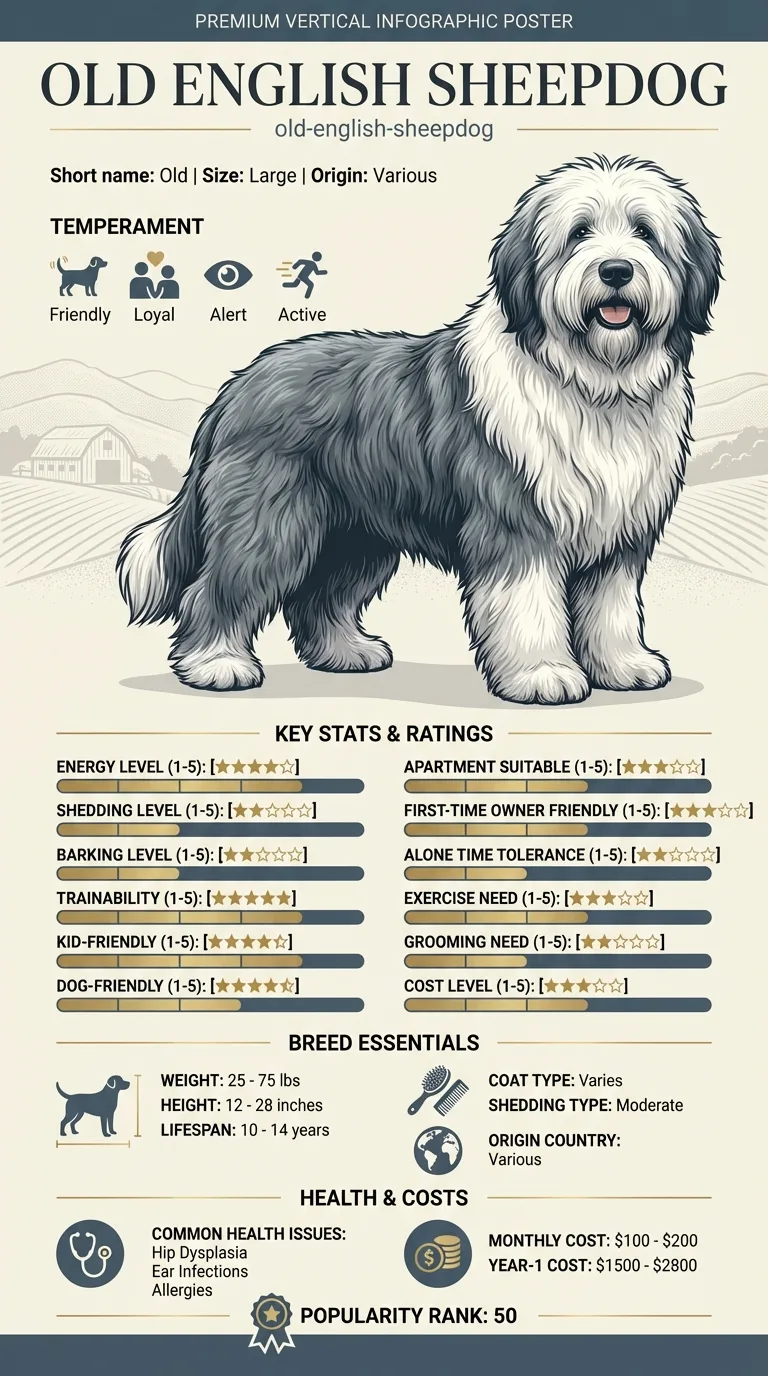
As a large breed reaching sixty to a hundred pounds within about eighteen months, this breed's rapid growth places real developmental demands on the elbow joint, similar in general mechanism to the well-documented hip dysplasia risk already established for this breed, though affecting a different joint.
Diet, growth rate, body weight, and exercise intensity during the growth phase all influence how a genetically predisposed elbow joint actually develops, meaning environmental management has a real, evidence-based impact on outcomes.
Talk to your vet about any persistent or recurring front-leg limp, stiffness after rest, or asymmetric leg muscling in a growing puppy. Seek same-day care for sudden inability to bear weight, especially after a fall.
Catching this early and managing growth appropriately makes a real difference in long-term joint function.
See all OLD English Sheepdog health problems, which breeds are prone to elbow dysplasia, or the full OLD English Sheepdog breed guide for temperament, exercise needs and ownership costs.
Diagnosis typically involves X-rays taken within a single vet visit. If surgery is pursued, recovery generally takes six to twelve weeks; conservative management is an ongoing, ongoing process similar to arthritis care elsewhere.
Success looks like a puppy that grows into an adult with the best achievable joint function, through early detection and appropriate management rather than a fully 'normal' joint in more significant cases.
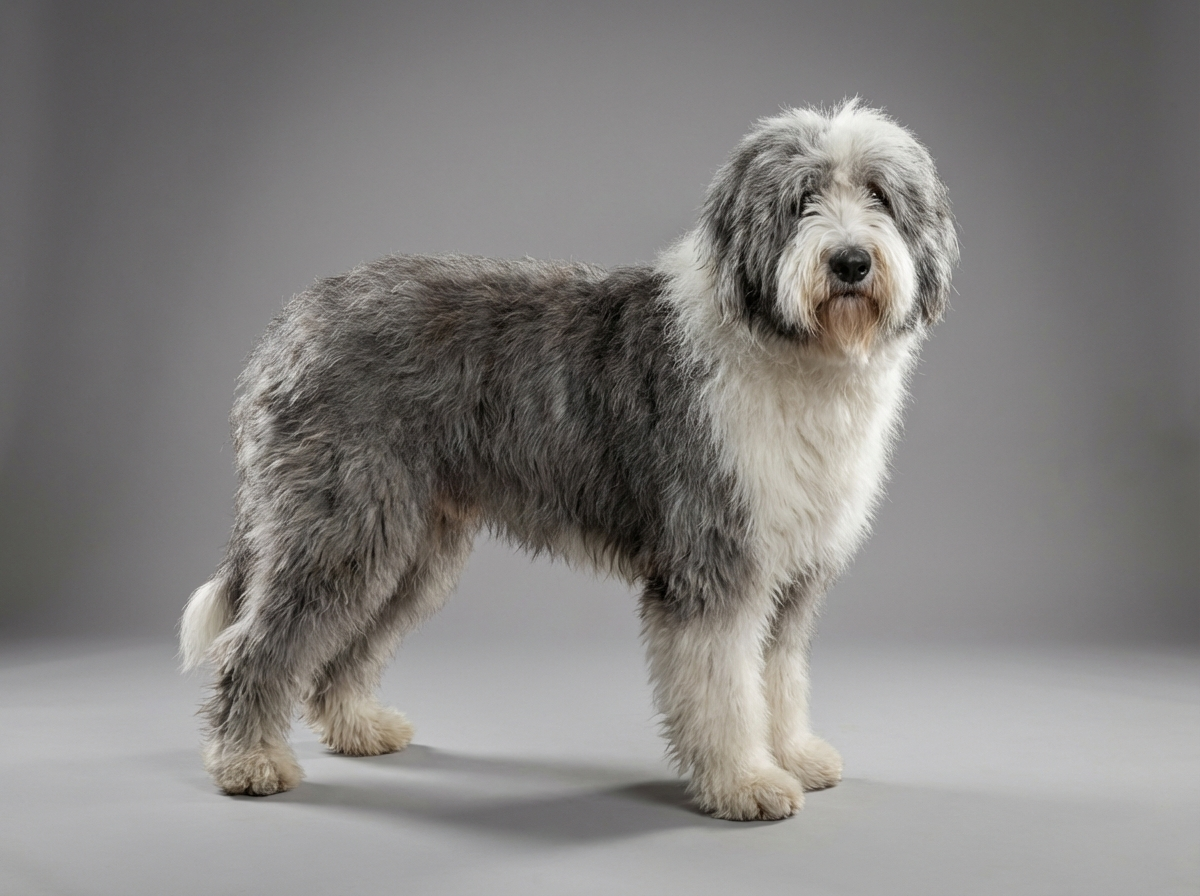
Nell, a seven-month-old Old English Sheepdog puppy, had already had a normal hip screening at her vet's recommendation. Her owner noticed she seemed to favor one front leg slightly after naps, though it wasn't a constant limp. Assuming the hip screening covered joint concerns generally, they almost didn't mention it. At her next visit, the vet asked specifically about front-leg symptoms and recommended elbow X-rays, which showed mild elbow dysplasia. Adjusted exercise and a large-breed puppy diet were enough to manage it conservatively, with no surgery needed.
Key takeaway: A normal hip screening doesn't rule out an elbow issue. The two joints are genuinely separate concerns and are worth asking about individually.
No, they're separate conditions affecting different joints, though both involve abnormal joint development during growth. This breed has a documented predisposition to hip dysplasia specifically; elbow dysplasia is a related but distinct developmental concern in large-breed puppies generally.
Watch for front-leg lameness, a puppy that seems stiff after rest and improves with gentle movement, or one front leg that appears less muscled than the other from favoring it during growth.
Symptoms often become apparent between four months and a year of age, during the period of rapid growth, though mild cases can go unnoticed until early adulthood.
Through a physical exam assessing gait and joint range of motion, followed by X-rays, and sometimes a CT scan for a more detailed view of the joint if surgery is being considered.
Not always. Mild cases are sometimes managed conservatively with weight control and controlled exercise, while more significant malformations are often addressed surgically, particularly if diagnosed early.
Elbow dysplasia commonly leads to some degree of arthritis in the affected joint over time, though appropriate management, and surgery when indicated, can meaningfully slow this progression.
It can't always be prevented, since there's a genetic component, but controlled growth through appropriate large-breed puppy nutrition and avoiding excessive high-impact exercise during the growth phase can reduce the severity of symptoms that develop.
No, it's a separate condition affecting the elbow joint specifically, distinct from this breed's documented hip dysplasia risk.
Often between four months and a year old, during the rapid growth phase.
Front-leg lameness or stiffness after rest, or one front leg appearing less muscled than the other.
Not always; mild cases can sometimes be managed conservatively, while more severe cases often benefit from surgery.
X-rays and an exam often run a few hundred dollars; surgery, if needed, can run into the thousands.
A one-page prep sheet for this condition: the signs, the questions to ask, what to get priced. Unlocks here.
You get: Vet visit prep sheet
No spam. One-click unsubscribe. See our privacy policy.
See a sample page before you decide.
Early access list
The free prep sheet covers the same-day warning signs, a symptom log and the questions to ask. We are considering a fuller kit that adds a cost worksheet for the usual tests and treatments (US price ranges with their sources) and a plain-English guide to ways of covering the bill. It is not built yet; this list tells us whether it is worth building.
One email, no spam, unsubscribe anytime. Information only, not veterinary advice.