Health
How does this differ from arthritis?
It's usually a sudden injury during activity, not the gradual joint wear seen with arthritis.

Quick answer
How does this differ from arthritis?
It's usually a sudden injury during activity, not the gradual joint wear seen with arthritis.
A sudden limp after a burst of running or play, rather than a slow build-up of stiffness, points toward a ligament injury rather than ordinary joint wear.
This affects active dogs of any age, though it's more common in middle-aged and overweight dogs, since both reduced muscle conditioning and extra body weight add stress to the knee during sudden movements.
This guide is not medical advice. If your dog shows pain, sudden behavior change, or worsening symptoms, consult a licensed veterinarian.
Some links may be affiliate links. We may earn a commission at no extra cost to you. We only suggest products we believe are helpful for dog owners.
We research and check what we publish, but we do not warrant that any figure, date, price, or statement is accurate, complete, or current, and we accept no liability for any loss, cost, injury, or other harm arising from the use of this site. Use it as one reference among several. You remain responsible for your own decisions and for your dog's care - confirm anything that matters with a licensed veterinarian or another qualified professional before you act on it. Full disclaimer.
Check this first
A sudden inability to bear any weight on a leg, visible swelling around the knee, or a leg held at an unusual angle should be evaluated by a vet within a day, since delaying diagnosis and treatment tends to worsen outcomes for cruciate injuries specifically. This isn't always a middle-of-the-night emergency, but it isn't a wait-and-see situation either.
A milder limp that comes and goes, without significant swelling, still deserves a prompt vet visit, since partial tears can look deceptively mild at first and progress to a full rupture with continued normal activity.
If any of these apply, call your vet or an emergency clinic now. The rest of this page is for the cases that are not an emergency.
A cruciate ligament injury is a sudden tear of one of the stabilizing ligaments in the knee, typically caused by a twisting motion or awkward landing during activity. In a large breed like this one, the forces involved in normal play and exercise make this a genuinely relevant orthopedic risk, distinct from the slower-developing hip dysplasia and arthritis also documented in this breed.
Cruciate ligament injuries are one of the most common orthopedic injuries in dogs generally, and larger, more active breeds like this one see them more frequently than small, sedentary breeds.
This breed's large size, sixty to a hundred pounds, means more force travels through the knee joint during normal athletic movement than in a small dog, which is the primary breed-relevant factor behind cruciate injury risk here, separate from the documented hip dysplasia this breed also carries.
Excess body weight, inconsistent exercise leading to poor muscle conditioning, and high-impact activities like sudden sprinting or sharp turns all add mechanical stress that can precipitate a tear.
See your vet within a day or two for any sudden hind-leg limp, even a mild one, since partial tears can progress with continued activity. Seek prompt care immediately for inability to bear weight at all or visible knee swelling.
How the first few weeks are handled has a real impact on long-term joint health.
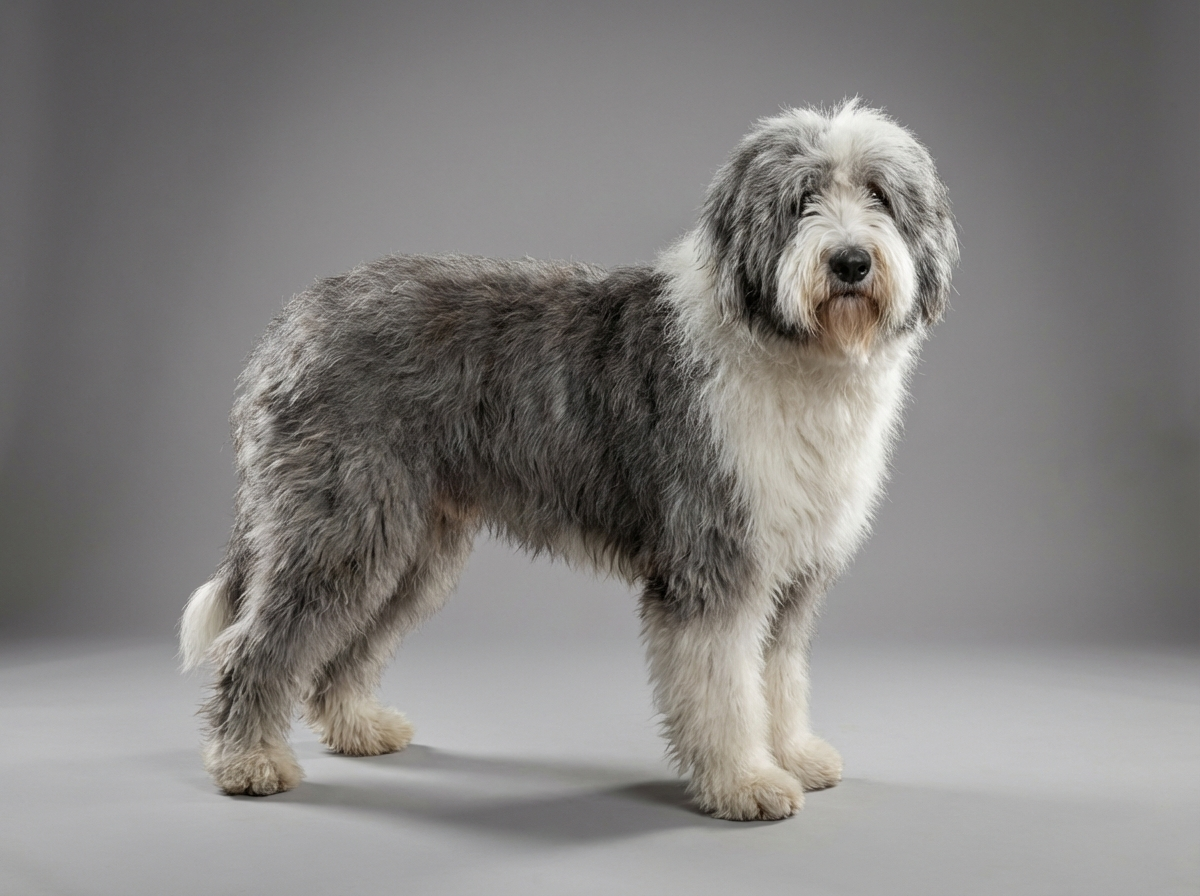
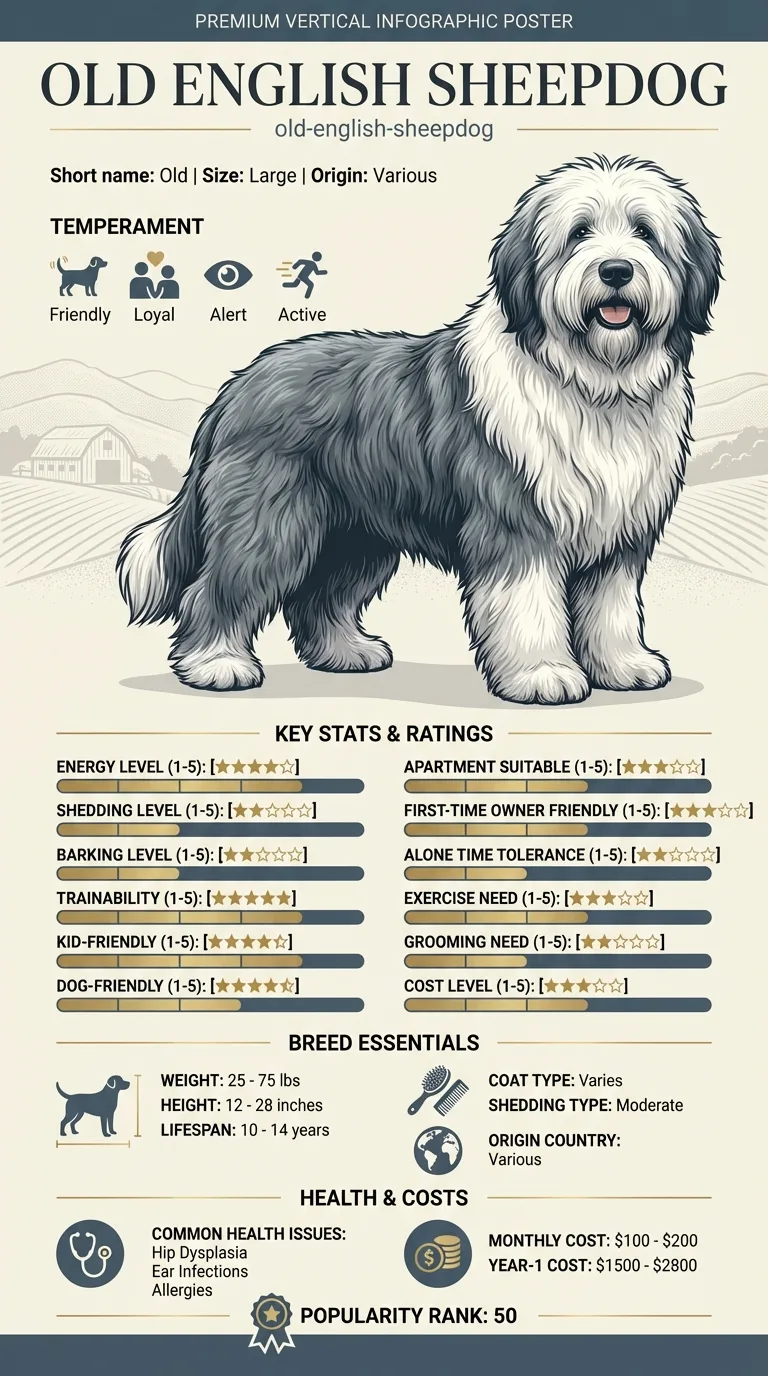
See all OLD English Sheepdog health problems, which breeds are prone to cruciate ligament injuries, or the full OLD English Sheepdog breed guide for temperament, exercise needs and ownership costs.
Surgical recovery typically involves eight to twelve weeks of restricted activity and rehabilitation, with continued improvement over the following months. Conservative management, where appropriate, can take longer to reach a stable outcome.
Success looks like a stable, functional knee that supports normal activity, achieved through appropriate treatment and a properly paced recovery rather than rushing back to full activity too soon.
Copper, a five-year-old Old English Sheepdog, was chasing a ball when he suddenly pulled up lame, holding one hind leg off the ground entirely. His owner assumed it was a sprain and planned to rest him for a few days, but when the limp hadn't improved after two days, they brought him in. A vet exam confirmed a cruciate ligament tear, and given Copper's size and activity level, surgery was recommended. After a carefully paced twelve-week recovery with structured rehabilitation, Copper returned to full activity, and his owner now watches his weight and conditioning closely to protect his other knee.
Key takeaway: A sudden, significant limp after activity is different from ordinary stiffness and deserves a prompt vet visit rather than a few days of wait-and-see rest.
Usually from a sudden twisting motion, quick turn, or awkward landing during play or exercise. In a large breed like this one, the forces involved during normal athletic movement are greater than in a small dog, which is part of why larger breeds see this injury more often.
Cruciate injuries affect the knee and usually happen suddenly, often during activity. Hip dysplasia and arthritis affect the hip and typically develop and worsen gradually over months to years rather than appearing overnight.
Surgery is the most common recommendation for larger, active dogs since it restores joint stability most reliably, but some smaller or less active dogs are managed conservatively. Given this breed's size and activity level, your vet will likely discuss surgical options as the primary path.
Yes, dogs who tear one cruciate ligament have a meaningfully increased chance of tearing the other within a couple of years, partly due to shared risk factors like weight and joint conformation.
Typically eight to twelve weeks of restricted activity and structured rehabilitation, with most dogs returning to a good level of function, though full athletic recovery can take a few months.
It's a significant expense, often ranging from around $3,000 to $7,000 or more depending on the surgical technique, region, and any complications, making it one of the costlier orthopedic procedures this breed may need.
Not entirely, but maintaining a healthy weight and good muscle conditioning through consistent, moderate exercise reduces the risk, since both excess weight and poor conditioning are known contributing factors.
It's usually a sudden injury during activity, not the gradual joint wear seen with arthritis.
Often yes for a large, active breed like this one, since surgery best restores stable joint function.
Yes, dogs with one torn cruciate ligament have a meaningfully increased chance of tearing the other.
Typically $3,000 to $7,000 or more, depending on technique and region.
Usually eight to twelve weeks of restricted activity and rehab, with continued improvement over a few months.
A one-page prep sheet for this condition: the signs, the questions to ask, what to get priced. Unlocks here.
You get: Vet visit prep sheet
No spam. One-click unsubscribe. See our privacy policy.
Preview page 1 before you decide.