Behavior
What are some quick tips for Rottweiler arthritis?
Keep your Rottweiler at a healthy weight and provide low-impact exercise daily. Regular vet visits are essential for monitoring joint health.

Quick answer
What are some quick tips for Rottweiler arthritis?
Keep your Rottweiler at a healthy weight and provide low-impact exercise daily. Regular vet visits are essential for monitoring joint health.
Rottweiler arthritis can be a painful condition that affects your dog's quality of life.
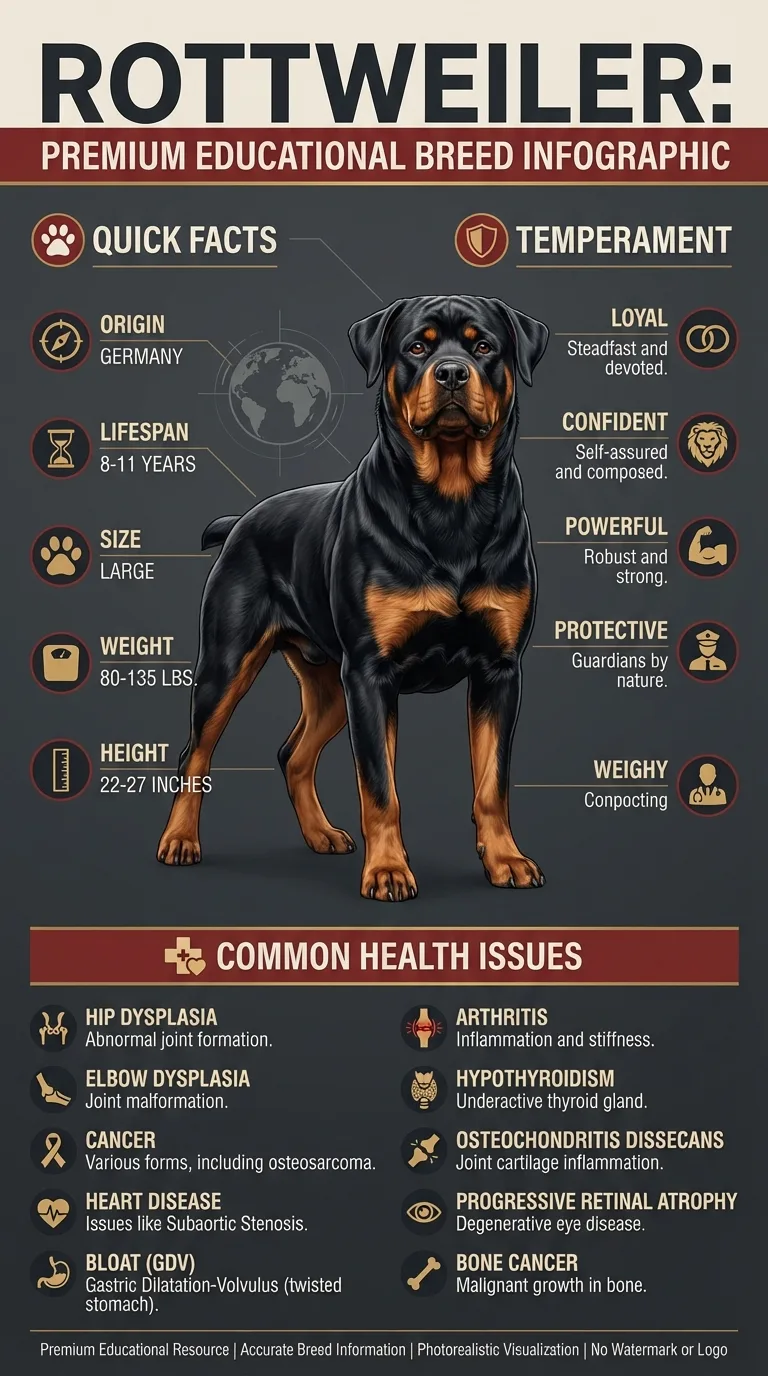
Many Rottweiler owners, especially those with older dogs, struggle to see their pets in discomfort. Owners concerned about their dog's health and mobility often find themselves searching for ways to manage arthritis effectively.
This guide is not medical advice. If your dog shows pain, sudden behavior change, or worsening symptoms, consult a licensed veterinarian.
Some links may be affiliate links. We may earn a commission at no extra cost to you. We only suggest products we believe are helpful for dog owners.
We research and check what we publish, but we do not warrant that any figure, date, price, or statement is accurate, complete, or current, and we accept no liability for any loss, cost, injury, or other harm arising from the use of this site. Use it as one reference among several. You remain responsible for your own decisions and for your dog's care - confirm anything that matters with a licensed veterinarian or another qualified professional before you act on it. Full disclaimer.
Check this first
Recognizing when Rottweiler arthritis is an emergency can make a significant difference in your dog's comfort and health. If you notice any of the following red flags, it’s vital to call your vet immediately. These signs include intense pain that causes your dog to whine or yelp, sudden inability to walk or bear weight on a limb, swelling around the joints, or noticeable changes in appetite or behavior.
These symptoms suggest a serious issue that requires prompt attention.
On the other hand, less severe cases of Rottweiler arthritis can often be monitored at home. If your dog shows mild limping or stiffness after exercise, this may indicate discomfort but not an immediate crisis. You can take a wait-and-see approach while implementing a management plan that includes appropriate exercise, weight management, and possibly joint supplements.
Keep a close eye on your Rottweiler's condition, and maintain regular check-ups with your vet to adjust the care plan as needed.
If any of these apply, call your vet or an emergency clinic now. The rest of this page is for the cases that are not an emergency.
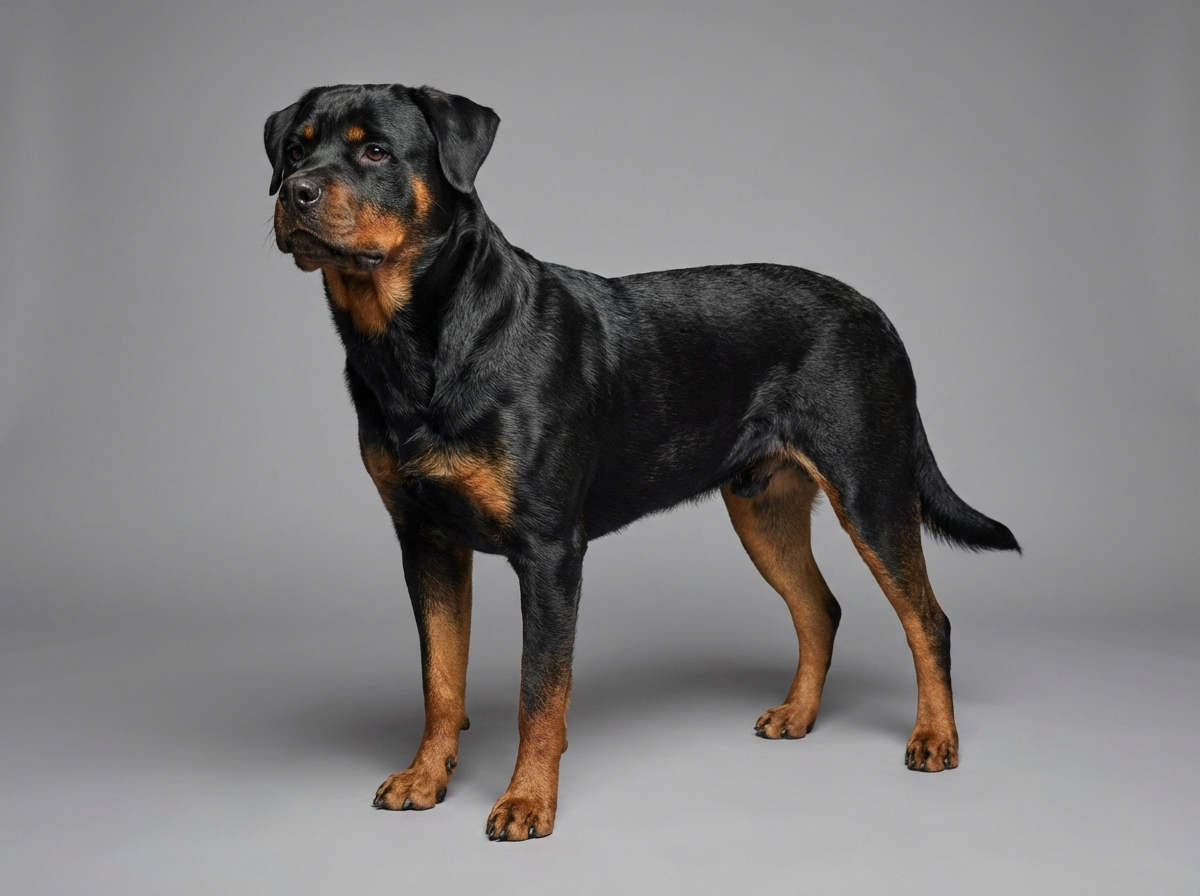
Rottweiler arthritis is a common issue that affects many Rottweilers, especially as they age. It manifests as stiffness, limping, or difficulty getting up after resting. Owners may notice their Rotties hesitating to jump or play due to discomfort, which can be distressing for both the dog and its family.
Arthritis is quite common in Rottweilers, particularly in those over six years old. Many Rottweilers will show signs of arthritis by the time they reach their senior years, making it an important issue for owners to monitor.
Rottweilers are large, powerful dogs that can be prone to arthritis due to their size and genetic predispositions. Their heavy weight puts more stress on their joints, increasing the likelihood of wear and tear as they age.
Environmental factors like inadequate exercise, poor diet, and obesity can also lead to arthritis in Rottweilers. A lack of proper joint care and overexertion during play can worsen their condition.
Consult your vet if your Rottweiler shows persistent limping, difficulty standing or sitting, or if you notice swelling in their joints. Early intervention can prevent further damage and improve their quality of life.
Avoiding these common mistakes can help manage your Rottweiler's arthritis more effectively.
See all Rottweiler health problems, which breeds are prone to arthritis, or the full Rottweiler breed guide for temperament, exercise needs and ownership costs.
Managing Rottweiler arthritis typically requires a consistent routine. You might start seeing improvements in about 4 to 6 weeks with proper treatment and lifestyle changes.
Success means your Rottweiler experiences reduced pain and improved mobility. You'll notice them being more active and comfortable in their daily activities.
When Rachel adopted Jake, her playful Rottweiler, she noticed he started limping as he aged. After a vet visit, Rachel learned it was arthritis. Determined to help, she implemented a weight management plan, adjusted his exercise routine to include low-impact activities, and followed a vet-recommended medication schedule. Over a few months, Jake's limping decreased, and he began enjoying walks again.
Key takeaway: With the right care and adjustments, Rottweilers with arthritis can lead fulfilling lives. Early intervention and a tailored approach make a significant difference.
Rottweiler arthritis is often due to age-related wear and tear on the joints. Additionally, genetic predispositions, obesity, and previous injuries can contribute to this condition. Regular veterinary check-ups can help catch these issues early.
To manage Rottweiler arthritis, ensure your dog maintains a healthy weight to reduce stress on the joints. Regular, low-impact exercise such as swimming or walking can also help keep joints flexible. Consult your vet for appropriate anti-inflammatory medications or joint supplements.
Signs of arthritis in Rottweilers include limping, reluctance to play or exercise, stiffness after resting, and difficulty standing up. If you notice any of these symptoms, it’s important to consult your vet for a proper diagnosis and treatment plan.
Yes, training that focuses on gentle exercises can help your Rottweiler maintain mobility and strength. Activities like controlled leash walks and basic obedience training can be beneficial. Always check with your vet to ensure the training is suitable for your dog's condition.
A balanced diet rich in omega-3 fatty acids can help reduce inflammation. Consider incorporating fish oil or a joint-support supplement into your Rottweiler's diet. Always talk to your vet before making any significant dietary changes.
Early signs of arthritis in a Rottweiler include stiffness after rest, difficulty getting up, or a reluctance to jump or run. You may also notice changes in their behavior, like decreased activity or signs of discomfort when touched.
Yes, a balanced diet can help manage Rottweiler arthritis. Foods rich in omega-3 fatty acids and glucosamine supplements may reduce inflammation and support joint health. Always consult your vet before making dietary changes.
Surgery might be an option for severe cases of arthritis in Rottweilers, especially if conservative treatments have failed. Speak with your vet about the risks and benefits to determine the best course of action for your dog.
To make your home comfortable for a Rottweiler with arthritis, provide soft bedding, avoid slippery floors, and ensure easy access to their favorite spots. Keeping their environment calm can also help reduce stress on their joints.
Yes, older Rottweilers with arthritis can still enjoy exercise, but it should be low-impact and tailored to their condition. Short, gentle walks and swimming can be great options to keep them active without putting too much strain on their joints.
Keep your Rottweiler at a healthy weight and provide low-impact exercise daily. Regular vet visits are essential for monitoring joint health.
Provide a soft, supportive bed and consider using ramps to help them access furniture or cars. Keeping their living area warm can also help ease discomfort.
Focus on gentle, low-impact training that encourages movement without strain. Positive reinforcement can help keep training sessions enjoyable.
A one-page prep sheet for this condition: the signs, the questions to ask, what to get priced. Unlocks here.
You get: Vet visit prep sheet
No spam. One-click unsubscribe. See our privacy policy.
Preview page 1 before you decide.