Health
How can I tell DM apart from arthritis?
DM doesn't respond to pain medication because it isn't painful, while arthritis typically does respond at least partially.

Quick answer
How can I tell DM apart from arthritis?
DM doesn't respond to pain medication because it isn't painful, while arthritis typically does respond at least partially.
A senior dog whose hind end is weakening might have arthritis, which is documented and common in this breed, or something else entirely: a progressive neurological disease that doesn't hurt but doesn't respond to pain medication either.
This matters for owners of senior dogs, generally past age eight, who notice hind-end weakness that doesn't seem to improve with the pain management that would typically help arthritis.
This guide is not medical advice. If your dog shows pain, sudden behavior change, or worsening symptoms, consult a licensed veterinarian.
Some links may be affiliate links. We may earn a commission at no extra cost to you. We only suggest products we believe are helpful for dog owners.
We research and check what we publish, but we do not warrant that any figure, date, price, or statement is accurate, complete, or current, and we accept no liability for any loss, cost, injury, or other harm arising from the use of this site. Use it as one reference among several. You remain responsible for your own decisions and for your dog's care - confirm anything that matters with a licensed veterinarian or another qualified professional before you act on it. Full disclaimer.
Check this first
DM itself progresses gradually rather than causing sudden emergencies, but a sudden, rapid loss of hind-end function, especially if it happens over hours rather than months, is not typical of DM and should be evaluated urgently, since it's more consistent with an acute spinal injury or disc problem that needs prompt diagnosis and treatment.
The key diagnostic clue that distinguishes DM from a painful orthopedic or acute spinal issue is the absence of pain: a dog with DM typically doesn't yelp, guard the area, or respond to pain medication, while a dog with arthritis or an acute disc problem usually shows some pain response. This distinction, alongside a full neurological exam, is what actually separates the two rather than the specific symptoms alone.
If any of these apply, call your vet or an emergency clinic now. The rest of this page is for the cases that are not an emergency.
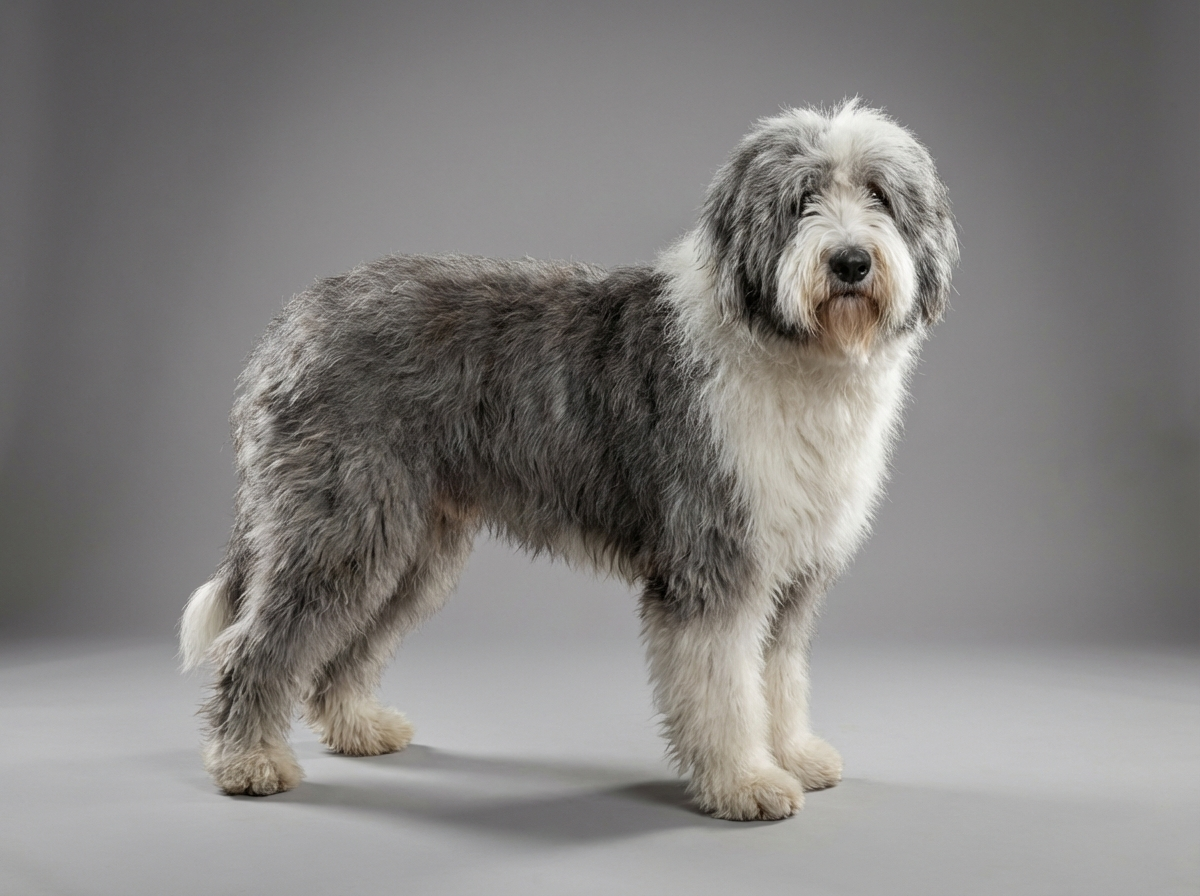
Degenerative myelopathy is a progressive, non-painful spinal cord disease linked to a gene mutation found across many breeds. It isn't a well-documented common issue in Old English Sheepdogs specifically, but it's an important condition to rule out when a senior dog's hind-end weakness doesn't respond to arthritis treatment.
Not a well-documented common issue in this specific breed, though the associated gene mutation has been identified across a wide range of breeds. It's discussed here because it's a genuinely relevant differential diagnosis for senior hind-end weakness.
There's no strong documented predisposition to DM specifically in Old English Sheepdogs, unlike the breed's well-documented hip dysplasia risk. DM is driven by a gene mutation found across many breeds, and any individual dog, regardless of breed, can potentially carry it.
Environmental factors aren't understood to significantly influence DM's onset or progression, since it's primarily a genetic, degenerative neurological process rather than one shaped by external triggers.
Talk to your vet if hind-end weakness isn't improving with arthritis treatment, or if you notice foot-dragging or unusually worn hind nails. Seek urgent care for a rapid, sudden loss of hind-end function over hours rather than months.
The two conditions genuinely require different approaches, so getting the distinction right matters.
See all OLD English Sheepdog health problems, which breeds are prone to degenerative myelopathy dm, or the full OLD English Sheepdog breed guide for temperament, exercise needs and ownership costs.
DM typically progresses gradually over one to three years, from mild hind-limb weakness to more significant loss of function. There's no treatment that reverses or stops this progression.
Success looks like maintaining the best possible quality of life and mobility for as long as possible through supportive care, physical therapy, and appropriate mobility aids, rather than expecting improvement or a cure.
Angus, a nine-year-old Old English Sheepdog, developed hind-leg weakness that his owner initially treated as arthritis, given the breed's documented hip dysplasia risk. Pain medication, however, made no noticeable difference over several weeks, and his owner noticed his hind toes had started dragging slightly, with unusual wear on his nails. A referral to a veterinary neurologist for a full exam pointed toward degenerative myelopathy rather than arthritis. While there was no treatment to reverse the condition, a physical therapy plan and a supportive harness helped Angus maintain a good quality of life for over a year afterward.
Key takeaway: When arthritis treatment doesn't help as expected, that lack of response is itself useful diagnostic information pointing toward a different underlying cause.
It's not among this breed's well-documented common health issues, but the underlying gene mutation associated with DM has been found across a wide range of breeds, so it isn't ruled out either. It's included here mainly because it's an important differential diagnosis for hind-end weakness in a senior dog.
Arthritis, tied to this breed's documented hip dysplasia risk, is typically painful and often responds at least partially to pain management. DM is a progressive neurological disease that isn't painful and doesn't respond to pain medication, which is a key distinguishing clue.
Subtle hind-limb weakness, dragging of the toes (sometimes with worn nails on the hind feet as a result), and a wobbly, uncoordinated gait, typically starting in one hind leg and progressing over months.
Through a neurological exam that rules out other causes like disc disease or orthopedic pain, sometimes combined with genetic testing for the associated gene mutation, though a definitive diagnosis technically requires spinal cord tissue examination, which isn't done in living dogs.
There's no cure or treatment that stops progression. Management focuses on maintaining mobility and quality of life through physical therapy, supportive equipment like harnesses or carts, and monitoring for complications as the disease progresses.
It's typically a slow, gradual progression over one to three years, moving from mild hind-limb weakness to more significant loss of function over time, though the pace varies between individual dogs.
A DNA test can identify the associated gene mutation, but having the mutation doesn't guarantee a dog will develop symptoms, so testing supports rather than definitively confirms a diagnosis alongside clinical signs.
DM doesn't respond to pain medication because it isn't painful, while arthritis typically does respond at least partially.
Not a well-documented common one, but it remains a relevant differential diagnosis for unexplained hind-end weakness.
Dragging the toes of a hind foot, sometimes noticed first as unusually worn nails on that foot.
No, there's no treatment that stops progression; management focuses on mobility support and quality of life.
Through a neurological exam ruling out other causes, sometimes combined with genetic testing for the associated mutation.
A one-page prep sheet for this condition: the signs, the questions to ask, what to get priced. Unlocks here.
You get: Vet visit prep sheet
No spam. One-click unsubscribe. See our privacy policy.
Preview page 1 before you decide.