Behavior
What are quick tips for managing Schnauzer (Standard) arthritis?
Keep your Schnauzer (Standard) at a healthy weight and engage in gentle exercises. Regular vet check-ups and joint supplements can also help manage pain effectively.

Quick answer
What are quick tips for managing Schnauzer (Standard) arthritis?
Keep your Schnauzer (Standard) at a healthy weight and engage in gentle exercises. Regular vet check-ups and joint supplements can also help manage pain effectively.
Schnauzer (Standard) arthritis is a common issue that can greatly affect your dog’s mobility and quality of life.
Owners of older Schnauzers often face this challenge, especially those who notice their pets becoming less active or hesitant to jump and play.
This guide is not medical advice. If your dog shows pain, sudden behavior change, or worsening symptoms, consult a licensed veterinarian.
Some links may be affiliate links. We may earn a commission at no extra cost to you. We only suggest products we believe are helpful for dog owners.
We research and check what we publish, but we do not warrant that any figure, date, price, or statement is accurate, complete, or current, and we accept no liability for any loss, cost, injury, or other harm arising from the use of this site. Use it as one reference among several. You remain responsible for your own decisions and for your dog's care - confirm anything that matters with a licensed veterinarian or another qualified professional before you act on it. Full disclaimer.
Check this first
Recognizing when Schnauzer (Standard) arthritis becomes an emergency can save your dog's quality of life. If your Schnauzer shows severe pain, is unable to walk, or has noticeable swelling in the joints, these are red flags. Additionally, if your dog refuses to eat, exhibits unusual behavior, or is lethargic, it’s crucial to contact your vet immediately.
If any of these apply, call your vet or an emergency clinic now. The rest of this page is for the cases that are not an emergency.
Schnauzer (Standard) arthritis is a common issue that affects many dogs in this breed, especially as they age. This condition manifests as pain and stiffness in the joints, making daily activities like walking or playing uncomfortable for your dog. Affected Schnauzers may show reluctance to move, struggle with stairs, or seem less energetic than usual.
Arthritis is quite common in Schnauzer (Standard) dogs, particularly in those over the age of 7. Studies suggest that around 20-30% of dogs will develop some form of arthritis in their lifetime, making it a significant concern for owners.
Some Schnauzers (Standard) may be predisposed to arthritis due to genetic factors. This breed is known to develop hip dysplasia, which can lead to joint pain and inflammation. Additionally, their medium size means they can experience wear and tear on their joints as they age.
Environmental factors also play a key role in arthritis development. Excessive weight can put added pressure on joints, and lack of exercise can weaken muscles that support those joints. Furthermore, injuries or high-impact activities can contribute to the onset of arthritis.
If you notice signs of pain, such as limping or difficulty getting up, it's essential to consult your vet. They can assess the severity of the arthritis and recommend appropriate treatments, such as medication or physical therapy.
Avoiding common pitfalls can help manage your Schnauzer's arthritis effectively. Here are some mistakes to steer clear of.
Start here: Standard Schnauzer Most Common Genetic Disorders: Screening
See all Schnauzer Standard health problems, which breeds are prone to arthritis, or the full Schnauzer Standard breed guide for temperament, exercise needs and ownership costs.
Managing Schnauzer (Standard) arthritis typically takes several weeks to see noticeable improvements. Consistent care and adjustments can lead to better mobility over time.
Success means your Schnauzer (Standard) experiences less pain, can move comfortably, and enjoys daily activities without significant discomfort.
In less severe cases, you can monitor your Schnauzer's arthritis with a plan. Look for signs like occasional limping, stiffness after resting, or reluctance to jump or climb stairs. These symptoms can often be managed at home with proper diet, exercise modifications, and weight management.

When Sarah, a devoted dog mom, noticed her 8-year-old Schnauzer, Max, struggling to climb stairs, she worried it might be arthritis. After a vet visit confirmed her fears, she started Max on a joint supplement and incorporated gentle exercise like short walks. With consistent care and a few weeks of patience, Max began to show improvement. He not only became more active but also regained some of his playful spirit, which brought joy back into their daily routine.
Key takeaway: With early intervention and a tailored care plan, Schnauzers (Standard) with arthritis can lead happy, active lives.
Schnauzer (Standard) arthritis is often due to age-related wear and tear on the joints. Factors such as genetics, previous injuries, and obesity can also contribute. It's important to monitor your dog's weight and activity levels to help manage this condition.
To help manage Schnauzer (Standard) arthritis, maintain a healthy weight and provide low-impact exercise like swimming or short walks. Joint supplements, prescribed by a vet, can also help reduce pain and improve mobility. Regular check-ups are essential to adjust care as needed.
Signs of arthritis in Schnauzers (Standard) include limping, difficulty getting up, reluctance to play, and stiffness after rest. You might also notice changes in their activity levels or whining when moving. If you observe these signs, consult your vet for a thorough evaluation.
Yes, a diet rich in omega-3 fatty acids and low in processed ingredients can help reduce inflammation. Special joint health diets are available and can be recommended by your vet. Always consult your vet before making significant changes to your dog's diet.
In severe cases, surgery may be considered to relieve pain or improve mobility in Schnauzers (Standard) with arthritis. Your vet will help assess whether this is necessary based on your dog's specific condition and overall health.
Yes, diet can significantly impact arthritis in your Schnauzer (Standard). A balanced diet with anti-inflammatory ingredients can help manage symptoms. Consult your vet for specific dietary recommendations tailored to your dog's needs.
Yes, arthritis is quite common in older Schnauzer (Standards) due to age-related wear on their joints. Regular vet check-ups can help monitor their joint health and provide early interventions if needed.
Keeping your Schnauzer (Standard) warm and comfortable during cold weather is crucial. Consider providing a soft bed and limiting outdoor time in harsh conditions. Regular, gentle exercise can also help keep their joints mobile.
Surgery may be an option if your Schnauzer (Standard) experiences severe pain or mobility issues that don't improve with other treatments. Always discuss this with your vet, who can recommend the best course of action based on your dog's condition.
Keep your Schnauzer (Standard) at a healthy weight and engage in gentle exercises. Regular vet check-ups and joint supplements can also help manage pain effectively.
Provide a soft bed in a quiet area and avoid slippery floors to help your Schnauzer (Standard) move comfortably. Consider using ramps for easier access to cars or furniture.
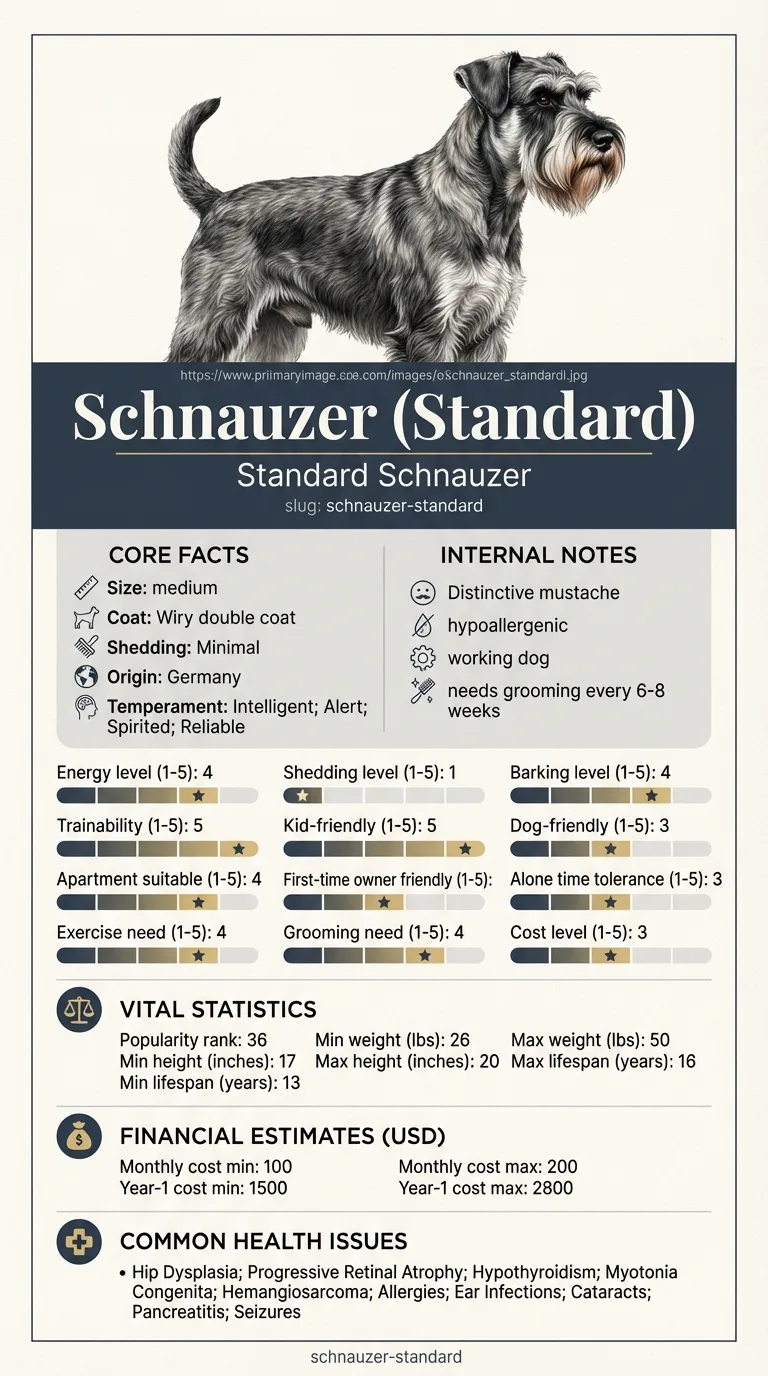
Expect to spend around $100 to $200 monthly on vet visits, medications, and supplements for managing arthritis in your Schnauzer (Standard). This can vary based on your dog's needs.
A one-page prep sheet for this condition: the signs, the questions to ask, what to get priced. Unlocks here.
You get: Vet visit prep sheet
No spam. One-click unsubscribe. See our privacy policy.
Preview page 1 before you decide.