Health
Does a big head mean a Newfoundland is brachycephalic?
No. Brachycephaly is about a shortened muzzle, not a large skull. The Newfoundland's muzzle is long, deep and proportionate, and its nasal passages are not compressed.

Quick answer
Does a big head mean a Newfoundland is brachycephalic?
No. Brachycephaly is about a shortened muzzle, not a large skull. The Newfoundland's muzzle is long, deep and proportionate, and its nasal passages are not compressed.
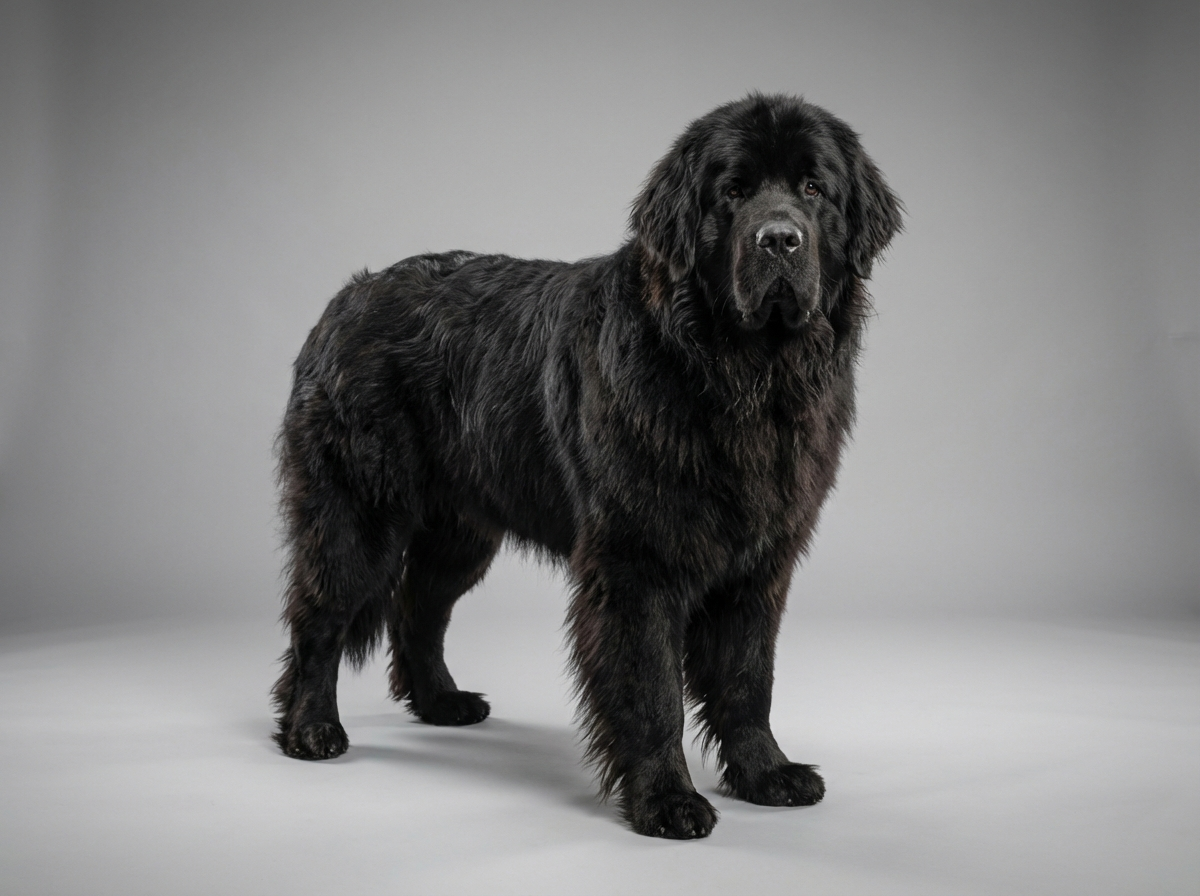
The Newfoundland has one of the most massive heads in the dog world attached to a long, deep, well-developed muzzle. Broad, yes. Shortened, no. The distinction changes which problems you should actually be looking for.
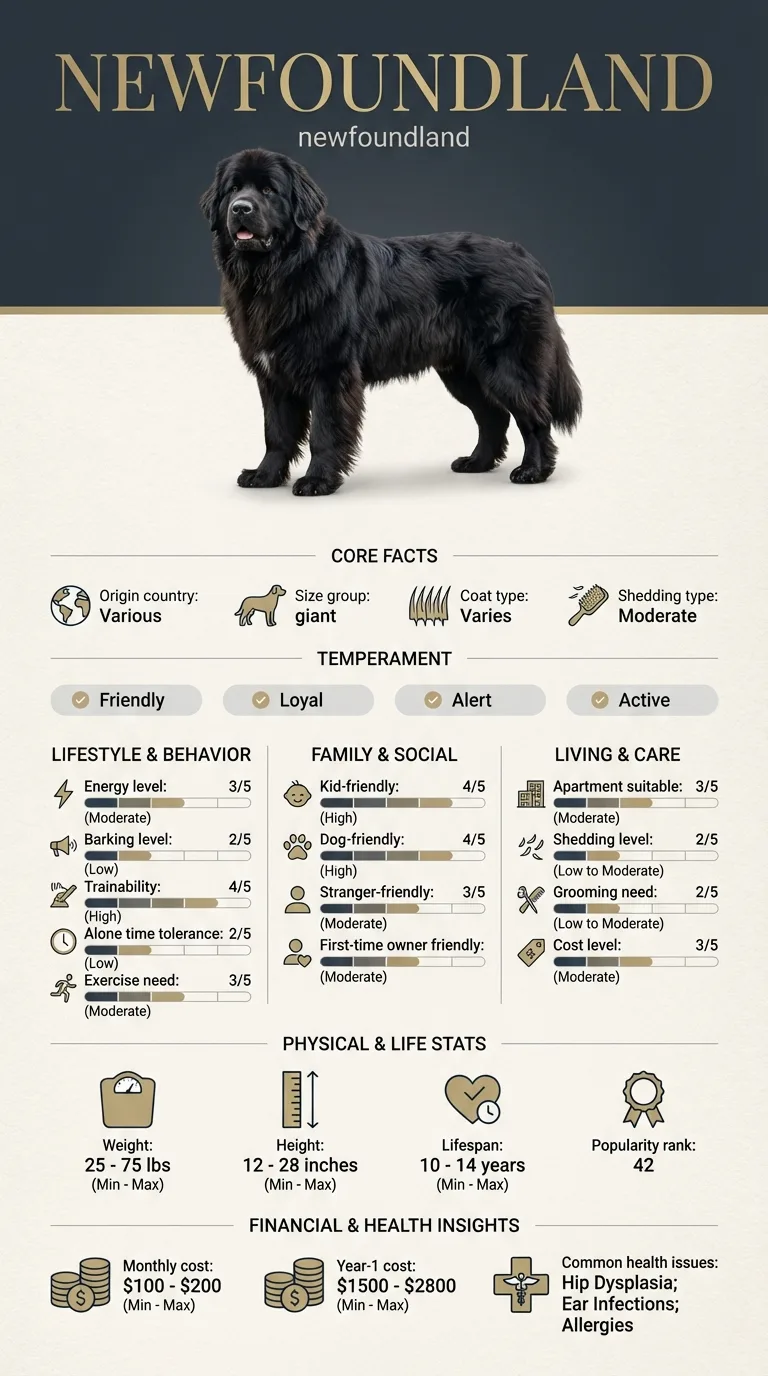
For owners who have been told their dog is brachycephalic because of the size of its head, the loose jowls or the drool, and who want to know which of those features carry real health implications.
This guide is not medical advice. If your dog shows pain, sudden behavior change, or worsening symptoms, consult a licensed veterinarian.
Some links may be affiliate links. We may earn a commission at no extra cost to you. We only suggest products we believe are helpful for dog owners.
We research and check what we publish, but we do not warrant that any figure, date, price, or statement is accurate, complete, or current, and we accept no liability for any loss, cost, injury, or other harm arising from the use of this site. Use it as one reference among several. You remain responsible for your own decisions and for your dog's care - confirm anything that matters with a licensed veterinarian or another qualified professional before you act on it. Full disclaimer.
The idea that a Newfoundland has brachycephalic features is a misreading of a broad skull, heavy jowls and a great deal of drool. None of those indicate a shortened muzzle or compressed nasal passages. The features on this head that do carry health implications are the eyelids, the lip folds and the drop ears, and the breed's genuine respiratory constraint comes from its coat and body mass rather than from its face.
True brachycephalic obstructive disease is not reported as a Newfoundland problem, and the breed does not appear on lists of shortened-muzzle breeds. The features that do matter here are common in the breed by design: essentially every Newfoundland has heavy flews and drop ears, and eyelid conformation issues are frequently discussed among breeders. Whether they cause trouble in an individual dog is a question of degree and of routine care.
The Newfoundland was developed as a working water dog, and every feature of the head serves that history: a massive skull housing powerful jaw muscles for carrying, a deep and complete muzzle, small deep-set eyes protected from spray, and drop ears that keep water out of the canal. The heavy water-resistant double coat and a body of 100 to 150 pounds are what create the real thermal challenge. The confusion with brachycephaly arises because owners read head volume as head shortening, and because the drooling that comes with heavy flews resembles what people associate with flat-faced breeds.
Warmth and water do most of the work in creating actual problems. A swimming breed with drop ears carries moisture into a warm covered canal. A drooling breed in a humid indoor environment keeps its lip folds permanently damp. Dust, sand and lake debris get into deep-set eyes and are held there by loose lids. And ambient heat, which has nothing to do with the head at all, is the environmental factor that most often turns a comfortable Newfoundland into a distressed one.
Book an appointment for persistent squinting, redness or tearing of an eye, for a visible rolled or drooping lid, for a sore or smelly lip fold that does not settle with cleaning, or for any new noise in your dog's breathing while awake. Seek urgent, same-hour care for an eye that is suddenly painful, cloudy or has a dilated pupil, since acute eye pain can indicate a sight-threatening emergency. Go immediately for laboured breathing at rest, blue or grey gums or tongue, a dog who will not lie down, or any breathing distress on a warm day; heat-related respiratory crisis in this breed escalates fast and cannot be managed at home.
See all Newfoundland health problems, which breeds are prone to brachycephalic features, or the full Newfoundland breed guide for temperament, exercise needs and ownership costs.
Nothing about the head changes; this is a management topic rather than a treatment one. A lip fold routine takes a fortnight to become habit and prevents most fold problems from that point on. Eyelid conformation issues, if surgical correction is advised, are resolved in one procedure with a couple of weeks of recovery. Heat management is a seasonal discipline that will be part of your routine every summer of the dog's life, and it does not get easier as the dog ages.
Success here is an owner who is looking at the right things. Clean, dry lip folds; comfortable eyes with no squinting; dry ear canals after swimming; a documented baseline for the dog's breathing sound; and a summer routine built around temperature. It also means never again being talked into worrying about a condition this breed does not have, and instead spending that attention on the coat, the eyes and the heat.
The Newfoundland's skull is broad and heavy with a well-developed occiput, and the muzzle beneath it is short in appearance only because the skull above it is so wide. In proportion it is a working muzzle: deep, square and long enough to house a full set of nasal passages. That matters, because nasal passages are where a dog does a large share of its heat exchange and its scenting, and a flattened breed loses that space.
The features owners misread are the soft ones. The lips, or flews, hang loose and heavy, which is why the breed drools; heavy flews are a lip characteristic, not a skull one. The eyes are set deep and relatively small, with a somewhat loose lid conformation, which is a genuine health-relevant feature but an eyelid issue rather than an airway one. The neck is thick and the throat is generously furnished with soft tissue and coat, which is why a sleeping Newfoundland can sound like a chainsaw without having any structural airway disease at all.
The practical consequence of getting this right is that it redirects attention. A brachycephalic breed's owner is watching the nostrils and the palate. A Newfoundland's owner should be watching the eyelids, the depth of the flews and the folds they create, and above all the interaction between a heavy insulating coat and hot weather.

Rejecting the brachycephalic label does not mean the head is free of issues. These are the ones genuinely worth checking, and none of them relate to muzzle length.
Barnaby was three and drooled magnificently. A stranger at the park told his owner, Lena, that he was brachycephalic and that she should get his nostrils checked, and Lena spent an anxious fortnight reading about airway surgery in flat-faced breeds. Her vet resolved it in about ninety seconds. She held a hand alongside Barnaby's muzzle and pointed out that it was long, deep and open, that his nostrils were wide, and that his heavy jowls and thick neck explained both the drool and the snoring without any shortened anatomy being involved. What the same appointment did find was worth the visit. The inside of Barnaby's left lip fold was inflamed and smelled sour, and his right lower eyelid sat slightly away from the eye and had been collecting debris after his lake swims. The fold got a cleaning routine. The eye was monitored and, eighteen months later, surgically tightened. Lena's takeaway was that she had been staring at the wrong end of the problem. Nothing about Barnaby's face needed fixing. Two soft-tissue features around it did, and neither had anything to do with the word she had been given at the park.
Key takeaway: Measure the muzzle, not the impression. On this breed the head issues worth your time are the eyelids, the lip folds and the ears, and the real respiratory limit is the coat meeting a hot day.
Not. Brachycephalic breeds have a muzzle that has been shortened by selective breeding, such as the Pug, the French Bulldog and the Bulldog. A Newfoundland has a large broad skull with a proportionate, deep, working muzzle. The visual impression of a big blocky head is created by skull width and coat, not by a compressed face.
Loose throat and soft palate tissue vibrates during sleep in many large dogs with generous flews and a thick neck, and it is often entirely normal. The question that separates benign snoring from a problem is whether the noise is present while the dog is awake, whether it worsens with exertion, and whether it has changed over the past year.
Not as a baseline. Heavy flews mean a Newfoundland drools, and every owner of the breed learns to live with it. Worry about a change: a sudden increase, thick ropey saliva, drooling with pawing at the mouth or refusing food, or drooling alongside restlessness and retching, which in this breed raises the question of bloat.
The eyelid conformation can. Deep-set eyes with somewhat loose lids can develop inward or outward rolling, which irritates the cornea, and this is a well-known consideration in the breed. It is a lid problem rather than the shallow-orbit exposure problem that flat-faced breeds have, and it is worth a vet's assessment if you see squinting, redness or persistent tearing.
For many Newfoundlands, yes. Warm damp folds accumulate saliva and food debris and can become inflamed or infected. Ask your vet or groomer to show you how to check and clean them for your individual dog, and treat a persistent sour smell from around the mouth as something to have looked at rather than lived with.
Head size relative to the birth canal is a factor in some breeds, and any breeding decision in a giant breed should be made with veterinary involvement. This is a question for a vet who knows your individual dog and its lines rather than something to reason about from a breed description.
No. Brachycephaly is about a shortened muzzle, not a large skull. The Newfoundland's muzzle is long, deep and proportionate, and its nasal passages are not compressed.
The eyelids and the lip folds. Loose lid conformation can irritate the eye surface, and deep warm flews trap moisture. Both are checkable at home in under a minute.
Sleeping snoring is usually normal for a dog with heavy flews and a thick neck. Awake, exertional or newly changed breathing noise is not, and it points to the larynx rather than the muzzle.
Keep towels by the doors, wipe the folds regularly, and learn what your dog's baseline is so a change registers. The drool is a permanent feature of the breed rather than a fixable problem.
Less than the coat does. A normal muzzle is an advantage for cooling, but a heavy water-resistant double coat over 100 to 150 pounds of dog outweighs it, which is why heat remains the breed's real respiratory risk.
A one-page prep sheet for this condition: the signs, the questions to ask, what to get priced. Unlocks here.
You get: Vet visit prep sheet
No spam. One-click unsubscribe. See our privacy policy.
Preview page 1 before you decide.