Health
What is the biggest source of eye injury in this breed?
Natural water. Silt, algae and debris encountered while swimming are a leading cause of corneal scratches and trapped foreign material.

Quick answer
What is the biggest source of eye injury in this breed?
Natural water. Silt, algae and debris encountered while swimming are a leading cause of corneal scratches and trapped foreign material.
A structural eye condition builds slowly over years. A trauma can happen in a single afternoon, and how fast you respond afterward decides how it ends.

For owners whose Newfoundland is genuinely outdoors and in water often, and who want to know what actually causes eye injuries in that lifestyle, how to reduce the odds, and what the first hour after a suspected injury should look like.
This guide is not medical advice. If your dog shows pain, sudden behavior change, or worsening symptoms, consult a licensed veterinarian.
Some links may be affiliate links. We may earn a commission at no extra cost to you. We only suggest products we believe are helpful for dog owners.
We research and check what we publish, but we do not warrant that any figure, date, price, or statement is accurate, complete, or current, and we accept no liability for any loss, cost, injury, or other harm arising from the use of this site. Use it as one reference among several. You remain responsible for your own decisions and for your dog's care - confirm anything that matters with a licensed veterinarian or another qualified professional before you act on it. Full disclaimer.
Traumatic eye injury in a Newfoundland is largely a consequence of lifestyle rather than anatomy: swimming in natural water, pushing through vegetation, and active outdoor play all expose the eyes to debris, scratches and occasional foreign bodies. Unlike inherited lid or lash conditions, this category of eye problem tends to have a clear before-and-after timing, and how quickly an owner responds in the first hours materially affects the outcome.
Traumatic eye injury is not among the five conditions most consistently documented for this breed, but an outdoor, water-loving lifestyle of the kind typical for a Newfoundland carries meaningfully more day-to-day exposure to debris and scratches than a more sedentary or indoor existence would. It is one of the more frequent reasons this breed is presented for an eye complaint.
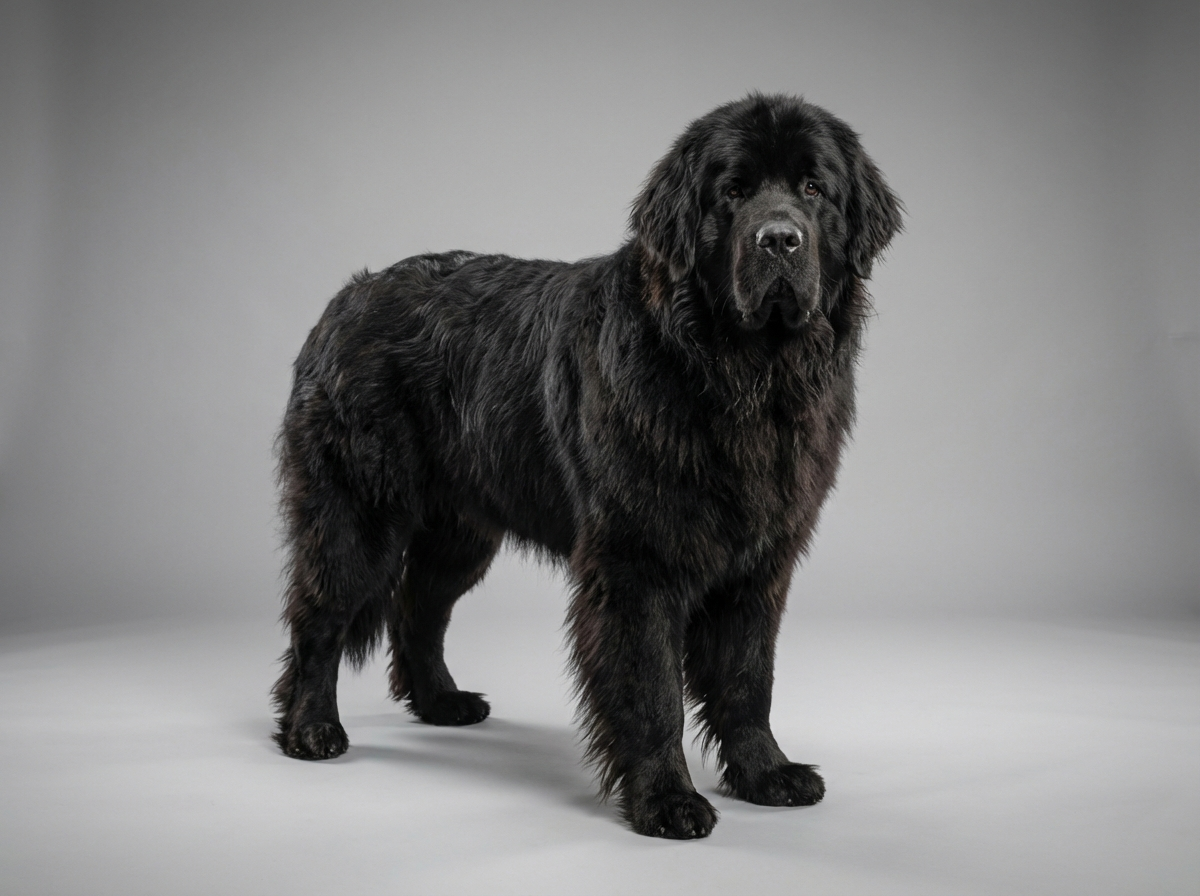
The Newfoundland's temperament and history as a water-oriented working breed mean it seeks out exactly the environments that carry the highest injury risk: open water, riverbanks, and unrestrained outdoor exploration. Its calm, patient nature means it may not signal early discomfort as dramatically as a more reactive breed, so a minor injury can go unnoticed for longer before an owner registers a change. Size affects the practical side of first aid and examination, since safely inspecting or treating an eye on a 100 to 150 pound dog is a different physical task than on a small breed, and struggling against restraint risks worsening an existing injury.
The environments this breed enjoys most are also the ones hardest on the eyes: natural water with silt and organic debris, sandy banks, dense vegetation, and off-leash exploration where an owner cannot always see the moment of injury. Households that swim their dog frequently without any rinsing routine, or that allow unsupervised rough play, see this category of injury more often than those with simple preventive habits in place.
Book the same day for any eye that has changed noticeably within hours: increased squinting, tearing, redness, or a visible film or cloudiness that was not there earlier. Seek emergency care for an eye held completely shut, obvious severe pain, a visible foreign body you cannot safely address, bleeding within the eye, or a pupil that looks abnormal. Do not wait to see whether a scratch settles on its own, since corneal injuries in dogs can deepen over hours rather than days.
See all Newfoundland health problems, which breeds are prone to eye problems, or the full Newfoundland breed guide for temperament, exercise needs and ownership costs.
A simple corneal scratch, treated promptly, typically heals within a week to ten days with veterinary-guided care and rechecks. A deeper ulcer takes several weeks and needs closer monitoring, since the first few days often determine whether it heals cleanly or progresses. A retained foreign body, once located and removed, usually resolves quickly, though the irritation it caused may take a little longer to settle.
Success is an eye that returns to full comfort with no lasting scarring, and a household that has built simple preventive habits, rinsing after swims, watching for signs after vegetation walks, supervising rough play, into its normal routine without turning outdoor life into something to be feared. This breed's lifestyle carries real eye risk, but it is a manageable one rather than a reason to keep an active water dog away from water.
Water is the biggest and least appreciated source of exposure. Natural water carries silt, algae, twigs, fishing line and grit, and a dog swimming with its head partly submerged, or shaking vigorously afterward, can drive debris against the eye surface or trap it beneath a lid. Sandy beaches abrade in a similar way when a dog digs or rolls. None of this is a defect in the dog; it is simply what happens when eyes meet an environment they were not designed to filter.
Vegetation is the second major source. A dog that pushes through long grass, brambles or low branches at head height, which describes most enthusiastic outdoor exploring, can pick up a scratch or a foreign body lodged behind the third eyelid without an owner seeing the moment it happened. Grass seeds and awns are a particular hazard because they can migrate and are surprisingly hard to locate without sedation and a careful look.
Other dogs are a third source that owners sometimes overlook. Rough or overly enthusiastic play, particularly involving a dog's face at ground level with another dog, carries a real risk of a claw or a snapping jaw catching an eye, and this is worth supervising rather than assuming will sort itself out. A car window is a smaller but genuine source too: a dog riding with its head out at speed takes wind-driven grit directly to the cornea.
What all of these share is speed and location. Trauma happens quickly, often unwitnessed, and produces a clear before-and-after: an eye that was normal at breakfast and is squinting by lunch. That timing pattern is itself one of the most useful diagnostic clues an owner can offer a vet.

What you do in the first sixty minutes genuinely affects the outcome, and several instinctive reactions actually make things worse.
Juniper had swum in the same slow-moving river every week of her life without incident. On one ordinary Tuesday she came out, shook hard, and within an hour was blinking rapidly on one side and pawing at her face. Her owner, Rhys, checked what he could see and found nothing obviously wrong, no visible redness, no discharge, and considered waiting until the following day since she seemed otherwise completely normal. He booked a same-day appointment anyway, mostly because the change had been so sudden and clear-cut. The vet found a small corneal scratch and, gently lifting the third eyelid, a sliver of waterlogged plant matter lodged behind it that had not been visible from the front. It was flushed out, the scratch was treated, and Juniper was back swimming within three weeks, with a slightly adjusted routine that now includes a quick eye rinse after every outing. Rhys says the part that stuck with him was how normal she looked from the front the whole time, and how close he came to waiting a day to see if it settled.
Key takeaway: A trapped foreign body can hide completely from a visual check, and the clearest sign a Newfoundland owner gets is often just timing: an eye that was fine an hour ago and is not fine now.
Yes, more than owners typically expect. Swimming in natural water, pushing through vegetation, and general outdoor exploration all expose the eyes to grit, debris and scratches that a less active, more indoor lifestyle simply would not produce. It is a real and largely preventable category of injury rather than a rare fluke.
Persistent squinting, excessive tearing, or a dog repeatedly pawing at one eye after a swim or a walk through long grass are the usual signs. Foreign material lodged there is often not visible without a veterinarian gently lifting the membrane, sometimes under sedation, so a persistent sign after outdoor activity warrants an exam even if you cannot see anything yourself.
Ask your vet about a suitable eye wash for your dog, particularly after swimming in silty, algal or sandy water. It is a reasonable preventive habit for a breed that swims often, though it will not catch every risk and does not replace watching for signs of irritation afterward.
Yes. A corneal scratch or ulcer in a dog can deepen over hours, and delaying treatment while waiting to see if it improves is one of the most common ways a minor injury becomes a serious one. Same-day assessment is the safer default for any painful or visibly abnormal eye.
It is a well-known route to corneal foreign bodies from wind-driven grit and insects. Many owners choose to limit this, particularly at higher speeds, given how directly it exposes the eye to debris travelling at force.
It can. A claw or a snap during enthusiastic face-level play carries genuine risk, and supervising boisterous play, especially between unfamiliar dogs, is a reasonable precaution rather than an overreaction.
Nothing that was not specifically prescribed by a vet for this dog and this episode. Leftover medication, human eye products, and steroid-containing ointments can all significantly worsen an eye that turns out to have an ulcer, which is impossible to rule out without an examination.
Natural water. Silt, algae and debris encountered while swimming are a leading cause of corneal scratches and trapped foreign material.
Exactly when the eye was last normal and what the dog had been doing since, since a clear timeline is a genuinely useful diagnostic clue.
Leftover drops or ointment from a previous problem, since some products can seriously worsen an undiagnosed ulcer.
Yes, as a reasonable preventive habit for a breed that swims often, using a wash your vet has approved.
Same day. A scratch that looks minor at first can deepen over hours, so waiting to see if it settles is a real risk.
A one-page prep sheet for this condition: the signs, the questions to ask, what to get priced. Unlocks here.
You get: Vet visit prep sheet
No spam. One-click unsubscribe. See our privacy policy.
Preview page 1 before you decide.