Health
How is the grade assessed?
By hand during a physical examination, testing whether the kneecap displaces and whether it returns on its own. Not from an X-ray.

Quick answer
How is the grade assessed?
By hand during a physical examination, testing whether the kneecap displaces and whether it returns on its own. Not from an X-ray.
Grade I and grade IV share a name and almost nothing else. One is watched for years, the other is a structural deformity that has already changed how the dog walks.
For owners who have been handed a grade after an examination and want to know what it means, and for anyone trying to understand how a veterinarian distinguishes the several causes of hind-limb lameness in a giant-breed dog.
This guide is not medical advice. If your dog shows pain, sudden behavior change, or worsening symptoms, consult a licensed veterinarian.
Some links may be affiliate links. We may earn a commission at no extra cost to you. We only suggest products we believe are helpful for dog owners.
We research and check what we publish, but we do not warrant that any figure, date, price, or statement is accurate, complete, or current, and we accept no liability for any loss, cost, injury, or other harm arising from the use of this site. Use it as one reference among several. You remain responsible for your own decisions and for your dog's care - confirm anything that matters with a licensed veterinarian or another qualified professional before you act on it. Full disclaimer.
Patellar luxation is graded from I to IV according to how readily the kneecap leaves its groove and whether it returns unaided. The grade, assigned during a hands-on examination, drives whether a dog is monitored or operated on. In a giant breed the grading exercise sits inside a wider differential, because cruciate ligament injury, hip dysplasia and spinal cord compression all produce overlapping hind-limb signs and are more common in dogs of this size.
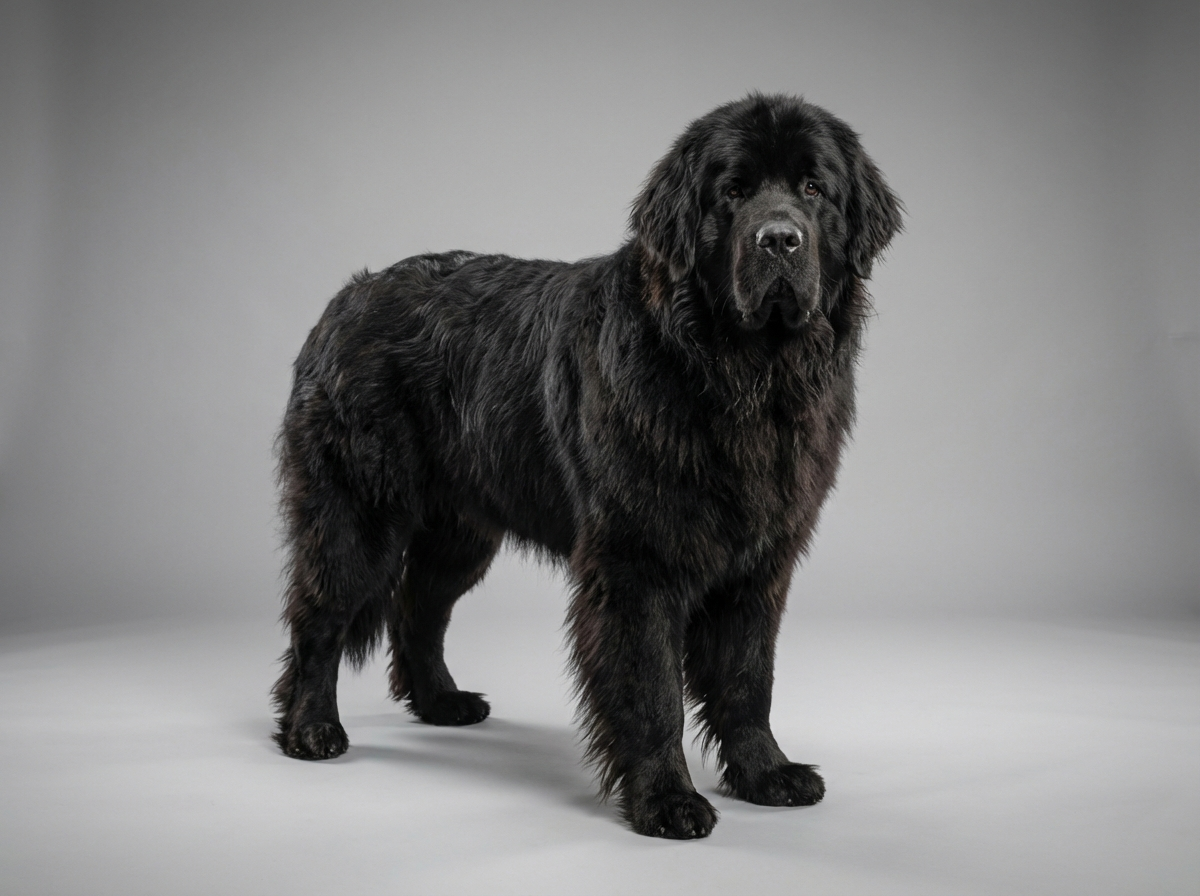
Patellar luxation is not among the Newfoundland's documented health issues, which are hip dysplasia, subaortic stenosis, dilated cardiomyopathy, cystinuria and bloat. Where it is found in a dog of this breed it is often a low-grade incidental finding, which is precisely why the rest of the examination matters so much.
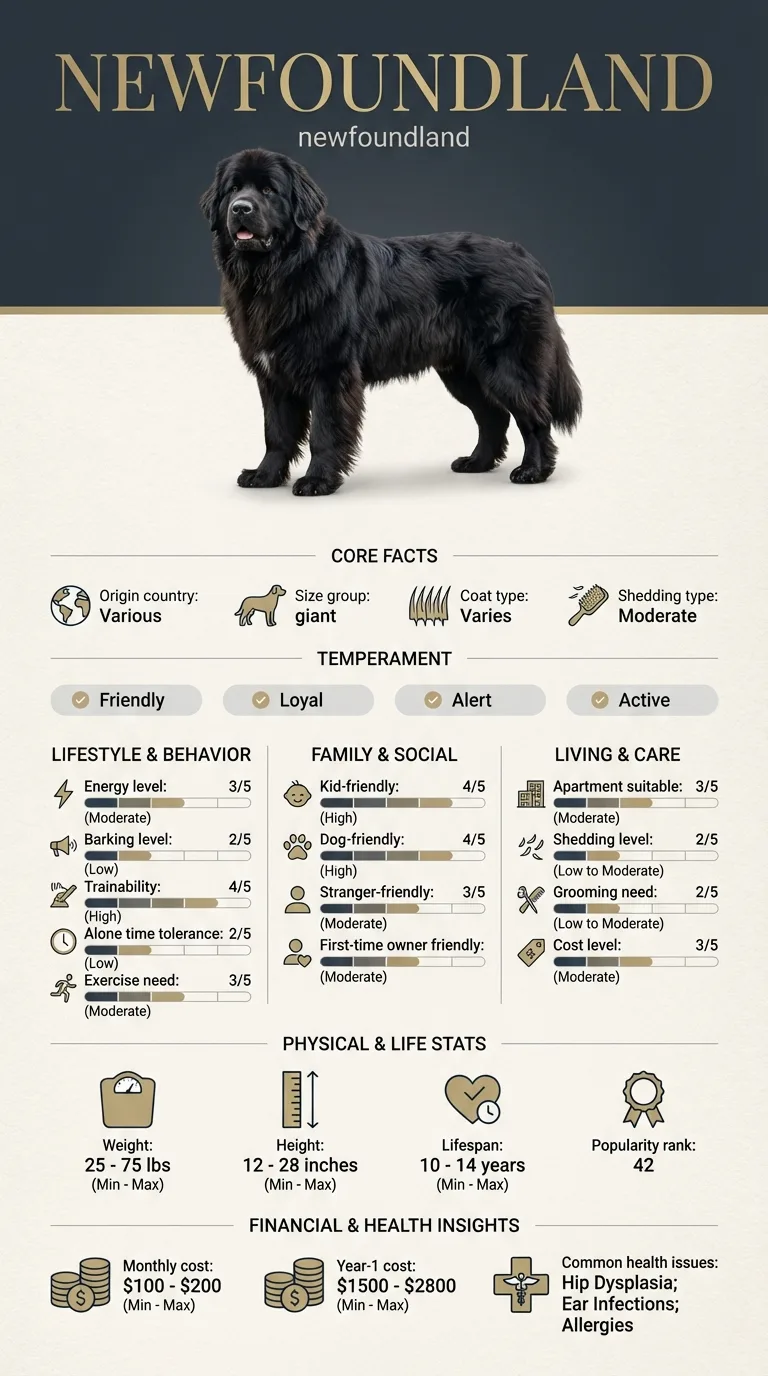
Grading exists because the same anatomical fault produces very different clinical pictures, and in the Newfoundland that variability is amplified by mass. A 100 to 150 pound body drives more force through a stifle than a small dog's does, so a given degree of instability causes faster cartilage wear and can push a dog up the grading scale over time. Height of 26 to 28 inches means longer limb bones, and alignment errors in long bones translate into larger deviations at the joint. The breed's documented cardiac predispositions also enter the treatment decision, since any surgical correction requires an anaesthetic that deserves prior cardiac assessment.
The environment influences progression more than diagnosis. Repeated pivoting on grass, chase games with sharp changes of direction, and slipping on hard flooring all deliver lateral force to a joint built for straight-line motion. Sedentary weeks followed by intense weekend activity produce the worst combination of weak supporting muscle and sudden load. Overfeeding, easy in a calm breed with modest exercise needs, quietly raises the force through the joint at every step and undermines whatever treatment plan has been chosen.
Book a re-examination if episodes of lameness become more frequent, if a previously intermittent limp becomes constant, if your dog starts sitting with one leg rolled out, or if muscle over one thigh is visibly shrinking. Seek same-day care for sudden non-weight-bearing lameness, obvious swelling of a knee, severe pain, or an inability to rise. Report any neurological signs such as knuckled paws or dragged hind feet promptly, since those point away from the joint entirely. Do not give human pain medication, and disclose your dog's cardiac history before any anaesthetic.
See all Newfoundland health problems, which breeds are prone to patellar luxation, or the full Newfoundland breed guide for temperament, exercise needs and ownership costs.
A grading examination takes minutes; the decisions that follow take longer. Non-surgical management is judged over three to six months of weight control and muscle work, with re-examination to see whether the grade or the frequency has changed. Surgical recovery runs two to three months of controlled activity before normal life resumes, with muscle taking longer than that to return fully. Arthritis, once established, is a lifelong background condition regardless of route.
Success is a dog moving symmetrically, holding muscle evenly on both hindquarters, and showing no increase in lameness frequency across the years. Where surgery was performed, success is a stable joint and a dog that returns to comfortable normal activity. And in a meaningful number of Newfoundlands, success is simply an accurate answer: a low-grade kneecap finding correctly identified as incidental, with the real cause of the lameness found and treated instead.
The scale describes the relationship between the kneecap and its groove at rest and under pressure. It is assessed by hand during a physical examination, not from an X-ray.
In a dog weighing 100 to 150 pounds, several conditions produce hind-limb lameness and they are told apart largely by physical examination rather than by imaging alone.
The stifle is checked for instability of a different kind first. A cruciate ligament that has failed allows the shin to slide forward relative to the thigh, and that movement is tested directly by hand. Fluid and thickening on the inside of the joint accompany it. Because cruciate injury is the leading cause of hind-limb lameness in heavy dogs, this is usually the first thing excluded rather than the last.
The hips are then examined for pain on extension and for reduced range of movement, since hip dysplasia is documented in this breed and frequently coexists with anything else that is going on. Muscle mass over each hindquarter is compared, because a leg that has been used less for months will be visibly smaller.
The spine and the neurological picture come next. Knuckling, worn hind toenails, a wandering gait and reduced awareness of foot position all point away from the joints entirely and toward cord compression, which giant breeds do develop.
Only then does the kneecap itself get pushed and released to establish whether it luxates and at what grade. Doing this in order is what prevents an incidental grade I finding from being blamed for a lameness that something else is causing.

Surgical correction typically involves some combination of deepening the groove the kneecap runs in, moving the attachment point on the shin so the tendon pulls in a straight line, and tightening or releasing soft tissue on either side of the joint. Which of these is needed depends on which part of the alignment has failed.
Body weight influences the decision in both directions. On one hand, a heavy dog puts more force through a repaired joint, which raises the demands on the reconstruction and on the recovery period. On the other, the same force means an untreated unstable joint degrades faster, so waiting is more costly than it would be in a small dog.
Recovery is the part households underestimate. A controlled recovery for a giant breed means many weeks of restricted movement, lead-only toileting, and an owner physically capable of supporting a very large dog on stairs and slippery floors. It also means anaesthesia, which in this breed warrants a conversation about cardiac status beforehand given the documented predispositions to subaortic stenosis and dilated cardiomyopathy.
None of this argues against surgery. It argues for having the practical conversation before the date is booked, so that a household knows what it is agreeing to.

If you think your Newfoundland has patellar luxation, the plan is three steps: write down what you have seen and when it started, book a veterinary appointment rather than waiting for the next flare, and take video of the behaviour or symptom before you go — the thing you are worried about rarely happens in the consulting room. Screening in the parents covers hip dysplasia, subaortic stenosis, dilated cardiomyopathy.
What the vet visit should produce is a diagnosis and a written plan, not just reassurance: what is being ruled out, what the monitoring interval is, and which signs mean you come back sooner. Ask what the treatment costs across a year rather than per visit, because that is the number that decides whether you are managing this condition or reacting to it.
Between appointments, keep a short log — dates, what you saw, what changed. It is the single most useful thing an owner brings to a follow-up, and for patellar luxation it is often what separates a clear pattern from a guess.
Juno was four and had been lame on her left hind leg on and off for six weeks. The first examination found a grade I luxation on that side, and her owner left with an explanation, a weight target and a plan to monitor. The lameness did not improve. At the recheck a different veterinarian worked through the whole limb in order, and the picture changed. Juno's hips were painful on extension, the muscle over her left hindquarter was measurably smaller than the right, and radiographs showed significant arthritic change in both hips. Her kneecap, meanwhile, had never displaced during normal movement in her life. The grade I finding had been real and entirely irrelevant. It was a thing that could be demonstrated on the examination table, which made it feel like an answer. Juno is now managed for hip disease: eighteen pounds lighter, on runners throughout the house, and reviewed by a rehabilitation therapist twice a year. Her lameness resolved within four months of the correct diagnosis.
Key takeaway: A finding is not automatically the cause. In a giant breed, ask specifically whether the hips, cruciate ligaments and spine were assessed before accepting the kneecap as the explanation.
Broadly, lower grades are more often monitored with weight and muscle management, and higher grades are more often surgical. The grade is one input alongside your dog's weight, age, activity level and any other joint disease present, so the recommendation should be specific to your dog.
Yes. Repeated displacement wears the edges of the groove, making the groove shallower and displacement easier. A grade assigned at two years is not a permanent label, particularly in a heavy dog.
The luxation itself is diagnosed by hand during examination. Imaging is used to assess bone alignment, plan surgery and look for the other conditions that share the same signs, which in a giant breed is often the more important reason for taking it.
Because hind-limb lameness in a Newfoundland has several plausible sources, and an incidental low-grade kneecap finding can easily be blamed for a lameness that hip disease or spinal compression is actually causing. Working through the differential in order avoids that mistake.
It is not among the breed's documented health issues, which are hip dysplasia, subaortic stenosis, dilated cardiomyopathy, cystinuria and bloat. It is primarily a small-breed condition, though it can occur in any dog.
Expect a controlled recovery of around two to three months, with restricted activity throughout and a gradual return afterwards. Rehabilitation support improves the outcome, and the practical burden of managing a very large dog through that period should be planned for in advance.
Joint instability leads to cartilage wear and arthritis over time, and surgery aims to slow that rather than prevent it entirely. Weight control remains important for the rest of the dog's life whichever route is chosen.
By hand during a physical examination, testing whether the kneecap displaces and whether it returns on its own. Not from an X-ray.
Grade II, where the kneecap displaces during movement and then snaps back when the leg extends.
Cruciate ligament injury, because it is the leading cause of hind-limb lameness in dogs of this size.
Yes, in both directions. A heavy dog stresses a repair more, and also degrades an untreated joint faster.
Two to three months of restricted movement, lead-only toileting, and the physical ability to support a very large dog daily.
A one-page prep sheet for this condition: the signs, the questions to ask, what to get priced. Unlocks here.
You get: Vet visit prep sheet
No spam. One-click unsubscribe. See our privacy policy.
Preview page 1 before you decide.