Behavior
What are quick tips for Jack Russell Terrier obesity?
Limit treats and focus on healthy snacks, adjust their food portions, and ensure daily exercise. Regular vet visits can help track their weight loss progress.

Quick answer
What are quick tips for Jack Russell Terrier obesity?
Limit treats and focus on healthy snacks, adjust their food portions, and ensure daily exercise. Regular vet visits can help track their weight loss progress.
Jack Russell Terrier obesity can be a serious concern for pet owners. Managing your dog's weight is crucial for their overall health and happiness.
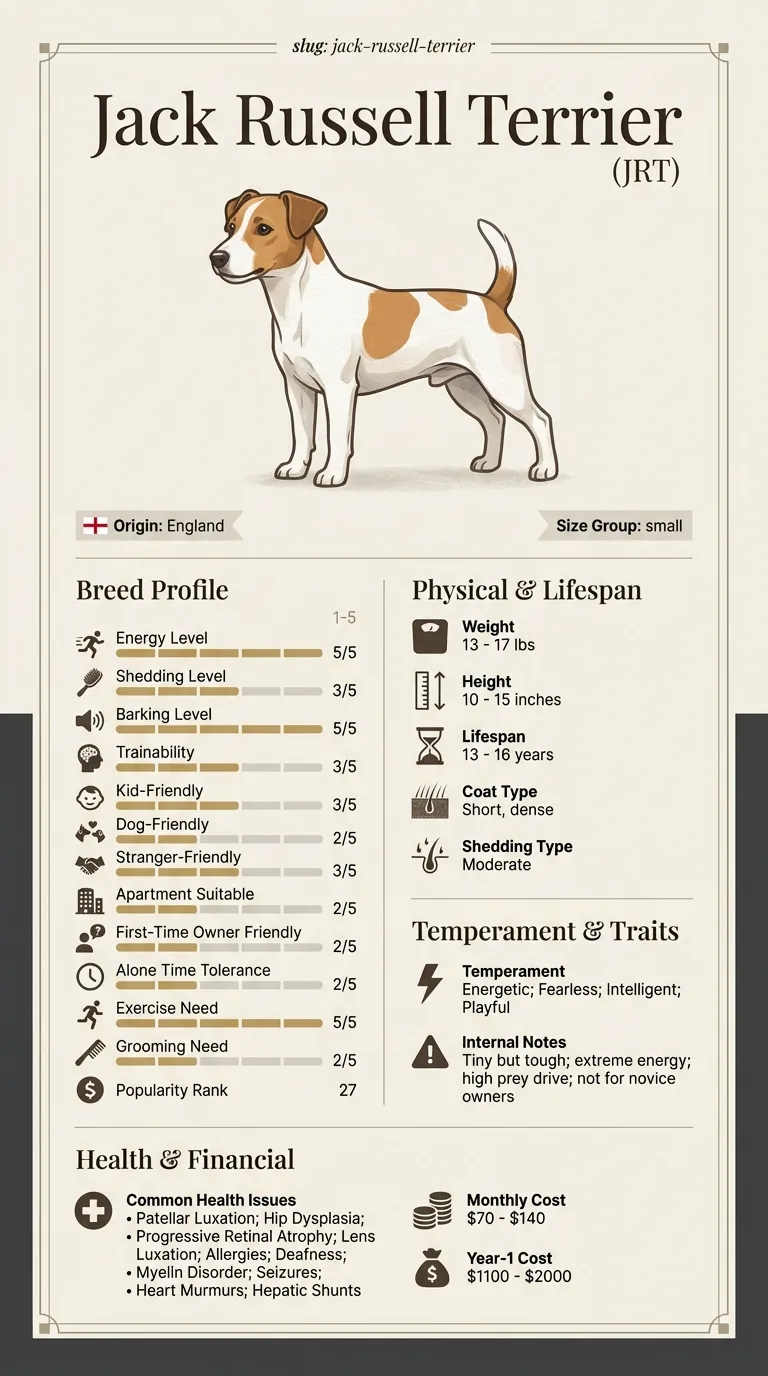
Owners of Jack Russell Terriers, especially those who lead busy lifestyles, may struggle with obesity management. First-time dog owners or families with young children might find it challenging to provide the necessary exercise and proper diet.
This guide is not medical advice. If your dog shows pain, sudden behavior change, or worsening symptoms, consult a licensed veterinarian.
Some links may be affiliate links. We may earn a commission at no extra cost to you. We only suggest products we believe are helpful for dog owners.
We research and check what we publish, but we do not warrant that any figure, date, price, or statement is accurate, complete, or current, and we accept no liability for any loss, cost, injury, or other harm arising from the use of this site. Use it as one reference among several. You remain responsible for your own decisions and for your dog's care - confirm anything that matters with a licensed veterinarian or another qualified professional before you act on it. Full disclaimer.
Check this first
Understanding when Jack Russell Terrier obesity becomes an emergency is crucial for their health. If your JRT shows sudden weight gain, lethargy, or difficulty breathing, it's time to call your vet immediately. These can be signs of serious complications such as heart issues or respiratory distress, requiring urgent care.
On the other hand, if your dog is slightly overweight but still active, you can monitor their condition with a structured weight loss plan. Look for signs like reduced energy levels or minor weight gain that can be managed with increased exercise and diet adjustments. Regular vet check-ups can help track their progress and adjust their plan as needed.
Setting a monitoring schedule can help you distinguish between mild cases and emergencies. Keep an eye on their eating habits, exercise routines, and overall behavior. If you notice the situation worsening, don’t hesitate to reach out to your veterinarian for advice.
If any of these apply, call your vet or an emergency clinic now. The rest of this page is for the cases that are not an emergency.
Jack Russell Terrier obesity is a growing concern among owners of this spirited breed. These small dogs, known for their high energy and playful nature, can become overweight if their diet and exercise needs aren't properly managed. Obesity in Jack Russells can lead to serious health issues, including joint problems, heart disease, and a shorter lifespan.
Obesity is quite common in Jack Russell Terriers, especially in those that are primarily kept indoors or have less active lifestyles. Many owners may not realize their dog is overweight until it's noticeable, making regular weight checks important.
Jack Russell Terriers have a strong prey drive and high energy levels, which can lead to weight gain if they are not exercised adequately. Their small stature may make it easy for owners to overlook weight gain, and their playful nature can sometimes result in overindulgence in treats.
A lack of physical activity and mental stimulation can contribute to Jack Russell Terrier obesity. If they are left alone for long periods or not given enough opportunities to play and explore, they may become bored and less active, leading to weight gain.
If your dog's weight gain is significant or sudden, it's essential to speak with a veterinarian. They can rule out underlying health issues and help create a weight management plan that suits your dog.
Managing Jack Russell Terrier obesity can be tricky, and certain common mistakes can make the situation worse. Avoid these pitfalls to help your dog achieve a healthier weight.
Start here: Jack Russell Terrier Most Common Genetic Disorders
See all Jack Russell Terrier health problems, which breeds are prone to obesity, or the full Jack Russell Terrier breed guide for temperament, exercise needs and ownership costs.
You can expect to see noticeable improvements in your Jack Russell Terrier's weight within 4 to 6 months of consistent efforts.
Success means your dog reaches a healthy weight, has more energy, and enjoys increased activity without struggling to keep up.
When Sarah adopted Bella, her Jack Russell Terrier, she quickly realized Bella was overweight. At first, Sarah struggled to find the right balance between feeding and exercise. After consulting with her vet, she started a structured meal plan and dedicated time for daily walks. Over several months, Bella lost weight and became more playful, often chasing after her toys with renewed energy. Sarah felt happier seeing Bella thrive and learned the importance of monitoring her dog's diet closely.
Key takeaway: With consistent diet management and exercise, Jack Russell Terriers can overcome obesity and lead healthier lives.
Jack Russell Terriers can become obese due to a combination of factors, including overfeeding, lack of exercise, and genetic predisposition. Their high energy levels require regular physical activity, and without it, they can easily gain weight. Additionally, treats and table scraps can contribute to excess calories.
To manage Jack Russell Terrier obesity, begin by adjusting their diet. Measure their food portions based on their ideal weight and switch to a healthier dog food if necessary. Incorporate daily exercise, such as walks or playtime, to help them burn calories and maintain a healthy weight.
Training your Jack Russell to follow commands can help with obesity management. Use positive reinforcement techniques to encourage physical activities like fetching or agility exercises. Consistency and patience are key to making exercise a fun part of their routine.
Obesity in Jack Russell Terriers can lead to serious health issues, including joint problems, diabetes, and heart disease. Keeping your dog at a healthy weight is crucial for their longevity and overall well-being. Regular vet check-ups can help monitor their health.
Jack Russell Terriers typically require at least 60 minutes of exercise each day to stay healthy. This can include walks, runs, or play sessions. Engaging them in interactive games also helps to keep their minds stimulated and their bodies active.
Yes, obesity can lead to behavioral changes in Jack Russell Terriers. They may become lethargic and less playful, which can affect their overall demeanor. Addressing their weight can help restore their energy levels and playful nature.
To determine if your Jack Russell Terrier is overweight, you should be able to feel their ribs easily without excess fat covering. Additionally, they should have a noticeable waist when viewed from above.
Yes, older Jack Russell Terriers can become obese more easily due to decreased activity levels and metabolic changes. It's important to adjust their diet and exercise routine as they age to prevent weight gain.
If your Jack Russell Terrier refuses to exercise, try engaging them with interactive toys or shorter, more frequent walks. Gradually increase their activity level and consult a vet if the situation doesn't improve.
Diet plays a significant role in Jack Russell Terrier obesity. Feeding them a balanced diet with controlled portions and avoiding excess treats can help maintain a healthy weight. Always consult your vet for dietary recommendations.
Limit treats and focus on healthy snacks, adjust their food portions, and ensure daily exercise. Regular vet visits can help track their weight loss progress.
Aim for at least one hour of exercise daily, including walks, playtime, and mental stimulation activities.
Avoid high-calorie human foods and limit treats that are high in fat and sugar. Stick to dog-specific treats in moderation.
If you notice significant weight gain or difficulty in managing their diet and exercise, consult your vet for personalized advice.
Consider agility training, fetch games, or puzzle toys to keep them active and mentally engaged, which helps prevent obesity.
A one-page prep sheet for this condition: the signs, the questions to ask, what to get priced. Unlocks here.
You get: Vet visit prep sheet
No spam. One-click unsubscribe. See our privacy policy.
Preview page 1 before you decide.