Behavior
What are some Mastiff (English Mastiff) anxiety quick tips?
Establish a consistent routine and safe space for your Mastiff to retreat to when anxious. Regular exercise and mental stimulation can also help reduce anxiety levels.

Quick answer
What are some Mastiff (English Mastiff) anxiety quick tips?
Establish a consistent routine and safe space for your Mastiff to retreat to when anxious. Regular exercise and mental stimulation can also help reduce anxiety levels.
Mastiff (English Mastiff) anxiety can be challenging, but you're not alone. Many owners face this issue with their gentle giants.
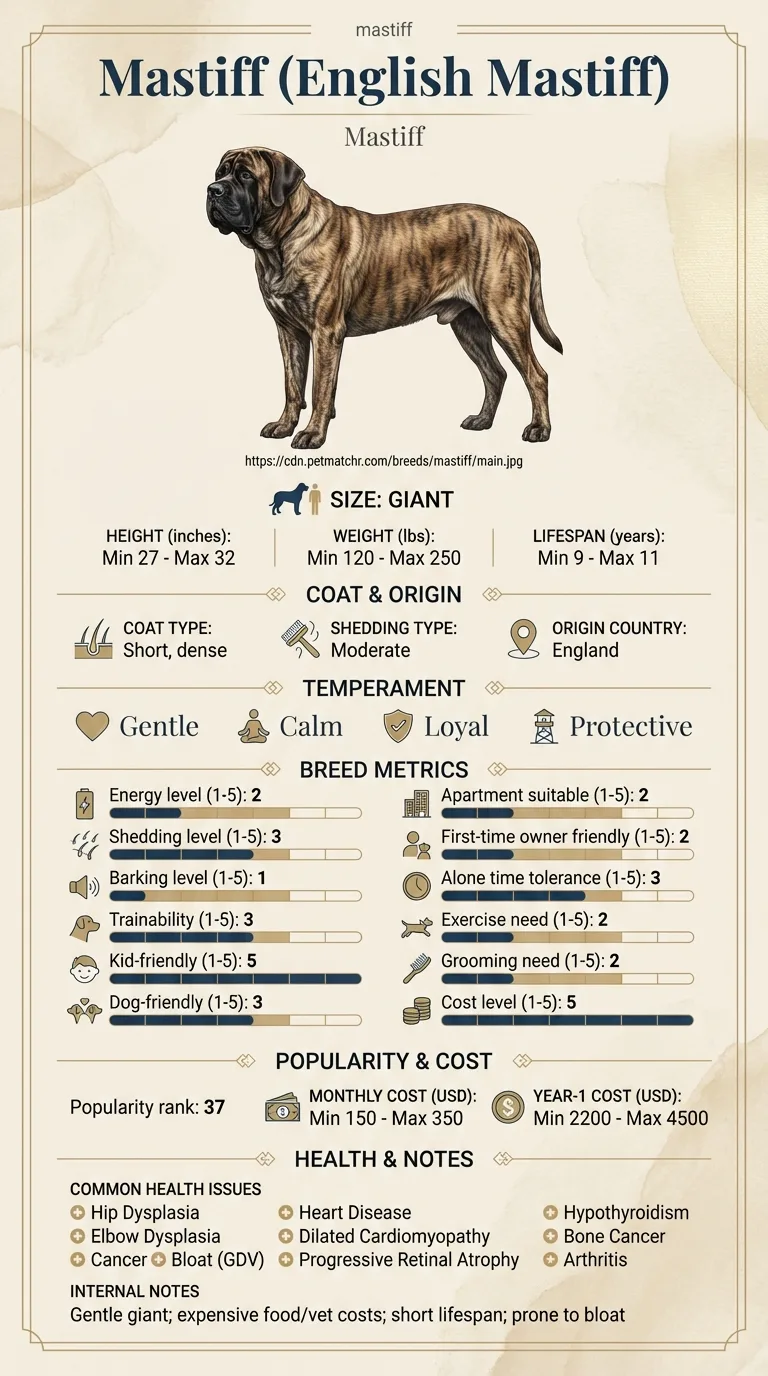
This guide is perfect for Mastiff owners who are struggling with anxiety issues in their dogs, whether you're a first-time owner or have experience with the breed.
Mastiff (English Mastiff) anxiety often manifests as restlessness or excessive drooling. These gentle giants may become clingy or show signs of distress when left alone. They might bark or whine, especially during stressful situations.
If your Mastiff's anxiety doesn't improve with at-home strategies, consider enrolling them in anxiety training classes. A professional can provide tailored techniques to help modify their behavior.
If your Mastiff shows extreme signs of anxiety, such as destructive behavior or aggression, talk to your vet or a behaviorist. They can offer specific guidance and may recommend medication in severe cases.
There are various tools and products that can help manage Mastiff (English Mastiff) anxiety, allowing for a calmer home environment.
Making lifestyle adjustments can significantly help reduce Mastiff (English Mastiff) anxiety. Start by establishing a consistent daily routine. Dogs, especially large breeds like Mastiffs, thrive on predictability.
Regular feeding, walking, and playtimes can create a sense of stability for your pet.
Next, focus on exercise. While Mastiffs may not need as much activity as some other breeds, daily walks and play sessions are crucial. Aim for at least an hour of moderate exercise spread throughout the day.
This will help release energy and reduce anxiety.
Consider your Mastiff's alone time. If your schedule allows, gradually increase the time your dog spends alone. Start with short intervals and gradually extend them.
This helps your dog learn to be comfortable on their own without panicking.
Adjusting household routines is also beneficial. Create a safe space for your Mastiff where they can retreat when feeling anxious. This could be a cozy corner with their bed and favorite toys.
Additionally, keep the environment calm. Minimize loud noises and sudden changes that could cause stress.
Finally, ensure that your Mastiff has mental stimulation. Puzzle toys, training exercises, or interactive games can keep their mind engaged and reduce anxiety. Remember, patience and consistency are key.
Each Mastiff is unique, so observe their reactions and adjust accordingly.
Tracking progress with Mastiff (English Mastiff) anxiety can feel challenging, but celebrating small victories is key. Micro-wins might include your Mastiff being calmer during thunderstorms or showing curiosity instead of fear when meeting new people. Even small changes in behavior can indicate that your training plan is starting to work.
Recognizing setbacks is just as important. If your Mastiff suddenly becomes more anxious after a period of improvement, it might signal that they need more time or a different approach. Look for signs like excessive barking or clinginess, which can indicate that anxiety is resurfacing.
To know when your efforts are paying off, observe consistent behaviors over time. If your Mastiff begins to relax more in situations that used to trigger anxiety, that's a sign of progress. If problems persist or worsen, it may be time to escalate the training or consult a professional.
Ultimately, patience and consistent effort are crucial for your gentle giant's well-being.

When Sarah adopted Bella, her English Mastiff, she quickly noticed signs of anxiety. Bella would bark excessively during storms and hide whenever someone knocked at the door. Sarah tried to comfort her with treats and cuddles, but it didn’t seem to help. After researching how to stop Mastiff anxiety, Sarah decided to take action. She started a consistent routine to help Bella feel secure, using calming music and a cozy space for her to retreat to during stressful times. Realizing that Bella's anxiety was too much for her to handle alone, Sarah sought help from a professional trainer who specialized in Mastiff anxiety training. The trainer taught Sarah techniques like desensitization to help Bella gradually face her fears. They worked on positive reinforcement, rewarding Bella for calm behavior during previously stressful situations. Over time, Bella learned to cope better with her anxiety. After several months, Bella became noticeably more relaxed. She still had her moments but was no longer hiding or barking uncontrollably. Sarah felt relieved and grateful that with patience and the right support, they could improve Bella's quality of life together.
Key takeaway: Addressing Mastiff anxiety takes consistency, patience, and sometimes professional help. Building a safe routine and reinforcing positive behavior can lead to significant improvements.
Mastiffs can experience anxiety for various reasons, including environmental changes, lack of socialization, or even health issues. Their gentle and loyal nature makes them sensitive to stress. It's important to observe your dog's behavior for triggers and consult with a vet if anxiety persists.
Common signs of anxiety in Mastiffs include excessive barking, pacing, hiding, or destructive behavior. They may also show signs of distress during loud noises or when left alone. Watching for these behaviors can help you identify when your Mastiff is feeling anxious.
Managing Mastiff anxiety often involves creating a calm environment, providing regular exercise, and using training techniques. Consistency in routine can help reduce anxiety levels. In some cases, working with a professional trainer or behaviorist is beneficial.
Yes, training can be very effective in reducing anxiety in Mastiffs. Positive reinforcement techniques can help your dog feel more secure and confident. Engaging in training can also strengthen your bond and provide mental stimulation.
There are several products designed to help alleviate anxiety in dogs, such as calming collars, anxiety wraps, and pheromone diffusers. Additionally, interactive toys can keep your Mastiff engaged and distracted from anxiety triggers.
Older Mastiffs can experience anxiety due to health changes or cognitive decline. Pain from arthritis or other issues may also contribute to their anxiety. Regular vet check-ups can help identify any underlying health problems.
Yes, anxiety can lead to aggression or fear-based behaviors toward other dogs. If your Mastiff is anxious, it's important to monitor their interactions and consider socialization training. A professional trainer can help address behavior problems effectively.
Traveling can be stressful for Mastiffs due to their size and sensitivity. Gradually acclimate them to car rides and create a comfortable space for them in the vehicle. Bringing familiar items can also ease their anxiety.
Signs of separation anxiety in Mastiffs may include excessive barking, destructive behavior, or house soiling when left alone. If you notice these signs, it’s crucial to consult a trainer. Implementing a gradual desensitization process can help.
Training your Mastiff to manage anxiety involves consistency and positive reinforcement. Start with basic obedience commands and gradually introduce calming techniques, like the 'place' command. Professional anxiety training can provide tailored strategies for your Mastiff.
Establish a consistent routine and safe space for your Mastiff to retreat to when anxious. Regular exercise and mental stimulation can also help reduce anxiety levels.
Create a safe and quiet space for your Mastiff during storms. Consider using calming music or a white noise machine to help drown out the noise.
In some cases, medication may be necessary to manage severe anxiety. Always consult with a veterinarian before starting any medication.
Yes, training can greatly help in managing anxiety. Positive reinforcement methods can teach your Mastiff coping strategies and improve their confidence.
Gradually get your Mastiff used to being alone by starting with short departures. Use toys or treats to distract them during these times, and consider consulting a trainer for additional strategies.
Anxiety and pain look alike from the outside. Get the prep sheet for this breed's separation-anxiety page and take it to the vet.
You get: Vet visit prep sheet
No spam. One-click unsubscribe. See our privacy policy.
Preview page 1 before you decide.

This guide is not medical advice. If your dog shows pain, sudden behavior change, or worsening symptoms, consult a licensed veterinarian.
Some links may be affiliate links. We may earn a commission at no extra cost to you. We only suggest products we believe are helpful for dog owners.
We research and check what we publish, but we do not warrant that any figure, date, price, or statement is accurate, complete, or current, and we accept no liability for any loss, cost, injury, or other harm arising from the use of this site. Use it as one reference among several. You remain responsible for your own decisions and for your dog's care - confirm anything that matters with a licensed veterinarian or another qualified professional before you act on it. Full disclaimer.
Not sure which breed is right for you? Take our 2-minute quiz to find out.
Take the quiz