Costs
Labrador Retriever cost in Wichita
Roughly $75–$155 a month, $1,250–$2,150 in year one — among the lowest this site tracks, low enough to make a second annual wellness visit a realistic addition given this breed's long health-risk list.

See Labrador Retriever price across all cities →
Quick answer
Labrador Retriever cost in Wichita
Roughly $75–$155 a month, $1,250–$2,150 in year one — among the lowest this site tracks, low enough to make a second annual wellness visit a realistic addition given this breed's long health-risk list.
Budget somewhere between $75 and $155 a month for a Labrador Retriever in Wichita, with a first-year total near $1,250 to $2,150 — pricing that lands among the lowest this site records, low enough that stepping up to twice-yearly wellness visits instead of once a year is a realistic, genuinely worthwhile move given this breed's long list of documented health considerations.
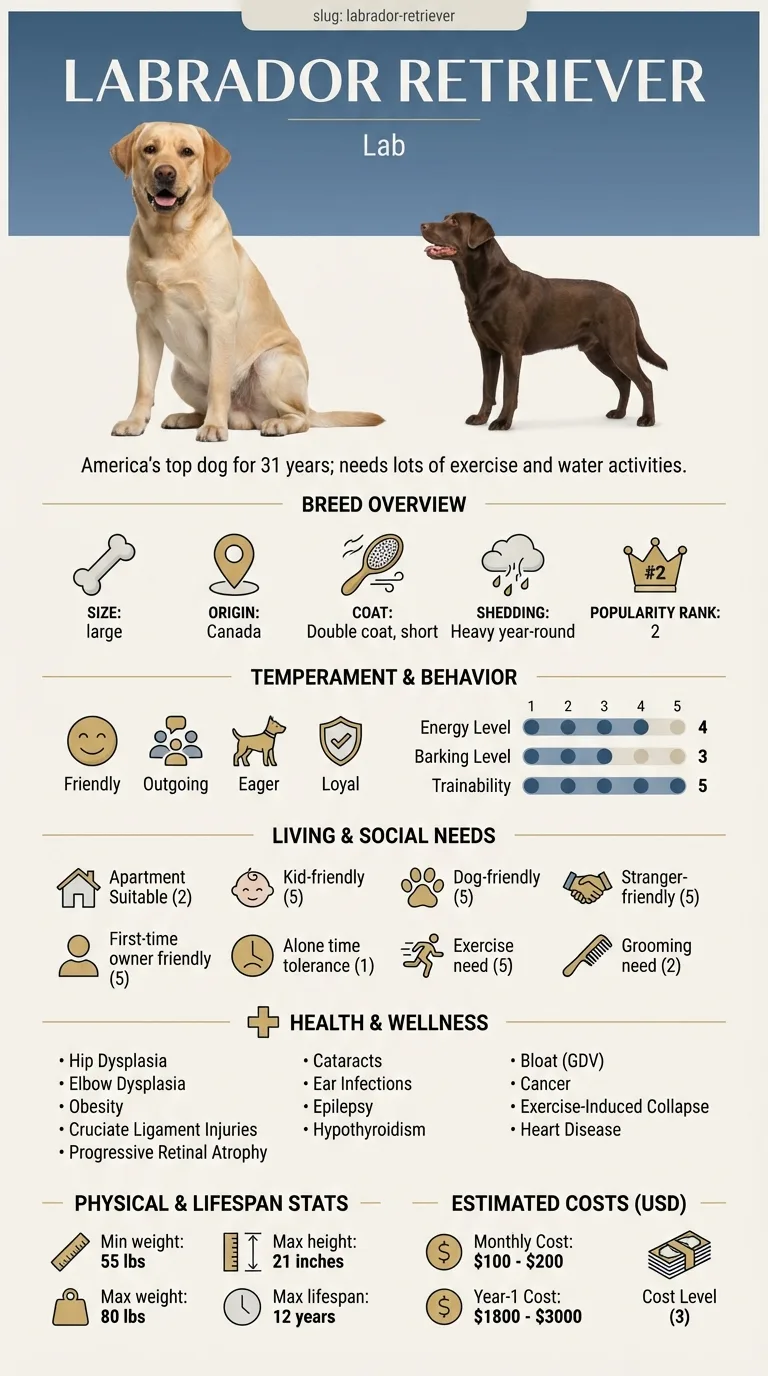
Cruciate ligament injuries are a well-documented, common orthopedic issue in this breed, often requiring surgery in the $3,000–$5,000 range. Bloat (GDV) is the separate, sudden emergency risk given this breed's deep chest — no warning, immediate surgery needed.
These numbers rank near the bottom of what this site tracks, with a note on how affordably a second annual wellness visit fits into that low baseline.
Estimate · source: estimation · confidence: medium · updated 2026-10-06 · not a quote
| Item | Cost range |
|---|---|
One-time setup (initial vet visit, spay/neuter, gear) Covers the initial exam, vaccinations, spay/neuter, and starter gear at Kansas's below-average rates. | $245 - $415 |
| Item | Cost range |
|---|---|
Food Runs low relative to most of this site's coverage, matching Kansas's general price level; large-breed portion sizing matters given this breed's documented obesity tendency. | $33 - $65 |
Grooming (short double coat) Modest for a short-coated breed, though the documented heavy shedding makes home brushing worth doing regularly. | $12 - $28 |
Each range starts from a national baseline for this breed's size class and is then adjusted for local cost of living and veterinary pricing. The baselines, and the source each one came from, are listed on our sources page (dataset 2026.09). Two inputs, the purchase price and the emergency reserve, have no published national figure we could verify, so we leave them to you rather than invent them.
These are planning estimates, not quotes. Your own numbers will move with the individual dog, your vet and your insurer. Build a budget with your own figures.
Given how many documented health considerations this breed carries, insurance is worth taking seriously in Wichita even with the area's otherwise low general pricing.
Buying young and before any diagnosis appears is the whole strategy — this breed's real cruciate ligament and bloat statistics mean coverage matters regardless of how affordable routine care runs here.
An owner who's already built a solid emergency fund and is comfortable managing a serious diagnosis without monthly premiums can reasonably self-insure instead.
Wichita's low baseline pricing makes it a good place to spend a little more on prevention rather than less.
A single annual exam is the standard baseline most vets recommend, but this breed's unusually long list of documented health considerations, cruciate ligament wear, obesity trends, cancer, thyroid irregularities, cardiac concerns, argues for catching problems on a shorter timeline than twelve months. Weight creep in particular is far easier to reverse when caught at six months than at twelve, and a second annual visit gives a vet a real chance to track subtle changes that an owner might not notice day to day.
Wichita's genuinely low routine-care pricing is what makes this realistic: adding a second wellness visit here costs meaningfully less than a single visit would in a pricier market, turning a nice-to-have into something worth actually scheduling.
Beyond that, general costs run well under the national average across food and grooming too, with a moderate, clearly seasonal parasite-prevention window that keeps year-round costs down further.

A Wichita Labrador Retriever owner added a spring wellness check to their dog's usual fall exam mostly because the low local pricing made it an easy call. That extra visit caught several pounds of weight gain months before it would have shown up at the annual checkup, giving the family time to adjust portions before it became a bigger issue tied to joint strain.
Key takeaway: Wichita's genuinely low routine-care pricing turns a second annual wellness visit from a luxury into a realistic, worthwhile habit for this breed's documented health profile.
Roughly $75 to $155, among the lowest figures this site tracks, matching Kansas's generally low cost of living.
Somewhere near $1,250 to $2,150 total, covering the initial exam, spay or neuter, starter gear, and the monthly costs layered on top.
There's a real case for it — given how many documented health considerations this breed carries, a second annual visit helps catch subtle changes like weight creep or early joint stiffness sooner, and Wichita's low pricing makes the extra visit affordable.
Genuinely, yes — Kansas's low cost of living applies across food, routine vet visits and grooming, ranking among the lowest markets this site tracks.
Worth pricing out given this breed's extensive documented health risks, including cruciate ligament injuries and bloat, bought while the dog is young and before anything is on record.
Around $540 covers a typical significant vet visit in this market, matching Wichita's genuinely low general pricing.
Roughly $75–$155 a month, $1,250–$2,150 in year one — among the lowest this site tracks, low enough to make a second annual wellness visit a realistic addition given this breed's long health-risk list.
This guide is not medical advice. If your dog shows pain, sudden behavior change, or worsening symptoms, consult a licensed veterinarian.
Some links may be affiliate links. We may earn a commission at no extra cost to you. We only suggest products we believe are helpful for dog owners.
We research and check what we publish, but we do not warrant that any figure, date, price, or statement is accurate, complete, or current, and we accept no liability for any loss, cost, injury, or other harm arising from the use of this site. Use it as one reference among several. You remain responsible for your own decisions and for your dog's care - confirm anything that matters with a licensed veterinarian or another qualified professional before you act on it. Full disclaimer.
One sheet with every line item, the emergency fund and when insurance pays off - unlocks on this page.
You get: 12-month budget sheet
No spam. One-click unsubscribe. See our privacy policy.
See a sample page before you decide.