Health
Is my Lab at risk for brachycephalic breathing problems?
No — Labradors aren't a brachycephalic breed and don't have the flat-faced anatomical airway narrowing those statistics describe.

Quick answer
Is my Lab at risk for brachycephalic breathing problems?
No — Labradors aren't a brachycephalic breed and don't have the flat-faced anatomical airway narrowing those statistics describe.
The respiratory condition actually worth knowing about in this breed isn't a flat-face breathing problem at all — it's a nerve condition that shows up in seniors and changes how the voice box itself functions during breathing.
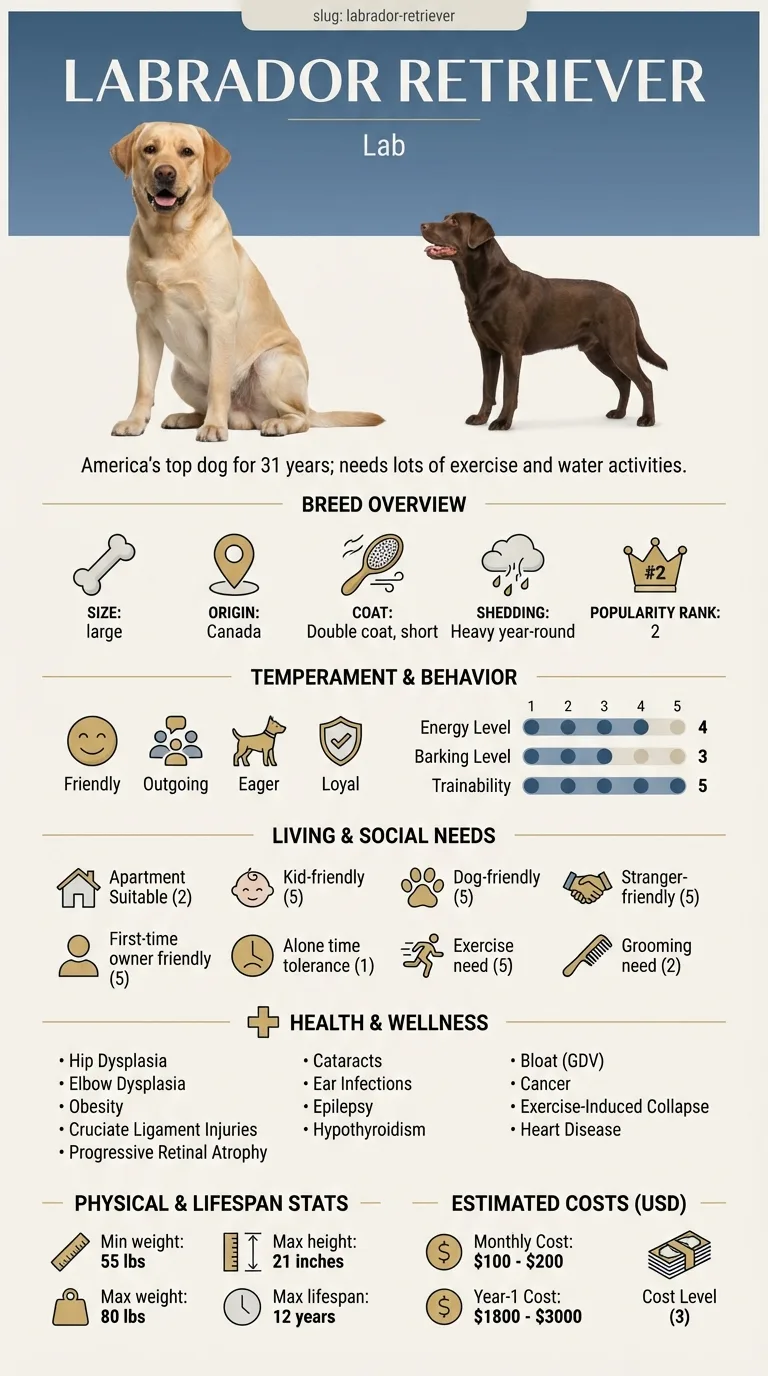
Owners who've read alarming brachycephalic breathing statistics online and are trying to figure out what, if anything, actually applies to their non-flat-faced Labrador, and owners of senior Labs noticing a new raspy breathing sound or reduced exercise tolerance.
This guide is not medical advice. If your dog shows pain, sudden behavior change, or worsening symptoms, consult a licensed veterinarian.
Some links may be affiliate links. We may earn a commission at no extra cost to you. We only suggest products we believe are helpful for dog owners.
We research and check what we publish, but we do not warrant that any figure, date, price, or statement is accurate, complete, or current, and we accept no liability for any loss, cost, injury, or other harm arising from the use of this site. Use it as one reference among several. You remain responsible for your own decisions and for your dog's care - confirm anything that matters with a licensed veterinarian or another qualified professional before you act on it. Full disclaimer.
Labrador Retrievers are not a brachycephalic breed and don't carry the anatomical airway obstruction risk associated with flat-faced dogs. The respiratory condition genuinely relevant to this breed is laryngeal paralysis, part of a senior-onset condition called GOLPP, where weakened nerve control of the voice box reduces airflow during breathing, typically emerging around age nine or older.
Laryngeal paralysis and GOLPP are documented often enough in senior large-breed dogs, including Labradors specifically, that vets routinely consider it when an older dog presents with a changed bark or noisy breathing, though it remains an age-related condition rather than one present from birth.
Labradors are among the breeds more frequently represented in laryngeal paralysis and GOLPP cases specifically, a nerve-based condition unrelated to the anatomical airway narrowing seen in brachycephalic breeds. Their long 10 to 12 year lifespan gives this age-related nerve degeneration time to develop and become clinically apparent in the senior years.
Obesity and hot, humid weather both increase the breathing demand placed on an airway with reduced nerve function, making symptoms more apparent and potentially more dangerous, though neither is the underlying cause of the nerve degeneration itself.
Schedule a vet visit for a changed bark sound, new noisy breathing, or reduced exercise tolerance in a senior dog, and seek emergency care immediately for visible breathing distress or blue-tinged gums, particularly in warm weather, since this combination can indicate a true respiratory crisis.
See all Labrador Retriever health problems, which breeds are prone to respiratory disease, or the full Labrador Retriever breed guide for temperament, exercise needs and ownership costs.
GOLPP is a progressive condition, typically developing gradually over months to a couple of years from first noticeable signs to more significant impairment. Surgical correction, when pursued, involves a recovery period of several weeks with permanent airway modification rather than a treatment that resolves and ends.
Success for milder cases means effective management through weight control and heat avoidance, maintaining reasonable quality of life. For more significantly affected dogs, success after tie-back surgery means meaningfully improved airflow and exercise tolerance, though some permanent change to bark sound and swallowing function is a realistic tradeoff of the procedure.
Brachycephalic obstructive airway syndrome, along with related issues like stenotic nares and an elongated soft palate, is a set of anatomical problems specific to flat-faced breeds whose skull shape physically narrows the airway. Labradors have a normal, moderate-length muzzle and skull shape, so this entire category of anatomical airway obstruction simply doesn't apply to this breed the way generic 'dog respiratory disease' content sometimes implies.
The respiratory condition genuinely worth knowing about in Labradors is laryngeal paralysis, more fully described in recent veterinary literature as part of a broader condition called geriatric onset laryngeal paralysis polyneuropathy (GOLPP). This is a nerve-based condition, not an anatomical one, where the nerves controlling the muscles that open the larynx (voice box) during breathing gradually weaken, so the airway doesn't open as fully as it should during inhalation. This typically develops in senior dogs, and Labrador Retrievers are among the breeds more frequently represented in cases of this specific condition.
Early signs include a change in bark sound, increased noisy breathing (especially during exercise or excitement), reduced exercise tolerance, and in more advanced cases, real breathing distress, particularly in warm weather when panting demands on an already compromised airway increase. This is a genuinely different mechanism, different age group, and different management approach than anything a brachycephalic breed statistic would suggest.

Since this is a nerve-based, senior-onset condition rather than an anatomical one, both recognition and management look different from brachycephalic airway syndrome.
Nine-year-old Lab Tanner's owner, Priya, noticed his bark had become noticeably raspier over a few months, and he seemed to tire faster on their usual walk route. She'd read online about brachycephalic breathing problems and was confused since Tanner clearly didn't have a flat face. Her vet explained that Labradors are actually a breed more associated with a completely different, nerve-based condition called GOLPP, and a laryngeal exam confirmed early laryngeal paralysis. Tanner's weight was already lean, so his vet recommended heat avoidance and monitoring rather than immediate surgery. A year later, his symptoms have progressed only mildly, and he continues his regular walks in cooler parts of the day.
Key takeaway: General respiratory disease information skewed toward brachycephalic breeds can genuinely mislead a Labrador owner — the real, breed-relevant condition here is a distinct nerve-based issue with its own recognizable signs and its own age pattern.
No — Labradors have a normal, moderate-length muzzle and skull shape, so they don't have the anatomical airway narrowing seen in flat-faced breeds like Bulldogs or Pugs. Respiratory risk statistics specific to brachycephalic breeds don't apply to this breed.
Laryngeal paralysis, part of a broader senior-onset condition called GOLPP, is the respiratory condition genuinely documented as more common in this breed, involving weakened nerve control of the voice box rather than any anatomical obstruction.
It's a senior-onset condition, typically appearing in dogs around nine years or older, distinguishing it clearly from the congenital, present-from-birth airway issues seen in brachycephalic breeds.
A changed or raspier bark sound, increased noisy breathing especially during exercise or excitement, and reduced exercise tolerance are the classic early signs, often subtle enough to be initially mistaken for normal aging.
Advanced cases with visible breathing distress or blue-tinged gums are a true emergency requiring immediate veterinary care, particularly in hot weather when panting demands on an already compromised airway increase significantly.
Weight management and heat avoidance are key supportive steps for milder cases, while more significantly affected dogs may benefit from a surgical procedure called tie-back surgery, which permanently repositions part of the larynx to improve airflow.
Tie-back surgery typically runs $2,000–$4,000 depending on region and specialist, reserved for dogs with more significant breathing impairment rather than mild, early-stage cases.
No — Labradors aren't a brachycephalic breed and don't have the flat-faced anatomical airway narrowing those statistics describe.
Laryngeal paralysis, part of a condition called GOLPP, involving weakened nerve control of the voice box in older dogs.
A changed or raspier bark sound and increased noisy breathing during exercise are common early signs.
Typically $2,000–$4,000 depending on region and specialist, for more significantly affected dogs.
Yes — this combination requires immediate veterinary care, especially in warm weather.
A one-page prep sheet for this condition: the signs, the questions to ask, what to get priced. Unlocks here.
You get: Vet visit prep sheet
No spam. One-click unsubscribe. See our privacy policy.
Preview page 1 before you decide.