Labradoodle Cruciate Ligament Injuries: What You Need to Know
Labradoodle cruciate ligament injuries can lead to serious mobility issues and pain for your furry friend.
Typically, active owners who love to take their Labradoodles on adventures may face this problem. It's particularly common in young, energetic dogs that are prone to high-impact activities.
Important reminder
This guide is not medical advice. If your dog shows pain, sudden behavior change, or worsening symptoms, consult a licensed veterinarian.
Some links may be affiliate links. We may earn a commission at no extra cost to you. We only suggest products we believe are helpful for dog owners.
What this problem looks like
Labradoodle cruciate ligament injuries are common issues that can cause significant pain and mobility problems. This injury typically occurs when a dog tears or ruptures the ligaments in their knee, often due to sudden movements, slips, or excessive jumping. Owners may notice their Labradoodle limping, having difficulty standing, or showing reluctance to play or exercise.
Common triggers
Sudden jumps or twists during play
Slippery surfaces
Obesity or lack of fitness
High-impact activities, especially in younger dogs
Cruciate ligament injuries are fairly common in Labradoodles, particularly because of their energetic nature and athletic build. Many Labradoodles are active dogs, and the risk increases with age and weight. If your Labradoodle is a bit clumsy or has a history of injuries, be extra cautious.
Why this happens
Breed factors
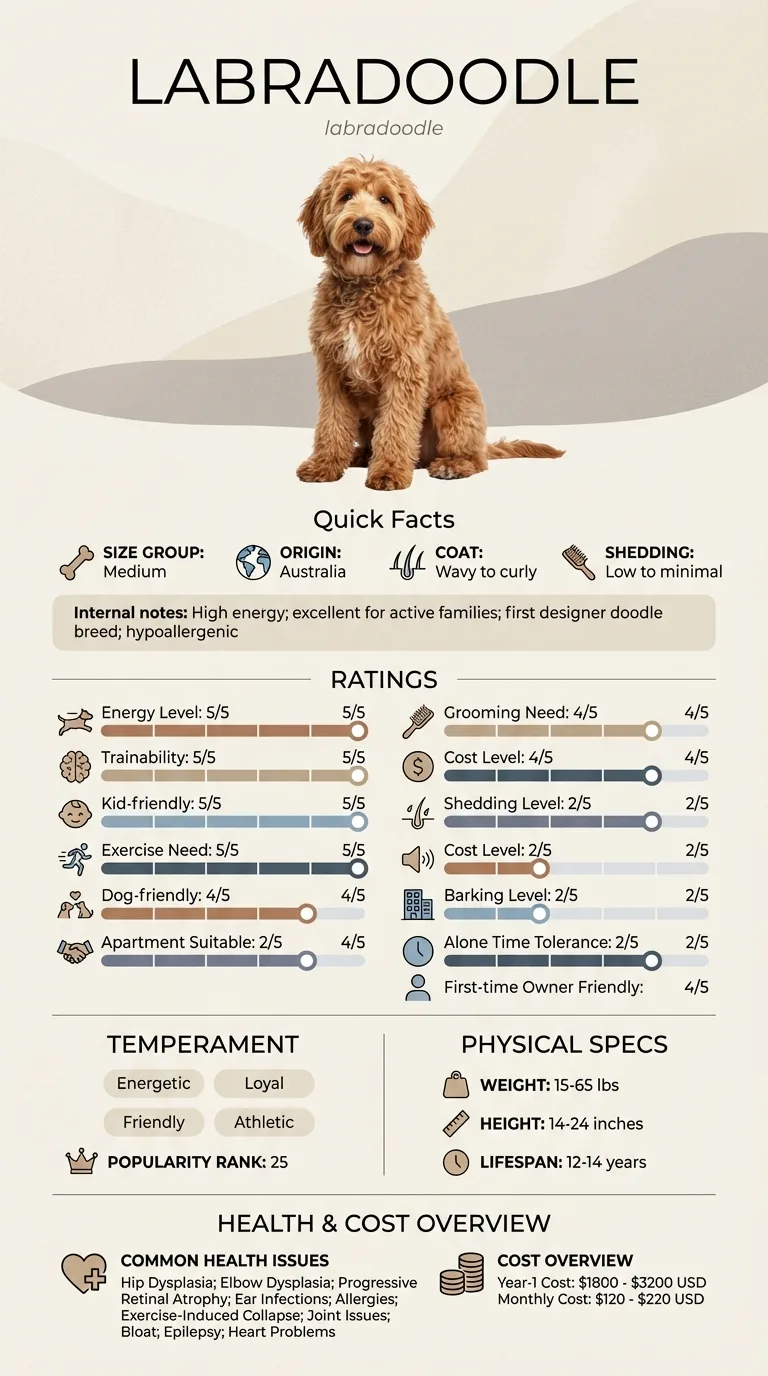
Labradoodles, being a medium-sized breed with a high energy level, are prone to cruciate ligament injuries due to their active nature. Their playful behavior can lead to sudden movements and jumps that put stress on their knees. Additionally, some Labradoodles may inherit genetic predispositions to joint issues, making them more vulnerable.
Environment factors
The environment plays a significant role in influencing cruciate ligament injuries. Dogs that engage in high-impact activities on hard surfaces without proper warm-up can be at risk. Furthermore, overweight Labradoodles may experience added strain on their joints, increasing the likelihood of injuries.
What you can try
At-home strategies
Implement a balanced exercise routine that includes both physical and mental stimulation. Aim for daily walks and interactive play sessions that avoid excessive jumping.
Create a safe play area with soft surfaces to minimize impact on their joints. Avoid hard surfaces where possible, especially for high-energy activities.
Maintain a healthy weight through proper diet and portion control. Consult with your vet to determine the best diet for your Labradoodle.
When to consider a trainer
If your Labradoodle is displaying signs of distress or difficulty in movement, consider hiring a professional trainer. A trainer can help with proper exercise techniques and behavior modifications to avoid injuries.
When to talk to your vet
If your Labradoodle shows persistent limping, swelling, or pain in the knee area, it’s time to talk to your vet. Early intervention can prevent further damage and help manage their recovery effectively.
Realistic expectations
You can expect to see improvement within 4 to 6 weeks with a consistent training and care plan. However, complete recovery from a cruciate ligament injury may take several months, depending on the severity.
Success means your Labradoodle can move comfortably without pain, resume normal activities, and avoid re-injury. Additionally, you'll feel confident in managing their exercise and training needs.
Mistakes that make this worse
Avoid these common mistakes that can worsen Labradoodle cruciate ligament injuries.
Ignoring early signs of discomfort: Many owners overlook subtle limping or reluctance to play. If you see these signs, consult your vet immediately to prevent worsening injuries.
Overexerting your Labradoodle: Some owners think more exercise is always better. High-impact activities can strain the knees and lead to injuries. Stick to low-impact exercises like walking or swimming.
Skipping warm-ups before play: Just like humans, dogs need a good warm-up to prepare their muscles. Spend a few minutes doing gentle stretches or a slow-paced walk before any vigorous activity.
Neglecting weight management: Extra pounds can put significant stress on your Labradoodle’s joints. Keep your dog at a healthy weight with a balanced diet and regular exercise.
Failing to provide proper surfaces: Playing on hard surfaces like concrete can increase the risk of injuries. Opt for softer areas like grass or carpeted spaces for playtime.
Not following vet advice: After an injury, some owners may ignore their vet's recommendations for rest and rehabilitation. Always follow your vet's instructions for recovery to help your dog heal properly.
Delaying veterinary visits: If your Labradoodle shows signs of pain or injury, delaying a vet visit can lead to bigger problems. Prompt treatment can save you time and money in the long run.
When Labradoodle Cruciate Ligament Injuries Are an Emergency
Recognizing when Labradoodle cruciate ligament injuries become an emergency is crucial. If your dog shows signs of severe pain, inability to bear weight on the affected leg, or a visible swelling around the knee, you should contact your vet immediately. These symptoms could indicate a complete rupture or a more serious injury that requires prompt medical attention.
In addition, if your Labradoodle is exhibiting signs of distress, such as excessive whining, panting, or restlessness, don't hesitate to seek help. Other red flags include a sudden change in appetite, lethargy, or any unusual behavior. These can signify broader health issues related to pain or discomfort.
On the other hand, if your dog has mild limping or seems slightly hesitant to jump, you can monitor the situation at home. A good plan includes resting your Labradoodle, limiting their activity, and applying ice to the knee area. Keeping an eye on their behavior and mobility over the next few days can help you decide if a vet visit is needed later. If the limping persists or worsens, it's time to make that call.
Always err on the side of caution. If you're unsure whether the situation is an emergency, it's better to consult your vet. They can provide guidance tailored to your Labradoodle's specific needs and condition.

Labradoodle Cruciate Ligament Injuries: What You Need to Know - When Labradoodle Cruciate Ligament Injuries Are an Emergency
Samantha's Journey with Daisy's Injury
Samantha, a busy nurse in Seattle, noticed her Labradoodle, Daisy, limping after an energetic day at the park. The vet diagnosed a cruciate ligament injury, which left Samantha feeling overwhelmed. They started a structured recovery plan that included physical therapy and gradually increased exercise. With dedication, Daisy was back to her playful self within months, and Samantha learned to better manage her exercise routine to prevent future injuries.
Key takeaway: With a solid recovery plan and some lifestyle adjustments, you can help your Labradoodle bounce back from cruciate ligament injuries and enjoy life to the fullest.
Frequently asked questions
Why does my Labradoodle have cruciate ligament injuries?
Labradoodles can be prone to cruciate ligament injuries due to their active nature and body structure. Factors like age, weight, and previous injuries can increase the risk. Regular check-ups and maintaining a healthy weight can help mitigate these issues. This answer relates to Labradoodle cruciate ligament injuries.
How can I prevent cruciate ligament injuries in my Labradoodle?
To prevent cruciate ligament injuries, focus on maintaining a healthy weight through proper diet and exercise. Avoid high-impact activities like jumping or running on hard surfaces. Gradual increases in exercise intensity can also help strengthen their joints.
What are the signs of a cruciate ligament injury in Labradoodles?
Signs of a cruciate ligament injury may include limping, reluctance to put weight on a leg, and swelling around the knee. If you notice these symptoms, consult your vet for an evaluation. Early diagnosis can lead to better treatment outcomes.
How is a cruciate ligament injury treated in Labradoodles?
Treatment for cruciate ligament injuries typically includes rest, anti-inflammatory medications, and possibly surgery. Your vet may recommend physical therapy to aid recovery. Follow their guidance closely to ensure your Labradoodle heals properly.
Is surgery always necessary for cruciate ligament injuries in Labradoodles?
Not all cruciate ligament injuries require surgery. Minor injuries can often be managed with rest and rehabilitation. However, severe cases may need surgical intervention for the best outcome.
Can I train my Labradoodle to avoid injuries?
Yes, training can help prevent injuries. Focus on strengthening exercises and proper warm-up routines before activities. Teaching commands like 'slow' or 'easy' can also help manage their energy levels during play.
What are the signs of cruciate ligament injuries in Labradoodles?
Signs of cruciate ligament injuries in Labradoodles can include limping, difficulty standing up, or reluctance to play. You might also notice swelling around the knee or a change in their walking pattern. If you see any of these signs, it's essential to consult your vet.
How can I prevent cruciate ligament injuries in my Labradoodle?
To help prevent cruciate ligament injuries, maintain a healthy weight for your Labradoodle and ensure they get regular exercise without overdoing it. Avoid high-impact activities, especially on hard surfaces, and consider strengthening exercises that focus on their legs. Training your dog to follow commands can also help to prevent sudden movements that might lead to injuries.
Are older Labradoodles more prone to cruciate ligament injuries?
Yes, older Labradoodles can be more prone to cruciate ligament injuries due to wear and tear on their joints over time. As dogs age, their ligaments may weaken, increasing the risk of injury. Regular check-ups with your vet can help track their joint health and catch any issues early.
When should I take my Labradoodle to the vet for a potential ligament injury?
If your Labradoodle shows signs of severe pain, inability to bear weight on a leg, or noticeable swelling, you should see a vet promptly. Early diagnosis can lead to better treatment options and quicker recovery. It's always better to err on the side of caution when it comes to your dog's health.
Can cruciate ligament injuries in Labradoodles heal without surgery?
Some minor cruciate ligament injuries in Labradoodles can heal with rest, medication, and physical therapy. However, more severe injuries may require surgery for proper healing. Always consult your vet for the best course of action based on your dog's specific condition.
What are quick tips for Labradoodle cruciate ligament injuries?
To reduce the risk of cruciate ligament injuries, keep your Labradoodle at a healthy weight and engage in controlled exercise. Avoid rough play on hard surfaces and provide joint supplements if recommended by your vet.
Living
How often should I exercise my Labradoodle?
Aim for at least an hour of exercise each day, balancing playtime and walks. Tailor the intensity to your Labradoodle's age and health condition to prevent strain.
Health
What should I do if my Labradoodle is limping?
If your Labradoodle is limping, limit their activity and consult your vet as soon as possible. Early intervention can prevent worsening injuries.
Training
Are there specific training methods to protect my Labradoodle's joints?
Yes, incorporating low-impact exercises like swimming and controlled leash walks can strengthen your Labradoodle's muscles without stressing their joints.
Health
What are common treatments for cruciate ligament injuries?
Common treatments include rest, medication for pain and inflammation, and sometimes surgery. Consult your vet for the best treatment plan based on your Labradoodle's condition.
Related DogBreedCompass guides
Labradoodle behavior problems – Understanding the common behavioral issues Labradoodles face can help in managing their overall health.
Labradoodle separation anxiety guide – If you're dealing with your Labradoodle's injuries, it might be helpful to also explore anxiety issues they may face.