What are quick tips for Jack Russell Terrier cruciate ligament injuries?
Ensure your dog maintains a healthy weight and engage in low-impact exercises. Regular vet visits can help catch issues early. Consider joint supplements for added support.
Jack Russell Terrier cruciate ligament injuries can be painful and debilitating for your dog. These injuries often occur when the knee ligaments are damaged, leading to mobility issues.

Typically, active families or individuals with Jack Russells may struggle with this issue. Owners who exercise their dogs frequently or participate in agility training need to be particularly vigilant.
This guide is not medical advice. If your dog shows pain, sudden behavior change, or worsening symptoms, consult a licensed veterinarian.
Some links may be affiliate links. We may earn a commission at no extra cost to you. We only suggest products we believe are helpful for dog owners.
Jack Russell Terrier cruciate ligament injuries are a common concern for owners of this energetic breed. These injuries often manifest as limping, difficulty in jumping, or reluctance to play. Daily life can become challenging as affected dogs may struggle to keep up with their usual activities due to pain or discomfort.
Cruciate ligament injuries are relatively common in Jack Russell Terriers due to their high energy and active nature. Many owners report these injuries in their pets, especially as they age or if they engage in vigorous activities without proper conditioning.
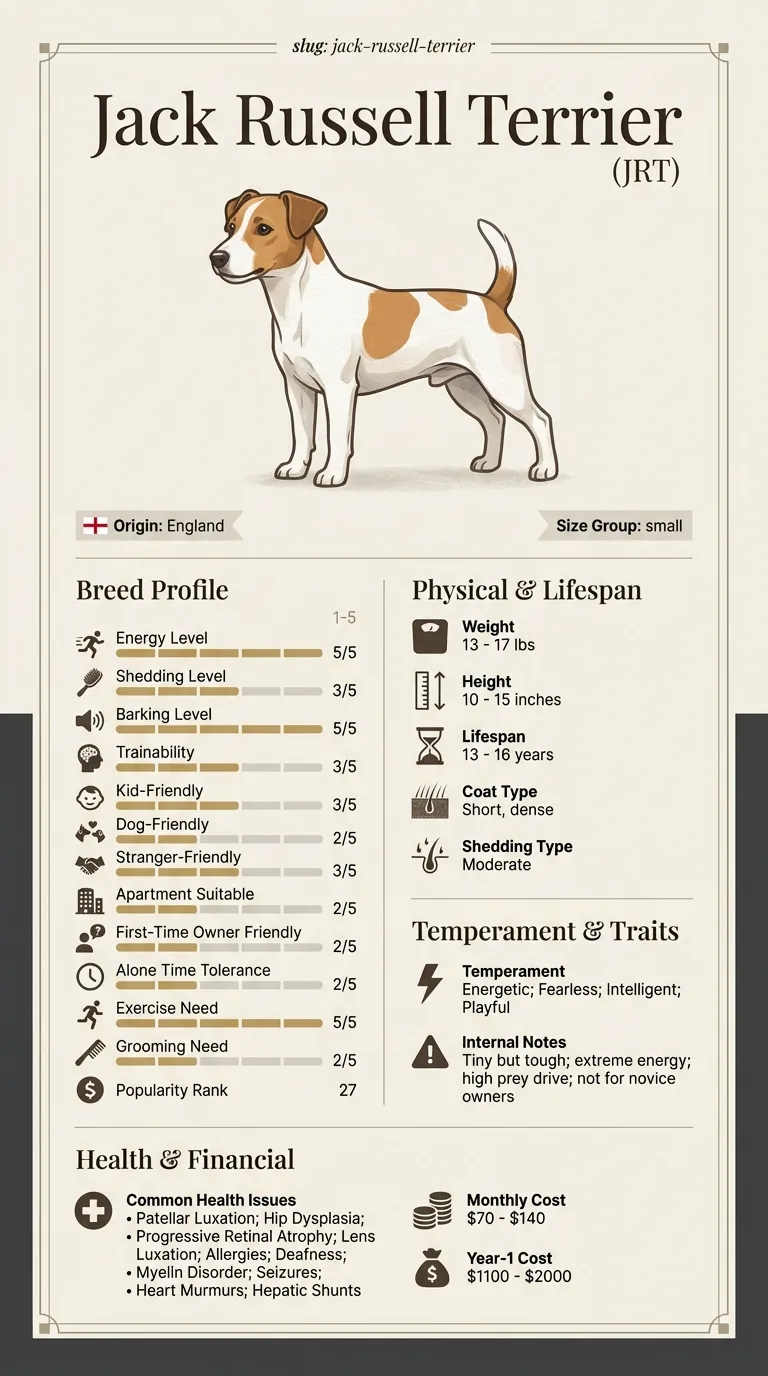
Jack Russell Terriers are small but energetic dogs. They often engage in high-impact activities, increasing the risk of cruciate ligament injuries. Their active nature, combined with their fearless attitude, can lead to accidents that strain their knees.
Inappropriate surfaces for play, such as hard ground or steep areas, can contribute to these injuries. Additionally, lack of proper exercise and warming up may weaken their muscles, making them more vulnerable to injuries. Overweight dogs also face higher risks due to added stress on their joints.
If your Jack Russell Terrier struggles with obedience or continues to engage in risky behaviors, consider hiring a professional trainer. They can provide tailored advice to improve training and reduce injury risk.
Consult your vet if you notice signs of pain, limping, or reluctance to move. Early intervention can prevent further complications related to cruciate ligament injuries.
It may take several weeks to months of consistent training and care to see improvement in your Jack Russell Terrier's knee stability and overall health.
Success means your dog shows less limping, increased mobility, and a reduced risk of further injuries. They should be able to enjoy daily activities without discomfort.
Avoid these common mistakes to help your Jack Russell Terrier heal and prevent further cruciate ligament injuries.
Recognizing when a Jack Russell Terrier cruciate ligament injury is an emergency is crucial. If your dog shows severe signs like inability to bear weight on the affected leg, extreme pain when touched, or swelling around the knee, you should call your vet immediately. Additionally, if your dog has a sudden onset of limping that worsens or shows signs of shock, such as rapid breathing or lethargy, it’s time for urgent care.
On the other hand, mild cases can often be monitored at home. If your Jack Russell is limping slightly but still putting some weight on the leg, you can start by limiting their activity. This includes restricting jumping and running and ensuring they have a comfortable space to rest. Using ice packs and anti-inflammatory medication, as recommended by your vet, can also help.
Always keep an eye on your dog's behavior. If they are still eating, drinking, and showing normal energy levels, you may have time to wait it out. However, if symptoms persist beyond a few days or worsen, don’t hesitate to reach out to your vet for advice. Knowing when to act can prevent further injury and ensure your dog’s speedy recovery.

Emily, a busy nurse living in a small apartment, found her Jack Russell Terrier, Max, limping after a spirited game of fetch. After consulting her vet, she learned that Max had a cruciate ligament injury. Initially overwhelmed, Emily committed to a rehabilitation plan that included weight management, controlled exercise, and specific training exercises to strengthen Max's legs. Over time, with patience and dedication, Max recovered, regaining his playful spirit and energy. Emily learned to adjust their play routines to prevent future injuries.
Key takeaway: With the right approach and support, you can significantly improve your Jack Russell Terrier's recovery and quality of life after a cruciate ligament injury.

Jack Russell Terriers are active and energetic dogs, which can lead to wear and tear on their knee ligaments. Factors like obesity, improper exercise, or previous injuries can increase their risk. It's essential to monitor their activity level and maintain a healthy weight.
To prevent cruciate ligament injuries in your Jack Russell Terrier, focus on controlled exercise and avoid high-impact activities. Regular vet check-ups are crucial to catch any potential issues early. Additionally, consider strengthening exercises that focus on the legs.
Signs can include limping, difficulty standing up, or reluctance to jump or run. You may also notice swelling around the knee. If you observe any of these symptoms, consult your vet immediately for an evaluation.
Treatment options vary from rest and physical therapy to surgical interventions, depending on the severity of the injury. Your vet will recommend the best approach based on your dog's specific condition. Early intervention can lead to better outcomes.
Yes, factors like age, weight, and activity level can influence susceptibility to cruciate ligament injuries. Overweight dogs and those engaged in high-impact activities are at higher risk. Regular monitoring and proper weight management are essential.
Look for signs like limping, reluctance to jump, or pain when touching their knee. If your dog seems to struggle with normal activities, it might be time for a vet visit.
Yes, as dogs age, their ligaments can become weaker, increasing the risk of injuries. It's important to monitor older dogs closely and consult your vet about preventive care.
Keeping your Jack Russell at a healthy weight and ensuring they get regular exercise can help maintain strong ligaments. Training that focuses on controlled movements can also reduce the risk of injury.
If you suspect an injury, it's crucial to limit your dog's activity and consult a veterinarian. They can provide a proper diagnosis and recommend the best treatment options.
Yes, cruciate ligament injuries are relatively common in Jack Russell Terriers due to their high energy levels and activity. Regular check-ups and observing their behavior can help catch issues early.
Ensure your dog maintains a healthy weight and engage in low-impact exercises. Regular vet visits can help catch issues early. Consider joint supplements for added support.
Treatment can range from $1,000 to $3,000, depending on the severity and type of care required. Always consult your vet for a cost estimate based on your dog's needs.
Yes, training your Jack Russell Terrier to engage in controlled activities can help prevent injuries. Focus on strengthening exercises and avoid high-impact play.


![Ultimate Guides: "Complete Guide to Choosing a Dog for [X] | Ultimate Guides: Complete Guide to Choosing a Dog for You thumbnail](/images/breeds/golden-retriever/golden%20retriever1.jpg)