Health
What's the first sign of a cruciate tear?
Sudden inability or reluctance to bear weight on a back leg, often right after a jump or hard turn during activity.

Quick answer
What's the first sign of a cruciate tear?
Sudden inability or reluctance to bear weight on a back leg, often right after a jump or hard turn during activity.
A sudden yelp mid-run followed by a dog that won't put weight on a back leg is the classic presentation of a torn cruciate ligament, not a passing sprain.
Owners of dogs in agility, disc sports, and serious off-leash herding work see this most often, since the repeated hard pivots those activities demand put steady, cumulative stress on the same knee structure.
This guide is not medical advice. If your dog shows pain, sudden behavior change, or worsening symptoms, consult a licensed veterinarian.
Some links may be affiliate links. We may earn a commission at no extra cost to you. We only suggest products we believe are helpful for dog owners.
We research and check what we publish, but we do not warrant that any figure, date, price, or statement is accurate, complete, or current, and we accept no liability for any loss, cost, injury, or other harm arising from the use of this site. Use it as one reference among several. You remain responsible for your own decisions and for your dog's care - confirm anything that matters with a licensed veterinarian or another qualified professional before you act on it. Full disclaimer.
Cruciate ligament injuries occur when the ligament stabilizing the knee joint tears, usually during a hard turn, jump, or awkward landing. For an active, athletic breed built for exactly those movements, this is one of the more common serious injuries, typically requiring surgical repair for the best long-term joint stability.
Cruciate ligament injuries are among the most frequent serious orthopedic injuries seen across active dog breeds, and this breed's high energy level and drive for hard-turning activities like herding and agility put it squarely among the breeds where this injury shows up often.
This breed's high energy level and drive to work at full intensity mean the knee joint regularly absorbs the exact forces — sharp pivots, hard stops, jumping landings — that most commonly cause a cruciate tear. An athletic, proportionate build supports this activity well under normal conditions, but the cumulative stress still adds up.
Repeated high-impact activity without adequate conditioning, excess weight, and a single awkward landing during an intense play or training session are the most common immediate triggers. Surfaces that are slick or uneven can also increase the risk of an injury-causing pivot.
See your vet promptly for any sudden non-weight-bearing lameness on a back leg, especially following activity. Persistent or recurring intermittent lameness, even if mild, also warrants an exam rather than assuming it will resolve on its own.
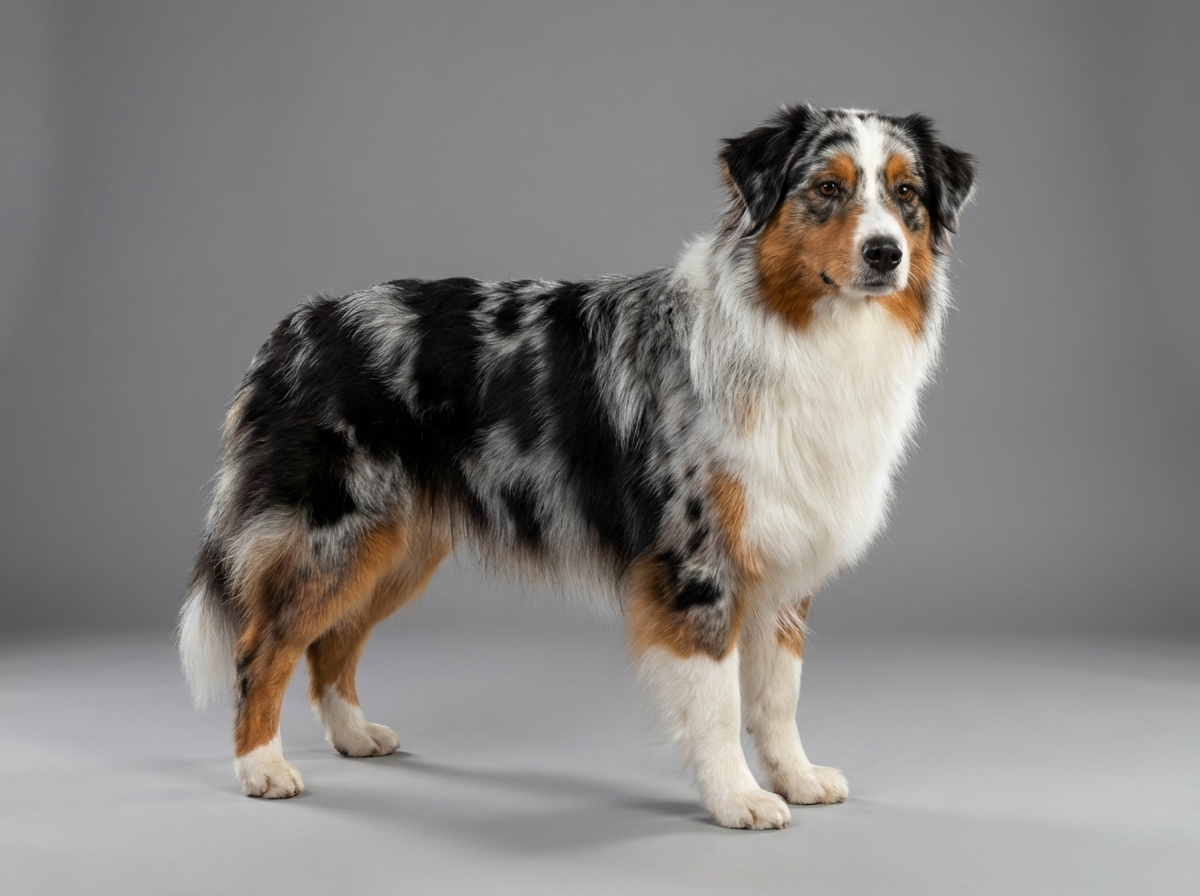
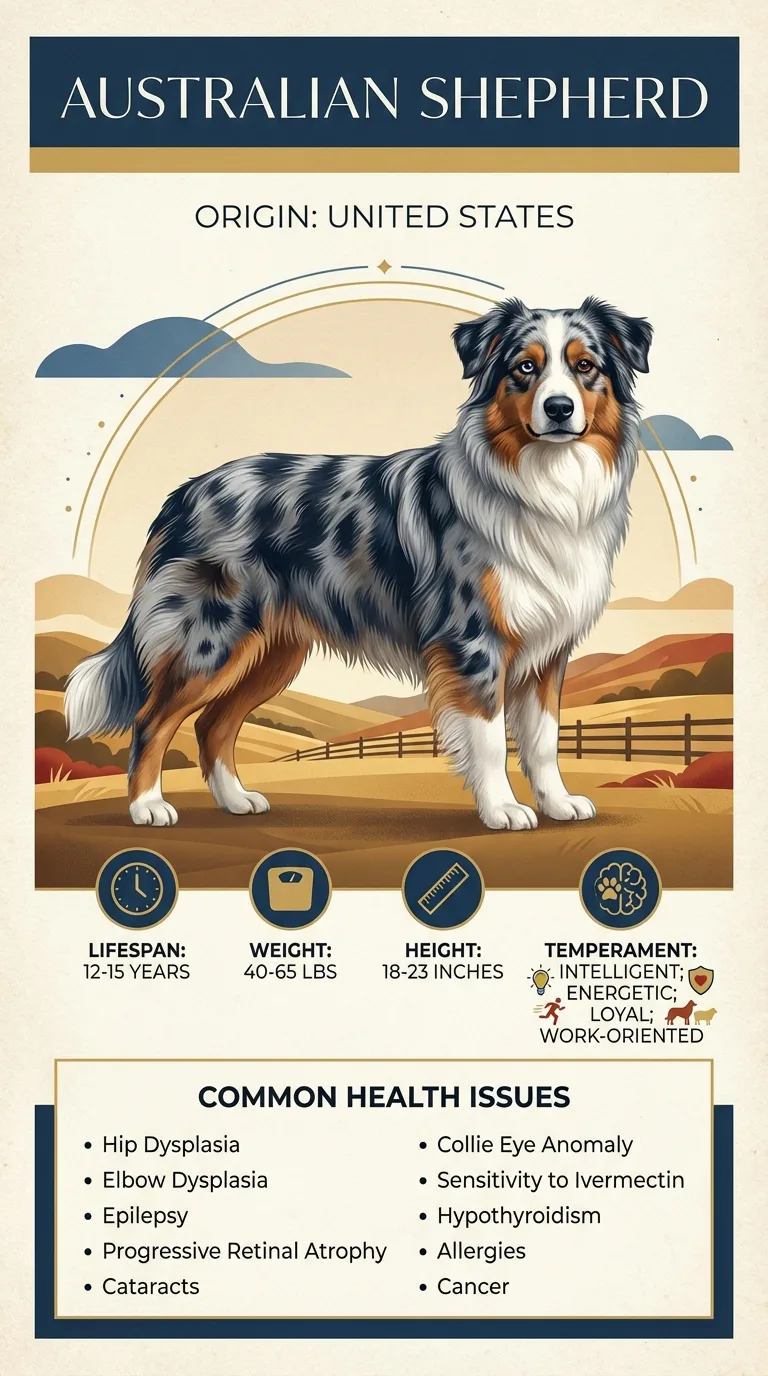
See all Australian Shepherd health problems, which breeds are prone to cruciate ligament injuries, or the full Australian Shepherd breed guide for temperament, exercise needs and ownership costs.
Surgical recovery typically involves 8 to 12 weeks of restricted activity, followed by a gradual increase in exercise over the following months before a full return to high-intensity work.
Success means a stable, functional knee that supports a return to most normal activity, though some dogs settle into a slightly lower-intensity version of their previous activity level, particularly in competitive sports.
Not every case is a complete tear — partial tears can cause milder, intermittent lameness that worsens over weeks rather than appearing all at once.
For most active, medium-to-large dogs, a full ligament tear is best addressed with a surgical procedure that changes the geometry of the knee joint so it functions stably without relying on the torn ligament at all. This is different from simply repairing the ligament itself, which tends to fail under the stress an athletic dog puts on the joint.
Recovery involves a lengthy period of strict activity restriction followed by a gradual, structured return to exercise, often guided by a rehabilitation professional. Dogs that tear one knee also carry a meaningfully higher risk of tearing the other within a couple of years, which is worth planning for rather than being surprised by.

Blue was mid-stride during an agility run when he suddenly pulled up lame and refused to bear weight on his left hind leg. His owner, Farrah, took him in the next morning, and an exam confirmed a full cruciate tear. Blue had surgery two weeks later and spent three months in structured rehabilitation before his vet cleared him for a gradual return to activity. A year later, Blue is back to modified agility training, though Farrah now builds in longer warm-ups and watches his other knee closely for any early signs of trouble.
Key takeaway: A torn cruciate ligament is a serious setback, but with proper surgical repair and a patient rehabilitation timeline, most active dogs do get back to a meaningful version of the activity they love.
Sudden non-weight-bearing lameness on a back leg, especially right after a jump or hard turn, is the classic sign. A vet exam confirms it by checking for joint instability.
For active, medium-sized dogs like this breed, surgery generally offers the best long-term outcome, since the joint tends to remain unstable and prone to arthritis without it.
Most dogs need about 8 to 12 weeks of restricted activity followed by a gradual return to normal exercise, with full athletic activity often not resuming for several months.
There's a meaningfully elevated risk of tearing the opposite knee within a couple of years after the first injury, so it's worth watching that leg closely even after full recovery.
Surgical repair is a significant expense, and costs vary by region and procedure type, so getting a quote from a surgeon early helps with planning.
There's no guaranteed prevention, but maintaining a healthy weight and building conditioning gradually rather than jumping straight into intense activity can reduce overall joint stress.
Sudden inability or reluctance to bear weight on a back leg, often right after a jump or hard turn during activity.
A vet exam should confirm the diagnosis first, since a full tear in an active dog generally does best with surgical repair rather than rest alone.
Full return to high-intensity activity typically takes several months following surgery and structured rehabilitation.
Surgical repair represents one of the larger unplanned veterinary expenses an owner of this breed may face.
Yes, watch the opposite leg closely for signs of strain, since the risk of a second tear is meaningfully elevated.
A one-page prep sheet for this condition: the signs, the questions to ask, what to get priced. Unlocks here.
You get: Vet visit prep sheet
No spam. One-click unsubscribe. See our privacy policy.
Preview page 1 before you decide.