Health
Is my Lab brachycephalic?
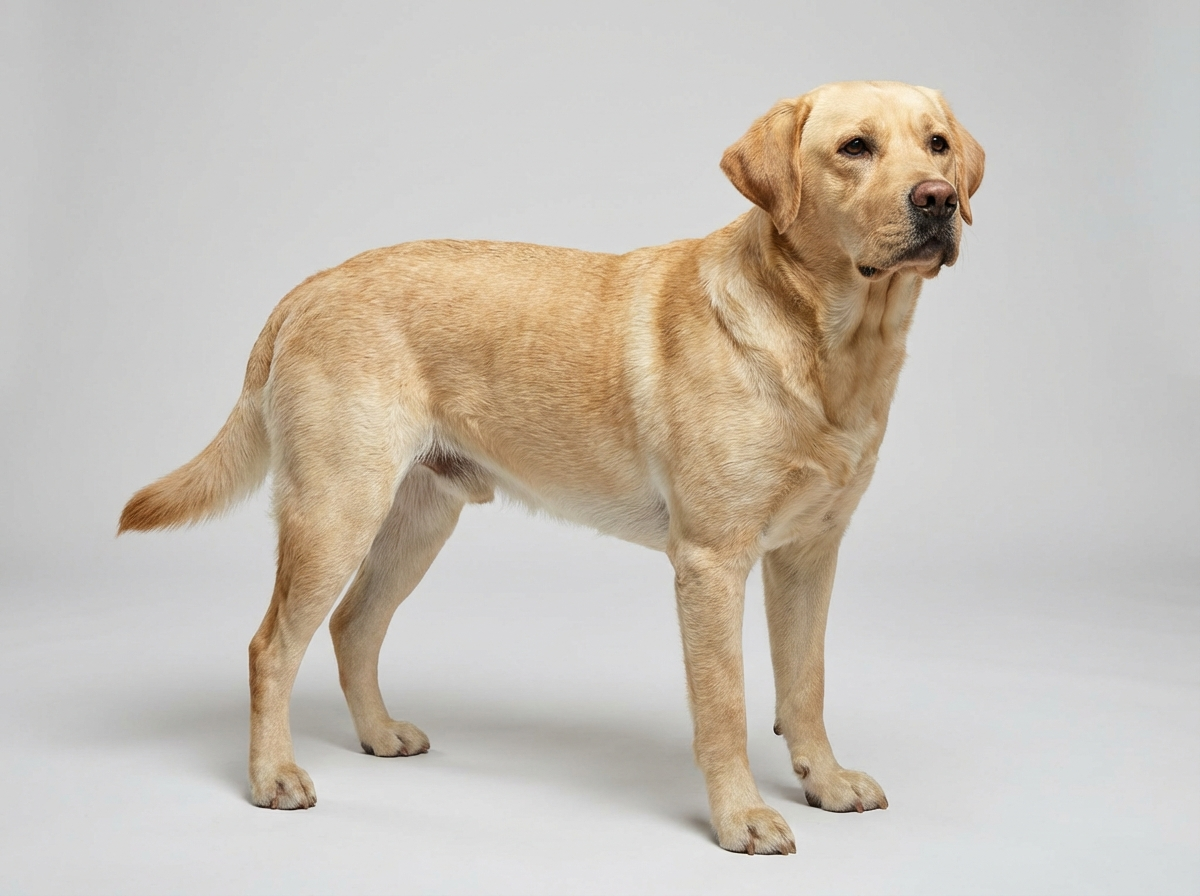
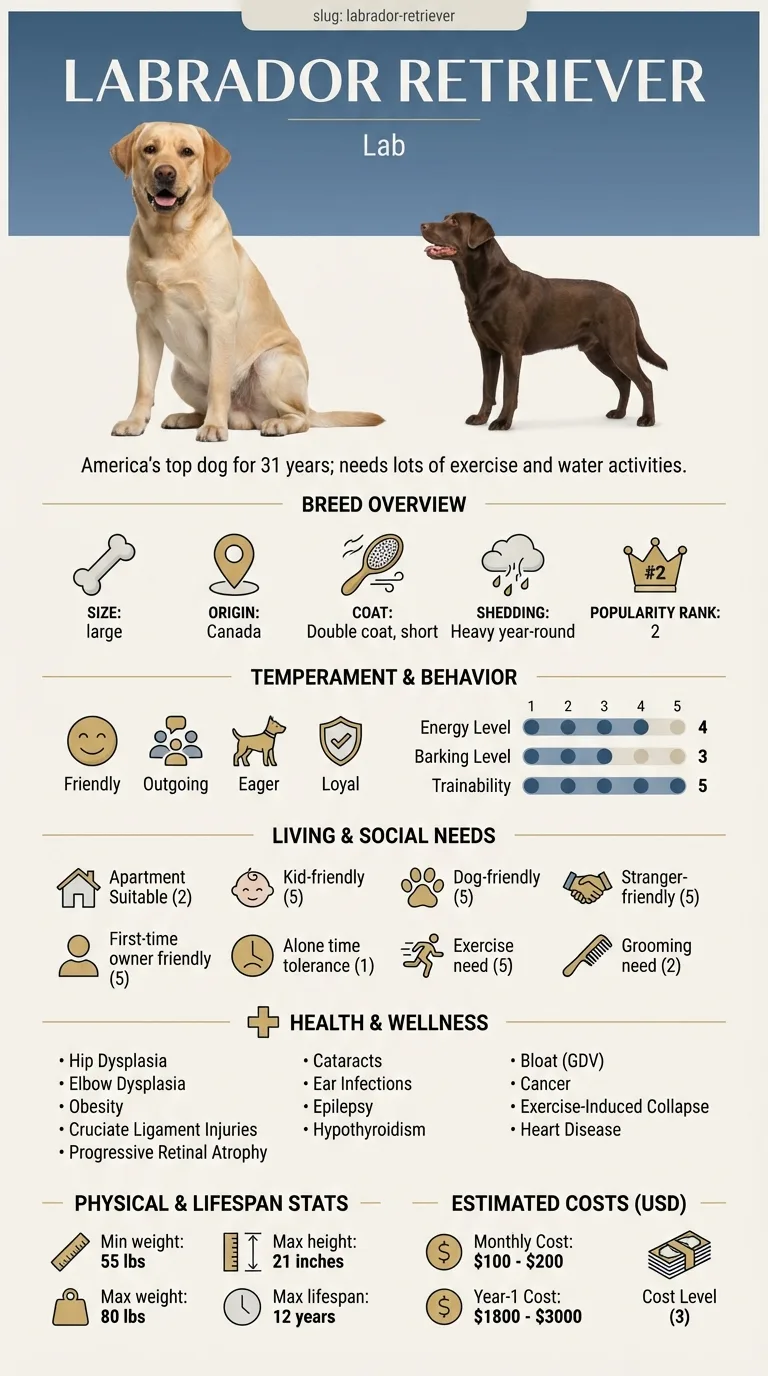
No, Labrador Retrievers have a normal, proportionate muzzle and skull shape and are not classified as a brachycephalic breed.

Quick answer
Is my Lab brachycephalic?
No, Labrador Retrievers have a normal, proportionate muzzle and skull shape and are not classified as a brachycephalic breed.
If you've seen BOAS mentioned in connection with your Lab, the honest first thing to know is that the underlying anatomy this condition requires simply isn't part of this breed's structure.
Owners who've noticed noisy breathing, snoring, or heat sensitivity in their Labrador and gone searching for an explanation are the ones most likely to land on this term, and they deserve the accurate redirect rather than an assumption borrowed from flat-faced breeds.
This guide is not medical advice. If your dog shows pain, sudden behavior change, or worsening symptoms, consult a licensed veterinarian.
Some links may be affiliate links. We may earn a commission at no extra cost to you. We only suggest products we believe are helpful for dog owners.
We research and check what we publish, but we do not warrant that any figure, date, price, or statement is accurate, complete, or current, and we accept no liability for any loss, cost, injury, or other harm arising from the use of this site. Use it as one reference among several. You remain responsible for your own decisions and for your dog's care - confirm anything that matters with a licensed veterinarian or another qualified professional before you act on it. Full disclaimer.
Brachycephalic Obstructive Airway Syndrome is a breathing disorder caused by the flattened skull anatomy of breeds like Bulldogs and Pugs, and it doesn't apply to Labrador Retrievers, which have a normal, proportionate muzzle. What owners of an older, noisy-breathing Lab are usually actually encountering is geriatric laryngeal paralysis, a progressive, well-documented age-related nerve condition affecting the voice box, unrelated to skull shape.
True BOAS essentially never occurs in this breed given its normal skull anatomy. Laryngeal paralysis, the condition actually relevant to aging Labradors, is disproportionately reported in this breed in veterinary literature, making it a genuine, common concern in senior dogs even though it isn't itemized by that name in every basic breed health summary.
Labrador Retrievers have a normal, mesocephalic skull with no documented brachycephalic trait, so the structural anatomy required for BOAS simply isn't present. What this breed does carry a documented tendency toward, disproportionately compared to many other breeds, is geriatric laryngeal paralysis, a progressive weakening of the nerves controlling the voice box as dogs age.
Heat and humidity make any airway limitation, whether from laryngeal paralysis or excess weight, considerably harder to manage, since affected dogs can't move air as efficiently during panting. Obesity, already documented in this breed, adds further soft tissue around the throat that compounds breathing effort.
Talk to your vet about any new or worsening noisy breathing, a changed bark, or reduced exercise tolerance in a dog over eight or nine years old. Treat sudden, severe respiratory distress, blue or gray gums, or collapse, especially in heat, as an immediate emergency.
See all Labrador Retriever health problems, which breeds are prone to brachycephalic airway syndrome boas, or the full Labrador Retriever breed guide for temperament, exercise needs and ownership costs.
Laryngeal paralysis is progressive and doesn't reverse; mild cases can be managed for a year or more with weight control and heat avoidance before symptoms meaningfully worsen. Advanced cases needing surgery typically see improved airflow within days of the procedure, followed by weeks of recovery.
Success is managing an aging dog's breathing effort well enough to preserve comfortable daily activity and safe heat tolerance, not eliminating the underlying nerve degeneration, which doesn't reverse once it starts.
BOAS results from a specific combination of physical traits: an elongated soft palate relative to a shortened muzzle, narrowed nostrils, and a windpipe that's often smaller than normal for the dog's size, all consequences of selectively breeding for a flat face. Labrador Retrievers have a normal, mesocephalic skull shape, a proportionate muzzle length, and none of the documented anatomical traits that define this syndrome. A vet examining a Lab for breathing noise isn't looking for BOAS; the physical starting point for that diagnosis doesn't exist in this breed's structure.
Veterinary literature does document a real, breed-relevant airway condition disproportionately reported in Labradors: geriatric onset laryngeal paralysis polyneuropathy, sometimes called GOLPP or "old dog" laryngeal paralysis. This is a progressive nerve and muscle condition, not a structural flat-face problem, where the muscles controlling the voice box gradually weaken with age, narrowing the airway opening during breathing. It typically appears in Labs around nine to twelve years old, starting with a raspy or altered bark and progressing to noisy breathing, especially during exercise or heat, and in advanced cases, real respiratory distress.

If you think your Lab has brachycephalic airway syndrome (boas), the plan is three steps: write down what you have seen and when it started, book a veterinary appointment rather than waiting for the next flare, and take video of the behaviour or symptom before you go — the thing you are worried about rarely happens in the consulting room. Screening in the parents covers hip dysplasia, elbow dysplasia, obesity.
What the vet visit should produce is a diagnosis and a written plan, not just reassurance: what is being ruled out, what the monitoring interval is, and which signs mean you come back sooner. Ask what the treatment costs across a year rather than per visit, because that is the number that decides whether you are managing this condition or reacting to it.
Between appointments, keep a short log — dates, what you saw, what changed. It is the single most useful thing an owner brings to a follow-up, and for brachycephalic airway syndrome (boas) it is often what separates a clear pattern from a guess.
Percy, a ten-year-old Labrador, had always had a booming, enthusiastic bark, but over a few months it turned raspier and quieter. His owner initially searched online and found BOAS mentioned as a cause of breathing noise in dogs, and worried she'd missed something about her own dog's face shape. Her vet clarified immediately that BOAS doesn't apply to Labradors at all, and instead diagnosed early laryngeal paralysis after a sedated airway exam. With weight monitoring and avoiding exercise during the hottest part of the day, Percy's mild case has stayed stable for over a year, and his owner now watches closely for any sudden worsening rather than assuming his bark change was just normal aging.
Key takeaway: A Labrador's noisy breathing points toward age-related laryngeal paralysis, not a flat-face airway syndrome that has no anatomical basis in this breed.
No. BOAS requires a flattened, shortened muzzle and related anatomical traits that Labradors simply don't have. This breed has a normal, proportionate skull shape, so the condition doesn't apply.
In an older Labrador, noisy breathing is more likely related to laryngeal paralysis, a progressive age-related nerve condition well documented in this breed, or simply excess weight adding soft tissue around the throat.
A gradual weakening of the nerves and muscles that open the voice box during breathing, typically appearing in Labradors around nine to twelve years old. It causes a raspy bark, noisy breathing, and in advanced cases, real airway obstruction.
It can become one. Sudden, severe respiratory distress, blue or gray gums, or collapse, especially in heat or after exertion, is a genuine emergency in a dog with this condition and needs immediate veterinary care.
Yes, in many cases. Reducing excess fat around the neck and throat can meaningfully ease breathing effort, particularly when weight is a contributing factor rather than laryngeal paralysis alone.
Mild cases are managed with weight control, heat avoidance, and exercise moderation. Advanced, severely obstructive cases are sometimes treated surgically to permanently widen the airway opening.
A vet examines the larynx directly under light sedation to watch whether it opens properly during breathing, since the noise alone can't distinguish this from other causes of airway sound.
No, Labrador Retrievers have a normal, proportionate muzzle and skull shape and are not classified as a brachycephalic breed.
Geriatric laryngeal paralysis, a progressive nerve condition affecting the voice box, well documented in Labradors typically from age nine onward.
Not automatically, but sudden severe distress, blue-tinged gums, or collapse in heat or after exercise is, and needs immediate veterinary attention.
Yes, dogs with laryngeal paralysis have a harder time cooling themselves through panting, making heat and humidity genuinely riskier for them than for an unaffected dog.
Surgical correction for advanced laryngeal paralysis is a significant specialty procedure, generally running into the low thousands of dollars depending on region and clinic.
A one-page prep sheet for this condition: the signs, the questions to ask, what to get priced. Unlocks here.
You get: Vet visit prep sheet
No spam. One-click unsubscribe. See our privacy policy.
See a sample page before you decide.
Early access list
The free prep sheet covers the same-day warning signs, a symptom log and the questions to ask. We are considering a fuller kit that adds a cost worksheet for the usual tests and treatments (US price ranges with their sources) and a plain-English guide to ways of covering the bill. It is not built yet; this list tells us whether it is worth building.
One email, no spam, unsubscribe anytime. Information only, not veterinary advice.