Health
What is dilated cardiomyopathy?
A weakening and stretching of the heart muscle that reduces the heart's pumping efficiency, the form of cardiomyopathy most relevant to large breeds.

Quick answer
What is dilated cardiomyopathy?
A weakening and stretching of the heart muscle that reduces the heart's pumping efficiency, the form of cardiomyopathy most relevant to large breeds.
Unlike a leaky valve or an electrical hiccup, cardiomyopathy is a problem with the heart's muscle itself losing the strength to pump effectively — and it's the form of heart disease large breeds are most associated with.
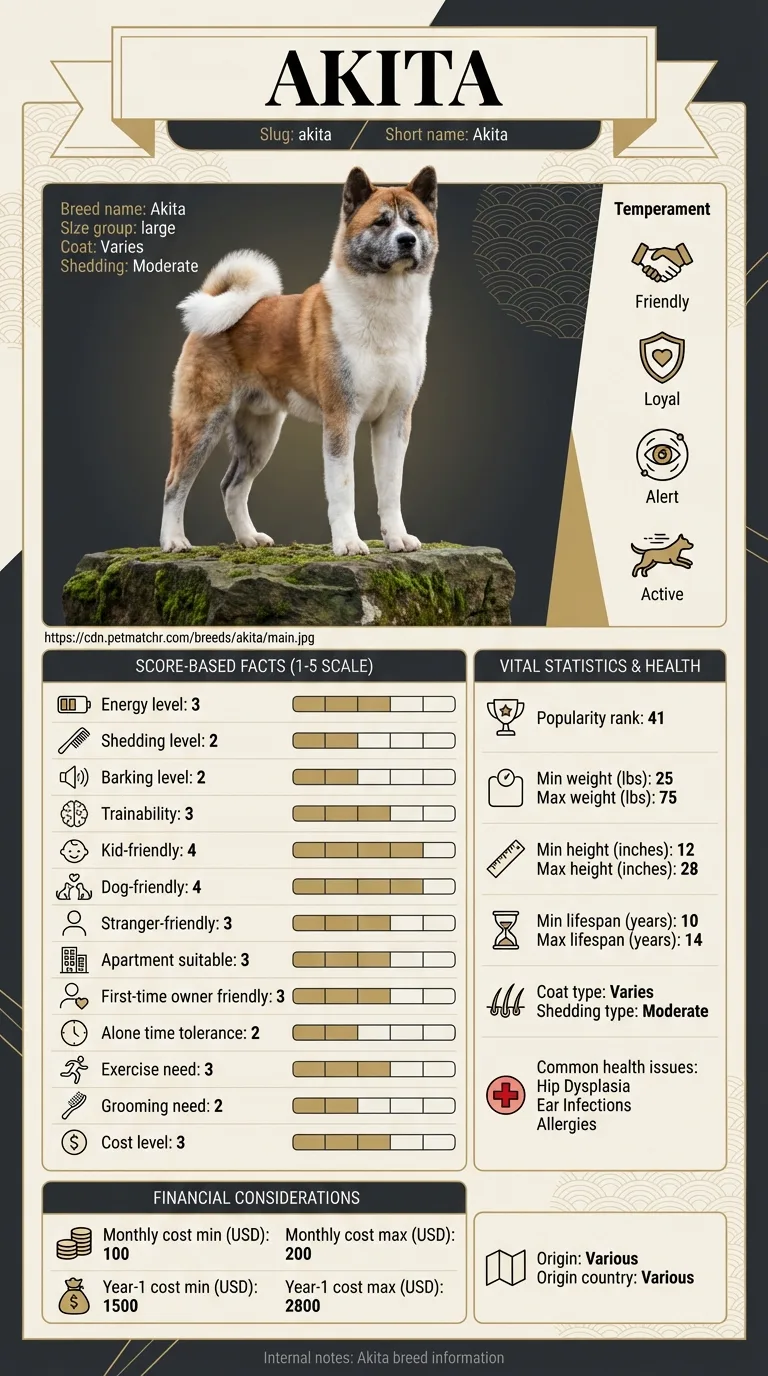
Owners of middle-aged and older Akitas, particularly those who've had a vet mention 'cardiomyopathy' after a murmur or abnormal exam finding, are the audience for this.
This guide is not medical advice. If your dog shows pain, sudden behavior change, or worsening symptoms, consult a licensed veterinarian.
Some links may be affiliate links. We may earn a commission at no extra cost to you. We only suggest products we believe are helpful for dog owners.
We research and check what we publish, but we do not warrant that any figure, date, price, or statement is accurate, complete, or current, and we accept no liability for any loss, cost, injury, or other harm arising from the use of this site. Use it as one reference among several. You remain responsible for your own decisions and for your dog's care - confirm anything that matters with a licensed veterinarian or another qualified professional before you act on it. Full disclaimer.
Check this first
Collapse, fainting, sudden weakness, pale or bluish gums, or rapid, labored breathing at rest are signs the heart may not be keeping up with the body's demands, or that a dangerous arrhythmia has developed — a known complication of dilated cardiomyopathy. These need same-day emergency veterinary care.
A new or worsening cough, reduced willingness or ability to exercise, or a swollen abdomen from fluid buildup are signs of possible heart failure developing and warrant a prompt vet visit, generally within a day or two rather than an immediate emergency unless breathing is significantly labored.
For a dog already diagnosed with cardiomyopathy, any new symptom or a sense that things have changed since the last recheck is worth calling your cardiologist about promptly rather than waiting for the next scheduled appointment.
If any of these apply, call your vet or an emergency clinic now. The rest of this page is for the cases that are not an emergency.
Cardiomyopathy is disease of the heart muscle itself, and in large breeds like the Akita, dilated cardiomyopathy — where the heart chambers stretch and weaken — is the relevant form. It can develop silently, which is why an echocardiogram rather than symptom-watching alone is the reliable way to catch and monitor it.
Dilated cardiomyopathy is the cardiomyopathy form most frequently discussed in large-breed dogs generally, and while it isn't cited as an overwhelmingly dominant Akita-specific statistic, it's the relevant heart muscle disease this breed's size category is most associated with.
As a large breed, the Akita's heart has more muscle mass and chamber volume to maintain over a lifetime than a small dog's, which is part of the general size-related pattern seen across large-breed dilated cardiomyopathy research. There isn't a single confirmed genetic mutation specifically mapped to Akita-driven cardiomyopathy the way there is in some other individual breeds, which is why case-by-case echocardiogram evaluation matters more than assuming a fixed breed statistic.
Diet has become an increasingly discussed environmental factor in canine dilated cardiomyopathy, particularly certain grain-free and boutique formulations investigated in recent veterinary research. Obesity and underlying untreated conditions like hypothyroidism can also contribute additional strain on heart muscle function over time.
See a vet the same day for collapse, fainting, pale or bluish gums, or labored breathing at rest. Schedule a prompt visit for a new cough, reduced exercise tolerance, or any new finding during a routine exam.
Because cardiomyopathy can progress silently for a long time, certain habits allow it to advance further before treatment starts.
See all Akita health problems, which breeds are prone to cardiomyopathy, or the full Akita breed guide for temperament, exercise needs and ownership costs.
Diagnosis typically involves an initial echocardiogram followed by a recheck a few months later to assess response to treatment. Diet-associated cases sometimes show improvement over three to six months of dietary change combined with medication; other cases are managed as an ongoing, ideally stable, long-term condition.
Success is a stable or improving echocardiogram on recheck, a dog maintaining reasonable energy and exercise tolerance, and no acute episodes of collapse or severe breathing difficulty.
If you think your Akita has cardiomyopathy, the plan is three steps: write down what you have seen and when it started, book a veterinary appointment rather than waiting for the next flare, and take video of the behaviour or symptom before you go — the thing you are worried about rarely happens in the consulting room. Screening in the parents covers hip dysplasia, progressive retinal atrophy, hypothyroidism.
What the vet visit should produce is a diagnosis and a written plan, not just reassurance: what is being ruled out, what the monitoring interval is, and which signs mean you come back sooner. Ask what the treatment costs across a year rather than per visit, because that is the number that decides whether you are managing this condition or reacting to it.
Between appointments, keep a short log — dates, what you saw, what changed. It is the single most useful thing an owner brings to a follow-up, and for cardiomyopathy it is often what separates a clear pattern from a guess.
When Corbin's Akita, Apollo, was diagnosed with early dilated cardiomyopathy at a cardiology referral in Seattle, the cardiologist asked detailed questions about Apollo's diet, which happened to be a boutique grain-free formula. They recommended switching to a diet with more established nutritional research behind it, alongside starting cardiac medication. At Apollo's six-month recheck echocardiogram, his heart chamber measurements had noticeably improved compared to the initial scan. Corbin has kept Apollo on the new diet and medication regimen since, with annual rechecks to monitor for any further changes.
Key takeaway: Diet is worth discussing seriously once cardiomyopathy is diagnosed — in some cases, a diet change alongside medical treatment can meaningfully improve the heart's condition on follow-up imaging.
It's disease of the heart muscle itself, as opposed to valve disease or a purely electrical problem. In dilated cardiomyopathy, the specific form most relevant to large breeds, the heart chambers stretch out and the muscle wall weakens, reducing the heart's pumping efficiency.
An echocardiogram (cardiac ultrasound) performed by a veterinary cardiologist is the standard way to measure heart chamber size and muscle function and confirm a diagnosis.
It can have a genetic component in certain breeds and bloodlines, and in recent years diet has also become a factor of active research interest, particularly certain grain-free or boutique diet formulations.
Medications that support heart muscle function and manage fluid buildup are the mainstay of treatment, often combined with dietary review and regular monitoring via follow-up echocardiograms.
Initial diagnosis with an echocardiogram commonly runs $300 to $600; ongoing medication and periodic recheck imaging can add several hundred dollars a year depending on how frequently monitoring is needed.
In some diet-associated cases, changing diet alongside medical treatment has led to meaningful improvement or even reversal on follow-up imaging; in cases without an identified reversible cause, management focuses on slowing progression rather than reversal.
This varies significantly based on how early it's caught and how the individual dog responds to treatment — some dogs are stable for years with consistent management, while advanced cases at diagnosis carry a more guarded outlook.
A weakening and stretching of the heart muscle that reduces the heart's pumping efficiency, the form of cardiomyopathy most relevant to large breeds.
An echocardiogram performed by a veterinary cardiologist confirms the diagnosis.
Typically $300 to $600, a worthwhile cost for a clear, actionable diagnosis.
Yes — diet has become an actively researched factor, particularly certain grain-free or boutique formulations.
Yes, many dogs are stable for years with consistent medication and monitoring.
A one-page prep sheet for this condition: the signs, the questions to ask, what to get priced. Unlocks here.
You get: Vet visit prep sheet
No spam. One-click unsubscribe. See our privacy policy.
See a sample page before you decide.
Early access list
The free prep sheet covers the same-day warning signs, a symptom log and the questions to ask. We are considering a fuller kit that adds a cost worksheet for the usual tests and treatments (US price ranges with their sources) and a plain-English guide to ways of covering the bill. It is not built yet; this list tells us whether it is worth building.
One email, no spam, unsubscribe anytime. Information only, not veterinary advice.