Health
What should I measure before seeing the vet?
Working minutes before slowing, recovery time after stopping, sleeping breathing rate, and monthly weight. Four numbers focus an investigation better than any description.

Quick answer
What should I measure before seeing the vet?
Working minutes before slowing, recovery time after stopping, sleeping breathing rate, and monthly weight. Four numbers focus an investigation better than any description.
In most breeds a dog slowing down is a shrug. In this one it is a data point, and it is worth treating as such.
Owners of dogs between five and ten who have watched a season's worth of gradual decline and are not sure whether they are seeing age, weight, weather or disease. Also owners whose vet found nothing on a routine examination.
This guide is not medical advice. If your dog shows pain, sudden behavior change, or worsening symptoms, consult a licensed veterinarian.
Some links may be affiliate links. We may earn a commission at no extra cost to you. We only suggest products we believe are helpful for dog owners.
Exercise intolerance means a dog can no longer sustain the work it used to. It is a symptom with many possible causes, from excess weight and unfitness through joint pain and thyroid disease to heart and respiratory problems. In a breed with as much baseline capacity as the German Shorthaired Pointer, a real decline is a meaningful finding.
Common as a complaint, and frequently under-investigated because owners attribute it to age. In a breed rated five out of five for exercise need and living ten to twelve years, a clear reduction in capacity before about eight has a cause worth finding. Several of the likely causes appear on the breed's own documented health list.
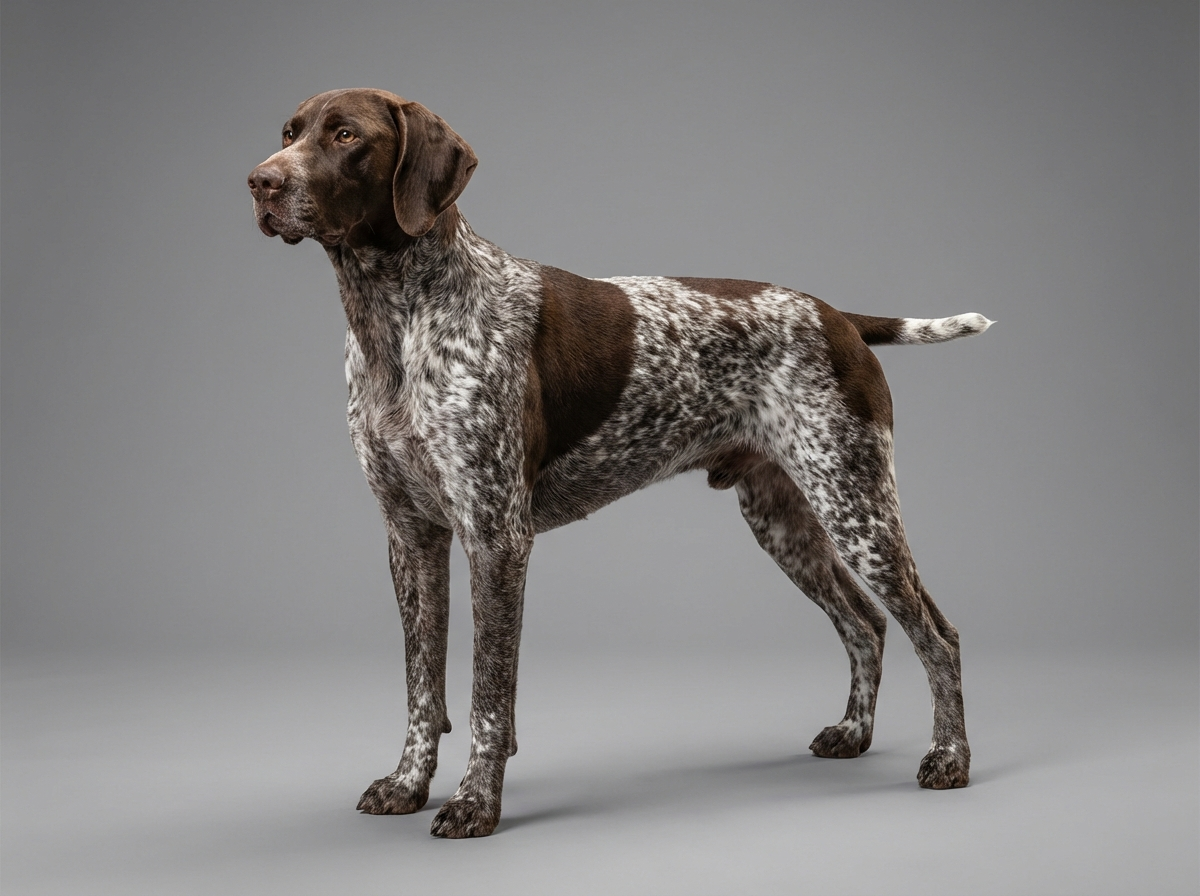
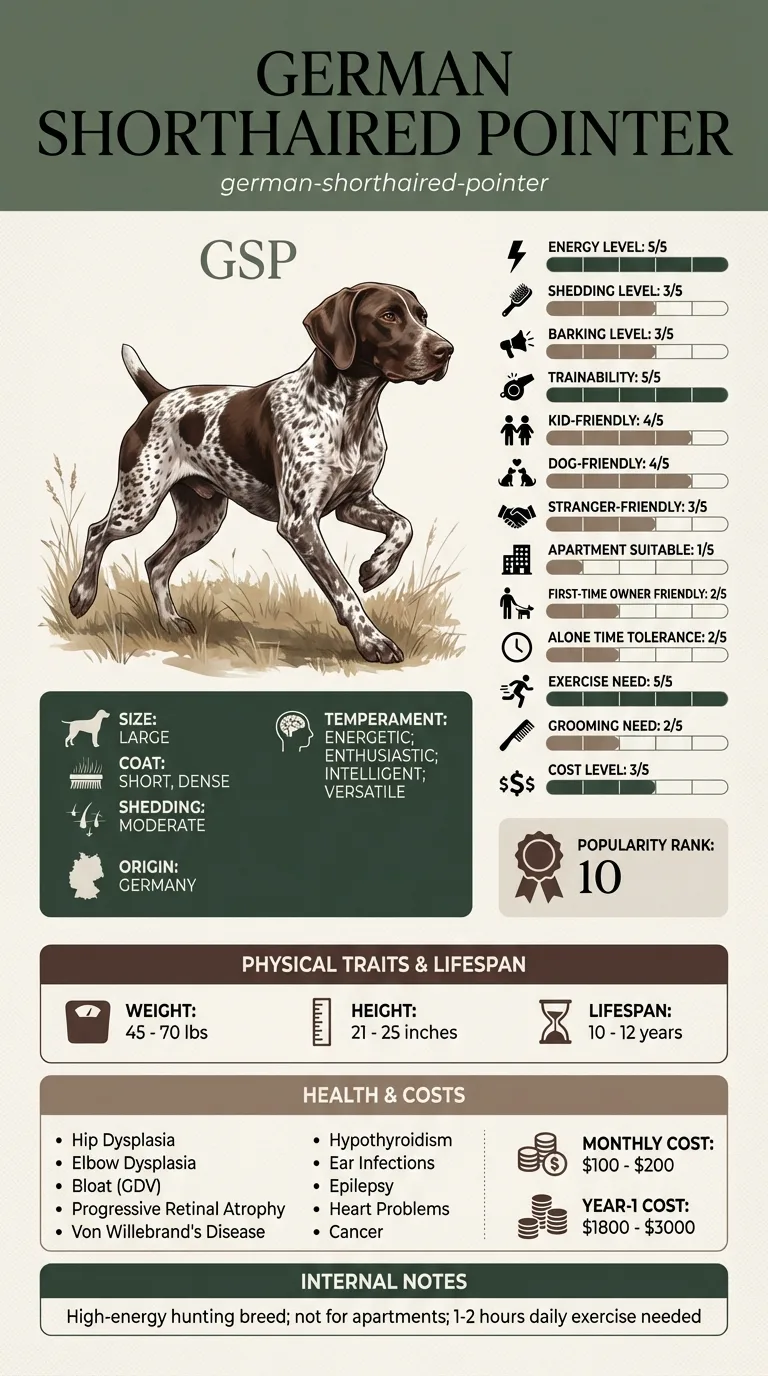
The German Shorthaired Pointer's baseline is what makes this symptom useful. A versatile German gundog of 45 to 70 pounds, rated five out of five for both energy and exercise need and requiring one to two hours of hard work a day, has an enormous performance ceiling, so a genuine drop is unlikely to be trivial. Several documented breed conditions sit on the differential: hip and elbow dysplasia produce pain that reduces self-selected workload, hypothyroidism produces exactly this picture, and heart problems appear on the same list. The breed's enthusiasm works against early detection, since the dog masks the change until it is substantial.
Weather and workload pattern account for a great deal. Warm, humid conditions limit a dog whose only cooling is evaporation from the airway, and a dog that seems intolerant in July may be entirely normal in October. Seasonal work patterns matter too: a dog that does very little for months and is then asked for full days is unfit rather than unwell. Off-season weight gain compounds both, and is the factor owners most often underestimate.
Book an appointment for any sustained loss of stamina in a dog under about eight, for a decline that does not improve when the weather cools, or for reduced capacity alongside weight change, coat change or a duller temperament. Take your recorded numbers with you. Go to an emergency clinic immediately for laboured or rapid breathing at rest, gums that are pale, grey or blue, collapse or fainting, a rapidly swelling abdomen, or a dog that is suddenly weak and reluctant to stand. Those signs mean the reserve has run out rather than narrowed, and they do not wait for an appointment.
See all German Shorthaired Pointer health problems, which breeds are prone to exercise intolerance, or the full German Shorthaired Pointer breed guide for temperament, exercise needs and ownership costs.
Expect two to six weeks to work through a staged investigation, starting with examination and bloodwork and escalating to imaging only if needed. Where weight and fitness are the cause, improvement is usually clear within eight to twelve weeks of consistent change. Where thyroid disease is found, energy commonly returns within four to six weeks of starting treatment.
A specific answer rather than a shrug. In many cases that is a leaner, fitter dog back to previous working times. Where a chronic condition is found, success is a dog working comfortably within a defined ceiling, with the owner's recorded numbers now serving as a monitoring tool rather than a diagnostic one.
The single most useful thing you can do before an appointment is convert he seems slower into something measurable, because a vague impression is very difficult for a vet to act on and a documented change is not.
Three measurements do most of the work. The first is working time: how many minutes your dog hunts, runs or plays hard before it noticeably drops its pace. Record it for four or five outings. The second is recovery time: how long heavy panting takes to settle once you stop, timed with a phone. A recovery that has stretched from five minutes to fifteen across a season is a genuine finding. The third is the sleeping breathing rate, counted while the dog is properly asleep in a comfortable room. Below thirty breaths a minute is normal for a dog of any size, and most healthy dogs are well under that.
Alongside these, weigh the dog on the same scales monthly. Weight gain explains a great deal of exercise intolerance on its own and is easy to miss on a short-coated dog you see every day.
Four numbers and a month of records will focus an investigation far more sharply than the most detailed verbal description, and they cost nothing.
A sensible investigation works through these in order rather than jumping to the frightening ones. Several can be present at once.

Larch was six and his owner could not put her finger on it. He was still keen, still ate, still came when called. He just did not seem to have the same engine. Two vets had examined him and found nothing wrong, which she found more frustrating than reassuring. On the third visit she brought numbers. Working time down from around two hours to forty-five minutes across a season. Recovery from heavy panting up from four minutes to eleven. Sleeping breathing rate steady at nineteen. Weight up three pounds. The normal sleeping rate argued against a heart in trouble, and the pattern of gradual decline with mild weight gain pointed elsewhere. Bloodwork including thyroid confirmed hypothyroidism. Six weeks after starting treatment his working time was back over ninety minutes, and by the following season he was where he had been at four.
Key takeaway: Two normal examinations had not been wrong; they had simply had nothing to work with. The notebook was what turned a feeling into a case, and it took her four minutes a week to keep.
One to two hours of real daily activity is the breed's documented requirement, and a fit adult will comfortably exceed that when working. A dog that struggles with an hour of moderate exercise is outside normal for the breed and worth investigating rather than accepting.
Later than most owners assume. In a breed living ten to twelve years, meaningful decline usually belongs to the last two or three. A five- or six-year-old that has visibly lost capacity is not old, and age is a diagnosis of exclusion rather than a first assumption.
A normal examination is genuinely reassuring but does not exclude much. The logical next steps are bloodwork including thyroid, a considered look at weight and fitness, and, if capacity is clearly reduced, cardiac imaging. Take your recorded numbers to that appointment.
Very often, yes, and it is worth ruling in or out first. Compare working times on a cool morning with a warm afternoon. A dog that performs normally at seven in the morning and poorly at three has a heat problem, not a disease.
Yes. Even a few pounds above ideal on a 45 to 70 pound frame increases the work of every stride and the heat generated doing it. Weight loss is the intervention with the best ratio of effort to result, and it costs nothing but discipline.
Look for stiffness in the first few minutes after rest, a changed sit, muscle loss on one side, or reluctance to jump rather than to run. A dog that starts well and fades is more likely to have a systemic cause; one that is worst at the start is usually sore.
Working minutes before slowing, recovery time after stopping, sleeping breathing rate, and monthly weight. Four numbers focus an investigation better than any description.
Excess weight combined with inconsistent conditioning. It is the first thing to assess honestly and the easiest to fix.
When it comes with laboured breathing at rest, pale or blue gums, collapse or a swelling abdomen. Those need an emergency clinic now.
Exam and bloodwork with thyroid are moderate. Chest imaging and cardiac ultrasound raise it substantially. Ask for a staged plan starting with the cheapest tests.
A one-page prep sheet for this condition: the signs, the questions to ask, what to get priced. Unlocks here.
You get: Vet visit prep sheet
No spam. One-click unsubscribe. See our privacy policy.
Preview page 1 before you decide.